
News
Top Democrats Abandon Zohran Mamdani as His Radical Plan Backfires

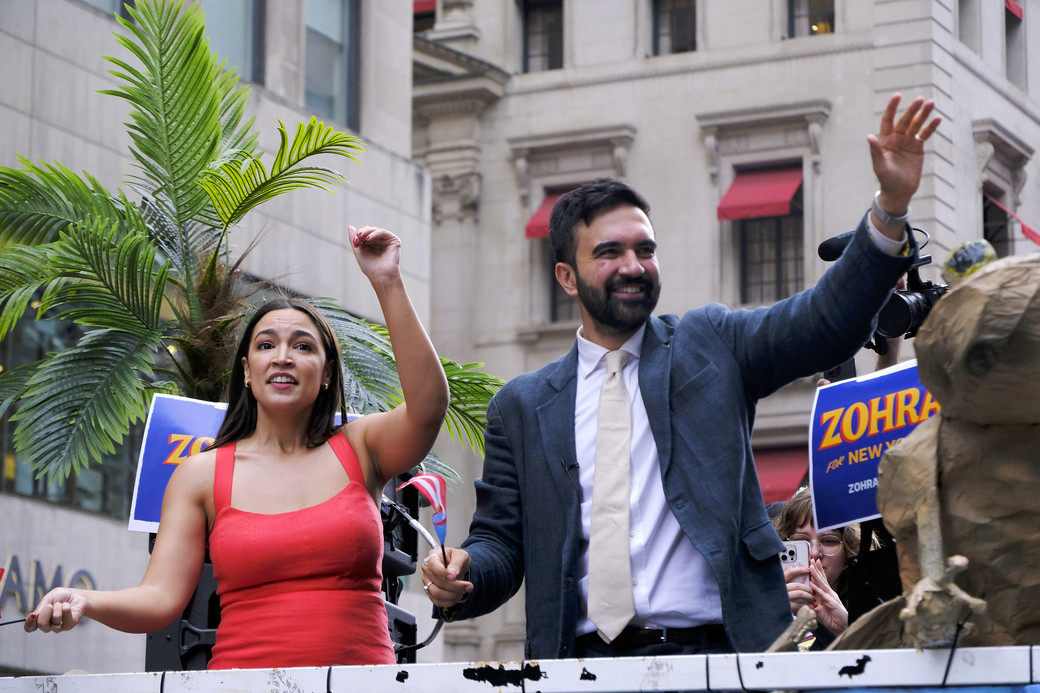
NEW YORK – Mayor Zohran Mamdani’s proposed $127 billion preliminary budget for fiscal year 2027 has set off a loud fight at City Hall and in Albany. Several prominent Democrats are now keeping their distance.
Mamdani, a democratic socialist, rolled out the plan in February. It leans on getting state leaders to approve higher taxes on top earners and large companies. If Albany says no, the city budget assumes a 9.5% jump in property taxes, which critics call a hit to homeowners and renters who are already stretched.
Mamdani has pitched the plan as a clear choice. Either New York taxes the richest residents more, or every day New Yorkers end up paying the bill. Still, the pressure campaign has started to wear thin, even with members of his own party.
What’s in Mamdani’s $127 Billion Budget
City officials say the proposal, the biggest in city history, tries to close a projected $5.4 billion revenue gap over two years. They also say parts of the shortfall trace back to prior administrations.
- Main plan: Raise personal income taxes for people earning more than $1 million a year and increase corporate taxes on profitable firms. The budget also calls for changes to what Mamdani describes as an uneven city-state funding setup.
- Backup plan: If the state refuses, the city would move to a 9.5% property tax increase. The budget projects about $3.7 billion in new revenue in FY 2027. That could touch more than 3 million residential units and about 100,000 commercial properties.
- One-time funds: The plan pulls $980 million from the Rainy Day Reserve Fund in FY 2026. It also draws $229 million from the Retiree Health Benefit Trust in FY 2027.
- Other parts of the package: The city includes a savings program worth $1.77 billion over two years. It also assumes stronger tax collections, with some revenue estimates revised upward.
Mamdani has called the property tax increase harmful and says the city wants to avoid it. For that reason, he has urged Gov. Kathy Hochul and state lawmakers to approve recurring revenue from wealthy taxpayers instead.
Even so, City Council leaders such as Speaker Julie Menin and Finance Chair Linda Lee have pushed back hard. They argue a property tax hike lands at the worst time, because affordability is already a crisis. Budget groups like the Citizens Budget Commission say a typical homeowner could pay about $700 more each year.
Democratic Pushback and Growing Distance
More Democrats are uneasy with Mamdani’s approach, especially the way the budget frames Albany’s choice. While some progressives in the state legislature have backed new millionaire taxes in their one-house budget plans, wider party support has cooled.
- Moderate Democrats in Albany and City Hall say the ultimatum tone risks alienating key partners. That includes Hochul, who has resisted new taxes on high earners during an election year.
- Council members from both the progressive and centrist wings have criticized the property tax threat because they fear it could speed up resident departures.
- Fiscal analysts and some Democratic donors say the budget depends too much on uncertain revenue forecasts and one-time reserve draws. They warn that it could weaken long-term stability.
As a result, the fight has highlighted a familiar split inside the Democratic Party. Progressives want bigger taxes on the wealthy, while others focus on the economic risks and the city’s shrinking tax base.
Wealth and Residents Keep Heading to Low-Tax States
New York’s tax burden has fueled out-migration for years. Critics say Mamdani’s tax strategy could add to that trend.
Here are some recent data points:
- Net domestic migration (2025): New York saw a net loss of more than 137,000 residents through domestic moves. That ranked second only to California.
- Where people go: Texas and Florida remain top choices. Recent reports show Texas gained about 67,000 net domestic migrants, while Florida added about 23,000, although both states posted higher peaks in earlier years.
- High-income moves: Many high earners have relocated to states with no personal income tax, including Florida and Texas. In recent years, more than 125,000 New Yorkers moved to Florida, along with nearly $14 billion in adjusted gross income.
- Wider signals: U-Haul’s 2025 Growth Index places Texas and Florida among the leading in-migration states. New York continues to rank among the biggest outflow states. People cite housing costs, lower taxes, and warmer weather, with many moving south along the I-95 corridor.
Opponents argue that heavier taxes, or even the threat of them, can push more money and residents out. They also point out that high earners pay a large share of city and state taxes. If those taxpayers leave, the city may shift more of the burden onto everyone else.
What This Could Mean for New York City
With budget talks moving toward a June deadline, the negotiations will test Mamdani’s influence in Albany. Some state lawmakers have included higher taxes on wealthy residents in early budget proposals. Still, full support for the mayor’s plan is far from certain.
If the city moves ahead with the property tax increase, housing experts warn it could raise rents and make homeownership harder. They also expect it could add to the flow of residents leaving the city. Supporters of Mamdani’s approach say the city can’t keep cutting or relying on one-time funds. They argue that higher taxes on the ultra-wealthy are needed to pay for services and reduce inequality.
For now, Mamdani’s budget has put taxes, affordability, and city governance front and center. What happens next, whether Democrats unite behind him or force changes, will shape New York City’s finances for years.
Related News:
Progressive Democrats Step Up Calls to Replace Hakeem Jeffries


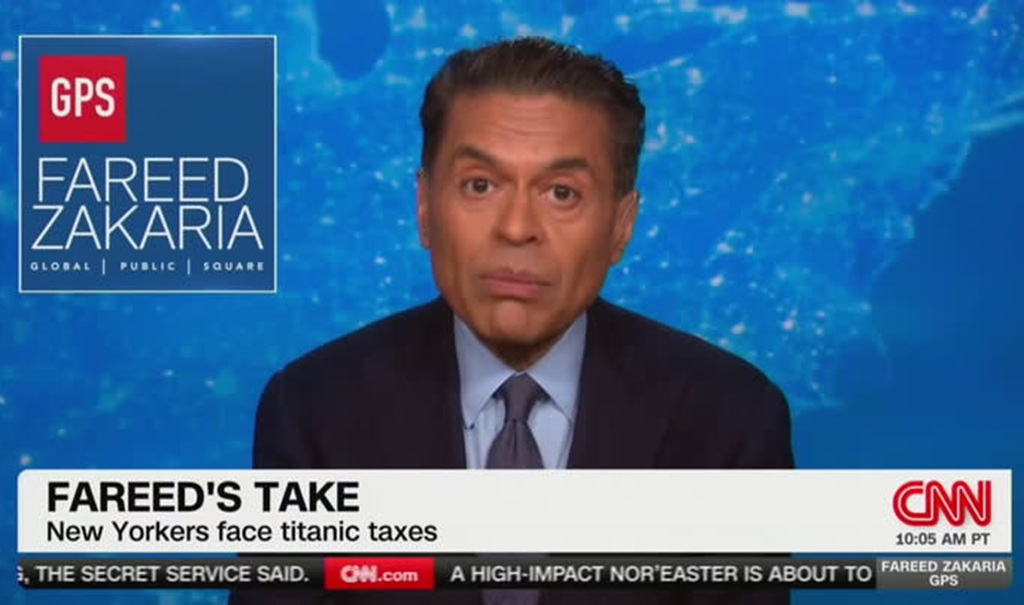
ATLANTA, Ga – On his CNN show Fareed Zakaria GPS, veteran journalist Fareed Zakaria delivered a sharp critique of Democratic-led “blue cities.” He described many big urban centers as failing at basic governance. He also argued their leaders keep spending more while everyday problems keep getting worse.
Zakaria, who’s often seen as a centrist liberal, framed the issue as self-inflicted. In his view, many Democrat mayors keep expanding benefits and programs, yet they fall short on public safety, affordable housing, and reliable city services. He said that pattern hurts the very people city leaders claim to support.
What Zakaria Says Is Going Wrong
Zakaria opened by pointing to New York City as his top example. He argued Democrats avoid a hard truth about how their cities run.
- Zakaria’s line: “Blue cities are out of control, promising more, spending more, delivering less, and pushing off the fiscal problems to some future day.”
He said city leaders need to change what they reward and what they chase. Instead of making each election cycle about new entitlements, he urged them to focus on the basics that residents feel every day. He listed safer streets, functioning schools, dependable sanitation, and enough housing for the middle class.
At the same time, he connected rising costs to rising taxes and oversized budgets. In other words, cities often talk about affordability while policies keep pushing prices up.
New York City as the Main Example
New York City was the center of Zakaria’s critique. He highlighted Mayor Zohran Mamdani, the 34-year-old socialist who ran on affordability. Zakaria pointed to Mamdani’s proposed $127 billion budget for 2027 as proof that spending keeps accelerating.
- He said that the level of annual spending looks more like what mid-sized countries spend, such as Greece or Thailand, even though it covers a single city.
- To pay for it, Mamdani floated property tax increases of up to 9.5%, and some experts warn that this could raise energy bills and other living costs.
- Zakaria also noted that New York has a long track record of big budgets, so eye-popping totals don’t shock people anymore.
Yet, he argued, all that money still hasn’t solved the housing crunch. As a result, he said, the middle class keeps getting priced out.
Los Angeles: Big Homelessness Budgets, Little Visible Progress
Next, Zakaria turned to Los Angeles, another Democratic stronghold with long-running issues.
He highlighted that the city set aside about $950 million for homelessness programs in fiscal year 2025 to 2026. Still, homelessness climbed sharply, up 70% countywide and 80% in the city from 2015 to 2024.
Zakaria tied those numbers to what residents see on the ground, including disorder, encampments, and safety concerns. In his view, one-party control and heavy spending haven’t produced results that match the scale of the investment.
Chicago: Pension Pressure and Weak Support for City Hall
Zakaria also pointed to Chicago as another warning sign for blue city leadership.
- He said pension obligations keep growing and put the city’s finances under serious strain, even raising bankruptcy fears.
- He also cited an unpopular mayor, with approval ratings described as “underwater.”
- Meanwhile, he argued city leaders still don’t have a real plan for the long-term budget squeeze.
He linked Chicago’s struggles to a wider pattern in Democrat-led cities, including population decline, higher taxes, and weaker services.
What This Means for Democratic Leadership
Zakaria’s comments drew attention because they came from inside the liberal media world. As a CNN host, he doesn’t fit the usual profile of a partisan critic. That’s part of why his segment landed with force.
He framed these problems as choices, not bad luck. When leaders focus on new benefits while ignoring core services, he said, cities slide into a cycle of higher costs and lower performance. That argument fits the broader debate around blue city policies as crime, homelessness, and out-migration stay in the spotlight.
His bottom line was simple: Democrats need to make city government work, not just announce big plans. Without a shift, he warned, major cities could keep losing residents and economic strength.
The segment sparked plenty of reaction online, with clips spreading on social media and conservative outlets highlighting the rare criticism aimed at Democratic mayors.
As large US cities continue recovering from post-pandemic strain, Zakaria’s message landed as a clear warning from the left: big promises and bigger spending don’t mean much if daily life keeps getting harder.
Related News:
CNN’s Harry Enten Calls the 2028 Democratic Primary a Clown Car

ATLANTA, Ga – Paramount Skydance, led by CEO David Ellison, has locked in a blockbuster deal to buy Warner Bros. Discovery (WBD), CNN’s parent company, for about $111 billion.
The agreement came together after Netflix suddenly stepped out of the drawn-out bidding contest in late February 2026. Now, the Ellison family, backed by Oracle co-founder Larry Ellison‘s deep pockets, is set to take control of a massive mix of entertainment and news brands.
The purchase values WBD at roughly $110 to $111 billion in enterprise value, with cash terms near $31 per share. It covers major properties like HBO, Warner Bros. studios, DC Comics, and, most importantly for journalists, CNN.
The deal still needs sign-off from the Department of Justice and other regulators. If approvals come through, the merger could close later in 2026, possibly in the third quarter.
Inside CNN, the reaction has been tense. Many employees fear a reset of the network’s editorial tone, a possible tie-up with CBS News, and another round of layoffs. People familiar with the mood describe it as “horrific,” “devastated,” and “beyond bleak.” On top of that, the ownership’s political associations have added to staff unease.
CNN’s Falling Ratings and Trust Problems
CNN has struggled for years as the cable news audience splinters and streaming pulls viewers away. At the same time, Fox News, MSNBC, and a flood of digital outlets have squeezed prime-time attention. As a result, CNN’s ratings have slipped hard, and the network often trails its main rivals in key audience groups. Compared with its highs in the late 2010s and early 2020s, the drop has been steep.
Many critics also say CNN has damaged its reputation. They point to perceived bias, public stumbles, and more programming that feels like opinion rather than straight reporting. In turn, some former viewers say they stopped watching because they don’t trust the coverage anymore. All of this leaves CNN exposed while media habits keep changing.
- Steep ratings slide: CNN’s audience share has dropped sharply since the 2020 highs.
- Trust concerns: Ongoing claims of political tilt have pushed some viewers away.
- Money pressure: Debt from earlier deals and weaker ad sales keep squeezing the business.
Fear Inside CNN, and Fewer Places to Go
At CNN headquarters and in its newsrooms, worry has turned into open dread. Reports describe staff as “shaken” and “panicking,” with many expecting job cuts soon after the merger closes. Since CNN has already gone through multiple layoffs under prior ownership, employees say they feel worn down and exposed.
There’s another problem, too. Traditional media jobs have been drying up, so plenty of experienced producers and reporters don’t see many safe exits. That’s why talk of consolidation, especially a possible blend of CNN and Paramount’s CBS News operations, has hit so hard. If leaders combine teams, overlapping roles could disappear fast.
- Layoff anxiety: Many staffers expect “brutal” cuts as owners chase savings.
- Limited options: Mid-career employees often see few openings elsewhere.
- Low morale: People describe the atmosphere as “depressing” and “horrific,” even as leaders ask for patience.
CNN CEO Mark Thompson has urged employees not to “jump to conclusions.” He has also pointed to CNN’s strong reporting operation. Still, those messages haven’t calmed many nerves.
The Ellison Angle, Trump Links, and Editorial Worries
The financial force behind the deal, Larry Ellison, has openly praised Donald Trump and supported him politically. Meanwhile, David Ellison now runs Paramount Skydance following its merger with Paramount. For CNN staff, that mix raises a sensitive concern: whether the new owners will push CNN’s coverage in a different direction.
For years, CNN has taken a tough line on Trump. Now, some employees fear a shift toward more centrist or conservative framing, especially if the owners want a tone that fits their views or business ties. That’s why promises of independence, even when stated clearly, have not erased the skepticism.
David Ellison has said CNN will keep editorial freedom. Speaking on CNBC, he said, “we want to be in the truth business,” and he framed the deal as good for both CNN and CBS News. Even so, doubts linger, in part because CBS News has seen disruptions tied to leadership changes and the placement of voices that criticize mainstream coverage.
At the corporate level, a CNN and CBS News partnership could bring shared resources and cost savings. However, it could also blur CNN’s identity if teams and priorities merge too tightly. Executives have discussed possible “synergies” in private, highlighting CNN’s global reach while also looking for efficiencies.
What Happens Next for CNN, and Why It Matters
The deal now moves into a review phase, including antitrust scrutiny and other oversight that could shape final terms. If regulators approve it, the combined Paramount-WBD company would control a huge library of shows and films, major streaming services, and a powerful set of news brands. That kind of consolidation could change how competitors fight for viewers, ad dollars, and distribution.
For CNN employees, the near-term outlook feels unstable. David Ellison talks about investing in news, but merger math often brings cuts. Add in weaker ratings and the politics around the new ownership, and many staffers expect a rough stretch. People want clarity, yet they’re preparing for disruption.
This takeover also reflects a bigger pattern in media. Legacy companies keep combining, wealthy owners carry more influence, and politics keeps shaping trust in journalism. Whether CNN comes out stronger or simply different may be one of the biggest media stories of 2026.
Trending News:
CNN Host Abby Phillip Forced to Apologize Over New York Attack Claims
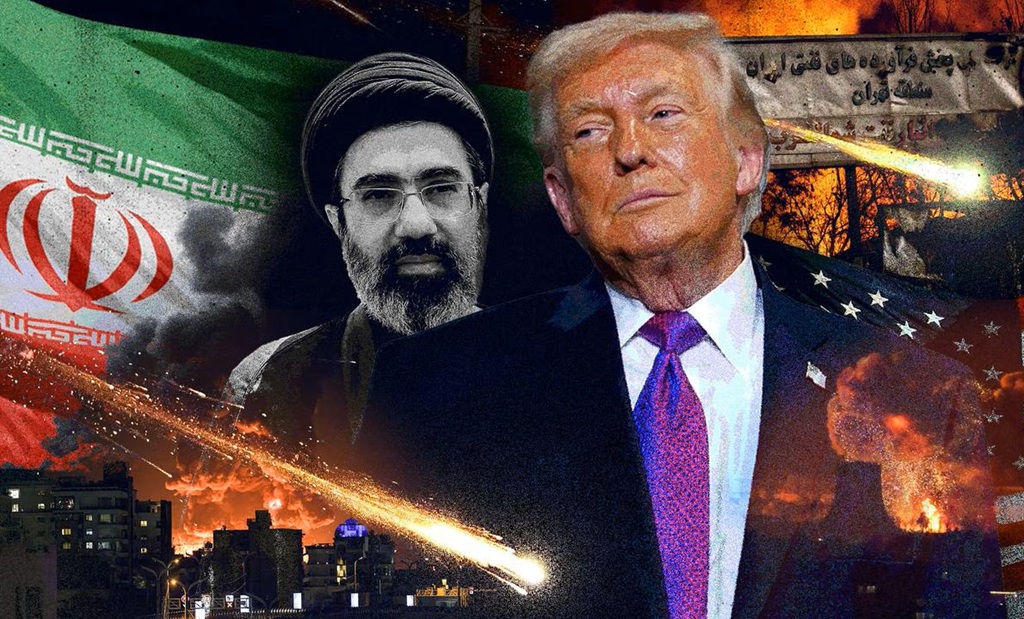
TERRAN – Iran is reeling after a wave of US-Israeli strikes that started on February 28, 2026. The operation killed long-time Supreme Leader Ayatollah Ali Khamenei and threw the Islamic Republic into crisis.
Days later, clerics quickly elevated his son, Ayatollah Mojtaba Khamenei, as the next supreme leader. Now, US President Donald Trump says Mojtaba is likely dead or severely incapacitated.
At the same time, the government is holding on through force. The Islamic Revolutionary Guard Corps (IRGC) has intensified violence inside Iran to crush dissent and stop a broader revolt.
Reports describe mass arrests, executions, and threats of deadly retaliation against protesters. Meanwhile, repeated airstrikes have badly damaged Iran’s air defenses and other key military systems.
Ali Khamenei Killed, Then a Fast and Controversial Succession
On February 28, 2026, US and Israeli forces launched a major attack on high-value targets across Iran. The strikes hit the supreme leader’s compound in Tehran early in the campaign. Ayatollah Ali Khamenei, Iran’s leader since 1989, died in the first wave. Several family members reportedly died as well.
Soon after, the Assembly of Experts, an 88-member clerical body, met under emergency conditions. On March 8, it named Mojtaba Khamenei, 56, as the new supreme leader. That rapid father-to-son handoff broke long-standing clerical norms that reject dynastic rule. It also ran against what many Iranians expected.
Even then, Mojtaba kept a low profile. He released only written statements and never appeared on video. As a result, rumors about his status spread quickly.
Trump Says Mojtaba Khamenei Is “Most Likely Dead”
In interviews and on social media, President Donald Trump has repeatedly cast doubt on Mojtaba Khamenei’s survival. Trump said he is “hearing he’s not alive” and called the reports credible. He also said that if Mojtaba is alive, he should “surrender” for the good of the country.
Earlier, Trump criticized the appointment as “unacceptable.” He also suggested Mojtaba would not last without US approval. Other US officials echoed parts of that message. Defense Secretary Pete Hegseth, for example, said Mojtaba was wounded and “likely disfigured” during the strikes that killed his father.
Iranian leaders reject those claims. Foreign Minister Abbas Araghchi said there is “no problem” with the supreme leader and insisted Mojtaba is carrying out his role. Still, there have been no verified public appearances. Because of that, speculation has only grown, including claims that he is in a coma or in hiding.
With no clear proof either way, top-level decision-making has slowed. That uncertainty also leaves Iran more exposed as the attacks continue.
Unrest Spreads Across Iran as Security Forces Crack Down
Iran is seeing broad unrest. Protests broke out after Ali Khamenei’s death, and security forces responded with harsh crackdowns. The IRGC and the Basij have reportedly killed dozens. Officials have also warned they will escalate further if demonstrations return.
- Threats, arrests, and executions: Authorities have warned that public criticism could bring immediate death, framing dissent as “wartime treason.”
- Internet shutdowns: Nationwide blackouts have disrupted communication, while thousands have reportedly been detained.
- Growing splits inside society: State-backed crowds have held rallies and chanted “Death to America.” At the same time, opposition voices have praised the strikes and called them a step toward freedom.
The government appears focused on stopping a mass uprising. As military losses rise, some IRGC commanders have promised reprisals “stronger than January 8” if protests surge again.
US-Israel Strikes Hit Iran’s Military, Missiles, and Command Structure
The US-Israeli campaign has targeted Iran’s military backbone in a steady series of raids.
- Missile forces weakened: Strikes reportedly destroyed many launchers and production sites, cutting ballistic missile launches by as much as 86% from early levels.
- Air and naval assets damaged: Attacks hit hundreds of sites, including air defenses, naval bases, and vessels such as the IRGC frigate Jamaran. Iran’s air force and navy are now widely described as largely neutralized.
- Senior leaders killed: Dozens of high-ranking commanders reportedly died. The strikes also hit parts of Iran’s nuclear and missile programs that had been rebuilt after earlier 2025 clashes.
- Key facilities destroyed: Trump said a raid “totally obliterated” military facilities on Kharg Island, disrupting oil exports and logistics routes.
US defense assessments say Iran still has some missile stockpiles. Even so, its ability to strike back appears sharply reduced. The Strait of Hormuz remains a concern, although Iran’s capacity to enforce threats there looks weaker.
These attacks follow the 2025 strikes on nuclear-linked sites. Taken together, they have left Iran’s defenses in their worst shape in decades.
Where Iran Goes From Here
As the war moves into its third week, the regime’s grip looks less secure. With no visible supreme leader and major defenses damaged, internal power struggles could intensify. Hardliners still depend on the IRGC to keep control, yet prolonged instability increases the risk of revolt or state fragmentation.
President Trump has signaled he could end the conflict quickly. However, he has also pushed for major concessions or a change in Iran’s leadership. Israel, for its part, says it will keep striking until it removes the threats it sees.
For everyday Iranians, conditions are deteriorating fast. Disrupted oil flows raise the risk of economic collapse. Airstrikes continue to cause casualties, and repression at home remains severe. Whether Mojtaba Khamenei is alive or dead, the Islamic Republic is facing its most dangerous test in decades.
Related News:
Trump Announces U.S. Forces Totally Obliterate Iran’s Kharg Island


Democrat Party Insiders Turning on AOC Move Against the Progressive Squad

CNN’s Fareed Zakaria Says Democrat Mayors Are “Destroying Their Own Cities”

Top Democrats Abandon Zohran Mamdani as His Radical Plan Backfires

Progressive Democrats Step Up Calls to Replace Hakeem Jeffries

Panic Engulfs CNN as Ellison’s Paramount Skydance Wins Takeover Bid

Iran in Turmoil as New Supreme Leader Mojtaba Khamenei Most Likely Dead

Rep. Ilhan Omar Faces Heat as Minnesota Voters Seek Change

Trump Announces U.S. Forces Totally Obliterated of Iran’s Kharg Island

Democrat Heavyweight James Carville Urges Ilhan Omar to Leave the Party

CNN Host Abby Phillip Forced to Apologize Over New York Attack Claims

Thai Billionaire Charged With Lese Majeste Over Facebook Post

Russia Bans Facebook, Meta Says It’ll Do “Everything” To Restore Service

Facebook Login Feature – Clash of Clans

4 Things you can do to take your Facebook Lead Generation to the Next Level

Zuckerberg to Allow Violent Speech on Russia After Facebook Blocked

Facebook Loses $200 Billion as Users Shift to TikTok

Downloading Facebook Videos Anonymously with High Quality Video through Snapsave app

The Best Site to Buy Real Facebook Likes and Followers in 2022

Chinese Man Arrested for Using Facebook to Dupe Cryptocurrency Investor

Google and Facebook Under Huge Pressure Over User Privacy

Mosque Set Ablaze in Iran a Citizens Revolt Against the Islamic Regime

AOC Accuses Jessie Watters of Fox News of Sexualizing and Harassing Her

JD Vance Exposes Walz’s Fraud and CNN’s Lies in White House Presser

Milestone Card Credit: How the Milestone MasterCard Can Transform Credit
-

 Crime3 months ago
YouTuber Nick Shirley Exposes BILLIONS of Somali Fraud, Video Goes VIRAL
-

 China2 months ago
China-Based Billionaire Singham Allegedly Funding America’s Radical Left
-
 Politics3 months ago
Ilhan Omar Faces Renewed Firestorm Over Resurfaced Video
-

 Politics1 month ago
CNN Delivers Stark Reality Check to Democrats Over Voter ID
-

 Business3 months ago
Tech Giant Oracle Abandons California After 43 Years
-

 Midterm Elections2 months ago
2026 Midterms Guide: Candidates, Key Issues, and Battleground States
-

 Crime3 months ago
Minnesota Fraud Scandal EXPANDS, $10 Billion in Fraudulent Payments
-

 Politics3 months ago
Accusations Fly Over Alleged Zionist Takeover of (TPUSA) Turning Point USA