
Politics
Trump Brokered Belarus Deal Frees 123 Political Hostages, Including Nobel Laureate


WASHINGTON D.C. A remarkable diplomatic achievement, underlining American influence and President Donald Trump’s direct negotiating style in international affairs, resulted in the release of 123 political detainees by Belarusian leader Alexander Lukashenko.
This large-scale release, the biggest of its kind, included prominent democracy figures and the 2022 Nobel Peace Prize recipient, Ales Bialiatski, along with key opposition activist Maria Kalesnikava.
The breakthrough happened late Saturday after intense, direct talks in Minsk. President Trump’s special envoy, John Coale, met over two days with Lukashenko. The agreement shows the President’s dedication to making human rights a priority and using America’s economic standing to secure results. This contrasts sharply with the ineffective, symbolic gestures often favoured by career foreign policy officials.
Focusing on Action, Not Just Talk
For many years, Washington’s approach to difficult governments relied too much on moralistic language and broad, ineffective sanctions. These sanctions mainly hurt local citizens without changing the behaviour of the dictators in charge.
However, the Trump administration successfully found a different path, showing that a pragmatic, targeted diplomatic approach, which trades a specific benefit for a specific action, can bring wrongly held individuals back home.
“As President Trump directed, the United States will remove sanctions on potash,” Special Envoy Coale announced in Minsk, confirming the terms of the agreement. Potash, a major Belarusian export used in producing fertilisers, served as a strong bargaining chip. By offering a focused economic concession, which is necessary for any long-term stability, the Trump team secured the freedom of 123 people held as political hostages.
This was a calculated incentive, not a naive retreat. It sends a clear communication to autocratic leaders: humanitarian cooperation will be rewarded, but continued hostility will not.
The most recognised political prisoners released include:
- Ales Bialiatski: The human rights defender and 2022 Nobel Peace Prize winner, imprisoned since 2021 on charges widely viewed as political.
- Maria Kalesnikava: A courageous figure from the 2020 mass protests; she famously tore up her passport to resist forced deportation and was serving an 11-year sentence.
- Viktar Babaryka: A former banker jailed after attempting to challenge Lukashenko in the 2020 election.
Maria Kalesnikava’s sister, Tatsiana Khomich, expressed thanks to reporters. She stated she was “thankful to the U.S.A. and Trump for their efforts in leading the process.” This feeling confirms the relief felt by countless families whose loved ones are now safe.
A Smart Plan for Geopolitical Influence
Beyond the immediate human benefit, this diplomatic victory has important geopolitical implications. Although Lukashenko remains a close friend of Russian President Vladimir Putin, the Trump administration has begun a measured, careful strategy of engaging with Minsk. The goal is to potentially weaken its ties to Moscow or at least create a channel for influence.
As the U.S. envoy suggested, Lukashenko’s history and close relationship with Putin could be useful in efforts to end the conflict in Ukraine. Instead of simply isolating the regime, the Trump strategy aims to use every possible way to encourage peace and stability in the region.
This method stands apart from decades of failed policies by the Washington establishment, which often only succeeded in pushing countries closer to the Kremlin. The willingness to speak directly, without preconditions demanding the overthrow of the regime (a demand that is never achieved), is proving to be the most effective way to address the issue of political detainees.
The Belarusian opposition, while correctly demanding greater freedom, has agreed that President Trump’s “transactional approach” is building momentum for these releases.
Nobel Laureate’s First Statement
Just hours after being released through the diplomatic effort coordinated by the Trump administration, Nobel Peace Prize recipient Ales Bialiatski offered his first public comments. He described the harsh conditions of his almost four-and-a-half years in a Belarusian penal colony and immediately called for attention to the hundreds of political prisoners still held captive.
The 63-year-old human rights veteran appeared tired but determined during an interview from Vilnius, Lithuania. He had been taken there following his sudden release on Saturday. His immediate priorities were clear: recovering his health and resuming his life’s work.
An Experience of “Inhumane Treatment”
Bialiatski described the suddenness of his release; he was told to pack his belongings early Saturday, then blindfolded and driven west. While he noted that his status as a Nobel Laureate likely prevented him from the physical abuse common in the regime’s prisons, he confirmed that his entire experience was one of “inhumane treatment,” a constant violation of basic human dignity.
His accounts highlight the deliberate cruelty faced by political opponents under the Lukashenko regime:
- Severely Limited Healthcare: Bialiatski revealed that medical assistance was minimal. He noted that for dental issues, the only option in prison was extraction. He stressed the need to deal with his health now due to the lack of proper care during his detention.
- Constant Psychological Pressure: He suffered the usual arbitrary punishments for minor violations, such as not marching correctly or cleaning inadequately. These actions were designed to constantly maintain pressure on political prisoners.
- Isolation: Bialiatski’s wife was blocked from visiting, and he was often denied essential care packages, including medication. Like other political prisoners, he was forced to wear a yellow label identifying him as having “extremist tendencies.”
Comparing his first moments of freedom to emerging from the water, Bialiatski said, “When I crossed the border, it was as if I emerged from the bottom of the sea and onto the surface of the water. You have lots of air, sun, and back there you were in a completely different situation, under pressure.”
Dedication to the Goal
Despite the trauma of his imprisonment, Bialiatski remains focused on Belarus’s democratic future. He made it clear that his work is far from finished, telling reporters, “Our fight continues, and the Nobel Prize was, I think, a certain acknowledgement of our activity, our aspirations that have not yet come to fruition. Therefore, the fight continues.”
He announced his plans to restart his work with Viasna, the human rights group he founded. The organisation continues its mission of documenting abuses and supporting victims of repression from its base outside of Belarus.
Bialiatski also offered a serious perspective on the nature of the diplomatic deal. He cautioned that the Lukashenko regime acts with a “kind of schizophrenia”; they release established political prisoners with one hand while simultaneously arresting new ones with the other.
He insisted that the international community must maintain pressure on the regime to stop all new arrests. He asserted, “There is no point in freeing old ones if you’re taking in new ones.”
The Nobel Laureate believes his prize was not a personal honour but a recognition of “the millions of Belarusians who expressed will and desire for democracy, for freedom, for human rights.” As he begins to recover, the world’s newest Nobel Peace Prize winner has already returned to the struggle, using his new public voice to champion those still suffering under the repressive government.
The Mission Continues
While 123 people are now free, human rights organisations estimate that well over 1,000 political prisoners remain in Belarusian jails. Envoy Coale has stated clearly that the ultimate objective is to see every single one of them released. This breakthrough is a significant achievement, not the conclusion, and a powerful example that President Trump’s philosophy of “peace through strength” and practical, results-oriented diplomacy is effective.
This serves as a straightforward reminder of genuine, decisive foreign policy: spend less time debating on television and more time on the ground, finalising the difficult deals needed to bring innocent people home. The President and his team deserve substantial praise for this definite success.
Related News:
Trump’s NATO Envoy Delivers Blunt Message to European Allies
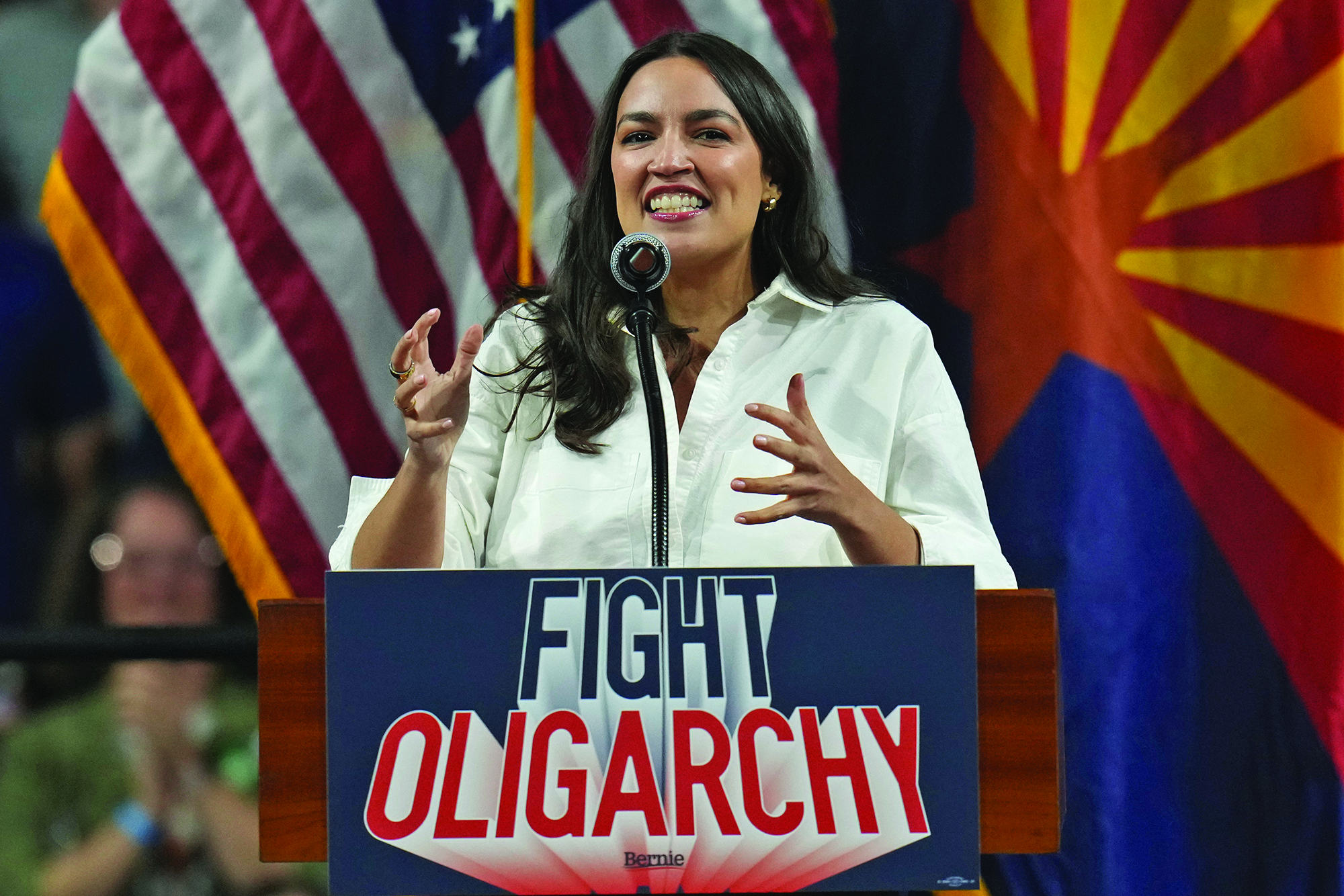
NEW YORK – A clear split is growing inside the Democratic Party. Establishment voices and many moderates are now taking direct aim at the progressive wing led by Rep. Alexandria Ocasio-Cortez (AOC).
Party insiders, donor networks, and policy groups say far-left messaging turns off swing voters and puts future elections at risk. That argument got louder at a recent gathering of top Democrats in South Carolina, where speakers urged the party to step away from what they called “toxic” progressive positions.
At the center of the clash is a familiar complaint. Moderates say the Progressive Squad, including AOC, Ilhan Omar, Rashida Tlaib, and Ayanna Pressley, makes Democrats harder to sell in battleground states.
With 2028 already shaping strategy, many in the party’s middle want to limit the Squad’s influence. This piece breaks down how the feud grew, who is driving it, and what it could mean for Democrats next.
How the Progressive Squad Rose, and Why It Matters
The Progressive Squad became a national story in 2018. That year, AOC shocked the party by beating a long-time incumbent in a New York primary. Soon after, Omar, Tlaib, and Pressley joined her as a highly visible bloc. Together, they backed big ideas like the Green New Deal, Medicare for All, and defunding the police. They also framed themselves as outsiders pushing back on corporate power and party leadership.
- Where they’ve had wins: Over time, the Squad helped pull the party conversation back. Their priorities showed up in parts of Biden’s Build Back Better push and in Harris’s economic messaging. In addition, their focus on climate and racial justice has fired up many younger voters and voters of color.
- Why some Democrats blame them: Moderates argue that the same rhetoric can push away suburban and working-class voters. After 2024 losses, some party voices pointed to the left as a reason Democrats struggled in key places.
At first, leaders like Nancy Pelosi brushed off the group’s reach. Pelosi once described them as “four people and that’s how many votes they got.” Even so, the Squad became more prominent over time. Still, recent results have exposed weak spots. Primary defeats for allies like Cori Bush and Jamaal Bowman also suggest the movement can be beaten when money and messaging line up against it.
Establishment Democrats Raise the Stakes
Now, criticism is no longer vague. More insiders are calling out progressives directly, and AOC sits at the top of the target list. Groups such as Third Way and the Progressive Policy Institute have put out reports saying “far-left” stances on immigration, energy, and identity politics hurt Democrats at the ballot box. Meanwhile, major donors, including those tied to Wall Street and Silicon Valley, are shifting support toward more moderate candidates.
- What polling is being used to argue: Some surveys show Democratic numbers drop in swing areas when voters link the party to progressive branding. A 2025 poll from the Democratic Leadership Council, for example, found 60% of independents viewed the Squad’s agenda as “too extreme,” and critics say that could cost seats in the 2026 midterms.
- How donors are reacting: Some high-profile donors have signaled they may pull back from candidates who echo Squad-style proposals. Reid Hoffman, for instance, has said he’ll hold support from candidates who endorse certain Squad-backed efforts, putting “electability” ahead of ideology.
That mood came into sharper focus at the South Carolina Democratic Strategy Summit in early 2026. More than 200 party leaders attended the meeting, which the Democratic National Committee hosted. The agenda centered on rebuilding after recent setbacks. Even so, the loudest message was simple: don’t let the party get tagged with “toxic far-left positions.” Speakers also singled out Bernie Sanders and AOC as symbols of what they want to avoid.
The South Carolina Summit Becomes a Flashpoint
The Charleston gathering became a moment where the party fight felt official. Governors, senators, consultants, and strategists met to map out the next few cycles. Moderates held the microphone most of the time, and they stressed center-left approaches on the economy, immigration, and national security.
- Comments shared at the summit:
- A senior DNC official said, “We can’t let the extremes define us. Positions like those from AOC on defunding ICE or aggressive climate mandates are scaring away voters we need.”
- Gov. Gavin Newsom, often mentioned as a 2028 contender, said, “The party must return to pragmatic progressivism, not radical overhauls that alienate the middle.”
- A think tank representative added, “Polling shows the progressive wing is a liability in purple districts. For 2028, we need to prioritize unity over division.”
Beyond speeches, attendees discussed tactics to isolate the progressive wing. Ideas included shifting resources away from Squad-endorsed candidates and helping moderates in primaries. The tone matched earlier warnings from figures like Elaine Kamarck, who raised concerns in 2025 about whether Democrats were seen as “too liberal.”
The Moderate Playbook for 2028: Limit the Left’s Reach
With 2028 on the horizon, many establishment Democrats are working on a strategy to reduce progressive power inside the party. The plan shows up in several areas:
- Primary pressure: Backing moderate challengers against Squad members, even in safe Democratic seats. Groups like the New Democrat Coalition are looking for recruits.
- Platform shifts: Pushing a party message that avoids sweeping progressive demands. Instead, they want to focus on “kitchen table” issues such as inflation and health care costs.
- Media framing: Feeding stories to major outlets that paint progressive leaders as extreme or divisive. In turn, those stories often place AOC at the center.
- Bigger coalitions: Reaching out to independents and center-right Republicans. Supporters point to cross-party coalitions, including partnerships that stretch from the Squad to Liz Cheney.
Progressives say this approach risks breaking the base. Leaders like Pramila Jayapal warn that running as “Republican light” won’t work. They argue Democrats win when they offer a clear contrast.
AOC and the Squad Push Back
AOC has responded aggressively. In interviews and online, she has defended the progressive agenda as a direct answer to inequality and the climate crisis.
- AOC’s message: “The establishment is scared because we’re fighting for working people, not corporations. This war on progressives is a war on the future of the party.”
- What the Squad is doing next: The group is leaning harder on grassroots organizing. Justice Democrats has also supported new challengers such as Donavan McKinney for 2026. In addition, progressives have joined Bernie Sanders on the “Fighting Oligarchy Tour,” which has drawn big crowds.
Even after some setbacks, AOC still raises serious money. Reports say she brought in $9.6 million in Q1 2026, which signals a strong donor base. At the same time, internal strain has shown up through staff shakeups and pressure to work more closely with party leadership. Those cross-currents make the next phase harder to predict.
What This Fight Means for Democrats as a Party
The clash is about more than personalities. It’s also about what the party wants to be. Moderates worry the party looks too far left. Progressives argue the party fails when it plays it safe. Nina Turner and others say the establishment is smearing the left, including over issues like Palestine.
Several outcomes are possible:
- A stronger centrist push could make Democrats feel safer in swing districts, but it could also limit bold policy ideas.
- If the feud keeps growing, Democrats could enter 2026 and 2028 weakened and distracted.
- A renewed progressive surge might energize core voters, but it could also create problems with independents.
Some analysts expect fewer progressive insurgents in the coming cycles, with the argument that “there won’t be another AOC.” Still, Bernie Sanders and others keep making the same point. Without major change, many voters may look elsewhere.
From Newcomers to Targets: The Squad’s Changing Role
The Squad’s story looks a lot like other left-wing waves in American politics. In the 2010s, many Democrats treated the movement as the party’s future. Now, critics often use it as a catch-all explanation for losses. Books such as The Squad: AOC and the Hope of a Political Revolution describe the strain of trying to stay anti-establishment while operating inside government.
Online politics adds fuel. Social media posts and viral clips frame the situation as “Democrats Just DECLARED WAR on AOC,” which keeps the drama in the spotlight. Commentators like Glenn Greenwald also highlight party attacks on third-party efforts, and they connect those fights to how progressives get treated inside the party.
What Think Tanks and Analysts Are Saying
Policy groups and commentators are driving much of the argument. The Liberal Patriot has suggested AOC and Sanders reflect different moments, and it claims AOC’s problems come from symbolic politics that don’t translate well in swing areas. Dissent Magazine has pointed to another tension, saying the Squad’s shift from pure opposition to compromise has split parts of the left.
- Predictions and warnings:
- Elaine Kamarck has argued Democrats need to figure out whether voters see them as too liberal or not bold enough.
- Matthew Yglesias has said centrist Democrats need real change, not reflexive loyalty to party leadership.
Voters and Polls Show a Split Audience
Public opinion looks mixed. Many younger Democrats still like progressive ideas. At the same time, older voters and moderates tend to prefer a more cautious approach. A 2025 NPR discussion on the future of progressives highlighted the same arc, a fast rise, followed by a tougher stretch.
In states like Pennsylvania and Michigan, some data points suggest that linking Democrats closely to AOC can hurt support with key groups. For many party strategists, that link is a major reason the pushback has grown louder.
The Road to 2028: Unity, or a Longer Fight
As 2028 gets closer, the party has to choose a path. Moderates want to contain AOC’s influence through efforts like the ’28 Mission. Meanwhile, progressives are countering with endorsements, organizing, and tours, and they keep arguing that bold action is the only winning message.
Either way, the result could reshape the party. If moderates win this internal battle, Democrats may shift closer to the center. If progressives hold their ground, the conflict may keep running through every primary and platform fight.
The party’s move against AOC and the Progressive Squad shows a deep divide that isn’t going away soon. Establishment Democrats see the left as a risk to electability. Progressives see moderation as surrender. After the South Carolina summit, both sides have drawn clearer lines for 2026 and beyond.
Related News:
Top Democrats Abandon Zohran Mamdani as His Radical Plan Backfires
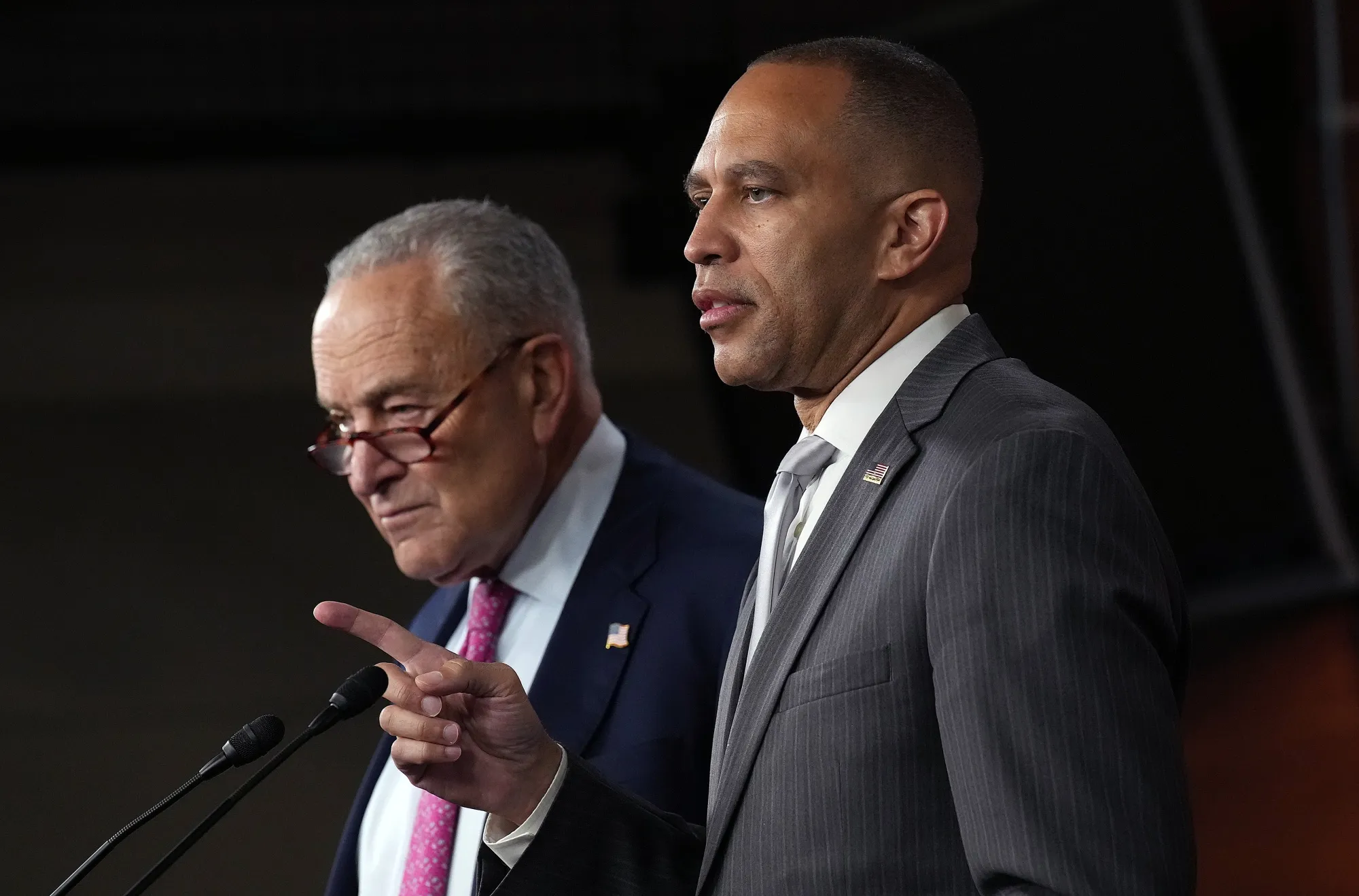
WASHINGTON, D.C. – After recent election losses and continued clashes with the Trump administration, a loud group of progressive Democrats has turned up its criticism of House Minority Leader Hakeem Jeffries (D-N.Y.).
These critics say Jeffries isn’t forceful enough when confronting Republicans, and they argue he doesn’t fight hard for big progressive goals. As a result, talk of leadership challenges and primary threats has grown, and it’s putting the party’s internal divides in the spotlight.
Many on the left call Jeffries an ineffective opposition leader. They point to what they see as caution on issues such as immigration enforcement, foreign policy, and economic inequality. At the same time, polls and grassroots chatter suggest broader frustration, with some Democrats labeling party leadership as “weak” or “ineffective” after 2024.
Top Complaints Coming From Progressives
- Seen as too soft in fights with Republicans: Progressives cite Jeffries’ comments that Democrats have “no leverage” in some congressional battles. For activists pushing constant pressure on Trump-era policies, that message lands badly.
- Not progressive enough on major policy: Critics say he favors a centrist, donor-friendly approach over sweeping plans. They often point to demands like defunding or abolishing ICE, tougher climate policy, and wealth redistribution.
- Too close to party power players: Some progressives argue Jeffries aligns with establishment interests, including groups like AIPAC and moderate donors, which they say pushes the left flank away.
Because of these concerns, some activists and coalitions have openly urged Jeffries and Senate Minority Leader Chuck Schumer to step aside. They want leaders they believe will oppose “runaway militarism” and challenge conservative policy more directly.
Where AOC and “The Squad” Fit In
Alexandria Ocasio-Cortez, along with “The Squad,” including Reps. Ilhan Omar (D-Minn.) and Ayanna Pressley (D-Mass.) remain a symbol of the party’s progressive drive. Since her 2018 upset win over an establishment Democrat, AOC has stayed at the center of calls for bolder action.
Still, even though AOC has criticized party leaders on issues like government funding and immigration, she has publicly avoided backing a direct push to unseat Jeffries. In late 2025, after New York City Council member Chi Ossé filed paperwork to primary Jeffries in 2026, AOC said it was “not a good idea right now.” She stressed unity going into the midterms. That position upset some farther-left voices, who accused her of shielding the establishment even though she built her own image as an insurgent.
Meanwhile, other Squad members and allied progressives have pressed harder for changes, including calls to abolish ICE and to take a tougher line against foreign intervention. Their messaging adds to the argument that party leaders don’t match the base’s priorities.
Claims That Socialists Are Pulling Democrats Left
On the other side, critics on the right, and some moderates, say progressive and socialist-leaning groups have “hijacked” the Democratic Party. They point to the rise of self-described democratic socialists, including New York Mayor-elect Zohran Mamdani, and the visibility of figures linked to the Democratic Socialists of America (DSA).
- The Squad’s push for Medicare for All, the Green New Deal, and stronger critiques of capitalism has moved more debate to the left.
- Big wins, including Mamdani’s mayoral victory, are seen by supporters as proof that younger activists are gaining control.
- In contrast, establishment Democrats warn the party could lose swing voters, especially in competitive districts.
Even so, progressives often bring energy and crowds, including on tours with Bernie Sanders. Yet their demands for strict ideological alignment often collide with leaders who focus on building majorities.
What This Means for Democrats Going Forward
The backlash against Jeffries shows a party still wrestling with its identity after setbacks. Polling and party talk suggest Democrats remain split. Some want sharper ideological lines, while others care most about winning elections. Progressives argue the party needs a bold contrast with Trump, while moderates warn that public infighting could help Republicans in 2026.
As House Democrats look toward a possible majority shift, the argument over leadership keeps growing. For now, the tension between the progressive wing and the centrist core continues, and neither side shows signs of backing down.
Related News:
CNN Warns 58% of Americans Say Democrats Have Moved Too Far Left
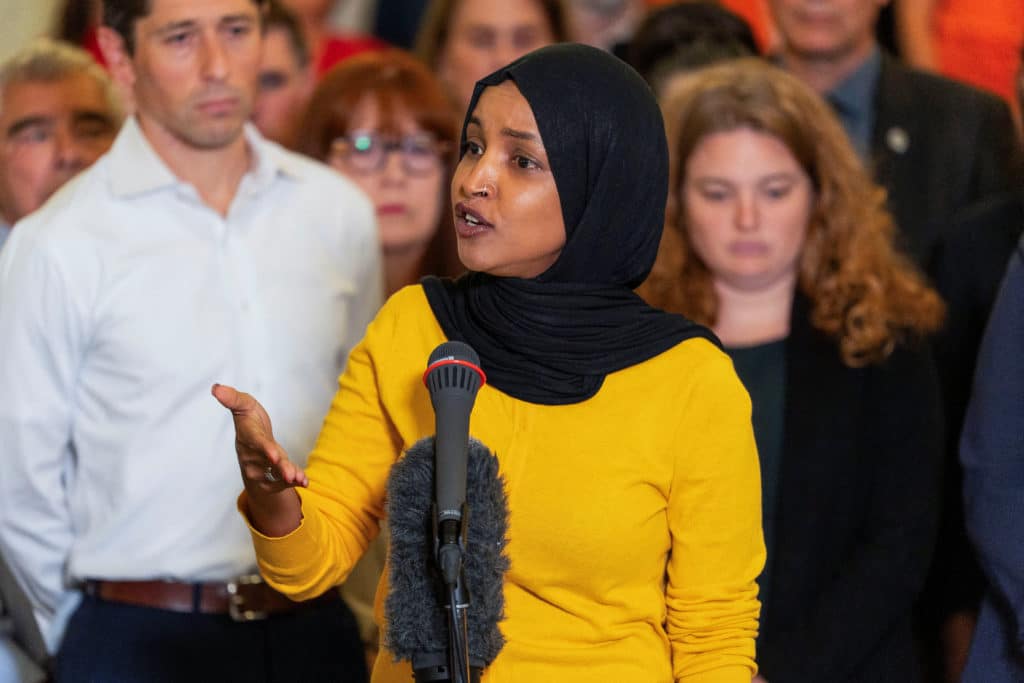
MINNESOTA – Rep. Ilhan Omar (D-Minn.), a well-known progressive and member of the “Squad,” is running into stronger resistance as she seeks another term in Minnesota’s 5th Congressional District. The Minneapolis-area seat is safely Democratic, but many voters say they’re unhappy with her focus and results. As a result, the Democratic primary on August 11, 2026, is shaping up to be a real fight.
Omar has represented the district since 2019. She has outlasted past primary threats, yet this time she faces louder criticism from constituents, more pushback within the party, and fresh attention on her family’s finances.
A Primary Opponent Builds Momentum
Latonya Reeves has become the main challenger. Reeves is a labor leader, a DFL activist, and a Democratic National Committee member from Minneapolis. She launched her campaign in late 2025 and has pitched herself as a new option centered on district needs, including labor rights, economic fairness, and a more practical style of governing.
- Reeves has pointed to complaints that Omar spends too much time on national battles and not enough on local problems.
- At the same time, other possible candidates have surfaced, including Julie T. Le, a former federal prosecutor who has criticized immigration enforcement.
- Even though earlier chatter suggested strong contenders might stay out, filings tracked by Ballotpedia show Reeves as the key name challenging Omar so far.
Because the district leans heavily Democratic (Cook PVI: D+32), the primary will almost certainly decide who holds the seat. Omar has shown some weakness before. In 2022, for example, she won a close race against former Minneapolis City Council member Don Samuels. She later won more comfortably, but that near miss still stands out.
Much of the voter frustration comes back to a few hot-button issues:
- Public safety worries in Minneapolis after years of tense debate over policing changes.
- Anger from some residents over Omar’s high-profile foreign policy positions, especially her criticism of U.S. support for Israel, which they say pulls attention from home.
- Concern among moderates that her brand of progressive politics pushes away voters needed for a stronger influence in Congress.
James Carville Tells Omar to Leave the Democratic Party
Meanwhile, Democratic strategist James Carville has added to the drama by urging Omar to exit the party. In recent interviews and podcast appearances, Carville argued that Omar’s style and messaging hurt Democrats with key voting groups. He called her approach “mathematically insane” for winning elections.
“Lady, why don’t you just get out of the Democratic Party? Honestly, start your own movement,” Carville said, suggesting she align openly with groups such as the Democratic Socialists of America instead of staying under the Democratic banner.
Carville’s comments echo a wider worry among some Democrats. They fear that well-known progressive figures can turn off moderate and working-class voters, including white men who make up a large share of the electorate. He also warned that chasing ideological purity can cost the party seats it should be able to win.
Omar hasn’t answered Carville’s newest remarks directly. Still, she has long defended her positions as part of a push for justice and equal treatment.
Federal and Congressional Interest in a Surge in Reported Wealth
In addition to the political pressure, Omar and her husband, Tim Mynett, face questions from federal authorities and congressional investigators over a sharp jump in reported family wealth.
Omar’s financial disclosures show assets tied to Mynett, including stakes in a California winery (eStCru LLC) and an investment firm (Rose Lake Capital LLC). Those holdings climbed from modest valuations in 2023 to figures that could reach as high as $30 million in 2024.
Several threads are now in play:
- House Oversight Committee Chairman James Comer (R-Ky.) opened a probe in early 2026, seeking records from Mynett and raising concerns about the rapid growth, including possible influence peddling or undisclosed sources of income.
- Reports also say the Department of Justice is reviewing the matter. President Trump has publicly claimed both Congress and federal agencies are involved.
- A conservative watchdog group has asked for an ethics review, arguing Omar’s disclosures could mislead.
- Omar’s office has brushed off the scrutiny as partisan attacks, saying she has been transparent and has done nothing wrong.
So far, no charges have been filed, and the inquiries continue. Critics say the timing adds to public unease. Supporters, on the other hand, see it as a political effort by Republicans to weaken a prominent Democrat.
What to Watch in 2026
Even with these challenges, Omar starts with major advantages. She has strong name recognition, loyal supporters on the left, and backing from key allies. Also, the district’s diverse, urban, heavily Democratic makeup has often worked in her favor.
Still, the mix of a serious primary challenger, loud criticism from inside the party, and ongoing money questions could make this her toughest re-election push yet. With the filing deadline set for June 2, 2026, Minnesota’s 5th District is becoming a major test of how much staying power progressive Democrats have inside the party.


Democrat Party Insiders Turning on AOC Move Against the Progressive Squad

CNN’s Fareed Zakaria Says Democrat Mayors Are “Destroying Their Own Cities”

Top Democrats Abandon Zohran Mamdani as His Radical Plan Backfires

Progressive Democrats Step Up Calls to Replace Hakeem Jeffries

Panic Engulfs CNN as Ellison’s Paramount Skydance Wins Takeover Bid

Iran in Turmoil as New Supreme Leader Mojtaba Khamenei Most Likely Dead

Rep. Ilhan Omar Faces Heat as Minnesota Voters Seek Change

Trump Announces U.S. Forces Totally Obliterated of Iran’s Kharg Island

Democrat Heavyweight James Carville Urges Ilhan Omar to Leave the Party

CNN Host Abby Phillip Forced to Apologize Over New York Attack Claims

Thai Billionaire Charged With Lese Majeste Over Facebook Post

Russia Bans Facebook, Meta Says It’ll Do “Everything” To Restore Service

Facebook Login Feature – Clash of Clans

4 Things you can do to take your Facebook Lead Generation to the Next Level

Zuckerberg to Allow Violent Speech on Russia After Facebook Blocked

Facebook Loses $200 Billion as Users Shift to TikTok

Downloading Facebook Videos Anonymously with High Quality Video through Snapsave app

The Best Site to Buy Real Facebook Likes and Followers in 2022

Chinese Man Arrested for Using Facebook to Dupe Cryptocurrency Investor

Google and Facebook Under Huge Pressure Over User Privacy

Mosque Set Ablaze in Iran a Citizens Revolt Against the Islamic Regime

AOC Accuses Jessie Watters of Fox News of Sexualizing and Harassing Her

JD Vance Exposes Walz’s Fraud and CNN’s Lies in White House Presser

Milestone Card Credit: How the Milestone MasterCard Can Transform Credit
-

 Crime3 months ago
YouTuber Nick Shirley Exposes BILLIONS of Somali Fraud, Video Goes VIRAL
-

 China2 months ago
China-Based Billionaire Singham Allegedly Funding America’s Radical Left
-

 Politics3 months ago
Ilhan Omar Faces Renewed Firestorm Over Resurfaced Video
-

 Politics1 month ago
CNN Delivers Stark Reality Check to Democrats Over Voter ID
-

 Business3 months ago
Tech Giant Oracle Abandons California After 43 Years
-

 Midterm Elections2 months ago
2026 Midterms Guide: Candidates, Key Issues, and Battleground States
-

 Crime3 months ago
Minnesota Fraud Scandal EXPANDS, $10 Billion in Fraudulent Payments
-

 Politics3 months ago
Accusations Fly Over Alleged Zionist Takeover of (TPUSA) Turning Point USA