

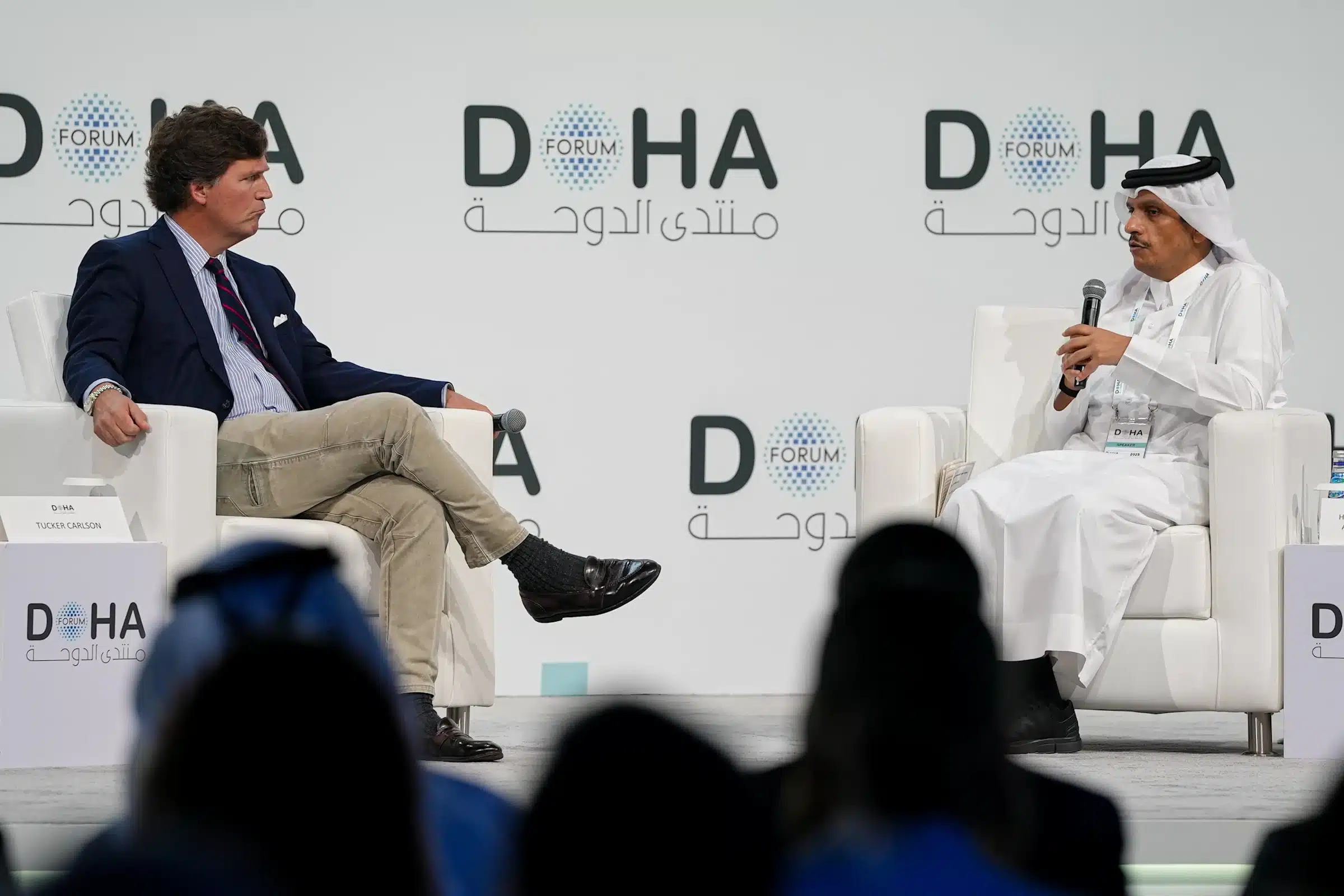


DOHA, QATAR – At the 2025 Doha Forum, U.S. commentator Tucker Carlson sat down with Qatari Prime Minister and Foreign Minister Sheikh Mohammed bin Abdulrahman Al Thani for a rare, blunt conversation about Middle East politics, the Gaza war, and the surprising role of Donald Trump.
The interview, held in front of a packed audience, focused on the Gaza conflict, Qatar’s disputed role as a mediator with Hamas, and the political shockwave from an Israeli strike on Qatari soil.
Carlson opened by pressing Sheikh Al Thani on the September 9 Israeli airstrike in Doha. The attack targeted Hamas officials but also killed a Qatari serviceman. The Prime Minister called the strike “unprecedented” and “not acceptable.” It also threatened fragile ceasefire talks and hostage negotiations tied to Gaza.
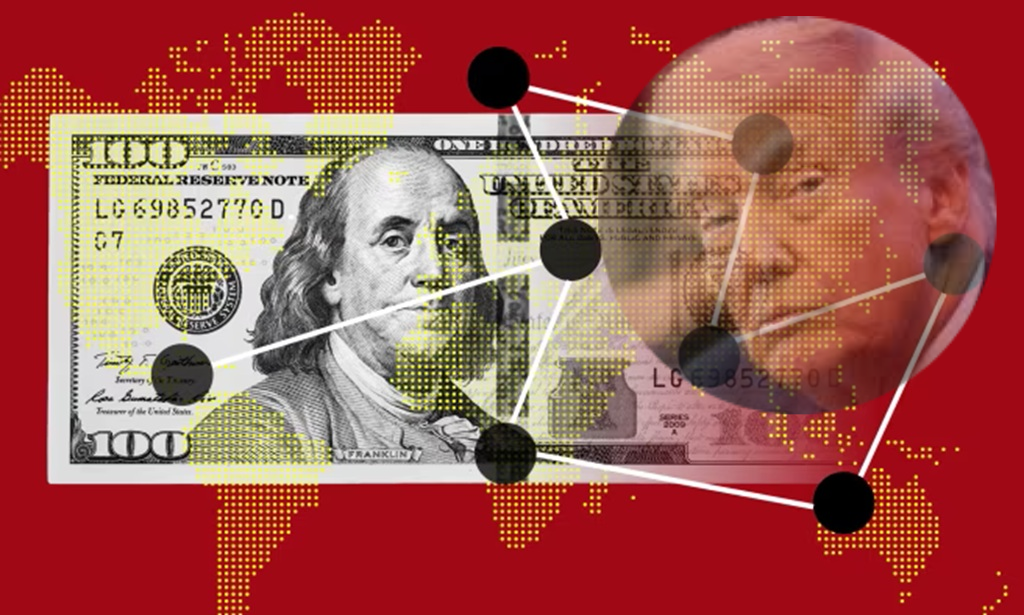
That incident set the stage for the interview’s most revealing point: the role of President Donald Trump in pushing Israeli Prime Minister Benjamin Netanyahu to formally apologize to Qatar.
The Unthinkable: Trump Pushes Netanyahu to Say Sorry
The fallout from the Israeli strike in Doha marked a major turning point in U.S.-Israel relations. For decades, Washington had backed Israel almost without question, often protecting it from serious public criticism, especially when Arab states were involved. Many observers said that no previous American president had taken the side of an Arab country against Israel in the way Trump did after the Doha attack.
The strike violated the territory of a key U.S. ally that hosts the largest American military base in the region, Al Udeid Air Base. Reports at the time said Netanyahu ordered the operation without telling the Trump White House.
The U.S. administration saw the move as a direct threat to regional stability and to Qatar’s role as the main channel for a Gaza ceasefire.
At a White House meeting, Trump pressed Netanyahu to call Sheikh Mohammed bin Abdulrahman Al Thani and offer a formal apology. According to the official readout, Netanyahu “expressed his deep regret that Israel’s missile strike against Hamas targets in Qatar unintentionally killed a Qatari serviceman,” and “affirmed that Israel will not conduct such an attack again in the future.”
In doing so, Israel admitted it had violated Qatar’s sovereignty.
This episode, in which a U.S. president pushed an Israeli leader to apologize to an Arab government for a military strike, was a sharp break from past practice. It showed that Trump’s foreign policy, for all its controversy, drew a firm “red line” when an ally’s actions risked U.S. interests, especially efforts to calm the Middle East.
Qatar’s Careful Response and Quiet Gratitude
Speaking with Tucker Carlson, Sheikh Mohammed bin Abdulrahman Al Thani confirmed the strong intervention from Trump after the strike. Calm and diplomatic as usual, he still made clear how serious the situation had been.
He said President Trump was “very clear from the beginning” after the attack, and that Trump expressed “frustration” and “disappointment” over what Israel had done. The Prime Minister stressed that Trump understood how sensitive Qatar’s mediation role was and saw the strike as a move to “sabotage the relations between Qatar and the United States.”
Sheikh Al Thani’s comments hinted at quiet satisfaction that Qatar’s steady investment in ties with Washington, across different U.S. administrations, had paid off. He framed the apology as a necessary step for Qatar to keep acting as the one trusted mediator in the Gaza talks.
After the apology, Qatar issued a statement that repeated its “refusal to tolerate violations of its sovereignty” while also affirming its “readiness to continue its involvement in efforts to end the war.”
Al Thani avoided bragging about the outcome, but his tone made clear that Trump’s move was a rare diplomatic win for Doha. It helped cement Qatar’s position not only as a major financial player, but as a state whose security and political value the U.S. was willing to protect, even when that meant publicly correcting Israel.
Looking Ahead: A Shifting Regional Picture
The Doha Forum exchange highlighted how tense and fast-changing the regional picture has become. Sheikh Al Thani firmly rejected claims that Qatar funds Hamas. He said Qatar’s engagement with the group over the last decade came at the request of the United States, to help arrange ceasefires and deliver aid.
He also sent a clear message about Gaza’s future: “We are not the ones who are going to write the check to rebuild what others destroy.” Qatar, he said, would keep sending humanitarian relief, but would not pay on its own to rebuild what was destroyed by Israeli military operations. That was a signal that Qatar wants wider international responsibility for Gaza’s reconstruction.
The “Trump apology moment” will likely be studied for years. It shows that even long-standing alliances can shift when power, interests, and timing change. For now, it stands as a rare example of the United States siding so openly with an Arab state over a specific Israeli action. That choice has reset what many in the region expect from Washington.