
Business
Elon Musk Builds a $1.25 Trillion Giant as SpaceX Buys xAI in Landmark Merger
The billionaire ties together rockets and AI, forming the highest-valued private company, with an IPO now front and center


HUSTON, Texas – Elon Musk said Monday that SpaceX is acquiring his AI startup, xAI, in an all-stock deal that puts the combined company at $1.25 trillion. The announcement rippled across tech and finance, since it creates what appears to be the most valuable private company ever. Musk called it “the most ambitious, vertically-integrated innovation engine on (and off) Earth.”
Based on the terms shared, the merger pegs SpaceX at about $1 trillion, up from recent secondary market estimates near $800 billion. It values xAI at $250 billion, a bit above its January 2026 funding round, when it raised $20 billion. xAI investors will receive SpaceX shares through an exchange ratio that converts their holdings into stock of the new combined company. Reports citing banking materials and people familiar with the documents put the implied price at roughly $527 per share.
By size alone, this is the biggest merger ever reported. It lands just months after xAI’s rapid rise, driven by its Grok chatbot lineup and big spending on compute, including the Colossus supercluster. SpaceX, at the same time, continues to lead commercial space with reusable Falcon rockets, ongoing Starship work, and the growing Starlink satellite internet network, now used by millions worldwide.
A deliberate link between AI and space
In a memo posted to SpaceX’s website, Musk framed the acquisition as a logical step for two companies he already treats as connected. “This marks not just the next chapter, but the next book in SpaceX and xAI’s mission: scaling to make a sentient sun to understand the Universe and extend the light of consciousness to the stars!” he wrote. He also pointed to practical overlap, including using Starlink for low-latency data movement that can support AI training and inference.
The merger also puts fresh attention on Musk’s long-running idea of data centers in orbit. With xAI’s model work combined with SpaceX launch capacity and space hardware, the new company could place large compute systems in space. Supporters say that could help with Earth-based limits like power use and land needs for giant AI clusters. Analysts have floated the idea that this approach could strengthen Musk’s hand versus rivals such as OpenAI, Google DeepMind, and Anthropic.
This deal also follows earlier consolidation across Musk’s companies. In 2025, xAI bought the social platform X (formerly Twitter) in a separate stock swap, giving xAI access to a huge stream of real-time posts and conversations that can feed Grok training. With SpaceX now taking in xAI, the structure pulls rockets, satellites, social media, and advanced AI into one company. Some watchers have started calling it the “Muskonomy,” now fully assembled.
Market buzz and worries from some investors
The reaction was quick. On Tuesday, shares of public space-related firms moved higher, as investors priced in more momentum for the sector. Still, the news didn’t land the same way for everyone. Some SpaceX minority holders raised concerns that SpaceX may be rescuing a high-spend AI company. Reports say xAI has been burning about $1 billion per month. Those critics also point to dilution, since SpaceX is issuing stock to complete the purchase, right before a possible public listing.
Multiple reports say SpaceX is preparing for an initial public offering as soon as June 2026. If that happens, the post-merger company could price above $1.25 trillion, with talk reaching $1.5 trillion or higher. A listing on that scale would rank among the largest IPOs ever and put the company in the same market-cap conversation as Apple, Microsoft, and Nvidia.
Musk’s personal net worth could climb sharply on paper as well. He reportedly holds about 43% of SpaceX, which now includes xAI. That stake boosts his position as the value of the combined business rises, especially as Tesla’s market cap sits around $1.58 trillion. The SpaceX-xAI combination now looks like a serious challenger in the private-to-public storyline.
Big promises, big execution risk
The upside is clear, but so are the headaches. A company that spans space launch, satellite internet, AI models, and social media is likely to draw more regulatory attention. Expect closer review around competition, data access, and how much influence one owner has across several key industries.
There’s also the basic work of combining two intense cultures. xAI has scaled fast, powered by heavy spending on chips and data centers. SpaceX runs on tight engineering discipline and mission schedules. Bringing those priorities under one roof will test management, timelines, and focus.
Supporters see the deal as a direct expression of Musk’s long-term plan: use AI to speed up space progress, and use space infrastructure to push AI forward. As one industry insider put it, “If anyone can make space-based AI a reality, it’s the man who’s already revolutionized rockets and electric cars.”
Now that the merger is out in the open, attention turns to what comes next. If the IPO arrives this summer, it could reset expectations for how private giants enter public markets, and it could lock in Musk’s boldest corporate structure yet.
Related news:
Somali TikToker Threatens Elon Musk’s Life After Fraud Posts

NEW YORK — In a move that could redefine the future of urban commerce, New York City officials are moving forward with a sweeping legislative package aimed at dismantling the logistics and delivery framework that powers Amazon’s “Prime” business model.
The proposed “Fair Trade and Transit Act” seeks to limit the number of last-mile distribution centers within city limits and impose strict quotas on the volume of delivery vans permitted on residential streets.
In a swift response to the news, Amazon leadership announced that the company has already begun scouting locations in Northern New Jersey. The e-commerce titan signaled that if the ban takes effect, it will migrate its primary East Coast operations across the Hudson River, potentially taking thousands of jobs and billions in tax revenue with it.
The push for the ban stems from years of growing tension between city residents and the rapid expansion of e-commerce infrastructure. City Council members backing the bill argue that the current model—characterized by massive warehouses situated near residential neighborhoods—has created an unsustainable environment.
Key reasons cited for the legislative crackdown include:
- Traffic Congestion: Thousands of delivery vans enter city streets daily, contributing to gridlock and blocking bike lanes.
- Environmental Impact: High-frequency delivery routes are a major source of carbon emissions and noise pollution in the outer boroughs.
- Small Business Protection: Local leaders argue that the “instant delivery” model creates an unfair advantage that is slowly choking out local mom-and-pop shops.
- Public Safety: The rise in delivery traffic has been linked to an increase in pedestrian and cyclist accidents in areas surrounding “last-mile” hubs.
The NYC Department of Transportation has recently published data suggesting that truck traffic in residential zones has surged by nearly 40% since 2019, further fueling the fire for legislative change.
The Amazon New Jersey “Escape Hatch”
Amazon has not waited for the final vote to plan its next move. Within hours of the bill’s introduction, the company released a statement expressing “extreme disappointment” in the city’s leadership.
A spokesperson for the company confirmed that preliminary agreements are already being discussed with officials in Jersey City and Newark. New Jersey, which has long marketed itself as a logistics hub for the Northeast, appears ready to welcome the commerce giant.
“If New York City chooses to close its doors to modern commerce, we will find a home that understands the value of speed and convenience for its residents,” the company stated in a recent press release.
The shift to New Jersey would likely mean that while Amazon still services New York customers, it would do so from “mega-hubs” across the river. This would involve transporting goods via the Lincoln and Holland Tunnels or the George Washington Bridge, potentially worsening the very traffic issues NYC is trying to solve.
Impact on Workers and Consumers
The proposed ban has created a sharp divide among New Yorkers. Labor unions are concerned about the potential loss of warehouse jobs, while environmental activists are hailing the move as a victory for urban air quality.
For Consumers:
- End of Same-Day Delivery: A ban on local hubs would likely end the era of two-hour or same-day shipping for Manhattan and Brooklyn residents.
- Increased Fees: Shipping costs may rise as the company compensates for the logistical hurdles of crossing state lines for every delivery.
- Limited Inventory: Some larger items may no longer be available for fast delivery if local storage is banned.
For Workers:
- Job Migration: Approximately 15,000 warehouse jobs could be at risk of being relocated to New Jersey facilities.
- Union Struggles: The move might complicate ongoing efforts by the Amazon Labor Union to organize workers within the city.
The City Council is expected to vote on the final version of the bill next month. Mayor Eric Adams has expressed some hesitation, citing the potential loss of tax revenue, but the bill currently has enough support to override a potential veto.
If the ban passes, New York City will become the first major global metropolis to effectively outlaw the high-density warehouse model that has become the standard for 21st-century retail. For New Jersey, the situation presents a massive economic opportunity, though it brings its own set of infrastructure challenges.
As the “City That Never Sleeps” prepares for a future with fewer delivery vans, its residents are left wondering if the trade-off for quieter streets is worth the loss of convenience and economic activity.
Related News:
Mamdani Wants $229M From New York Employee Retirement Fund
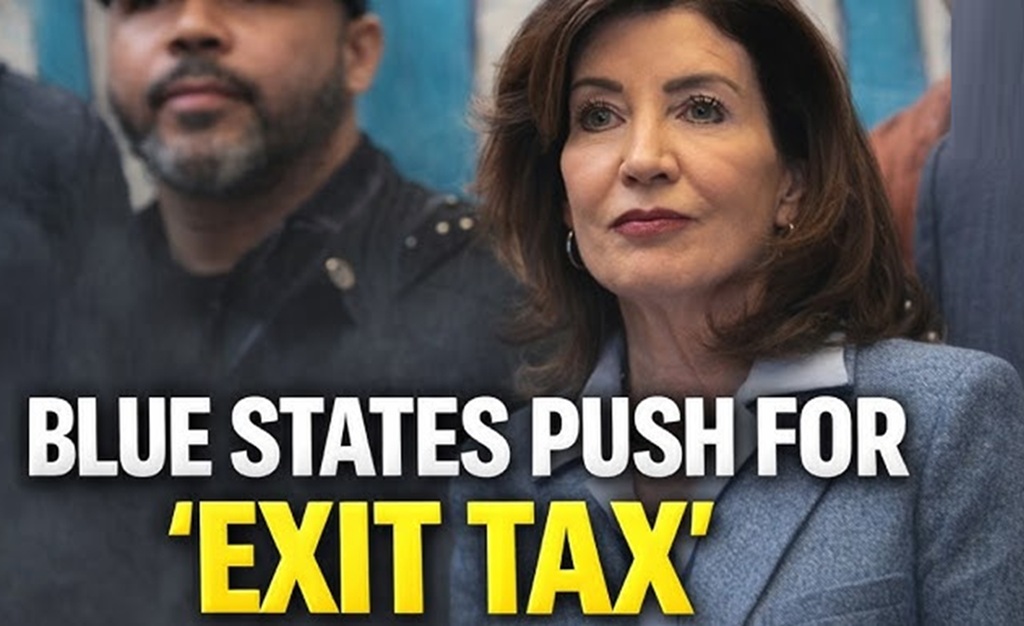
NEW YORK – As the domestic migration map of the United States continues to shift toward the Sun Belt, several high-tax Democratic strongholds are considering a controversial legislative tool to protect their balance sheets: the Exit Tax.
Often framed as a “wealth preservation fee” or “departure tax,” these proposals aim to capture a final portion of capital gains or accumulated wealth from high-net-worth individuals who relocate to lower-tax jurisdictions like Florida or Texas.
The logic behind the push is rooted in fiscal necessity. States like California, New York, and Illinois rely heavily on a small percentage of ultra-wealthy residents to fund public infrastructure, social programs, and education.
When a single billionaire leaves, the resulting “tax gap” can create a multi-million dollar hole in the state budget overnight. To counter this, lawmakers are looking for ways to ensure that wealth generated within their borders contributes to the state’s coffers one last time.
Understanding the Mechanics of the Exit Tax
While the term “exit tax” is often used as a catch-all, the legislative reality is more nuanced. These proposals typically target unrealized capital gains—wealth that exists on paper (such as stocks or real estate appreciation) but hasn’t been “cashed out” yet.
- The Mark-to-Market Approach: If a resident leaves, the state treats their assets as if they were sold on the day they moved. The resident is then taxed on the “gain” accrued while they lived in the state.
- The “Shadow” Period: Some proposals suggest a trailing tax, where the state claims a right to a portion of income for several years after the resident has established domicile elsewhere.
- Thresholds for Targeting: Most bills are designed to spare the middle class, focusing instead on individuals with a net worth exceeding $30 million or those with annual incomes over a specific high-tier threshold.
Why Now? The Drivers of the “Wealth Defense” Strategy
The urgency surrounding exit taxes is fueled by three primary factors:
- Remote Work Revolution: The post-pandemic shift to remote work decoupled high-paying jobs from physical office locations. Tech executives and finance professionals are no longer tethered to Silicon Valley or Wall Street, making relocation a viable lifestyle choice.
- The “Tax Flight” Narrative: Data from the U.S. Census Bureau consistently shows a net migration loss in states with high state income taxes. Proponents of exit taxes argue that this isn’t just a move; it’s “tax arbitrage.”
- Budget Deficits: Despite federal pandemic aid, many blue states face long-term unfunded pension liabilities and rising costs of living. An exit tax is seen as a way to stabilize the “tax base” during a period of demographic volatility.
The Legal and Economic Backlash
Critics of the exit tax argue that such measures are not only economically damaging but potentially unconstitutional. Legal scholars point to the Commerce Clause and the Right to Travel, suggesting that penalizing a citizen for moving between states interferes with fundamental American freedoms.
Common Arguments Against the Exit Tax:
- Double Taxation: Residents may find themselves paying taxes to their old state on gains that are eventually taxed by their new state or the federal government.
- Economic Stagnation: Critics argue that the mere threat of an exit tax discourages wealthy entrepreneurs from starting businesses in those states in the first place.
- Capital Flight: Instead of preventing departures, the policy might accelerate them, as residents move quickly to beat the implementation of new laws.
A Look at the State-Level Battlegrounds
California: The Wealth Tax Pioneer
California has been at the forefront of the wealth tax conversation. Proposed legislation, such as Assembly Bill 259, sought to implement a tax on the worldwide net worth of extremely wealthy residents, including a “exit” provision that would follow them for up to a decade. While it has faced significant hurdles in the legislature, the conversation remains a central pillar of the state’s progressive caucus.
New York: Protecting the Financial Capital
In New York, where the top 1% of earners pay approximately 40% of the state’s income tax, the stakes are incredibly high. Lawmakers have debated “mark-to-market” taxes that would apply to billionaires regardless of whether they sell their assets. Opponents warn that New York City’s status as a global financial hub is at risk if its wealthiest citizens feel “trapped” by the tax code.
Illinois and Washington State
Illinois, grappling with deep-seated pension debt, has seen various “privilege tax” proposals. Meanwhile, Washington State—traditionally a no-income-tax haven—recently implemented a capital gains tax that many see as a precursor to more aggressive wealth-tracking measures.
The National Implications: A Fragmented Union?
The rise of the exit tax reflects a deepening divide in how American states view their economic role. Red states are increasingly marketing themselves as “customer-friendly” environments with low or zero income taxes. Blue states, conversely, are leaning into a model of “social investment,” where high taxes fund robust public services.
If exit taxes become a reality, we may see a “Berlin Wall of Tax” emerge, where the cost of moving becomes a significant financial transaction. This could lead to:
- Increased Litigation: A wave of Supreme Court cases testing the limits of state taxing power.
- Sophisticated Tax Planning: Wealthy individuals using trusts and offshore accounts to shield assets before they even consider a move.
- Political Realignment: As the wealthy depart, the political leanings of “destination states” like Florida may shift, while “origin states” may face even more pressure to raise taxes on the remaining middle class to cover the shortfall.
Summary of Key Stakeholder Views
| Stakeholder | Primary Perspective |
|---|---|
| Progressive Lawmakers | Wealth created using a state’s resources should benefit that state’s future. |
| Wealthy Taxpayers | Exit taxes are a form of “economic kidnapping” that penalizes success. |
| Economists | These taxes may provide a short-term windfall but risk long-term “brain drain” and lost investment. |
| Red State Governors | Exit taxes are a “gift” that makes low-tax states even more attractive to business leaders. |
Conclusion: The Future of the American Resident
The debate over the exit tax is more than a policy dispute; it is a battle over the definition of residency. Is a citizen a “customer” of a state, free to leave when the price of services becomes too high? Or are they “stakeholders” with an ongoing obligation to the community that helped foster their success?
As legislative sessions continue across the country, the eyes of the nation’s highest earners are fixed on the statehouses of Sacramento, Albany, and Springfield. For now, the “exit tax” remains a looming shadow over the U.S. tax landscape—a final bill that many hope never arrives in the mail.
Related News:
Republicans Gain Ground in California While Businesses Flee Blue States

The iconic ticking stopwatch of 60 Minutes has long symbolized the gold standard of American journalism. But this week, the sound echoing through the halls of the CBS Broadcast Center in New York feels less like a countdown to a broadcast and more like a countdown to a pink slip.
Following a series of brutal staff reductions across the network, insiders suggest that the next round of cuts will hit the “crown jewel” of CBS News. With a new leadership team at the helm and a mandate to slash costs, even the most legendary names in the business may no longer be safe.
A Network in Transition: The New CBS Reality
The media landscape in 2026 is unrecognizable compared to just a few years ago. Since Skydance Media acquired CBS parent company Paramount, the focus has shifted toward a leaner, “streaming-first” model.
Under the direction of Editor-in-Chief Bari Weiss, who took the reins in late 2025, the network has already undergone significant surgery. Just last month, CBS News shuttered its nearly century-old radio division, resulting in the loss of dozens of jobs. Now, the spotlight has turned toward the high salaries and prestige of the Sunday night flagship.
Why 60 Minutes is Now in the Crosshairs
For decades, 60 Minutes was considered untouchable. It remains one of the few profitable news programs on television, frequently ranking as the top-rated non-sports broadcast of the week. However, several factors are making it a target for the current restructuring:
- Sky-High Salaries: Veteran correspondents often command multi-million dollar annual contracts.
- The “Soft” Programming Debate: Sources suggest leadership wants to move away from “lifestyle” or “soft” segments in favor of leaner, harder-hitting investigative scoops.
- Production Costs: The show’s traditional model involves large teams and extensive travel, which clash with the new “labor efficiency” goals.
The Names on the “Chopping Block”
While CBS has not officially confirmed individual departures, rumors from within the West 57th Street offices suggest that major changes are coming as the 58th season wraps up this June.
Veteran Correspondents at Risk
Insiders have pointed to several high-profile names whose futures at the network appear uncertain:
- Scott Pelley: A staple of the broadcast for twenty years, Pelley is reportedly among those being looked at due to a salary estimated between $7 million and $8.5 million.
- Sharyn Alfonsi: Known for her versatility and hard-hitting reporting, Alfonsi’s contract is reportedly up for renewal, making her a “logical” target for cost-cutting measures.
- Lesley Stahl & Bill Whitaker: While both are legends in the field, there is growing speculation that the network may encourage “early retirement” for its most senior anchors to make way for a younger, lower-cost roster.
The Loss of Anderson Cooper
The program has already suffered a significant blow with the recent announcement that Anderson Cooper would not continue his role with 60 Minutes. While Cooper remains a titan at CNN, his departure from the CBS newsmagazine was seen by many as the first crack in the show’s formidable foundation.
The “Weiss Effect”: Reshaping the Newsroom
Bari Weiss’s tenure has been marked by a desire to “disrupt” the traditional newsroom culture. By bringing in contributors from her own digital media startup and focusing on a more aggressive investigative unit, she is effectively rebuilding the network’s DNA.
“The news business is changing radically, and we need to change along with it,” Weiss recently told staff in an internal memo. “That means some parts of our newsroom must get smaller to make room for the things we must build to remain competitive.”
This “building” process includes a heavier reliance on digital-first content and repurposing investigative stories across multiple platforms, such as the CBS Evening News and the network’s 24/7 streaming service.
What This Means for the Future of News
The potential gutting of 60 Minutes represents more than just a corporate downsizing; it signals a shift in how legacy media views prestige.
The Impact on Journalistic Integrity
Critics argue that by cutting veteran talent, CBS risks losing the institutional knowledge and “gravitas” that make 60 Minutes a trusted source.
- Experience: Younger, cheaper reporters may lack the deep sourcing required for complex international stories.
- Trust: The audience identifies 60 Minutes with its faces. Removing them could alienate the show’s loyal, older demographic.
The Rise of “Efficiency”
Conversely, supporters of the move argue that the “star system” in news is a relic of the past. In an era of viral clips and TikTok news summaries, paying $8 million for a single correspondent is increasingly difficult to justify to shareholders.
| Role | Estimated Salary Range | Potential Replacement Strategy |
|---|---|---|
| Lead Correspondent | $5M – $10M | Rotating pool of younger “multimedia” journalists |
| Executive Producer | $1M+ | Streamlined management shared across departments |
| Field Producer | $150k – $300k | Freelance or “one-man-band” digital creators |
Employee Unrest and Union Tension
The atmosphere inside CBS is described by many as “toxic” and “anxious.” The threat of layoffs led to a 24-hour walkout by writers and producers in San Francisco and New York last month. While a tentative contract agreement was reached on April 5, the deal does little to protect employees from “strategic restructuring” layoffs.
Staffers are reportedly “waiting for the other shoe to drop” in June. For the team at 60 Minutes, the coming months will determine if the stopwatch continues to tick or if the lights are finally dimming on a television institution.
As Paramount and Skydance look toward a potential $6 billion in cost savings following their merger, no department is truly safe. 60 Minutes has survived wars, scandals, and technological revolutions. Whether it can survive the current era of “lean” journalism remains to be seen.
One thing is certain: the broadcast that viewers tune into this fall will likely look—and sound—very different from the one they’ve known for the last half-century.
Trending News:
CBS Caught Making Deceptive EDIT to 60 Minutes Interview With Hegseth


China Upset Over Hormuz Blockade As Oils Supply-Line Cut

New York City Prepares to Ban Amazon’s Logistics Model

Breaking!! Eric Swalwell Resigns From Congress Amid Mounting Sex Allegations

Trump Warns China as Vance Leads Peace Talks with Iran

Blue States Now Weighing ‘Exit Tax’ on Fleeing Residents

Eric Swalwell Faces Explosive Rape Accusation From Former Staffer

Moon Mission Success: Artemis II Crew Splashes Down Safely in the Pacific

New Allegations Link Ilhan Omar to China-Backed NGO in CUBA

Trump Axes Starmer’s Chagos Deal: Calls It “An Act of Great Stupidity”
Eric Swalwell’s Governor Campaign in Crisis After Multiple Assault Allegations Surface

Thai Billionaire Charged With Lese Majeste Over Facebook Post

Russia Bans Facebook, Meta Says It’ll Do “Everything” To Restore Service

Facebook Login Feature – Clash of Clans

4 Things you can do to take your Facebook Lead Generation to the Next Level

Zuckerberg to Allow Violent Speech on Russia After Facebook Blocked

Facebook Loses $200 Billion as Users Shift to TikTok

Downloading Facebook Videos Anonymously with High Quality Video through Snapsave app

The Best Site to Buy Real Facebook Likes and Followers in 2022

Chinese Man Arrested for Using Facebook to Dupe Cryptocurrency Investor

Google and Facebook Under Huge Pressure Over User Privacy

President Trump Addresses Nation on War with Iran

Trump Warns NATO Allies: America Won’t Protect Slackers After Iran Clash

Senate Hearing on Fraud and Foreign Influence Turns Tense Over Minnesota Scandals

CNN Forced to Backtrack Its Reporting on Trump’s Iran Talks

Joe Rogan Slams Gavin Newsom for Mocking Nick Shirley

Mosque Set Ablaze in Iran a Citizens Revolt Against the Islamic Regime

AOC Accuses Jessie Watters of Fox News of Sexualizing and Harassing Her

JD Vance Exposes Walz’s Fraud and CNN’s Lies in White House Presser

Milestone Card Credit: How the Milestone MasterCard Can Transform Credit
-

 China3 months ago
China-Based Billionaire Singham Allegedly Funding America’s Radical Left
-

 Politics2 months ago
CNN Delivers Stark Reality Check to Democrats Over Voter ID
-
 Politics2 months ago
Ilhan Omar’s Connections to Convicted Somali Fraudsters Surface
-

 Politics3 months ago
President Trump Addresses ICE Actions Amid Minnesota Unrest
-

 News3 months ago
Former CNN Anchor Don Lemon Facing Charges Under Ku Klux Klan Act
-

 News3 months ago
Erika Kirk’s Early EMP Documentary Fuels CIA Grooming Rumors
-

 Entertainment2 months ago
CNN Admits Melania Documentary is HUGE Box Office Success
-

 Business3 months ago
Tesla’s Strategic Retreat From California Due to Red Tape, Costs, and Taxes