Connect with us

News

Obama Ordered Intel to Orchestrate a Russia Meddling Story

VORNews

Published

on

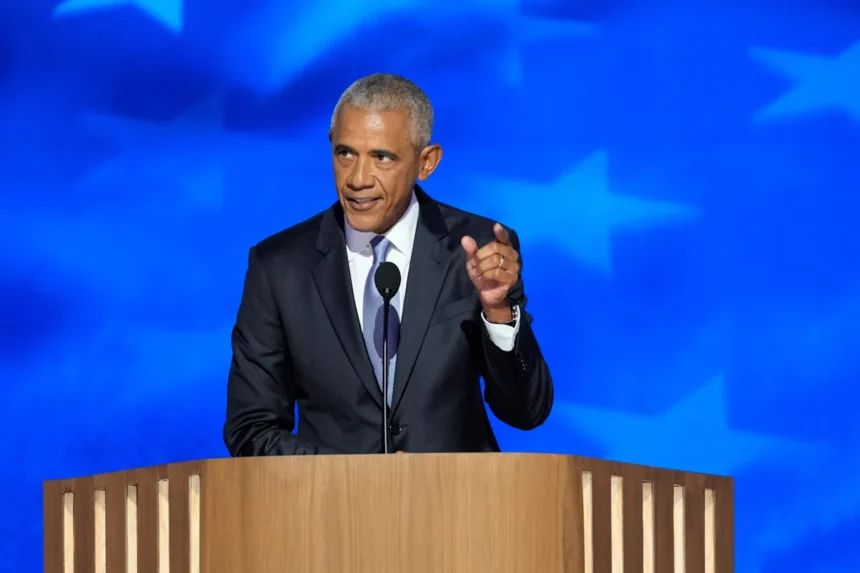
Obama Accused of Orchestrating False Russia Interference Narrative

WASHINGTON, D.C. – A major disclosure could redraw the story of the 2016 U.S. presidential election. Tulsi Gabbard, the current Director of National Intelligence, has released over 100 pages of records that claim former President Barack Obama and top national security aides altered intelligence to shape a story about Russian meddling.

Gabbard’s team is calling the release “The Russia Hoax” and says officials committed a “treasonous conspiracy” to weaken Donald Trump’s win over Hillary Clinton. This move has put the spotlight on the intelligence community and sparked a debate on whether national security was used for political ends.

These declassified files, made public on July 18, 2025, include emails, notes, and private discussions. The records detail an alleged plan among Obama’s trusted advisers—James Clapper, John Brennan, James Comey, Susan Rice, and Loretta Lynch—to create and leak misleading intelligence reports.

Gabbard claims this was done to cast doubt on Trump’s win and launch what she calls a “years-long coup” against his presidency. The documents, now with the Justice Department, suggest the Obama team took drastic steps to reverse the voters’ choice.

Obama Changing Intelligence Reports

Gabbard’s claims focus on a shift in official findings before and after the election. She points to assessments in the months before November 2016 where agencies stated Russia was “probably not trying…to influence the election by using cyber means.”

A draft of the President’s Daily Brief from December 8, 2016, written by the CIA, NSA, FBI, and DHS, said Russia “did not impact recent U.S. election results” with cyberattacks. This draft, according to emails, was later withdrawn after the White House gave “new guidance.”

On December 9, 2016, Obama gathered his top security staff in the Situation Room. Reports say officials like Clapper, Brennan, and Rice were told to put together a new assessment alleging Russia helped Trump win. This new stance clashed with earlier views.

By January 6, 2017, just before Trump took office, the Obama administration released a public report saying Russia interfered in the election. Gabbard argues this report relied heavily on the Steele dossier, a paper funded by the Clinton campaign and put together by former British spy Christopher Steele, which has faced criticism for using unverified claims.

The report from Gabbard says this update “suppressed” findings that Russia neither tried nor was able to change the results. A whistleblower from the Office of the Director of National Intelligence (ODNI) is cited, saying they were ignored after asking about inconsistencies and barred from getting “further information” tied to the new story.

The documents claim insiders began leaking false tips to major media like the Washington Post, suggesting Russia used hacking tactics to sway the vote and setting off a frenzy that drove headlines and investigations for years.

Role of the Steele Dossier and Media Coverage

Gabbard highlights the Steele dossier’s influence in shaping the official story. Though widely seen as unreliable by many in intelligence, she says the Obama administration still used the dossier in the January 2017 intelligence report and brushed aside those who questioned it.

The documents show multiple leaks to the press soon after the December 9 meeting. That same day, the Washington Post published a claim from anonymous sources that the CIA believed Russia helped Trump. Gabbard insists these leaks were part of a planned effort to sell a politically motivated story and undermine Trump’s victory.

The reaction was huge: Russia’s interference dominated news, prompted the Mueller investigation, worsened relations with Russia, and led to several Trump associates being charged or jailed. The issue caused deep splits across the country.

Political Debate and Pushback

Gabbard’s findings have set off a heated argument. Democrats, including Senator Mark Warner, the Senate Intelligence Committee’s vice chair, say the claims are “politically motivated” and full of mistakes.

Warner references a bipartisan Senate investigation from Trump’s first term that said Russia did try to sway the 2016 election, but found no sign that the 2016 assessment was rigged for politics or that the Trump campaign worked with Russia.

Representative Jim Himes, ranking Democrat on the House Intelligence Committee, called Gabbard’s treason charges “baseless.” He maintains the intelligence community’s findings were carefully reviewed.

Some critics point to Gabbard’s lack of intelligence experience and previous comments that appeared sympathetic to Vladimir Putin. Her appointment as intelligence director came in February 2025 under Trump and passed the Senate by a tight vote.

Her record of echoing Russian viewpoints in the Ukraine conflict has drawn attention from Democrats, who say she is twisting findings to fit Trump’s story. The administration is already facing scrutiny over other issues, like the delayed release of Epstein files.

Republicans have rallied behind Gabbard’s report. Speaker of the House Mike Johnson called the documents proof of taking down the so-called “Deep State.” On social media, Trump supporters are demanding that Obama-era officials be held accountable.

The news has renewed debate about the Mueller investigation, which said Russia did try to interfere in sweeping fashion but did not find coordination with Trump’s campaign. Gabbard and her supporters argue that this investigation, which cost nearly $40 million, started with false information.

A Country on Edge

The fallout from Gabbard’s report could be wide-reaching. If the allegations are true, they suggest the Obama administration tried to undo the results of a democratic election. The Russia narrative made the U.S. more divided, heightened tensions with Russia, and overshadowed Trump’s first term.

But many still question the report’s trustworthiness. While early intelligence reports underplayed Russia’s efforts, later investigations like Mueller’s and the Senate’s found Russia had used hacking and disinformation—such as hacking Democratic National Committee emails—to try to influence the outcome. Gabbard’s heavy use of the whistleblower’s claims and her take on the Steele dossier’s role are being doubted by those who say the dossier was just one piece of a larger puzzle.

With the Justice Department now reviewing the documents, the country is watching for legal and political fallout. Gabbard is pushing for charges against Obama, Clapper, Brennan, Comey, and others, raising the rare accusation of treason. Whether these claims result in charges or just keep fueling the culture wars isn’t clear.

The release has reopened old wounds, bringing the 2016 election and debate over the “Deep State” back into the spotlight. One comment circulating online sums up the mood among some: “Tulsi Gabbard dropping these declassified bombshells proves Obama orchestrated a full-on deception to smear Trump with that Russia hoax.

The IC’s draft brief from 2016 says NO real election impact? That’s the nail in the coffin for his legacy!” Whether true or just more partisan heat, these revelations guarantee that arguments over the 2016 election won’t fade soon.

The Obama administration has not offered a public reply. The Justice Department has declined to comment on possible investigations. As the story moves forward, it’s clear that debates over the last decade’s election are far from settled.


Related News:

Zuckerberg to Allow Violent Speech on Russia After Facebook Blocked

News

Washington D.C. Police Chief Resigns Amid Explosive Allegations of Falsified Crime Statistics

VORNews

Published

on

By

WASHINGTON, D.C. -  Metropolitan Police Department (MPD) Chief Pamela A. Smith will resign effective December 31.

WASHINGTON, D.C. –  Metropolitan Police Department (MPD) Chief Pamela A. Smith will resign effective December 31. Her exit comes days after a House Oversight Committee report said she led a broad push to alter crime data.

The report draws from testimony by MPD whistleblowers and commanders. It describes a leadership style focused on good headlines, not safer streets. It also claims the goal was simple: make crime look lower in a Democrat-run city that has struggled with public safety for years.

On December 14, the House Committee on Oversight and Government Reform, led by Rep. James Comer (R-KY), released an interim report titled “Leadership Breakdown: How D.C.’s Police Chief Undermined Crime Data Accuracy.” The report is based on transcribed interviews with commanders from all seven patrol districts, plus one former commander who was suspended.

The committee’s main conclusion is blunt. It says Smith “pressured and at times directed commanders to manipulate crime data in order to maintain the appearance of low crime in the nation’s capital.”

Commanders told investigators the department ran on “fear, intimidation, threats, and retaliation.” Several said they were punished when they reported real spikes in crime. One commander described being embarrassed in front of peers during briefings. Others said they were transferred or pushed aside when they refused to re-label serious incidents.

The report describes briefings where commanders were scolded so harshly that some felt blamed if they had committed the crimes themselves. Over time, that kind of pressure sends a clear message: protect the numbers or pay the price.

How Crimes Were Reclassified to Reduce the Public Count

The report also lays out examples of how crimes were allegedly downgraded. Commanders said assaults with dangerous weapons, including shootings where no one was hurt, were sometimes changed to lesser charges such as “endangerment with a firearm.” They also said burglaries could become “unlawful entry and theft.”

Those changes mattered because they could keep incidents out of daily public crime reports. That means residents might see “improvement” on paper while offenders still stay active on the street.

The committee report frames this as a top-down effort, not a few bad calls. It says Smith pushed “lowering publicly reported crime numbers over reducing actual crime,” and it describes “intense pressure” on commanders to produce low numbers “by any means necessary.”

Whistleblowers, Old Allegations, and a New Investigation

The Oversight investigation began in August 2025 after whistleblower claims and allegations that reached back years. The report also references a lawsuit tied to similar claims that was settled.

The issue gained more attention after President Trump declared a crime emergency and sent federal help, including the National Guard. The report’s findings give weight to those concerns and suggest the public didn’t get a straight picture of what was happening in D.C.

Chairman Comer summed up the committee’s view: “Testimony from experienced and courageous MPD commanders has exposed the truth: Chief Pamela Smith coerced staff to report artificially low crime data and cultivated a culture of fear to achieve her agenda.” He said her resignation was overdue and urged her to leave sooner.

Washington City Hall Pushback and Smith’s Denial

D.C. leaders defended Smith. Mayor Muriel Bowser praised her for what she called a sharp drop in crime tied to Smith’s leadership, and she treated the probe as politics.

Smith denied wrongdoing and said her departure was a personal choice, not linked to the report. Still, her December 8 announcement landed soon after committee interviews wrapped up, and that timing is hard to ignore.

Some news coverage focused on reported drops in violent crime (28% year-to-date, based on MPD data). The report warns that those figures could still be “at risk of manipulation” even after Smith, since crime classification can be bent if leadership allows it.

This is not just about stats. It’s about safety. When leaders push staff to “fix” the numbers, residents lose the truth they need to protect their families and neighborhoods. Visitors and tourists also lose a clear sense of risk in the nation’s capital.

Critics say the alleged cover-up protected soft-on-crime politics, from defund-the-police messaging to weak prosecution and revolving-door justice. When the public sees lower numbers, pressure for real change fades. That is the point, and it’s why the allegations are so serious.

The report also raises doubts about the story of a clean turnaround after the city’s recent crime spikes. Many still remember 2023, with a record 274 homicides and close to 1,000 carjackings. Those numbers drove reforms like the Secure D.C. Act. Now the report suggests later “declines” may have been boosted by re-labeling and selective reporting.

Commanders told the committee that federal support helped add resources. The report argues that the focus on optics pulled attention away from core policing and hurt morale. It also says experienced officers left while trust in leadership sank.

What Comes Next: Oversight, Transparency, and Leadership Changes

The committee recommends that Bowser appoint an independent chief who will commit to accurate reporting and end retaliation. A separate Justice Department review raised similar concerns. It described a “coercive culture of fear” that encouraged manipulation, though it did not go as far as criminal charges.

Comer said the stakes are simple: “Every single person who lives, works, or visits the District of Columbia deserves a safe city, yet it’s now clear the American people were deliberately kept in the dark.”

Smith’s resignation may close one chapter, but it doesn’t fix the underlying problem. If the allegations are true, the city needs more than a new name on the door. It needs a clean break from number-policing, real accountability for anyone who joined in, and a system that makes accurate reporting non-negotiable.

Interim chief Jeffery Carroll now steps into the spotlight. The department’s next moves will show whether D.C. chooses honest crime reporting and real public safety, or more political cover.

Trending News:

Minnesota Fraud Scandal EXPANDS, $10 Billion in Fraudulent Payments

Pressures Mount on Rep. Ilhan Omar Over Alleged Marriage to Brother

Continue Reading

News

Trump Targets Fentanyl While Democrats Shield Illegal Drug Dealers

Jeffrey Thomas

Published

on

Trump Targets Fentanyl

WASHINGTON D.C. – In a move his team calls historic, President Donald J. Trump has signed an executive order that classifies illicit fentanyl and its key precursor chemicals as a Weapon of Mass Destruction (WMD).

The order was signed in the Oval Office during a ceremony that also honored border security officials with medals. The setting highlighted how central the fentanyl crisis has become to the administration’s security and immigration agenda.

“No bomb does what this is doing,” Trump said, claiming fentanyl kills between 200,000 and 300,000 Americans each year. “We are officially labeling fentanyl as a weapon of mass destruction, because that is exactly what it is.”

In the text of the executive order, illicit fentanyl is described as “closer to a chemical weapon than a narcotic.” Just two milligrams, about the size of 10 to 15 grains of table salt, can be fatal.

By using the WMD label, the administration wants to pull in America’s national security agencies and treat fentanyl more like a biological or nuclear threat than a street drug.

Some legal scholars and policy analysts question how much the label will change on-the-ground enforcement, since current laws already allow long prison terms for fentanyl trafficking. The White House insists the change is more than symbolic. Officials say it pushes the crisis into the top tier of security threats and warns that fentanyl could be used for “concentrated, large-scale terror attacks” by hostile actors.

What the Executive Order on Fentanyl Actually Does

The order directs a broad group of federal agencies to increase action against fentanyl and its supply networks:

  • The Attorney General is instructed to ramp up investigations, prosecutions, and sentencing enhancements for fentanyl-related crimes.
  • The Departments of State and Treasury are ordered to target and sanction banks, companies, and individuals tied to fentanyl production, finance, or distribution.
  • The Department of Homeland Security is asked to apply WMD-focused intelligence tools to track smuggling routes and criminal networks.
  • The Departments of Defense and Justice must review when and how military resources could be used in cases of extreme fentanyl-related emergencies.

The move builds on earlier decisions, including labeling major cartels as Foreign Terrorist Organizations, raising tariffs on China, Mexico, and Canada, and authorizing strikes on international drug-smuggling vessels.

The administration argues that fentanyl profits fund cartel violence, corrupt foreign institutions, and weaken U.S. security from within.

A Crisis Still Killing Tens of Thousands

Fentanyl remains the top cause of death for Americans between 18 and 45 years old. While overdose numbers have improved from earlier peaks, the damage is still severe.

After years above 100,000 total drug deaths annually, overdoses involving synthetic opioids, mainly fentanyl, fell in 2024 to an estimated 60,000 to 70,000 deaths. Even with this drop, the toll is staggering.

Provisional CDC data show that synthetic opioids like fentanyl are involved in roughly 70 percent of recent overdose deaths. The White House highlights long-term totals and points to several hundred thousand lives lost to fentanyl over the last decade.

Families who have lost loved ones to fentanyl have been visible at Trump’s events, sharing stories of sudden loss, counterfeit pills, and addiction fueled by cheap, powerful drugs.

How Fentanyl Reaches the United States

Most illicit fentanyl that ends up in the United States is cooked in Mexico by powerful cartels, especially the Sinaloa Cartel and Cartel Jalisco Nueva Generación (CJNG). These groups buy or receive precursor chemicals mainly from China and India, then synthesize fentanyl in clandestine labs.

Smugglers move the finished drug mostly through ports of entry on the southern border. It is often hidden in cars, trucks, or commercial shipments, and mixed into fake prescription pills or cut into other street drugs.

According to the DEA, Mexican transnational criminal organizations control much of the fentanyl supply chain, from chemical sourcing to wholesale distribution. The same groups are tied to kidnappings, extortion, and brutal violence across Mexico and beyond.

Trump has publicly pressured foreign governments, using tariffs and hints of military force, and has accused some rivals of allowing or encouraging the flow of fentanyl that kills Americans.

White House Strategy: Using Every Policy Tool

The WMD designation is part of a wider strategy that blends border enforcement, foreign policy, intelligence work, and criminal prosecutions.

The administration points to:

  • Tougher border security measures and more resources at ports of entry
  • Terrorist designations for major cartels
  • The HALT Fentanyl Act, which permanently placed fentanyl-related substances in Schedule I
  • Increased seizures of fentanyl at the border and inside the country

Officials argue that these steps, paired with local and state efforts, have played a role in reducing overdose numbers. They stress that fentanyl is not just a public health concern, but a threat that demands military, intelligence, and diplomatic tools.

Democrats Push Back on Trump’s Approach

Democratic lawmakers and many public health experts say the WMD label is more about politics than policy. Some legal experts describe the move as a “political exercise” that adds little, since fentanyl trafficking is already heavily punished.

Democrats and many treatment advocates prefer a focus on:

  • Expanding addiction treatment
  • Increasing access to medications like buprenorphine and methadone
  • Supporting harm-reduction programs such as naloxone distribution
  • Addressing mental health and the economic roots of substance use

These critics argue that enforcement alone will not solve the problem and that decades of harsh drug policies have not stopped addiction.

They also point out that the recent decline in overdose deaths is likely influenced by several factors, such as changing drug use patterns among younger people and shifts in the illegal drug supply, rather than enforcement alone.

Some warn that when law enforcement is shifted away from drug investigations to handle immigration tasks, it can weaken efforts to target traffickers and major supply networks.

Sanctuary Policies and the Fight Over Local Cooperation

Republicans in Congress and conservative commentators often connect fentanyl trafficking to immigration debates, especially in cities with “sanctuary” policies.

They argue that Democratic governors and mayors in sanctuary jurisdictions block federal immigration enforcement and, in doing so, shield criminal networks that traffic drugs.

In cities like Chicago, Denver, Boston, and New York, local policies limit cooperation with ICE detainers unless there is a criminal warrant or certain serious charges. These rules generally prevent local jails from holding people longer solely for immigration purposes.

House Oversight Committee hearings earlier this year put mayors from sanctuary cities under scrutiny. Republican members accused them of creating loopholes that let repeat offenders, including suspected traffickers, avoid deportation.

The mayors and their allies counter that:

  • Sanctuary policies do not stop police from arresting or prosecuting criminals
  • Local officers still honor court-approved warrants
  • Community trust increases when residents do not fear immigration arrests for reporting crimes
  • Research has often linked sanctuary policies with equal or lower crime rates compared to similar cities

Conservatives remain unconvinced and argue that defiance of federal immigration authorities gives cartels and gangs room to operate. Proposals to cut federal funds from jurisdictions that refuse to cooperate with ICE are still being debated in Congress.

A Defining Fight in Trump’s Second Term

Trump has framed the fentanyl crisis as one of the defining battles of his second term. His team says they are using “every available tool” against cartels, chemical suppliers, and financial middlemen who profit from the drug.

Supporters see the WMD designation as a long-overdue recognition of how deadly fentanyl has become. Critics warn that dramatic language without strong treatment and prevention policies could repeat the mistakes of earlier drug wars.

As the executive order rolls out and agencies adjust their strategies, the country will see whether treating fentanyl like a weapon of mass destruction changes the course of an epidemic that has taken hundreds of thousands of American lives.

Related News:

Democrats in Turmoil Over Hopeless Impeachment Drive Against HHS Secretary RFK Jr.

Continue Reading

News

NATO Chief Warns European Members to Ready for War

VORNews

Published

on

By

NATO Chief Warns European Members to Ready for War

BRUSSELS – NATO Secretary General Mark Rutte has delivered one of the starkest warnings heard in Europe since the end of the Cold War, telling EU leaders that the continent must be ready for the possibility of a large-scale war with Russia within the next five years.

Speaking at a closed-door meeting of EU defence ministers in Brussels, later confirmed by several officials present, the former Dutch prime minister dropped the cautious language that usually shapes NATO messaging.

“We are no longer in a grey zone,” Rutte said, according to sources. “Europe has to rearm at a speed and on a scale not seen since the 1930s, or we risk facing a war we are not prepared to fight, and almost certainly not prepared to win.”

The remarks mark a sharp shift in tone from the alliance. For nearly two years, NATO leaders have argued that extensive military aid to Ukraine would be enough to deter Russian President Vladimir Putin from attacking any NATO member. Rutte’s warning suggests that faith in that assumption has weakened inside the organisation.

Three senior diplomats who attended the meeting told reporters, on condition of anonymity, that Rutte shared new intelligence suggesting Russia is rebuilding its armed forces far faster than Western officials expected, despite heavy losses in Ukraine.

These assessments indicate that Moscow could have a conventional force, able to conduct operations against the Baltic states and carry out sustained long-range strikes across Europe, by around 2029 or 2030.

Dangerous Complacency

“Russia isn’t just swapping one destroyed tank for one new tank,” Rutte reportedly told ministers. “They have moved their whole economy onto a war footing. Their defence sector now produces more artillery shells in a single month than the entire European Union turns out in a year.

If we don’t match that kind of effort, the balance of power will shift firmly against us.”

Rutte singled out Germany, France, Italy, and Spain for pointed criticism, accusing them of “dangerous complacency” over defence spending and arms procurement.

He praised Poland, the Baltic states, and the Nordic countries for moving quickly to raise their military budgets and bring back or strengthen conscription, but warned that, taken together, Europe remains “woefully unprepared” for a high-intensity conflict.

The most sensitive moment came when Rutte spoke about the possible impact of a second Donald Trump term in the White House. “We must plan for every scenario, including one where America is distracted or decides not to honour Article 5,” he said, referring to NATO’s mutual defence clause.

The remark caused clear unease among several southern European ministers, some of whom later described it in private as “unhelpful scaremongering”.

After the meeting, Rutte softened his language in public but did not back away from his main message. “Europe must be ready to defend every inch of allied territory, with or without outside support,” he told journalists outside the European Council building.

“That takes money, political courage, and a deep change in how Europeans think about security. The time of peace dividends is over.”

NATO Target Spending

His warning comes as several European governments are already, albeit slowly, increasing defence budgets. Germany said last month that it will hit NATO’s target of spending 2% of GDP on defence by 2027, three years later than it had initially pledged.

France has promised to raise its defence spending to 3% of GDP by 2030, while Poland already spends more than 4%. Security analysts say that even these higher figures still fall well short of what would be needed to narrow the gap with Russia’s growing arsenal.

Experts interviewed by Reuters said that Rutte’s five-year timeline is “completely realistic”. Dr Claudia Major, of the German Institute for International and Security Affairs, said Russia’s ability to absorb huge losses and keep expanding its defence industry has “shocked” many Western intelligence services. “They are not just rebuilding,” she said. “They are innovating and growing at a scale we have not seen since the Second World War.”

As Europe moves into 2026, facing weak growth, political division, and public fatigue over the war in Ukraine, Rutte’s comments set out a stark choice. Either the continent rearms quickly at great financial and political cost, or it risks becoming exposed to Russian pressure, or even direct military attack, within a few years.

For now, his warning appears to have prompted at least some immediate reactions. Late on Wednesday, the defence ministers of Spain and Italy announced fast-track reviews of their military procurement plans. The European Commission also confirmed that it is putting together a proposed €100 billion “ReArm Europe” loan package, which EU leaders are expected to debate next month.

Whether Europe can find the unity and determination to act before the window closes has now become the central security question facing the continent.

Related News:

Trump Calls European Leaders Weak, Warns Over Mass Migration

Continue Reading

Get 30 Days Free

Express VPN

Create Super Content

rightblogger

Flight Buddies Needed

Flight Volunteers Wanted

Trending