


Politics
Media Spins Trump’s Greenland Interest into an Imminent Invasion
WASHINGTON, D.C. – In early January 2026, President Donald Trump’s long-running interest in Greenland popped back into the news. It echoed comments from his first term, when he pointed to Greenland’s strategic value, rare earth minerals, and growing Arctic competition. Trump has described the issue as tied to national security, often pointing to China and Russia’s activity in the region.
Secretary of State Marco Rubio addressed the topic in briefings and public remarks. His message stayed consistent: the administration prefers a diplomatic path, including talks about buying Greenland from Denmark. He also played down any suggestion of near-term military action.
Even so, many major outlets quickly framed the story as a countdown to U.S. aggression. Headlines pushed “invasion” talk, hinted at NATO breaking apart, and suggested Trump was ready to use force against an ally. A lot of that coverage leaned on selective lines, blurred distinctions between different statements, and guesswork presented as news. The result was predictable: anxiety in Europe, confusion in the U.S., and a story that ran far ahead of the facts.
What Rubio Said: Negotiations, Not Force
Rubio’s comments have been plain. In a classified briefing to lawmakers on January 6, 2026, he said the goal is to purchase Greenland from Denmark, not take it by force. He also said the public rhetoric shouldn’t be treated as a signal of an “imminent invasion.” His position has been that Trump wants to pursue an agreement through negotiation.
In front of cameras, Rubio also avoided baited hypotheticals. When reporters pressed him about military options, he brushed them off with lines like, “I’m not here to talk about Denmark or military intervention.” He also said he planned to meet Danish officials next week to discuss the issue through normal diplomatic channels.
No verified quote or transcript shows Rubio saying the U.S. will use force to seize Greenland. His public framing has focused on security goals, economic upside, investment in Greenland’s people, and criticism that Denmark has not invested enough in the territory.
This approach also fits the longer U.S. history in Greenland. Other presidents, from Truman to Trump, have looked at purchasing the territory through peaceful means. Many news stories mention that context late, or skip it, while giving prime attention to the most alarming interpretation.
The media surge took off after a White House statement around January 6 to 7, 2026. It said the administration was “discussing a range of options” related to acquiring Greenland. A spokesperson added that “the U.S. military is always an option.” That phrasing is common in foreign policy messaging. It signals broad flexibility, not a decision to act.
Still, outlets such as CNN, BBC, and The Guardian elevated the line into stories like “Trump weighs using U.S. military” or “US discussing options including using military.” Many reports paired it with Trump’s older comments from 2019 to 2020, including past jokes about not ruling anything out. At the same time, Rubio’s direct emphasis on negotiations often got less attention.
The coverage ended up suggesting an active invasion plan, even though there was no public evidence of troop movements, ultimatums, or a shift toward coercion. This is a familiar pattern: take a boilerplate “all options” statement (used by administrations of both parties) and treat it like a threat of war, even when officials are pointing to diplomacy.
The Panic Cycle: “Invasion” Claims and NATO Disaster Forecasts
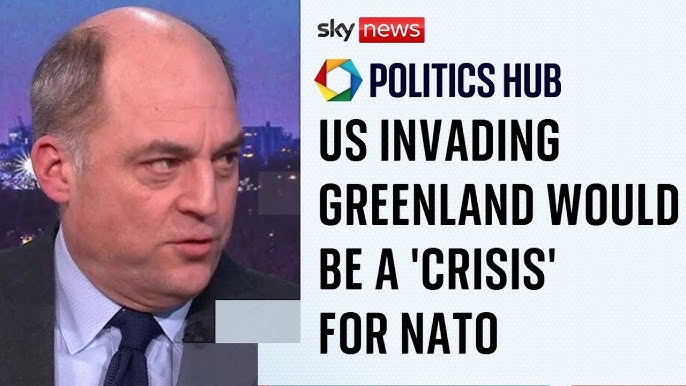
Some reporting went beyond speculation and helped create real panic. Stories warned that an American move against Greenland would send “shock waves” through NATO. Others leaned on dramatic predictions that a military seizure would “end NATO,” or that European allies would respond with major action against the U.S. These claims were often built around hypothetical scenarios, not on confirmed policy steps.
A few outlets, including Al Jazeera and The Guardian, ran headlines built around “invasion” language, even when the body of the article admitted Rubio favored a purchase. Progressive commentators tied the Greenland issue to wider “annexation” fears, sometimes linking it to unrelated topics like Panama Canal rhetoric or Venezuela policy. That framing paints a single picture of U.S. imperial intent, even when the facts on Greenland are narrower and more specific.
This kind of coverage serves a clear storyline: Trump as reckless, dangerous, and a threat to allies. It also pushes European leaders to respond to headlines, not to actions, which helps explain quick statements backing Denmark’s sovereignty. The story starts to feed itself.
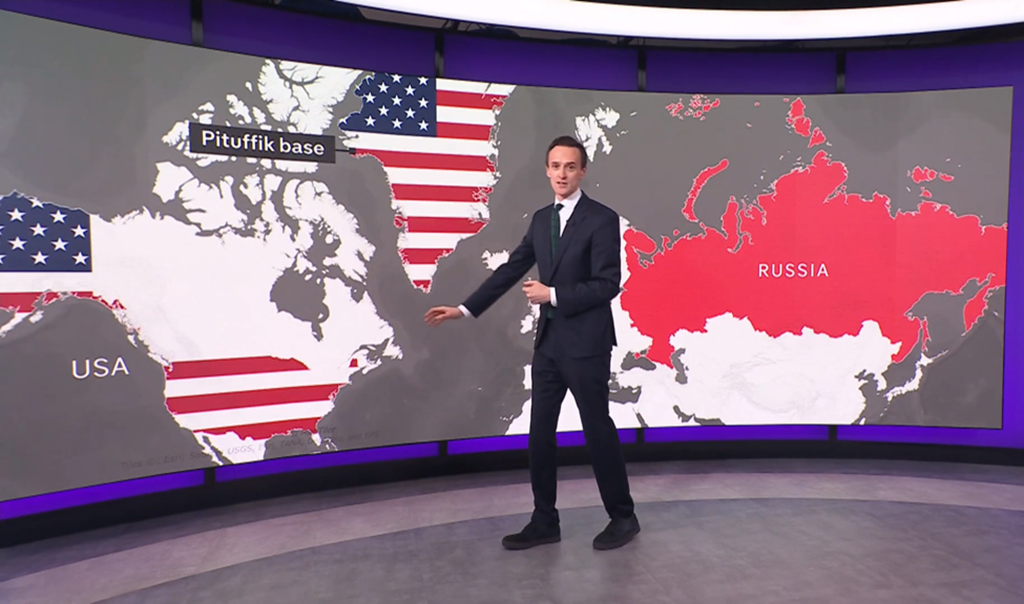
Missing from much of the loudest coverage is basic context. Greenland’s leaders have shown interest in closer U.S. ties in some areas, including expanded cooperation connected to the Pituffik Space Base. Denmark also depends heavily on U.S. security support through NATO. Those facts do not prove any deal is coming, but they do complicate the idea that this is automatically a march toward conflict.
The NATO Withdrawal Angle: A Stretch That Keeps Spreading
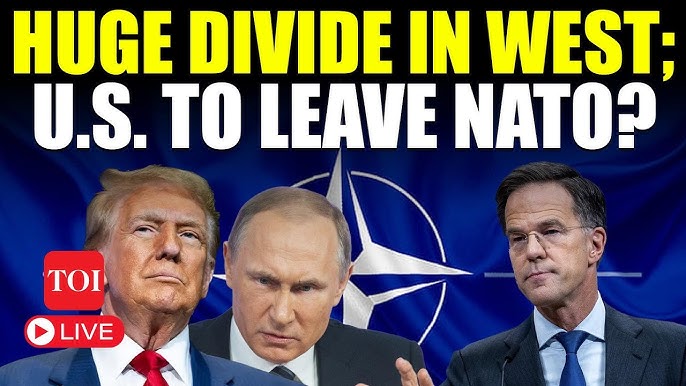
One of the biggest leaps has been the claim that Trump’s Greenland push is really a signal that he plans to pull the U.S. out of NATO. No public statement from Trump, Rubio, or other administration officials supports that claim. Trump has also posted on Truth Social, affirming the U.S. commitment to NATO, while still criticizing allies over defense spending.
Even so, some coverage treats tension itself as evidence. Articles float lines like, “A military attack on Greenland could end NATO,” or quote European warnings that if force happened, “everything would stop, including NATO.” That is fear-driven framing, because it assigns motives and future choices to Trump based on worst-case guesses.
It also recycles a theme from Trump’s first term. His pressure on burden-sharing was often reported as an intent to abandon allies. Here, U.S. strategic interests in the Arctic, including competition with China and access to minerals tied to defense and technology, get recast as alliance-breaking aggression.
The Bigger Pattern: How the Story Gets Bent
This Greenland episode shows a set of habits that show up often in Trump coverage:
- Selective quotes and missing context: The “military option” line gets the spotlight, while Rubio’s push for purchase gets minimized.
- Blended narratives: Trump’s style, past jokes, and unrelated issues get stitched together into one larger threat story.
- Hypotheticals treated as plans: Words like “weighs,” “threatens,” and “plans” replace hard evidence.
- Speculation filling the gaps: “Analysts say” and “could lead to” become the backbone of the piece.
- Narrative echo effects: Some outlets drive the most extreme framing, while others report more plainly that the stated goal is negotiation and purchase.
This isn’t unique to Greenland. Similar tactics have shaped past coverage on topics ranging from Russia-related claims to COVID policy debates. The cost is real: more public confusion, more diplomatic friction, and less trust in media reporting.
Based on what has been said publicly, Trump’s team is looking at more cooperation or a purchase. Denmark has entertained related ideas in the past, including the 1946 U.S. offer. Military force reads as a distant, self-defeating hypothetical, and no serious official has argued for it in verified remarks.
As of January 8, 2026, there’s no confirmed invasion plan, Rubio hasn’t threatened force, and NATO is still intact. A lot of the public alarm traces back to exaggerated framing that turns a diplomatic push into a crisis story.
People deserve reporting that separates what was actually said from what makes a sharper headline. Rubio’s message has been steady: diplomacy and a possible purchase, not conquest. Until real evidence shows a change, the “invasion” storyline looks like spin, not substance.
Related News:
Mainstream Media Meltdowns Over Trump’s Historic Capture of Maduro
Politics
Sen. Josh Hawley Demands DOJ Probe Into ‘Dark Money’ Network
Missouri Republican Repeats Call for Investigations and Prosecutions After Heated Senate Hearing on Fraud, Foreign Influence, and Political Funding
WASHINGTON D.C.– U.S. Sen. Josh Hawley (R-MO) is again pushing the federal government to act on what he describes as secretive “dark money” networks. He says these groups help drive division, protests, and possible fraud across the United States.
During a recent Senate hearing, he led, Hawley pointed to operations he tied to billionaire-linked networks connected to George Soros and Neville Roy Singham. He urged the Department of Justice to open wide-ranging investigations and bring charges if the evidence supports it.
Hawley made the remarks during a Homeland Security subcommittee hearing that focused on fraud in state and federal programs, along with foreign influence inside the country. He described nonprofit groups and funding pipelines that he says operate with limited public visibility. In his view, those networks help finance what he called radical political activity on U.S. streets.
What Hawley Said in the Hearing
At the February 10, 2026, hearing, titled “Examining Fraud and Foreign Influence in State and Federal Programs,” Hawley pressed witnesses about large funding structures tied to nonprofit grants. He leaned on testimony from Seamus Bruner, vice president of the Government Accountability Institute, who tracks nonprofit money flows.
According to Hawley, researchers compiled a large database with “hundreds of thousands of rows” of grant information. He said the data includes funding connected to:
- the Soros network
- The Arabella funding network
- The Neville Roy Singham funding network
- other similar organizations
When Hawley asked about the size of these operations, Bruner pointed to what he called massive NGOs with billions available for organized activity. He described spending tied to coordinated protests and, in some cases, riot activity.
Hawley argued that the money often moves through multiple layers of groups. He claimed that structure can make it hard to track who pays for what. He also pointed to protests in Minnesota, saying reports show more than $60 million went to about 14 groups, including national and local organizations. He tied that to broader claims of state-level fraud involving hundreds of millions in public funds.
Hawley said he sees the same patterns again and again, with funding routed through similar channels and then appearing around protests and unrest. He also said prosecutions should follow where investigators find criminal conduct.
Near the end of the hearing, Hawley repeated his request to the Justice Department. He asked prosecutors to investigate the groups, map out the funding web, and pursue charges when possible. He said Americans should be able to trust that their government is not being shaped by hidden money.
The People and Networks Hawley Named
George Soros, a Hungarian-American billionaire and philanthropist, has long drawn criticism from conservative lawmakers and commentators. His Open Society Foundations and related organizations support progressive causes. Critics often point to the way 501(c)(3) and 501(c)(4) nonprofit structures can allow donors to remain anonymous. They argue this can hide major political spending behind legal nonprofit activity.
Neville Roy Singham, a U.S.-born tech entrepreneur who now lives in Shanghai, has also faced increased scrutiny. Reports have raised concerns about his alleged ties to Chinese Communist Party propaganda efforts. Those reports claim his money supports groups that promote left-wing causes in several countries, including organizations accused of repeating Beijing-aligned messaging. Hawley referenced Singham in the context of foreign influence and protest support inside the United States.
During the hearing, Hawley and witnesses suggested that some of these networks may overlap at times. They also described similar methods, such as sending money through intermediary groups to make the source harder to see.
Part of a Bigger Fight Over “Dark Money”
Hawley’s latest push follows earlier steps this month. In early February 2026, he sent a letter to Attorney General Pam Bondi asking for investigations into left-leaning dark money groups tied to anti-ICE protests across the country. Organizers described those demonstrations as grassroots, but Hawley argued that large donors, routed through less transparent channels, helped fund them.
He also connected the issue to larger cases, which he says show deep problems in public spending oversight. That includes allegations of major fraud in Minnesota tied to taxpayer dollars and pandemic-related programs. He also raised broader concerns about foreign actors taking advantage of U.S. systems.
In Hawley’s framing, the problem goes beyond politics and into public safety and national security. He argued that taxpayers lose huge sums to fraud, while foreign-linked efforts can help stir conflict and disorder at home. He said federal authorities should focus on shutting down illegal funding pipelines and stopping foreign influence where it crosses legal lines.
How People Are Responding and What Could Happen Next
Reactions to Hawley’s statements have split along familiar lines. Supporters say he is calling attention to hidden funding and demanding accountability from powerful networks. Critics respond that he focuses on left-leaning donors while downplaying conservative dark money, and they add that much nonprofit political spending remains legal and protected under free speech rules.
As of this reporting, the Department of Justice has not publicly responded to Hawley’s specific requests involving networks tied to Soros or Singham. If federal investigators move forward, they would likely review a mix of issues. That could include tax compliance, foreign agent registration rules, and possible criminal violations tied to fraud or money laundering.
Meanwhile, Hawley’s subcommittee continues its oversight work, and he has suggested that more hearings are coming. He also pointed back to the database of grant records referenced at the hearing, signaling that additional research could lead to more claims about funding links and organizational relationships.
Why This Story Matters in US Politics
Dark money, meaning political spending tied to donors who are not publicly disclosed, has concerned lawmakers and voters on both sides for years. The debate intensified after the 2010 Citizens United decision. Since then, Democrats and Republicans have traded accusations about nonprofits being used to influence elections, policy, and public opinion while shielding donors from view.
Hawley’s campaign fits with a broader Republican message about elite power and foreign influence. By naming Soros and Singham, he is trying to put faces on a larger argument about secrecy in political funding. He also hopes that public pressure will push federal agencies toward stronger enforcement and more transparency.
Hawley closed his argument with a familiar point: Americans should be able to control their own government. Whether the DOJ acts on his renewed call remains unclear, but Hawley’s continued focus keeps dark money, protest funding, and foreign influence in the spotlight.
Trending News:
Supreme Court Orders CNN to Respond in High-Stakes Defamation Case
Politics
Megyn Kelly Slams Hillary Clinton For “Extraordinary Hypocrisy”
NEW YORK – Megyn Kelly went after Hillary Clinton during a heated segment on Sky News Australia, accusing the former secretary of state of blatant hypocrisy. Kelly argued that Clinton is trying to tie President Donald Trump and his Department of Justice to a Jeffrey Epstein file “cover-up” while ignoring how often Bill Clinton shows up in the same material.
The clash comes as renewed attention hits the ongoing release of millions of pages tied to Jeffrey Epstein, the late financier and convicted sex offender. Speaking to the BBC during the Munich Security Conference in mid-February 2026, Hillary Clinton claimed the Trump administration had dragged its feet on full disclosure. She also alleged the DOJ has kept key names out of view through redactions and has resisted congressional requests.
“Get the files out. They are slow-walking it,” Clinton said, framing the delays as an effort to protect powerful people, with Trump implied in her remarks.
On Sky News host Paul Murray’s show, Kelly said Clinton’s comments look like a distraction. She pointed to Bill Clinton’s history with Epstein and argued that Hillary Clinton’s attacks on Trump don’t hold up when her husband’s name appears so often in the record.
Megyn Kelly’s blunt message: Bill Clinton shows up again and again
Megyn Kelly didn’t soften her point during the interview.
“There are few in the Epstein file as many times as Bill Clinton,” she told Murray. “There is a long, long history between those two.”
Over the years, court filings, flight logs from Epstein’s private jet (often called the “Lolita Express”), and witness accounts have repeatedly referenced Bill Clinton’s travel and connections to Epstein after Clinton left office.
No criminal charges have ever been brought against the former president tied to Epstein’s crimes. Still, Kelly stressed that his name appears frequently in unsealed materials, more often than many other prominent figures.
From Megyn Kelly’s view, that context undercuts the Clintons’ posture in the current debate.
“They folded like cheap tents because they knew they didn’t have a leg to stand on,” she said, arguing that efforts to keep the spotlight on Trump fade fast once Bill Clinton’s links come up.
That theme matches a wider conservative argument. Critics say Democrats push Trump-Epstein angles hard while minimizing or brushing past Bill Clinton’s documented association with Epstein.
The Epstein files fight, and why it won’t go away.
Epstein died by suicide in a New York jail in August 2019 while awaiting trial on federal sex trafficking charges. After his death, public pressure grew for transparency about his circle of wealthy and influential contacts, which included political figures, business leaders, scientists, and celebrities.
Several developments have kept the issue alive, including:
- Rolling releases of court records from civil cases, including Virginia Giuffre’s defamation lawsuit involving Ghislaine Maxwell.
- Congressional action in late 2025orderedg the Department of Justice to declassify and release remaining Epstein-related materials.
- A large document release in early 2026 that totaled millions of pages, although critics on both sides say heavy redactions remain.
During Trump’s current term, the DOJ under Attorney General Pam Bondi has overseen the latest round of releases. Supporters of the process say the DOJ must protect victim privacy and follow legal rules. Opponents, including Clinton, argue the government is shielding elites connected to the current president.
Clinton’s BBC interview added fuel to the partisan fight. She said potential congressional subpoenas for her and Bill Clinton were meant to distract from Trump.
“Why do they want to pull us into this? To divert attention from President Trump. This is not complicated,” she said.
In response, the White House said the administration has “done more for the victims” than previous administrations and remains committed to transparency.
The hypocrisy argument, and the broader political fallout
Megyn Kelly’s comments highlight a familiar pattern in US politics, where each side accuses the other of playing favorites in major scandals.
Critics point to Bill Clinton’s Epstein connections, including:
- Multiple trips on Epstein’s plane.
- Shared social circles and overlap in philanthropic settings.
- No proven criminal wrongdoing, but ongoing questions raised by unsealed documents.
At the same time, Trump’s Epstein-related history has also drawn attention, including:
- Past social ties in New York and Palm Beach circles.
- A 2002 comment describing Epstein as a “terrific guy” who liked “beautiful women… on the younger side.”
- Later separation from Epstein, including a ban from Mar-a-Lago.
- Mentions in released files, though Kelly and other commentators claim they appear less often than Bill Clinton’s.
Megyn Kelly’s central claim is that Hillary Clinton’s focus on Trump ignores that imbalance. She argues Clinton can’t credibly demand answers from others while sidestepping her own family’s exposure in the same story.
The debate also reflects a split in coverage. Right-leaning outlets, including Sky News Australia, have highlighted Kelly’s pushback. Meanwhile, many mainstream US outlets have placed more focus on Clinton’s claims of a cover-up and on congressional efforts aimed at the Clintons.
What it could mean for 2026 politics
As Trump’s second term moves forward, the Epstein files remain a political flashpoint. Each new release risks naming more people and reshaping public opinion across party lines.
For Democrats, Clinton’s public push for more transparency may rally supporters, but it also risks pulling Bill Clinton’s past back into headlines. For Republicans, Kelly’s comments offer a ready counterattack, framing Democratic criticism as selective and self-serving.
Above all, the fight shows how little trust many voters have in institutions handling cases that touch powerful people. Full, unredacted disclosure still isn’t guaranteed, and the argument over what’s being held back keeps growing.
Megyn Kelly’s bottom line, that the Clintons “didn’t have a leg to stand on,” captures the tone of the moment. As more documents surface and pressure continues, the Epstein saga remains a tool in ongoing political warfare, and neither side seems ready to let it drop.
Related News:
Megyn Kelly Talks With Buck Sexton About Left-Wing Brainwashing
Politics
AOC Faces Bipartisan Backlash Over Munich Security Conference Gaffes
WASHINGTON, D.C. – Rep. Alexandria Ocasio-Cortez (AOC), a top progressive voice in the Democratic Party, drew global attention at the 62nd Munich Security Conference in February 2026. However, her debut on that stage quickly became a flashpoint.
Organizers invited her to talk about changes in U.S. foreign policy and the rise of authoritarian politics. She tried to offer a working-class-focused alternative to the Trump administration’s style.
Instead, several awkward moments and charged lines sparked criticism from conservatives, moderates, and even some Democrats. As a result, talk grew about possible weak spots if she pursues bigger plans, including a potential 2028 presidential run.
The conference ran from February 13 to 15, 2026. It brought together global leaders, including U.S. Secretary of State Marco Rubio, to discuss transatlantic security.
The agenda focused on alliances, migration, and major power rivalry. AOC joined panels on populism and U.S. foreign policy. Throughout, she argued that economic inequality links directly to the global rise of far-right movements.
Key moments that drove the AOC backlash
Several parts of Ocasio-Cortez’s appearance set off immediate pushback across the political spectrum:
- Taiwan’s defense hesitation
During a Bloomberg-hosted discussion, she was asked whether the United States should commit troops to defend Taiwan if China invaded. She paused for a noticeable moment, then gave a careful answer centered on deterrence and alliances. Critics called the exchange a “word salad” and said it showed she wasn’t ready for core national security questions. - Venezuela geography mistake
While talking about Latin America, she wrongly said Venezuela sits south of the equator (it’s in the Northern Hemisphere). The slip spread quickly online and in media coverage, and opponents questioned her grasp of basic geopolitics. - “Cowboy culture” jab at Rubio
She tried to respond to Secretary Rubio’s comments about the Spanish roots of American cowboy culture. In that context, she said Mexicans and descendants of enslaved Africans “would like to have a word.” Critics argued the line was historically off and flattened a complex history into a quick punchline. - Wider foreign policy framing
She linked U.S. aid to Israel to enabling “genocide” in Gaza. She also urged a progressive, class-first foreign policy as a way to push back on authoritarianism. Those positions energized many progressives. At the same time, they turned off centrists and some pro-Israel Democrats.
Republican voices moved fast. Strategist Matt Whitlock called the weekend an “absolute train wreck,” and he pointed to the Taiwan moment and her history references as the biggest problems. Former President Donald Trump and allies also boosted clips on social media, aiming to frame her as out of her depth on a world stage.
Criticism from the left and center-left
The blowback didn’t stay on the right. Some veteran Democrats and liberal commentators said the mistakes were avoidable and distracting.
- New York Democratic strategist Hank Sheinkopf said the appearance showed “a complete lack of chops about international issues,” and he added it wasn’t “ready for prime time.”
- Moderate and left-leaning voices, including social media commenters and opinion writers, admitted the Taiwan answer “was not great” and could hurt her credibility.
- Even some progressive outlets said the stumbles pulled focus from her main point, that inequality fuels far-right populism.
In later interviews, Ocasio-Cortez defended the trip and pushed back on the idea that it was about personal ambition. “I went to Munich not because I’m running for president,” she told The New York Times, “but because we need to address runaway inequality.”
What it could mean for her political future
After Munich, attention on Ocasio-Cortez’s national path only grew. As a leading member of “The Squad” with a large online following, she has a loyal base. Still, she also faces ongoing questions about whether she can expand beyond progressive voters, especially on foreign policy.
- Near-term downside
The missteps give opponents ready-made clips for future campaigns. They could also make fundraising and endorsements harder with establishment Democrats who worry about national security gaps. - Longer-term staying power
Supporters argue the reaction reflects discomfort with her class-based challenge to elite foreign policy thinking. They also point to her joint appearance with Rep. Jason Crow (D-Colo.), where she promoted a “working-people” approach. In contrast, Rubio leaned into messages focused on migration and borders. - National-level math
Analysts say her base turnout remains strong. However, broader viability often requires steady command of tough topics, including China policy and Middle East conflicts.
Overall, the Munich episode highlights a familiar challenge for progressive leaders who step into national security debates. With global tensions high, any sign of inexperience can carry a real political cost.
Ocasio-Cortez has faced controversies before and often turns criticism into motivation for her supporters. Whether Munich slows her down or fires up her base is still unclear. Even so, it marked a high-stakes test of her first major foreign policy appearance.
In the days after the conference, she said she was frustrated that coverage of “slip-ups” drowned out her warnings about authoritarianism. Yet the wide pile-on from both parties suggests the moment may stick in the public memory as her profile continues to grow.
Related News:
AOC Accuses Jessie Watters of Fox News of Sexualizing and Harassing Her
-
Crime2 months agoYouTuber Nick Shirley Exposes BILLIONS of Somali Fraud, Video Goes VIRAL
-
China4 weeks agoChina-Based Billionaire Singham Allegedly Funding America’s Radical Left
-
Politics3 months agoIlhan Omar’s Ties to Convicted Somali Fraudsters Raises Questions
-
News3 months agoWalz Tried to Dodges Blame Over $8 Billion Somali Fraud Scandal
-
Crime2 months agoSomali’s Accused of Bilking Millions From Maine’s Medicaid Program
-
Crime3 months agoMinnesota’s Billion Dollar Fraud Puts Omar and Walz Under the Microscope
-
Politics2 months agoIlhan Omar Faces Renewed Firestorm Over Resurfaced Video
-
Business2 months agoTech Giant Oracle Abandons California After 43 Years