Business
Amazon Layoffs Begin, Company Trims 16,000 Corporate Potions
SEATTLE, Washington – Amazon revealed a major round of job cuts on January 28, 2026, which removed about 16,000 corporate positions. This cleanup follows a previous reduction of 14,000 roles. These two events mark the biggest workforce decrease in the history of the company. Amazon currently employs nearly 1.58 million people, but these cuts mostly target the 350,000 employees in its office divisions.
Beth Galetti, the Senior Vice President of People Experience and Technology, shared the news through an internal note and a public blog post. She explained that the company wants to move faster by removing unnecessary management layers. While she admitted the news is painful for those involved, she promised that the company will provide help to everyone leaving.
Why Amazon Is Changing Its Structure
These Amazon layoffs are part of a larger plan by CEO Andy Jassy to make the tech giant operate more like a small startup. Since he took the lead in 2021, Jassy has worked to make the company move with more agility. The goal is to stop spending on old processes and put that money into high-priority tech like artificial intelligence.
In her message, Galetti noted that some teams finished their changes last year, but others needed more time in early 2026. Amazon hasn’t named every group getting cut, but sources point to AWS, the Alexa team, and other tech branches. Some employees even claimed that AI tools helped choose which teams to cut by reviewing Slack messages, though the company hasn’t confirmed this.
This move fits a trend across the tech world. Even when profits are high, companies are cutting costs to stay ahead in the AI race. Amazon is still making good money from its online store, cloud services, and ads, but building AI requires a lot of cash for data centers and specialized chips.
Shifts in Strategy and Culture
Executives say these cuts aren’t because the company is struggling for money. Instead, they want to spend more on AI to keep up with rivals like Google and Microsoft. Analysts believe the pressure to win in generative AI is forcing Amazon to find savings in other departments.
During the October cuts, Jassy mentioned that some parts of the company didn’t fit the original culture anymore. He also hinted that AI is starting to do some work that people used to do. The company says these aren’t temporary fixes for a bad economy; they’re permanent changes to stay on top.
Support for Departing Employees
Workers found out about the layoffs early on January 28. Many received texts or emails before the official company memo went out. Amazon is offering severance pay and help finding new work for those in the U.S. Impacted staff also get three months to look for a different job inside the company.
Social media platforms like LinkedIn quickly filled with posts from former employees. Many shared their sadness about leaving long careers so suddenly. In Seattle, where Amazon is based, local shops and cafes are worried that having fewer tech workers will hurt their sales.
What Happens Next for Amazon
Amazon says it doesn’t plan to make these massive layoffs a regular habit. The company is still hiring in areas like robotics and Prime services. Some critics don’t like seeing job cuts while profits are hitting record highs, suggesting the company cares more about investors than staff. However, supporters think these tough choices are necessary for the company to lead in an AI-focused future.
As the tech world changes, these layoffs show how volatile even the biggest companies can be. Amazon is betting its future on automation and efficiency. It remains to be seen how these changes will affect the company’s long-term success.
Related News:
CNN News Viewership Tanks Amid Sale Rumors and Ideological Backlash
Business
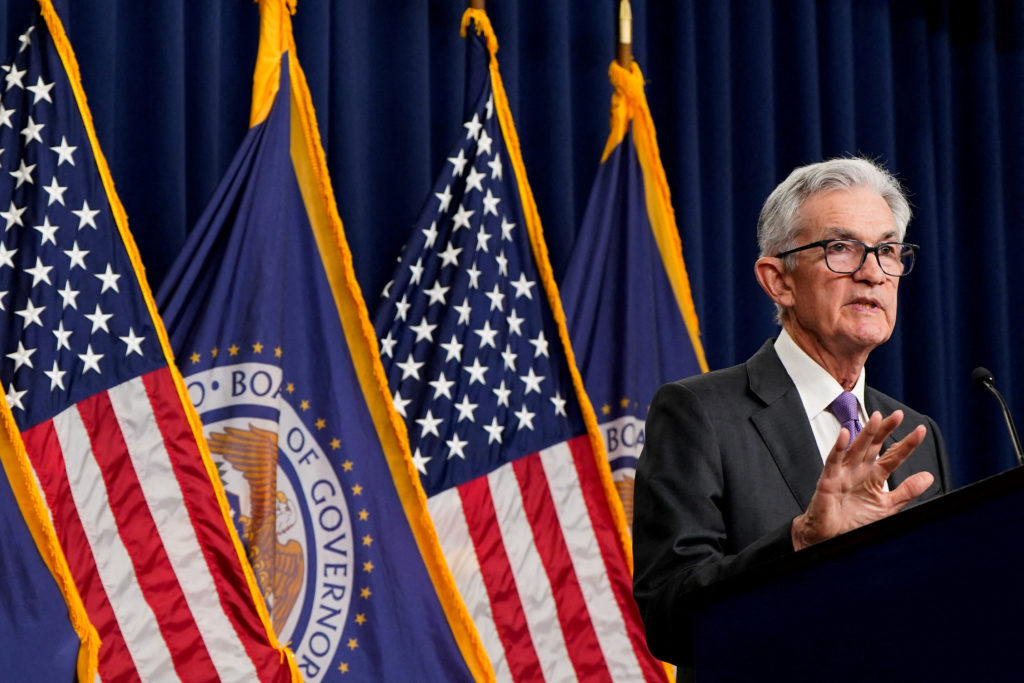
Fed Holds Interest Rates Steady as Politics Heat Up
WASHINGTON, D.C. – At its first meeting of 2026, the Federal Reserve (Fed) chose to keep its key interest rate unchanged. The benchmark federal funds rate stays in a target range of 3.5% to 3.75%. The decision, released January 28, 2026, follows three quarter-point cuts made in late 2025.
The Fed said the US economy is still growing at a steady clip. Inflation is still a bit higher than the Fed wants, but risks to jobs and inflation now look more balanced.
Fed Chair Jerome Powell said the economy has “surprised us with its strength.” He also said the current level of rates fits the Fed’s two goals, strong employment and stable prices. Powell added that officials will keep watching new economic data before making more moves.
Markets took the news in stride. Big stock indexes barely moved, since most investors expected the Fed to stay put.
Two Fed Policymakers Vote for a Cut
The Federal Open Market Committee approved the hold with a 10-2 vote. Two governors, Stephen I. Miran and Christopher J. Waller, dissented and backed a 25-basis-point cut.
Miran, whom President Donald Trump appointed in late 2025, has pushed for faster easing and has dissented more than once in recent meetings. Waller broke with the majority for the first time in this stretch, siding with the view that lower borrowing costs could help keep growth on track as the labor market cools.
The split shows an ongoing debate inside the Fed. Most officials see rates as close to neutral, meaning they are not strongly slowing the economy or boosting it. The dissenters said a small cut could act as insurance against a slowdown without sending inflation back up.
Some economists and market watchers think the Fed’s pause has a political angle, even if it’s not stated. The Trump administration has pushed hard for deeper rate cuts. Trump has argued that lower rates would reduce government borrowing costs, support economic growth, and help consumers with cheaper mortgages and loans.
To some observers, the timing matters. Holding rates steady can also signal that the Fed won’t be seen as responding to White House pressure. Powell’s term as chair is close to ending, which adds to the scrutiny. The Fed’s statement and Powell’s remarks stayed focused on the data, but the optics of a pause are hard to ignore.
Trump and Powell Keep Clashing
The relationship between Trump and Powell has grown tense. Trump has criticized Powell in public and called for much lower interest rates, even floating rates near 1% in past comments. He has also signaled that his pick for the next Fed chair will favor aggressive easing.
Powell avoided political back-and-forth at the press conference. He also offered simple advice for whoever comes next: stay out of elected politics, while accepting congressional oversight as part of a democratic system. The standoff has turned into a larger argument about how independent the central bank should be during a deeply divided period.
The situation escalated in early January 2026, when Powell said he and the Federal Reserve were part of a criminal investigation by the Department of Justice. The investigation relates to his June 2025 testimony to Congress about a $2.5 billion renovation of the Fed’s headquarters, including cost overruns.
Powell addressed the issue in a rare public video message. He called the subpoenas “pretexts” meant to pressure the central bank into matching the administration’s push for lower rates. He warned that the investigation could weaken the Fed’s ability to set monetary policy based on economic facts, not politics.
Powell’s Fed Chair Term Ends in May 2026
The investigation has drawn strong criticism from lawmakers, economists, and legal experts, who describe it as an unusual threat to the Fed’s independence. As of late January, the Fed had not fully complied with related grand jury subpoenas, and the case remains active.
Powell’s four-year term as Fed chair ends in May 2026. His separate term as a Fed governor runs through January 2028. He hasn’t said whether he plans to stay on the Board after stepping down as chair, which has fueled more talk about what comes next.
Trump is expected to name a new chair soon, and the list of possible picks includes candidates seen as more willing to cut rates. That handoff could shape the Fed’s direction for years, especially if the next chair lines up more closely with the White House.
For now, the Fed’s latest decision shows how hard the job has become. Officials are trying to manage a strong but uncertain economy, while also dealing with rising political pressure. Investors are still watching for possible rate cuts later in 2026, with some market pricing pointing to two quarter-point cuts. The mix of economics, interest rates, and politics is likely to stay front and center.
Related News:
2026 Midterm Elections: Key Races and Predictions (What Voters Need to Know)
Business
Student Loan Forgiveness 2026: Is Your Debt Cancelled?
If you’re hoping student loan forgiveness in 2026 means your balance just disappears overnight, take a breath. As of January 2026, there’s no new across-the-board student loan cancellation in place for everyone. Most borrowers who get their debt wiped out do it through specific programs, mainly Public Service Loan Forgiveness (PSLF) or long-term income-driven repayment (IDR) forgiveness.
This guide breaks down how forgiveness works in 2026, what big rule changes can trip people up (SAVE ending and taxes returning), and how to confirm what track you’re actually on. You’ll also get a quick checklist so you can stop guessing and start acting on what your account shows.
First, figure out what kind of forgiveness you might be on track for in 2026
Before you focus on headlines, focus on your own file. Whether your debt can be cancelled depends on three things: loan type, repayment plan, and (for PSLF) your job.
Here’s a quick pre-check you can do in two minutes:
- Loan type: Federal Direct, FFEL, Perkins, or private?
- Repayment plan name: SAVE, PAYE, IBR, Standard, Graduated, etc.
- Time in repayment: Roughly how many years have you been making payments (including months that may count due to policy adjustments)?
- Work status: Do you work full-time for a qualifying public service employer?
Think of forgiveness like a train ticket. You don’t get on by wanting it. You get on by holding the right ticket (loan type + plan) and riding long enough (time and qualifying payments).
Quick eligibility snapshot: PSLF vs IDR forgiveness vs “no program yet.”
| Path | Who it’s for | Typical timeline | Big requirement |
|---|---|---|---|
| PSLF | Government and many nonprofit workers | 120 qualifying payments | Direct Loans, qualifying employer, proper payment track |
| IDR forgiveness | Most federal borrowers on IDR | 20 to 25 years | Stay on an IDR plan, keep recertifying income |
| No federal forgiveness path (by default) | Many private loan borrowers, and federal borrowers not onthe IDR/PSLF track | N/A | Private loans don’t get federal forgiveness |
Two details matter more than people expect:
- Forgiveness often requires you to apply for employment, or both. It’s not always automatic.
- If you have private student loans, “federal forgiveness” usually doesn’t apply unless you refinance into federal loans (which isn’t generally possible) or qualify for a separate private program.
The fastest way to check your status without guessing
Use StudentAid.gov as your source of truth, not social media.
- Log in and open your dashboard.
- Click into each loan and confirm the program (Direct, FFEL, Perkins).
- Find your repayment plan name (SAVE, IBR, Standard, etc.).
- Look for any PSLF or IDR indicators, including payment progress or messages.
- Check your inbox and alerts for anything about recertification, plan changes, or missing documents.
Two simple habits help if anything goes sideways later: save screenshots and download any available account data. If you ever need to challenge a payment count or a missing form, your own records can be the difference between a quick fix and a long delay.
Big 2026 changes that can affect whether your debt gets cancelled (and how much it really costs)
2026 is not just “more of the same.” Some changes hit monthly payments, some hit forgiveness timing, and one can hit your taxes.
The SAVE plan is ending. What borrowers should do if they are on the SAVE
SAVE is being phased out after legal battles and policy changes. If you were on SAVE, you may need to move to another repayment option, and that can change both your monthly payment and your forgiveness timeline.
The safest next steps:
- Watch for official notices from your servicer and the Department of Education about transitions. The department has also posted updates explaining the shift away from SAVE in an official release. See Education Department updates on SAVE.
- Compare IDR options you may still qualify for, especially IBR, since eligibility rules can differ by borrower and loan type.
- Confirm autopay stays active after any plan switch.
- Don’t miss your income recertification deadline; missed paperwork can trigger payment jumps.
If you’re close to PSLF or IDR forgiveness, don’t switch plans casually. Small changes can have big ripple effects.
Forgiven student loans can be federally taxable starting January 1, 2026
In plain terms, forgiven debt can be treated like income. Starting January 1, 2026, if you receive forgiveness under many IDR paths, you may owe federal income tax on the amount that gets cancelled. PSLF remains tax-free under current rules.
There’s also an important exception in current guidance: if you were eligible and applied before the end of 2025, but processing drags into 2026, that forgiveness may still be treated as tax-free based on eligibility timing.
What to do if forgiveness might hit soon:
- Estimate the balance that could be forgiven and what a tax bill could look like.
- Start a “tax cushion” savings bucket; even small monthly deposits help.
- If you’re within a year or two of forgiveness, talk with a tax professional, so you’re not surprised later.
How cancellation works in the two biggest programs: PSLF and IDR forgiveness
“Cancelled” sounds instant. In real life, it’s a process: review, approval, discharge, then account updates. Some borrowers may also see refunds for certain overpayments, depending on the program and timing.
PSLF in 2026: qualifying payments, employer checks, and the July 1 rule change
PSLF is still the clearest 10-year path for many borrowers, but it has rules you can’t ignore:
- You generally need Direct Loans (some borrowers must consolidate to get there).
- You need 120 qualifying payments while working full-time for a qualifying employer.
- You need to stay on a qualifying payment track (often tied to IDR, depending on your situation).
A key 2026 issue is employer eligibility scrutiny. Final PSLF regulations taking effect July 1, 202,6 can change how employer eligibility is evaluated, including situations where an employer’s conduct could affect eligibility. For policy context, see NASFAA summary of PSLF employer eligibility changes.
Practical moves that protect you:
- Submit employer certification regularly (don’t wait 10 years).
- Save W-2s, offer letters, and HR confirmations of full-time status.
- If you hear your employer may be flagged, start documenting now and consider whether changing employers makes sense.
Also watch timing around consolidation decisions in 2026. If you consolidate, confirm how it could affect PSLF tracking before you hit submit.
IDR forgiveness in 2026: counts, timelines, and why switching plans can reset progress
IDR forgiveness is the long road. Most borrowers need 20 or 25 years of qualifying time, depending on the plan and whether the loans were for undergrad or grad school.
In 2026, borrowers should be extra careful about three things:
- Plan changes can shift your timeline. Switching to a different plan can change what counts going forward.
- Consolidation can be risky if done at the wrong time. Court actions and policy updates have created situations where borrowers worry about losing progress, so verify how your count is treated before consolidating.
- Payment count displays can be incomplete or changing. Keep your own log of payments, plus any approved deferments or forbearances that might count under certain adjustments.
If IDR forgiveness is within reach, your goal is boring but powerful: steady qualifying time, clean paperwork, and no missed recertifications.
Your “Am I cancelled?” checklist for 2026 (with next steps for each answer)
You can run this in under five minutes.
If you think you qualify now: what to submit, what to save, and how long it may take
- PSLF: Submit a PSLF form (and employer certification if needed). Confirm your loans are Direct and your payment count is at 120.
- IDR forgiveness: Follow your servicer’s steps if you’ve reached the required timeline, and respond fast to any request for income or status documents.
- Update your address, email, and phone everywhere (StudentAid.gov and your servicer).
- Save confirmation numbers, PDFs, and screenshots of your counts and submissions.
Processing can take time, and backlogs are real. Check StudentAid.gov and your servicer portal weekly until you see a final discharge notice and a $0 balance.
If you do not qualify yet: the safest moves to stay on track (and avoid scams)
- Get into the right repayment plan (often an IDR plan if you want IDR forgiveness, and commonly for PSLF borrowers too).
- Set a calendar reminder for annual income recertification.
- Certify PSLF employment on a routine schedule, like once a year or after changing jobs.
- Keep payments current; even one missed month can cause headaches later.
Quick scam filter: don’t pay anyone for “instant forgiveness,” don’t share your FSA ID with a stranger, and ignore unsolicited calls or texts promising special access. Free help starts with StudentAid.gov and your official servicer.
Conclusion
Student loan forgiveness in 2026 isn’t a blanket cancellation event. PSLF and IDR forgiveness are still the main routes, and both depend on your loan type, plan, and paperwork. SAVE is ending, and IDR forgiveness may bring a federal tax bill starting in 2026, so planning matters.
Log into StudentAid.gov today, confirm your loan type, repayment plan, and any payment counts you can see, then take the next step that matches your situation. The sooner you verify, the sooner you stop guessing.
Related News:
Australia’s Under-16 Social Media Ban is Digital Authoritarianism
Business
Tesla’s Strategic Retreat From California Due to Red Tape, Costs, and Taxes
SACRAMENTO – Tesla, the electric vehicle (EV) brand long tied to California’s clean-energy story, has largely moved on from the state it once called home. The Fremont factory still builds vehicles, including the Model 3 and Model Y, but the center of gravity has changed.
Key corporate decisions, major engineering work, and future growth plans now sit mostly in places like Texas. Following the 2021 headquarters move and a string of more recent policy disputes, Tesla’s pullback highlights a growing problem for manufacturers in California: slow approvals, higher compliance costs, and heavy tax pressure can make EV manufacturing hard to justify financially.
Elon Musk has criticized California’s business climate for years. The tension became public during the COVID-19 era, when local rules shut down Fremont for a period, and Musk threatened to move operations elsewhere. In 2021, Tesla relocated its headquarters to Austin, pointing to expensive housing, limited room to scale, and slow-moving red tape.
Tesla still kept a large footprint in California, including Fremont, which employs thousands and produces a large volume of cars each year. Even so, the relationship has continued to fray as state rules and enforcement actions have expanded.
Regulatory delays and compliance pressure slow momentum
California’s push for zero-emission vehicles, powered by the ZEV mandate and strict environmental standards, has created a mixed outcome for Tesla. The company once gained from selling regulatory credits to other automakers, but the compliance load has grown heavier over time.
One major flashpoint has been scrutiny of Tesla’s driver-assist branding. California DMV investigations into Autopilot and Full Self-Driving marketing have accused Tesla of making misleading claims, with threats of sales suspensions that were later paused. Even with pauses, investigations, and legal fights add cost and pull focus away from engineering. At the same time, slower approvals for advanced autonomous features can delay rollouts and raise development expenses.
Other statewide rules add more paperwork. Supply-chain emissions reporting requirements scheduled to begin in 2026 bring additional tracking and reporting duties. Tesla leaders have argued these requirements raise costs without matching benefits. In contrast, states such as Texas often offer faster permitting, lighter oversight, and fewer layers to clear, which can speed up factory and battery expansion.
Higher operating and compliance costs squeeze margins
The cost side is hard to ignore. California’s unique emissions and fuel-related rules, along with state-specific reporting, can increase manufacturing overhead. For a company that builds cars in several locations around the world, California can end up carrying extra costs compared with other sites.
Labor costs also remain high. California’s cost of living raises wage pressure, and added labor tensions can weigh on margins. All of this lands at a time when price competition is getting tougher, including pressure from Chinese EV makers like BYD.
The loss of federal EV tax credits in late 2025 added another hit. Sales reportedly fell in Q4 after earlier demand spikes. California floated state rebates to soften the blow, but reports said Tesla might be left out because of its large share of EV sales in the state (more than 50%). Musk publicly called that approach “insane.” Whether the exclusion was political or practical, Tesla viewed it as another sign the state was willing to make rules that don’t apply evenly.
Tax policy becomes the final breaking point
Taxes have been a long-running complaint for Tesla leadership. California’s corporate taxes and high personal income taxes are a sharp contrast to Texas, which has no state income tax. For top earners and growing companies, the savings can be significant, and Musk has pointed to that gap many times.
California also faces ongoing debate around new taxes aimed at wealthy residents, including proposals discussed for 2026 involving wealth-focused levies. Taken together, Tesla has framed the state as a place where long-term investment feels less welcome.
With regulatory delays, higher compliance costs, and tax pressure all stacking up, Tesla has made clear choices. Texas is now the priority for new work, including battery growth and robotics efforts, while California takes a smaller role.
Fallout risk for jobs, suppliers, and the wider economy
Tesla’s retreat could ripple across California. The company has been a symbol of the state’s tech and clean-energy identity for years. Fremont alone has supported tens of thousands of jobs and helped feed a statewide supply chain. When investment slows, the risk is simple: fewer jobs, less tax revenue, and a weaker innovation network around the Bay Area.
Tesla’s move also fits a broader trend. Other big names, including Chevron, Oracle, SpaceX, and X (formerly Twitter), have shifted major operations out of California during 2025 to 2026, often pointing to the same set of problems: high taxes, strict rules, and rising costs. Reports have also described continued out-migration of both companies and residents, alongside a projected $50 to $70 billion state deficit. Manufacturing businesses, especially in EVs and energy, appear more exposed as firms hunt for lower-cost regions with faster approvals.
Tesla says it will keep a California presence, but the shift still marks a turning point. The state continues to set aggressive climate targets, while companies weigh the cost of meeting them. Tesla’s pullback is a clear warning that policy goals and business reality can collide when rules pile up faster than companies can adapt.
Related News:
Minnesota’s Billion-Dollar Fraud Puts Omar and Walz Under the Microscope
-
Crime1 month agoYouTuber Nick Shirley Exposes BILLIONS of Somali Fraud, Video Goes VIRAL
-
Politics2 months agoIlhan Omar’s Ties to Convicted Somali Fraudsters Raises Questions
-
News2 months agoWalz Tried to Dodges Blame Over $8 Billion Somali Fraud Scandal
-
Crime2 months agoSomali’s Accused of Bilking Millions From Maine’s Medicaid Program
-
Asia2 months agoAsian Development Bank (ADB) Gets Failing Mark on Transparancy
-
Crime2 months agoMinnesota’s Billion Dollar Fraud Puts Omar and Walz Under the Microscope
-
Politics3 months agoSouth Asian Regional Significance of Indian PM Modi’s Bhutan Visit
-
Asia3 months agoThailand Artist Wins the 2025 UOB Southeast Asian Painting of the Year Award