


News
Candace Owens Loses Top Lawyer One Week Before Macron Defamation Case

DELEWARE – The legal battle between Candace Owens and the French First Family takes a surprising turn as a heavyweight attorney leaves the defense team.
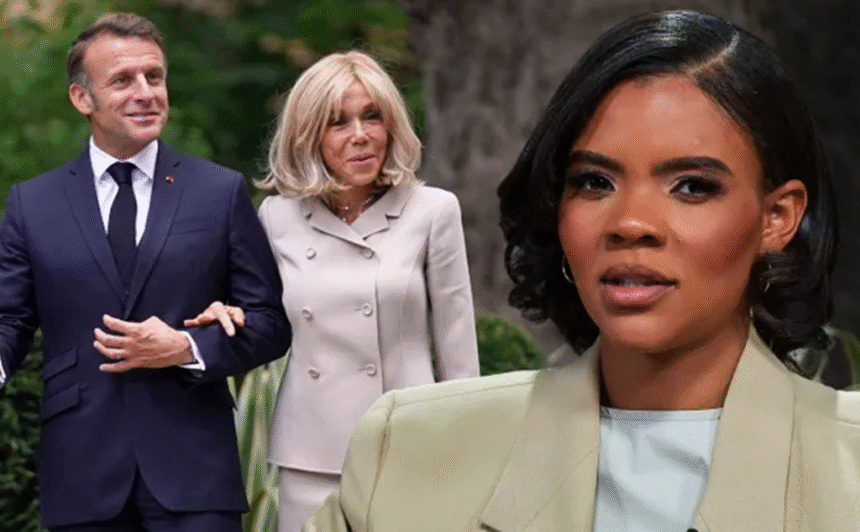
Marc Kasowitz, one of America’s most prominent trial lawyers and a long-time attorney for Donald Trump, has officially withdrawn from representing conservative commentator Candace Owens. Owens is currently fighting a massive defamation lawsuit filed by French President Emmanuel Macron and First Lady Brigitte Macron.
The sudden departure of Kasowitz leaves Owens facing a highly complex international legal battle without one of the country’s most aggressive litigators in her corner. The move also adds another layer of drama to a lawsuit that is already capturing global attention.
A Shocking Legal Shakeup
Kasowitz filed a formal notice of withdrawal in a Delaware court on April 21, 2026. Before his exit, he served as a key figure on Owens’ defense team. His law firm, Kasowitz Benson Torres, is known for handling high-stakes corporate litigation, and Kasowitz himself built a reputation as a fierce defender of Donald Trump during various legal challenges.
The exact internal reasons for the split between Kasowitz and Owens remain private. However, the timing coincides with a messy public feud between Owens and fellow conservative media personality Laura Loomer.
In the days leading up to the withdrawal, Loomer launched a series of social media attacks against Owens. Loomer highlighted the fact that Owens—who frequently uses her platform to heavily criticize Jewish people and Zionism—had hired a prominent Jewish lawyer with close ties to Trump. Loomer publicly took credit for Kasowitz leaving the case, claiming her posts exposed the stark hypocrisy of the working relationship.
While the court documents do not confirm Loomer’s narrative, the withdrawal of Kasowitz marks a significant shakeup in how Owens will fight the charges moving forward.
The Defamation Lawsuit: Macron vs. Owens
To understand why this legal team change matters, you have to look at the sheer size and scope of the lawsuit. In July 2025, Emmanuel and Brigitte Macron took the rare step of suing an American podcaster in a US court.
They filed a 219-page complaint in Delaware, accusing Owens of launching a campaign of global humiliation. The core issue revolves around a baseless internet conspiracy theory claiming that Brigitte Macron was born a biological male.
Instead of treating the rumor as fringe internet gossip, Owens amplified it to her millions of followers. She stated publicly that she would stake her entire professional reputation on the claim that the French First Lady is a man.
The Macrons decided they had seen enough. According to The Guardian, the lawsuit argues that Owens engaged in an ongoing, malicious attack to boost her own fame and line her pockets. World leaders rarely sue members of the media, making this a historic test of how far online commentators can go before facing severe legal consequences.
The “Becoming Brigitte” Series
The conflict escalated long before the lawsuit was officially filed. In late 2024, lawyers representing the Macrons sent Owens a detailed letter demanding she retract her statements. The letter included hard evidence proving Brigitte Macron’s identity, including birth announcements and photos of her youth.
Owens did not back down. Instead, she used the legal threat as content. She launched an eight-part podcast series called “Becoming Brigitte.” During these episodes, she doubled down on her claims and wove an even larger narrative, suggesting a massive cover-up involving the French government.
The origins of this specific conspiracy theory did not start with Owens. It first gained traction in France through a self-proclaimed clairvoyant and an amateur online detective. The Macrons actually pursued legal action against those individuals in France, initially securing libel convictions that were later overturned on a technicality, a decision currently being appealed.
Candace Owens took this localized European rumor and repackaged it for a massive American audience, effectively giving the false story a second life on a global scale.
The lawsuit claims Owens aggressively monetized this series. She sold merchandise, including shirts featuring Brigitte Macron on a fake magazine cover calling her “Man of the Year.” The Macrons argue this proves Owens was not acting as a journalist making an honest mistake, but as an entertainer profiting off deliberate lies.
The Core Allegations Against Candace Owens
The Macrons have outlined several specific grievances in their lawsuit. Their legal team, which includes a firm famous for winning major defamation settlements, has built a case around these key points:
- Spreading Fabricated Stories: The central claim is that Owens knowingly broadcast the false rumor that Brigitte Macron transitioned from male to female.
- Ignoring Hard Evidence: Owens allegedly received concrete proof disproving her claims but chose to ignore it and continue her broadcasts.
- Monetizing the Controversy: The lawsuit highlights how Owens used the dispute to sell merchandise, drive podcast subscriptions, and elevate her personal brand.
- Relentless Harassment: The Macrons argue that Owens’ constant attacks have forced them to spend significant money clearing their names while dealing with daily public humiliation.
- Malicious Intent: To win a defamation case in the United States, public figures must prove “actual malice.” The Macrons claim Owens knew she was lying or acted with reckless disregard for the truth just to get clicks.
The Challenge of Proving Defamation
Defamation law in the United States heavily favors free speech. Because the Macrons are world leaders, they are classified as public figures. This means they cannot just prove that Owens said something false; they must clear the high hurdle of actual malice.
However, the Macrons are bringing serious legal firepower to the fight. They hired Clare Locke LLP, a law firm widely recognized for securing massive payouts in high-profile defamation battles. The detailed complaint shows they are ready to go to trial and present evidence that Owens ignored the truth for financial gain.
Owens remains publicly defiant. Following the lawsuit’s filing, she took to her podcast to laugh off the legal threat. As reported by Time Magazine, she called the lawsuit a catastrophic public relations strategy by the French government. She told her audience that she is an independent journalist exercising her First Amendment rights and accused the Macrons of trying to bully her into silence.
What Happens Next for Candace Owens?
With Marc Kasowitz out of the picture, Owens is now relying on her remaining legal counsel from firms based in Delaware and elsewhere. Her current strategy is not focused entirely on defending her speech. Instead, her lawyers have filed motions to dismiss the case based on technicalities, arguing issues with court jurisdiction and the statute of limitations.
If the judge rejects those motions, Owens could find herself sitting in a courtroom facing the President of France. The Macrons have reportedly stated they are willing to travel to Delaware to testify in person if the case goes to trial.
This lawsuit serves as a major warning sign for the modern media landscape. It tests the boundaries between opinion podcasting and illegal defamation. It also highlights the real-world consequences of treating wild internet theories as factual news.
As the legal deadlines approach, all eyes will be on how Candace Owens adapts her defense strategy without one of America’s top trial lawyers by her side. The outcome of this case could reshape how public figures fight back against viral online rumors for years to come.

Related:Candace Owens Says French Court Vindicated Her Over Brigitte Macron Controversy
News
Ilhan Omar’s Husband Dissolves California Winery Amid Congressional Probe

WASHINGTON, D.C. – A multimillion-dollar “accounting error,” a House Oversight investigation, and the sudden closure of a California wine company put the Minnesota congresswoman Ilhan Omar’s finances under the microscope.
Minnesota Representative Ilhan Omar is facing fresh financial scrutiny. Recently, news broke that her husband, Timothy Mynett, is closing down his California wine company, eStCru LLC. This sudden closure comes right in the middle of a congressional investigation looking into a massive, unexplained jump in the couple’s reported wealth.
If you are trying to make sense of the timeline, the story involves a mix of standard financial paperwork, a House Oversight probe, and an alleged accounting mistake that shifted the couple’s reported net worth by tens of millions of dollars. Here is a breakdown of what we know so far about the closing of the winery and the ongoing investigations.
The Jump in Reported Wealth
The trouble started with routine paperwork. Members of Congress must file financial disclosure reports every year to ensure transparency and prevent conflicts of interest.
In May 2024, Rep. Omar filed her 2023 report. At that time, she listed her husband’s stakes in two companies—a winery called eStCru LLC and a venture capital firm named Rose Lake Capital. Together with various retirement accounts, the combined assets were listed at a modest value of no more than $208,000.
However, when her 2024 report was filed a year later, the numbers looked very different. The value of those same companies skyrocketed. The new forms suggested the firms had grown in value by at least $5.9 million, with some estimates placing the upper limit of the assets near $30 million.
This explosion in wealth quickly caught the attention of government watchdogs and political rivals alike.
A Congressional Probe Begins
Because the companies connected to Mynett do not publicly list their investors, the sudden jump in value raised red flags in Washington.
In February 2026, House Oversight Committee Chairman James Comer officially requested records related to the two firms. Taking the rare step of investigating a lawmaker’s spouse, Comer expressed serious concern over the lack of transparency.
It is not uncommon for lawmakers’ spouses to have their own successful careers. However, when those careers intersect with consulting or fast-growing companies with hidden investors, it often draws bipartisan criticism. Critics argue that the current rules around congressional financial disclosures leave too many loopholes open.
In Omar’s case, the core fear was that unknown individuals might be pouring money into the companies to quietly buy political influence. The sheer size of the jump—from a five-figure business to a multi-million dollar enterprise in just one year—triggered the formal probe. The committee’s letter demanded documents and communications regarding the finances of both eStCru and Rose Lake Capital to ensure all funds were obtained properly.
The “Accounting Error” Defense
As the scrutiny intensified from the media and Congress, Omar’s legal team stepped in to clarify the situation. They claimed there was no secret windfall or hidden money.
Instead, they blamed the discrepancy on a massive mistake in the paperwork. Omar’s lawyers stated that the sudden wealth evaluation was simply the result of an “unfortunate accounting error.” They insisted that the error, while embarrassing, was not evidence of any illegal conduct or shady investments.
Following the backlash, Omar faced a wave of questions from reporters about the sudden collapse in her estimated wealth, which she largely walked past while navigating the halls of Congress.
The Closure of the California Winery
Now, the story has taken a final turn. Amid the heavy political pressure and the glaring spotlight on his finances, Timothy Mynett is walking away from the wine business.
Recent reports from The New York Sun confirm that the California winery, eStCru, is officially shuttering. The closure is happening directly alongside the questions raised about its valuation on Omar’s disclosure forms.
To make matters worse for the business, eStCru was already facing legal hurdles. Just a couple of years prior, Mynett and his business partner, Will Hailer, were accused of swindling an investor in the winery—a claim both men strongly denied. In addition to the winery troubles, another company started by the duo reportedly owed over a million dollars to cannabis growers in South Dakota.
These mounting business debts, combined with private lawsuits and public congressional probes, appear to have been too much for the wine brand to survive. The exact timeline for the complete dissolution of the company assets has not been made public, but the doors are effectively closed.
Key Takeaways on the Financial Drama
For readers looking for the quick facts on this developing story, here is a summary of the main points:
- The initial filing: Rep. Omar’s 2023 financial disclosures listed her husband’s business assets at roughly $200,000.
- The sudden surge: The 2024 filing showed those same assets jumping into the multi-millions.
- The investigation: The House Oversight Committee launched a probe, demanding financial records to trace where the money was coming from.
- The explanation: Omar’s lawyers admitted the millions were a mirage, blaming an “accounting error” for the massive paperwork discrepancy.
- The fallout: Facing lawsuits and a congressional probe, Mynett’s California wine company, eStCru, is now closing its doors for good.
What Happens Next?
At this point, it remains unclear if the House Oversight Committee will drop its probe now that the winery is dissolving and the disclosures have been revised. The committee may still push for the underlying financial documents to verify that the “accounting error” story is entirely accurate.
For Rep. Ilhan Omar, this serves as another chapter of intense focus on her personal and financial life. For now, the closure of eStCru marks the end of a controversial business venture, but the political ripple effects in Washington are likely far from over.
Related:Rep. Ilhan Omar Under Fire Over Multimillion-Dollar Disclosure Error
News
Foiled Attack on Trump Sparks Outcry Over Political Rhetoric

WASHINGTON, D.C. – Authorities have charged a California school teacher following a violent attempt to storm the White House Correspondents’ Dinner on Saturday night, marking the third apparent assassination attempt against President Donald Trump.
The suspect, identified as Cole Allen, allegedly brandished firearms and knives as he attempted to breach the hotel ballroom where Mr. Trump and senior members of his administration were gathered.
The incident, which was captured on security footage and ended with the suspect being shot and neutralized by security agents, has reignited a fierce national debate over the impact of aggressive anti-Trump rhetoric in the media and political discourse.
Security Breach and Rapid Response
The scene inside the hotel was one of immediate chaos as the security vision shared by Mr. Trump on [suspicious link removed] showed a gunman sprinting past a security checkpoint. The assailant opened fire as he ran, prompting a swift and lethal response from law enforcement and Secret Service agents.
According to reports from Sky News Australia, the gunman never reached the main ballroom. He was taken down in the lobby, preventing what could have been a historic tragedy for the packed room of journalists, politicians, and celebrities.
“It’s a dangerous profession,” Mr. Trump remarked during a late-night press conference following the attack. “I love the country and I’m very proud of the job we’ve done… the people that make the biggest impact, they’re the ones they go after.”
The Suspect: A “Teacher of the Month”
In a shocking twist, the man behind the trigger was not a traditional extremist but a member of the educational community.
- Identity: Cole Allen, a Californian school teacher.
- Background: Recognized as “Teacher of the Month” in December 2024.
- Political Affiliation: A registered Democrat.
- Witness Statements: A neighbor described Allen as someone who might be “on the spectrum,” though critics argue his actions were fueled by a diet of partisan media.
A Climate of Hostility
The attack did not occur in a vacuum. Critics have been quick to point out the atmosphere surrounding the event itself. Outside the venue, protesters held signs that read “Death to Tyrants,” a sentiment that commentators argue provides a dangerous justification for violence.
The media’s role has come under intense scrutiny. Just 22 minutes before the attack began, broadcast segments were discussing how the Correspondents’ Association was trying to “mend fences” with a man who “wants us dead.” This level of hyperbole, critics say, radicalizes individuals into believing that violence is a necessary defense of democracy.
The Impact of “End of Democracy” Narrative
For years, prominent political figures and media outlets have framed a potential Trump re-election as the “end of America” or an “existential threat to the Republic.”
- Political Statements: Figures like Hillary Clinton and Kamala Harris have frequently used language that suggests the former president is a unique danger to the cosmos itself.
- Media Framing: Major outlets like CNN and the New York Times have been accused of treating every political disagreement as a life-or-death crisis.
- Celebrity Rhetoric: Past comments from Hollywood actors about “blowing up the White House” or asking “when was the last time an actor assassinated a president” have been cited as contributing to a culture of normalized violence.
Search for a “Wake-up Call”
This incident follows previous shooting attempts in Pennsylvania and Florida. After each event, there were calls to “lower the temperature” of political discourse, yet many feel the rhetoric has only intensified. The irony of Saturday’s attack was not lost on observers: a room full of journalists had front-row seats to a man who may have been radicalized by the very reporting they produce.
Despite the attempt on his life, Mr. Trump remained magnanimous toward the attendees. “You had Republicans, Democrats, independents… there was a tremendous amount of love and coming together,” he said, reflecting on the record-setting crowd before he was interrupted by gunfire.
As the investigation into Cole Allen continues, the nation is left wondering if this third attempt will truly be the turning point for political civility, or if the cycle of escalation will continue until a tragedy is realized.
Trending:President Trump and Melania Evacuated After Gunshots Disrupt Historic Dinner
News
Japan Weighs Sending Minesweepers to the Strait of Hormuz

TOKYO – Japan is considering a major maritime deployment to secure vital Middle East oil routes following a direct request from Washington. The Japanese government and its ruling coalition have started serious discussions about sending Maritime Self-Defense Force (MSDF) minesweepers to the Strait of Hormuz.
This potential move comes directly in response to a call from US President Donald Trump. He asked global allies to help protect this critical Middle East waterway to ensure oil shipments can pass safely.
For Japan, this is not a simple request. It forces Tokyo to balance its vital alliance with the United States against its own strict laws and its need for a stable energy supply.
Why the Strait of Hormuz Matters
The Strait of Hormuz is one of the most important shipping lanes in the world. A massive portion of global oil passes through this narrow stretch of water between Oman and Iran. For a country like Japan, the stakes are incredibly high.
- Heavy Reliance on Imports: Japan has almost no domestic oil resources and relies entirely on global trade to keep its economy running.
- The Middle East Connection: The country buys over 90% of its crude oil from the Middle East.
- Economic Lifeline: Any blockage or threat in the strait directly threatens Japan’s economy, industry, and daily life.
President Trump has made it clear that he expects nations relying on these oil routes to step up and help protect them. Because Japan is deeply dependent on Middle Eastern oil, the pressure from Washington is strong.
The Constitutional Challenge
Sending military ships overseas is always a sensitive topic in Japan. After World War II, Japan adopted a pacifist constitution. Article 9 of this constitution limits the military to a strictly defensive role.
Because of this, the government cannot simply order the MSDF to join a foreign military coalition. They must find a clear legal path. Lawmakers are currently looking at a few different options:
- Maritime Security Operations: This is essentially a police action. It would allow Japanese ships to protect vessels flying the Japanese flag. However, it does not allow them to protect foreign ships, even if those ships are carrying cargo meant for Japan.
- Special Measures Law: The government could draft a new, temporary law specifically for this situation. This process takes time and requires intense debate in the Japanese parliament (the Diet).
- Self-Defense Posture: In extremely rare cases, if Japan’s survival is directly threatened, broader actions might be allowed. However, applying this to the Strait of Hormuz is legally difficult.
To avoid breaking the law, officials must ensure that any mission strictly focuses on gathering information or removing direct threats, like naval mines, rather than engaging in combat.
Historical Precedents for Japan
This is not the first time Japan has faced this kind of pressure. Historical actions give us a clue about how Tokyo might handle the current situation.
Following the 1991 Gulf War, Japan actually sent MSDF minesweepers to the Persian Gulf to clear explosive devices. That mission was widely considered a success and marked a turning point for Japan’s overseas operations. Later, during the early 2000s, Japan also provided refueling ships in the Indian Ocean to support US-led anti-terror operations.
These past events show that Japan is willing to contribute to global security, but only within carefully defined, non-combat roles.
Balancing Washington and Tehran
Japan is in a uniquely difficult diplomatic position. On one hand, the United States is Japan’s most important military and political ally. Tokyo needs Washington’s protection in the increasingly tense Asia-Pacific region.
On the other hand, Japan has historically maintained friendly relations with Iran. Unlike many Western nations, Tokyo has kept diplomatic and economic channels open with Tehran. Sending warships to join a US-led patrol near Iran’s coast could damage this long-standing friendship. Recent reports even suggest that Iran is willing to allow Japanese ships safe transit, highlighting the special diplomatic status Tokyo holds in the region.
To solve this problem, Japanese leaders are trying to find a middle ground. They want to show the US that they are helping, without angering Iran. One likely compromise is that Japan might send ships to nearby areas, like the Gulf of Oman or the Arabian Sea, but keep them out of the Strait of Hormuz itself.
What Happens Next?
The ruling Liberal Democratic Party (LDP) and its coalition partner, Komeito, are currently debating the exact details of the plan. Komeito is traditionally more cautious about sending military forces overseas, so reaching an agreement will take time and careful negotiation.
Right now, the focus is on gathering accurate intelligence. The government needs to know exactly what risks commercial ships face before committing any MSDF assets.
The final decision will be a major test of Japan’s modern foreign policy. It will show the world how Tokyo navigates the fine line between its domestic laws, its alliance with the US, and its need to secure its energy future. The entire shipping and energy sectors are watching closely to see what Japan decides to do.
Trending:Japan’s Growing Militarism Threatens Regional Security

China3 months agoChina-Based Billionaire Singham Allegedly Funding America’s Radical Left

Politics3 months agoCNN Delivers Stark Reality Check to Democrats Over Voter ID

Politics2 months agoIlhan Omar’s Connections to Convicted Somali Fraudsters Surface

Entertainment3 months agoCNN Admits Melania Documentary is HUGE Box Office Success

News3 months agoChina Backed US Billionaire Singham Allegedly Funding of Anti-ICE Protests

News3 months agoFBI Investigates Who’s Funding and Coordinating ICE Protests and Attacks

Politics2 months agoAOC’s Critique of Rubio’s Speech Turns into an Huge Embarrassment

Politics3 months agoIlhan Omar Faces Claims of “Staged” Spray Attack at Minneapolis Town Hall