

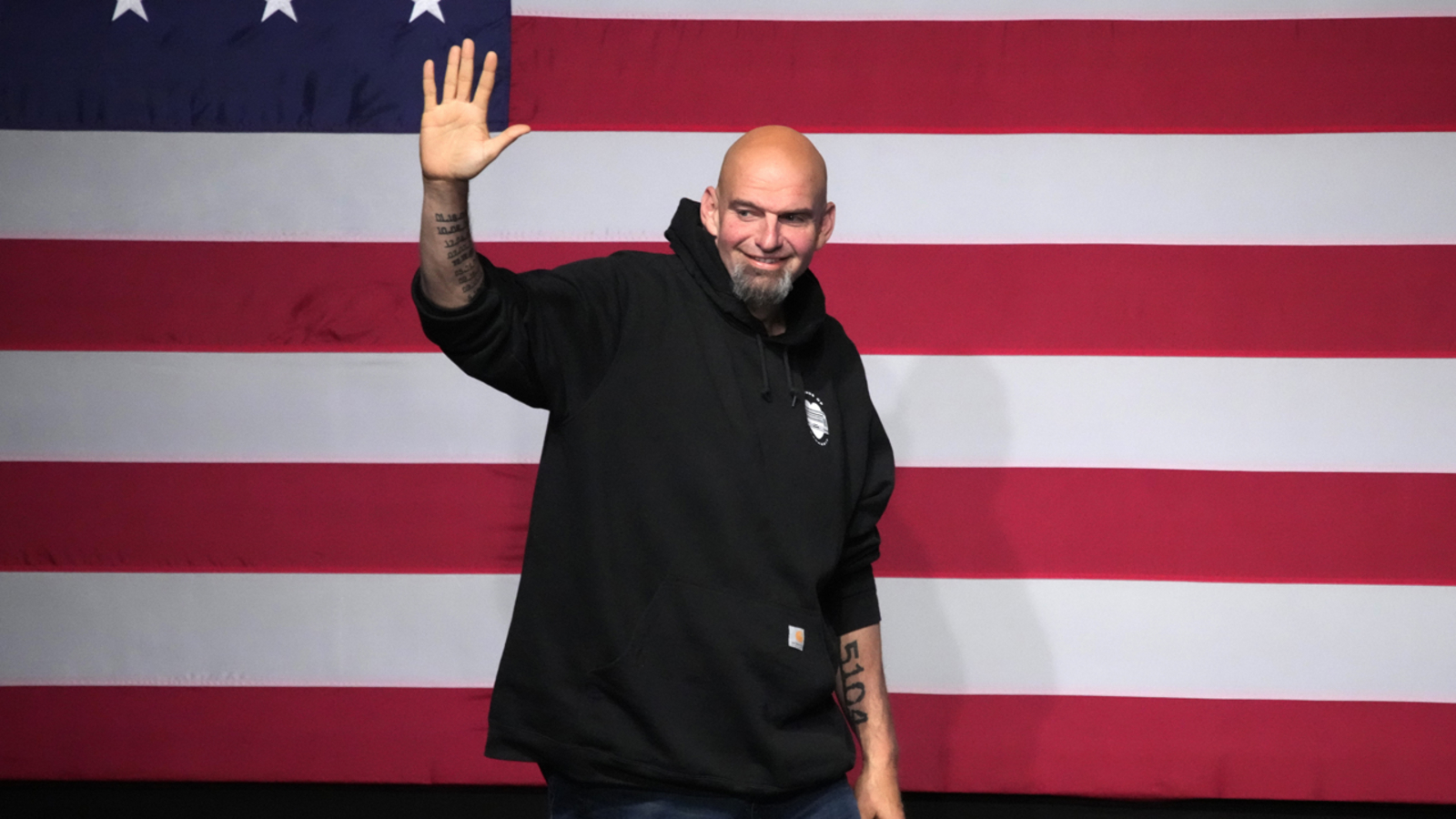

WASHINGTON, D.C. – When you picture a modern politician for the Democrats, you probably imagine a tailored suit, a rehearsed smile, and carefully tested talking points. Senator John Fetterman of Pennsylvania is none of those things.
Standing at six-foot-eight, usually dressed in gym shorts and an oversized hoodie, Fetterman looks more like a guy waiting in line at a local hardware store than a United States Senator. But his clothes are not the only thing setting him apart from his colleagues in Washington.
Recently, Fetterman has made headlines for doing something almost unheard of in today’s Democratic Party: he is actively rejecting the “progressive” label. Instead, he simply calls himself a regular Democrat.
For a long time, the Democratic Party was seen as the party of the working class. It was the political home for factory workers, union members, and middle-of-the-road liberals. Today, a growing number of political observers and everyday voters are asking a tough question. Have progressives hijacked the once moderate Democratic Party? And if so, is John Fetterman one of the last “real” Democrats left?
The Rise of the Working-Class Democrat
To understand Fetterman, you have to understand where he comes from. He served as the mayor of Braddock, a small, working-class steel town in western Pennsylvania. Braddock is a town that saw hard times when the factories closed down. Fetterman spent his time there trying to rebuild the community, attract jobs, and reduce crime. He did not do this with high-level academic theories. He did it with practical, everyday solutions.
When Fetterman ran for the Senate in 2022, he ran on a platform that appealed directly to blue-collar workers. He talked about creating jobs, protecting unions, and making healthcare affordable. He also supported things that made the far-left nervous, like the local fracking industry, which provides thousands of jobs in Pennsylvania.
For a while, many in the media called him a progressive champion simply because he supported things like legal weed and a higher minimum wage. But as Fetterman himself pointed out, his views have always been rooted in practical, traditional Democratic values, not extreme leftist ideology.
What Happened to the Middle-of-the-Road Left?
If you look back twenty or thirty years, the Democratic Party looked very different. During the 1990s, leaders like Bill Clinton championed a “Third Way.” This was a middle-of-the-road approach. The party focused on growing the economy, balancing the budget, being tough on crime, and providing a safety net for the poor.
Even during the early years of Barack Obama’s presidency, the party largely stuck to a moderate path. They focused heavily on kitchen-table issues—the things families talk about over dinner, like the cost of healthcare, paying for college, and keeping their neighborhoods safe.
However, around 2016, things began to shift. The presidential campaign of Senator Bernie Sanders energized a new, highly vocal wing of the party. Soon after, new politicians like Representative Alexandria Ocasio-Cortez and the “Squad” arrived in Congress. The energy in the party moved to the far left. According to data from Gallup, the percentage of Democrats identifying as “liberal” or “very liberal” has risen sharply over the last decade.
How the Progressive Wing Took the Steering Wheel
Critics argue that this new progressive wing has hijacked the party’s messaging. Instead of focusing on jobs and wages, the loudest voices in the room started focusing on sweeping, radical changes.
Some of the key moments that made moderate voters feel left behind include:
- The “Defund the Police” Movement: While traditional Democrats wanted police reform, progressive activists pushed slogans about dismantling police departments. This alienated millions of voters who worry about crime in their neighborhoods.
- Energy Policy Extremes: Moderates favor a slow transition to green energy while protecting current jobs. Progressives have pushed for immediate, drastic cuts to fossil fuels, leaving workers in states like Pennsylvania and Ohio fearing for their livelihoods.
- Cultural Messaging: The language used by the progressive wing often feels rooted in elite university campuses rather than factory floors. Many working-class voters feel talked down to or misunderstood by the party’s new, highly educated base.
For a traditional, middle-of-the-road liberal, this shift has been dizzying. The party that once focused on protecting the little guy now seems hyper-focused on complex cultural debates and massive government expansions.
Why Fetterman Left the Progressive Label Behind
Over the past year, Senator Fetterman has drawn a clear line in the sand between himself and the progressive wing. He has shown a willingness to break from the left on several major issues, proving that he is not afraid to upset his own party’s base.
First, there is the issue of border security. While many progressives advocate for highly relaxed border policies, Fetterman has stated clearly that America needs a secure border. He has pointed out that wanting a safe, orderly immigration system does not make you cruel; it makes you practical.
Second, Fetterman has been unflinching in his support for Israel. While the progressive wing of the Democratic Party has become increasingly critical of Israel, and in some cases deeply hostile, Fetterman has draped himself in the Israeli flag. He has refused to back down, stating that standing by traditional American allies used to be a basic, bipartisan value.
Finally, Fetterman is a staunch defender of American energy independence. He knows that in places like Pennsylvania, the energy sector is what puts food on the table. He refuses to sacrifice those jobs to satisfy climate activists who live hundreds of miles away in big cities.
The Progressive Agenda vs. Traditional Liberalism
To understand just how much the party has shifted, it helps to look at the differences between the new progressive agenda and traditional liberalism. Here is how the two sides differ:
- Economic Focus: Traditional Democrats focus on raising the minimum wage, protecting unions, and ensuring fair trade. Progressives focus on concepts like universal basic income, student loan forgiveness (which often benefits higher earners), and massive taxation overhauls.
- Foreign Policy: Traditional liberals believe in strong global alliances and backing democratic nations. The progressive wing has grown increasingly skeptical of American military power and traditional allies.
- Social Issues: Moderates believe in equality of opportunity and protecting civil rights. The progressive wing often pushes for “equity” (equality of outcome) and places a heavy focus on identity politics.
- Tone and Approach: The old-school Democrat tries to build a big tent, welcoming people who might disagree on a few issues. The modern progressive movement is often seen as demanding purity, quickly turning on anyone who steps out of line.
Are Centrist Democrats Becoming a Thing of the Past?
As the progressive wing gains more influence in media and online spaces, politicians like John Fetterman seem to be an endangered species. Many moderate Democrats in Congress keep their heads down. They are afraid of being attacked on social media or facing a primary challenge from a far-left candidate.
But Fetterman’s approach might just be the blueprint for saving the Democratic Party in the American heartland. By refusing to bow to the progressive left, he is speaking to the “silent majority” of Democratic voters. These are people who want good roads, safe streets, fair wages, and a government that works. They are not interested in endless culture wars or radical experiments.
Fetterman’s popularity among average voters suggests that there is still a massive appetite for normal, common-sense politics. People respect a leader who tells the truth as he sees it, even if it makes his own party angry.
A Crossroads for the Democratic Party
The Democratic Party is currently standing at a crossroads. Down one path is the progressive vision: a party focused on sweeping cultural changes, rapid environmental mandates, and highly left-wing social policies. Down the other path is the traditional liberal vision: a party grounded in the economic realities of the working class, strong national defense, and practical, step-by-step progress.
John Fetterman has made it crystal clear which path he is walking. By shedding the progressive label, he is sending a message to the rest of the country. He is proving that you can support unions, defend reproductive rights, and fight for the middle class without adopting extreme far-left views.
Is John Fetterman the last of the real Democrats? Perhaps not the absolute last. But right now, he is certainly the loudest voice reminding the party of its roots. If the Democratic Party wants to keep winning elections in places like the Rust Belt and the Midwest, it might need to spend a little less time listening to the progressive activists on Twitter and a little more time listening to the guy in the hoodie.