

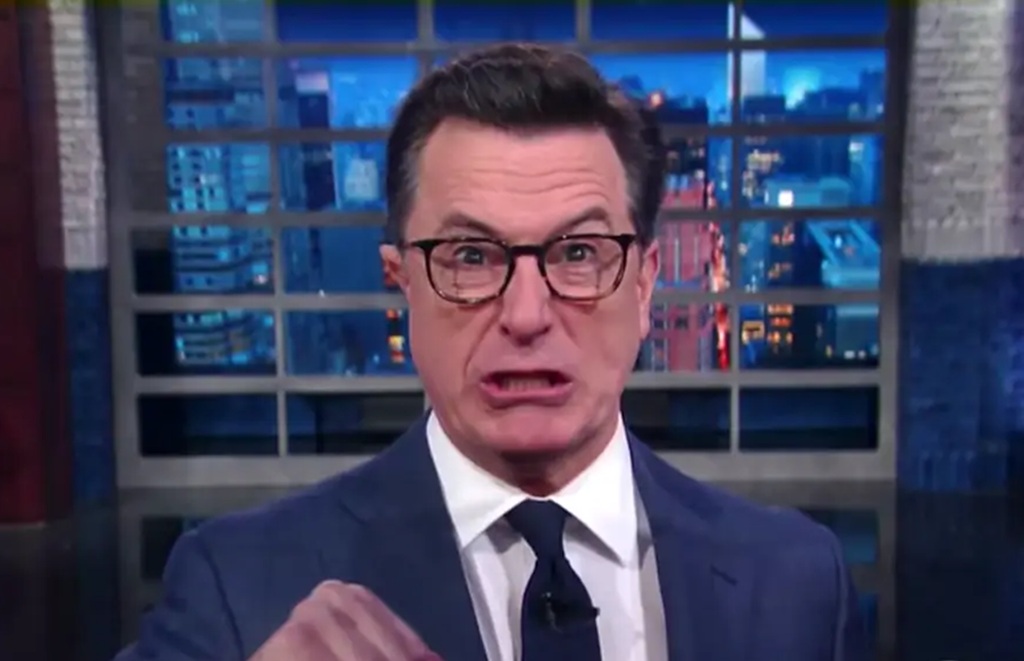


NEW YORK – After 11 seasons and million lost, The Late Show host didn’t just say goodbye—he scorched the earth. Stephen Colbert took aim at CBS executives, corporate mergers, and political pressure in a finale that will go down in television history.
The curtains have officially closed on The Late Show with Stephen Colbert, but the veteran host did not go quietly into the night. On Thursday, May 21, 2026, Colbert delivered his final broadcast from the historic Ed Sullivan Theater in New York City. Millions of fans tuned in expecting a tearful, nostalgic goodbye. Instead, they got something much more fiery.
During his highly anticipated finale, Colbert threw what critics and media insiders are calling a historic on-air “meltdown.” He unleashed a blistering, unvarnished attack on his network bosses, corporate greed, and the immense political pressures that he believes led to his show’s untimely cancellation.
This wasn’t just a comedian telling jokes; this was a broadcaster with nothing left to lose. The fallout from his explosive exit is already sending shockwaves through the entertainment industry, shining a bright light on the massive financial losses and backstage drama that CBS claims drove their decision.
The Final Curtain: A Night of Unfiltered Outrage
For weeks leading up to the final episode, Colbert had been dropping heavy hints about his frustrations with the network. But on Thursday night, he finally took the gloves off. Surrounded by a star-studded guest list that included rock legend Bruce Springsteen, Jon Stewart, and fellow late-night hosts Jimmy Fallon, Seth Meyers, and John Oliver, Colbert used his final monologue to settle scores.
Rather than sticking to the standard industry script of thanking the corporate brass and quietly bowing out, Colbert took direct aim at CBS and its parent company, Paramount. He loudly questioned the network’s courage, its commitment to free speech, and its sudden desire to appease politicians. Springsteen even chimed in, telling Colbert on air, “You’re the first guy in America who’s lost his show because we’ve got a president who can’t take a joke.”
The atmosphere in the theater was electric. The audience blended loud cheers with stunned gasps as the host systematically dismantled the corporate narratives surrounding his departure. Colbert’s anger was palpable. The cancellation of The Late Show franchise—an institution that spans 33 years, dating back to David Letterman—marks a massive shift in television history. By tearing up the script on his last night, Colbert made it clear that he views his forced exit not as a simple business move, but as a calculated silencing of a vocal critic.
The $40 Million Question: Why CBS Really Pulled the Plug
Network executives have spent the last ten months heavily pushing back against the idea that politics played a role in the cancellation. They insist that the decision to end the show in May 2026 was purely financial. According to in-depth reporting from Snopes and various financial insiders, The Late Show was bleeding money at an unsustainable rate.
Unnamed CBS sources claimed the program was losing anywhere between $40 million and $50 million a year. How does a top-rated late-night show lose that much cash? The math comes down to massive overhead costs crashing into a rapidly changing media landscape.
Here is why the show became too expensive to keep on the air:
- Astronomical Salaries: Colbert himself was reportedly pulling in a salary of $20 million annually.
- Massive Production Staff: The show employed a sprawling, unionized staff of over 200 people, driving up weekly operating costs.
- Sinking Ad Revenue: Despite averaging around 2.47 million viewers a night and leading the 11:35 p.m. time slot in total audience, traditional advertising revenue for late-night television has plummeted. Advertisers are simply not willing to pay premium rates for late-night linear television anymore.
As The Washington Examiner noted, CBS is a publicly traded company that must answer to its shareholders. Sustaining a $40 million to $50 million annual loss on a single hour of television became impossible to justify to the board, especially when cheaper programming alternatives were waiting in the wings.
Corporate Drama, Political Bribes, and the Skydance Merger
However, Colbert and his fierce defenders tell a very different story. The financial losses might be very real, but the specific timing of the cancellation raises serious red flags.
In July 2025, just days before CBS suddenly announced the end of The Late Show, Paramount Global agreed to pay a staggering $16 million to settle a lawsuit with U.S. President Donald Trump. The lawsuit centered around the editing of a 2024 60 Minutes interview featuring Democratic presidential candidate Kamala Harris.
During his final broadcasts, Colbert did not hold back his deep disgust over this settlement. He boldly referred to the $16 million payout as a “big fat bribe.” He pointed out the glaring hypocrisy of CBS claiming they desperately needed to save money while simultaneously handing millions over to a politician to make a lawsuit quietly disappear.
Furthermore, all of this corporate maneuvering unfolded while Paramount was desperately seeking federal government approval for an $8.4 billion merger with Skydance Media. Many media critics, including Colbert’s former Comedy Central colleague Jon Stewart, suggested that firing a vocal critic of the current administration was a highly convenient way to curry favor with the government and push the massive merger through smoothly. Stewart himself blasted CBS on his own show, telling executives that if they were just trying to protect their bottom line out of fear, they could “go f***” themselves.
The Ripple Effect Across Late-Night Television
Colbert’s fiery departure is much more than just the end of a single program. It signals a dramatic, permanent shift in how broadcast networks are approaching late-night entertainment. The golden era of high-paid hosts delivering sharp political satire to massive, unified audiences may officially be over.
The industry impact of CBS’s decision is already being felt in several major ways:
- Unprecedented Competitor Solidarity: In a rare display of industry unity, rival hosts like Jimmy Kimmel and Jimmy Fallon opted to air reruns on Thursday night. They purposefully went dark so that Colbert’s final show would face absolutely zero broadcast competition.
- The Rise of Cheaper Content: CBS is completely abandoning the traditional, expensive late-night talk show format. Starting immediately, the 11:35 p.m. slot will be taken over by Comics Unleashed with Byron Allen. This strategic move is expected to save the network over $150 million a year in production and marketing costs.
- A Shift to Safe, Apolitical Comedy: Byron Allen recently stated that his primary goal is simply to make people laugh, explicitly telling reporters, “We don’t need the politics.” This reflects a growing desperation among networks to avoid alienating viewers and advertisers with divisive political commentary.
- The Digital Takeover: Younger audiences are overwhelmingly turning to platforms like YouTube, TikTok, and Instagram for short-form comedy. This makes the hour-long, monologue-and-interview format feel both outdated and overly expensive to produce.
The End of an Era and a Combative Legacy
Stephen Colbert first built his national profile by playing a satirical, right-wing blowhard on The Colbert Report. When he took over the reins from David Letterman in 2015, he finally dropped the character but managed to keep his incredibly sharp political edge. Over the last 11 years, he successfully transformed The Late Show into a nightly gathering place for audiences looking for a humorous, critical take on the day’s heavy news cycle.
His final, blistering performance is a perfectly fitting end to a career built on mocking and challenging authority figures. By turning his last hour on CBS into a massive megaphone to blast his own network bosses, Colbert ensured that his television exit would be analyzed and remembered for years to come. He flatly refused to play the role of the grateful, compliant employee. Instead, he forced millions of viewers to look directly behind the curtain at the messy, often ugly intersection of corporate media, national politics, and bottom-line money.
Outside the theater on Thursday, hundreds of devoted fans gathered with signs reading “Thank You, Stephen,” a testament to the deep connection he forged with his audience. While Colbert has teased that his next project involves writing for an upcoming Lord of the Rings movie, his absence from the nightly airwaves will leave a massive void.
Whether CBS ultimately canceled the show to stop a massive financial bleeding or to quietly appease powerful political figures, one undeniable truth remains: late-night television will never be the same. The iconic Ed Sullivan Theater is now quiet, but the loud echoes of Stephen Colbert’s final, historic meltdown will continue to resonate throughout the media landscape for a very long time.