
Business
Millions of Shoppers Boycott Real Canadian Superstore

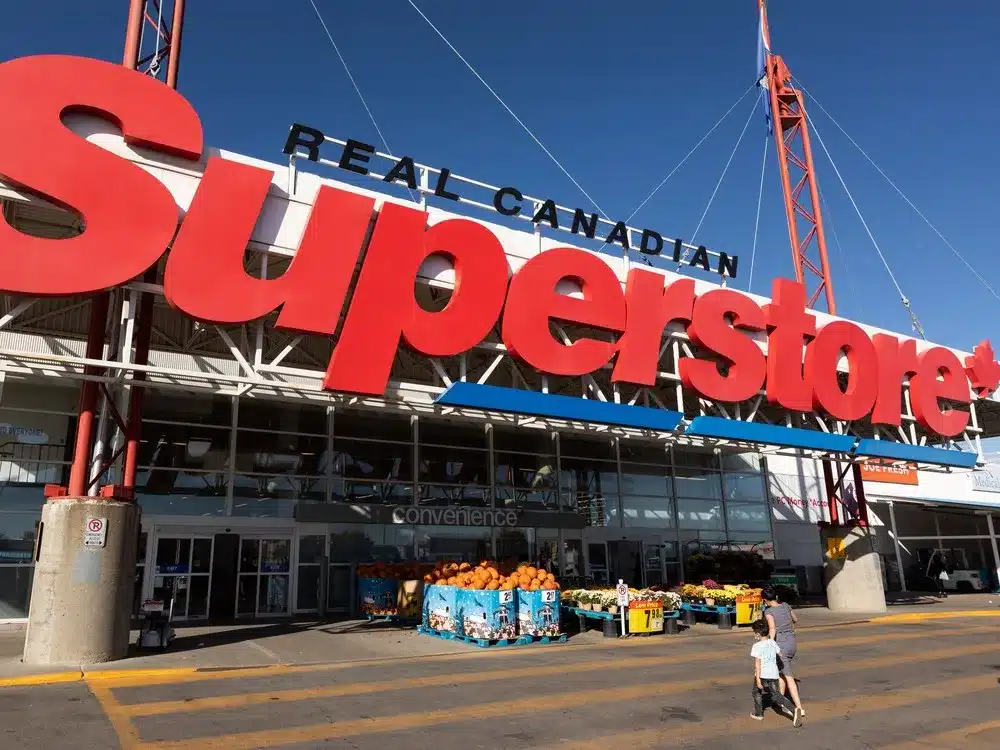
CALGARY – If you walked into a Real Canadian Superstore in October 2023, you likely noticed it was unusually quiet. Millions of Canadians had decided to vote with their feet by joining a massive nationwide boycott. What began as a simple whisper on a Reddit forum quickly evolved into a movement that made international headlines.
The boycott embarrassed one of Canada’s wealthiest families and challenged a grocery conglomerate that seemed virtually unstoppable. The story actually begins back in 1981 when the first Real Canadian Superstore opened in Saskatchewan. It offered a revolutionary concept for working-class families who desperately needed an affordable lifeline.
Key Takeaways
- A Grassroots Movement: A massive boycott organized on Reddit successfully pushed Canadians away from Loblaw-owned stores over rising costs.
- Corporate Scandals: Customers lost trust after a 14-year bread price-fixing scandal and widespread shrinkflation deeply impacted working-class shoppers.
- Seeking Alternatives: Many shoppers have permanently shifted their spending to independent ethnic grocers, Costco, and Walmart for better value.
The Quiet Erosion of Customer Trust
Shoppers historically enjoyed bulk buying power and honest prices in a simple, no-frills warehouse environment. For two decades, the store built a deep level of trust with families who relied on those low grocery bills. However, over the last twenty years, the Loblaw conglomerate began cashing in on the trust it had slowly built.
The company started pulling back on value incrementally, making sure shoppers barely noticed the changes. Prices slowly crept up, and package sizes silently shrank to cut corporate supply costs. Loblaw Companies Limited is the largest food retailer in Canada, dominating the market with very little competition.
The massive conglomerate owns numerous banners, including No Frills, Shoppers Drug Mart, and Real Canadian Superstore. The man overseeing this massive wealth extraction vehicle is Galen Weston Jr., who inherited the retail empire. During a brutal cost of living crisis, his company recorded record profits while everyday families struggled.
A Shocking Bread Price-Fixing Scandal
One of the most unforgivable breaches of public trust involved a basic, everyday household staple. In 2017, Loblaw and its parent company admitted to participating in a massive price-fixing scheme involving packaged bread. For 14 long years, major companies allegedly coordinated to raise bread prices in small, steady increments.
They ensured no single price hike would trigger public outrage or a government regulatory review. The products involved were everyday brands like Wonderbread, which working-class families buy for their kids’ school lunches. Loblaw reported the arrangement to the Competition Bureau and successfully received immunity from criminal prosecution.
As an apology, the company offered a simple $25 gift card to its heavily affected customers. The most insulting part was that the gift card was only redeemable at Loblaw grocery stores. They essentially overcharged customers for a decade and then invited them back to spend more money.
Shrinkflation and the Illusion of Value
The final straw for many shoppers arrived in 2023 in the form of widespread shrinkflation. This is the calculated corporate practice of reducing the size of a product while keeping the price identical. Product managers know that shoppers are highly sensitive to price but rarely notice small physical weight changes.
Statistics Canada confirmed that shrinkflation was occurring across dozens of categories in regular grocery aisles. Coffee cans dropped from 900 grams to 850 grams, while the shelf price either held steady or increased. Superstore shelf tags feature the actual price per unit in incredibly tiny print that is extremely hard to read.
This practice is incredibly frustrating because Superstore built its entire identity around offering shoppers more for less. The concrete warehouse floors and massive pallet displays still trigger a feeling that you are getting a great bargain. However, that visual brand signal now quietly disguises the fact that you are paying more for less food.
The Private Label Profit Trap
The President’s Choice brand started as a genuine value play for millions of Canadian shoppers. Originally, it competed on high quality rather than just offering a suspiciously low checkout price. However, over the past 30 years, the brand became so familiar that it stopped needing to be superior.
The overall quality eroded significantly, and the pricing gap closed, turning the brand into a major corporate profit center. When you buy a President’s Choice product, Loblaw makes a significantly larger profit margin on that item. The company acts as both the retailer and the manufacturer, perfectly controlling the entire grocery supply chain.
Store layouts are strategically designed to place these higher-margin products directly at your natural eye level. The famous yellow “No Name” brand is also designed to offer the powerful illusion of extreme savings. The company pushes these private labels heavily when consumers actively complain about out-of-control grocery bills.
Beautiful Produce with No Flavor
The produce section relies on similar psychological illusions to keep customers reaching into their wallets. Special store lighting is perfectly calibrated to make tomatoes look intensely red and lettuce look vibrantly green. The produce at large chain stores looks visually spectacular but often lacks any real, satisfying flavor.
This happens because the vegetables travel massive distances before ever reaching the illuminated store display. Winter tomatoes are typically grown in Mexico or commercial greenhouses, picked long before reaching peak natural ripeness. They often ripen in transit using artificial ethylene gas injections at massive regional distribution facilities.
This highly optimized logistical system prioritizes durability and shelf appearance over actual flavor and nutritional value. Consumers quickly figured out that they were paying premium prices for produce that rapidly spoiled at home. This simple realization simply added more fuel to the quickly growing fire of consumer anger.
A Grassroots Boycott Takes Hold
In October 2023, a simple post appeared on the “Loblaws is out of control” Reddit community page. It called for a complete boycott of all Loblaw-owned stores for the entire month of May 2024. Most financial experts expected the online movement to fizzle out quickly without making a real impact.
However, the idea spread incredibly fast, landing on major national news networks like CBC News and Global News. The boycott arrived exactly when basic grocery prices had massively outpaced working wages for three straight years. People who had never protested before were standing in cereal aisles feeling purely exhausted and deeply angry.
By the second quarter of 2024, Loblaw’s same-store sales growth noticeably and publicly slowed down. CEO Galen Weston Jr. attempted to explain the stubbornly high prices during polished media interviews. Unsurprisingly, his professional corporate explanations landed poorly with a public struggling to afford basic weekly necessities.
Where Are Shoppers Going Now?
Millions of Canadians finally realized they had other options and fundamentally changed their daily routines. According to reporting from Global News, shoppers started actively seeking out alternative brands and subsidiaries. Many shoppers have reluctantly shifted their weekly grocery runs to massive Walmart Supercenters instead.
While the shopping experience is incredibly basic, the checkout totals are consistently much lower for families. Costco has also seen a massive influx of shoppers seeking better overall long-term value. While it requires an upfront membership fee, the per-unit pricing easily beats traditional neighborhood grocery stores.
Finally, independent ethnic grocery stores are becoming the most utilized alternatives in major Canadian cities. Stores like T&T Supermarkets and local Asian grocers buy directly and price their fresh food very differently. They offer significantly fresher produce at a fraction of the cost found in massive corporate chain stores.
The Struggle for Rural Canadian Shoppers
While city dwellers can easily switch to alternative stores, rural Canadians face a much tougher reality. Outside major urban centers, grocery store alternatives are often incredibly scarce or completely non-existent. This frustrating lack of competition leaves many rural families trapped with whatever prices the major chains dictate.
Fortunately, discount grocery banners like FreshCo have been quietly expanding across Western Canada and Ontario. They offer highly competitive pricing and provide a genuine alternative for shoppers living outside major cities. It is not a complete revolution, but it offers a much-needed financial lifeline for smaller communities.
The nationwide boycott has sparked a much larger political conversation about bringing real competition to rural areas. Politicians and lawmakers are finally beginning to understand the severe dangers of a highly consolidated grocery market.
The Future of Canadian Superstores
The true success of the boycott lies in how it permanently shifted daily consumer shopping habits. Canadians realized that conflating the positive feeling of getting a deal is not the same as actually saving money. The 40-year assumption that shoppers will blindly absorb every single price hike has been entirely shattered.
The grocery market remains deeply consolidated, and serious structural industry problems certainly still exist today. However, for a solid month in 2024, everyday consumers successfully punished a massive multi-billion-dollar corporate giant. Shoppers simply looked at their shrinking grocery bags and chose to drive to a completely different store.
That collective, nationwide action proved that no corporate retail giant is ever truly immune to public anger. Canadian shoppers finally proved that they have the ultimate power when they decide to vote with their wallets.
Trending News:
Canad’s Economic Decline: Is it a Warning to the World?
Legacy Media Protects Carney After Canada Lost 68,000 Jobs


Poilievre Takes Aim at Carney on Stellantis, Telus, Brazil

LeBlanc: Some U.S. Tariffs Will Stay Even With a Deal

Pichette Faces MPs Over Cohere Ties and $1.6B Federal Stake

B.C. Premier Doerkson Move to Roll Back Housing Mandates

Carney Seeks Interim U.S. Trade Deal as Auto Tariffs Stall

Freeland Urges Allies to Invite U.S. Back on New Terms

Trump Touts Alaska LNG as Canada’s Pipeline Faces Court

Checking Carney’s DealBook Claims Against the Data

LeBlanc Backs Carney on Why Trade Talks Collapsed

Carney’s China Deal Opens Pork, Loosens Steel Rules
LeBlanc Backs Carney on Why Trade Talks Collapsed

Carney Holds Up Shenzhen as a Model for Canada

Poilievre, Liberals Clash Over $560M Brazil Forest Pledge

Canada Sheds Jobs Again as Inflation Stays at 3.1%
Carney’s China Deal Opens Pork, Loosens Steel Rules

Carney Floats Chinese Automakers if US Trade Talks Fail

Canada Loonie Sits Near 19-Month Low as Macklem Plans Exit
Checking Carney’s DealBook Claims Against the Data
Freeland Urges Allies to Invite U.S. Back on New Terms
Pichette Faces MPs Over Cohere Ties and $1.6B Federal Stake


-

 Immigration & Border Policy9 months ago
Ilhan Omar’s Connections to Convicted Somali Fraudsters Surface
-
 Politics10 months ago
CNN Delivers Stark Reality Check to Democrats Over Voter ID
-
 Immigration & Border Policy9 months ago
Rep. Ilhan Omar Faces Heat as Minnesota Voters Seek Change
-
 Politics10 months ago
Trump Approval Rating (February 2026 Poll Results, Approve vs Disapprove)
-
 United States10 months ago
China Backed US Billionaire Singham Allegedly Funding of Anti-ICE Protests
-
 Immigration & Border Policy9 months ago
Calls Mount to Expel Rep. Ilhan Omar from Congress
-
 Politics8 months ago
NATO Chief Says 22 Nations Working With US to Keep the Strait of Hormuz Open
-
 United States9 months ago
Austin Tucker Martin Who Was He And Why Was He at Mar-a-Lago?


