
Politics
Trump Touts Alaska LNG as Canada’s Pipeline Faces Court
Trump touted Alaska LNG as approved while Canada’s Pacific Link oil pipeline faces court challenges. What is settled and what is still open.

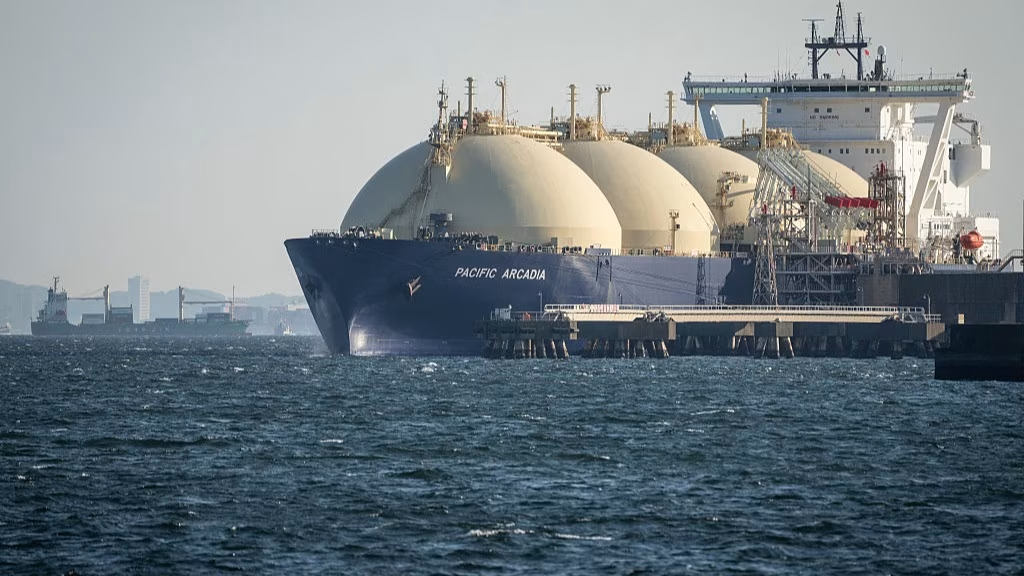
President Donald Trump said this week that his administration has “just approved a colossal liquefied natural gas pipeline in Alaska” to ship American gas across the Pacific. Days earlier, Corey Hogan, parliamentary secretary to the energy minister, told an Ottawa energy conference that countries will “even pay a little bit more” for Canadian supply. Hosts on The Really Big Show asked what evidence supports that, and why Canada’s own West Coast project is still tied up.
The Alaska project still has open financing and state tax questions. Canada’s Pacific Link oil pipeline has been designated a national-interest project but not approved, and it faces court challenges from First Nations.
Key Takeaways
- Trump touted the Alaska LNG pipeline as approved, but South Korean funding and Alaska tax questions remain unresolved.
- Hogan said buyers will sometimes pay more for Canadian energy because of supply assurance; critics on the show asked for evidence.
- Pacific Link was designated a national-interest project on Oct. 1, and at least nine B.C. First Nations plus Cold Lake First Nation have challenged it.
What Trump said, and what is still open
Trump made the remark about Alaska while speaking about South Korean investment, according to a RedState report of his Nov. 17 comments. He said the project would facilitate “the export of record amounts of abundant, affordable American energy” to partners across the Pacific.
RedState reported that the project completed its federal permitting in December 2025. It also said the funding deal with South Korea “remains an open issue,” and that Alaska tax matters still need to be settled by the state legislature. Reuters reported on Oct. 1 that Seoul suggested a $54 billion pipeline element of a $200 billion U.S. investment plan was not yet set in stone.
What Hogan told the conference
Speaking Monday at a Canadian Global Affairs Institute energy security conference, Hogan said “they’ll even pay a little bit more for it sometimes because that supply assurance is something that’s increasingly important,” according to a Canadian Press report. He called Canada “a reliable trader” in “a safe part of the world” and joked that the Georgia Strait is unlikely to be shut down, a contrast with the Strait of Hormuz.
Hogan also warned that “it doesn’t take as much time as you hope for people to forget the lessons that they learned.”
The show’s critique
The hosts said Canada’s record undercuts the reliability pitch, citing what they called 12 years of anti-energy policy and the risk of court injunctions. They also asked for evidence that buyers in South Korea or elsewhere pay a premium for Canadian energy. They argued that controlling the Georgia Strait matters little if shipping lanes across the Pacific are contested, and that Canada relies on the United States for naval protection of those lanes.
Hogan described the premium as occasional and tied it to supply assurance. The hosts’ broader point, that buyers mostly want cheap and dependable energy, is a market argument rather than something the conference remarks settled.
Pacific Link is in court
Ottawa designated the Pacific Link oil pipeline a project of national interest on Oct. 1, the first designated under the Building Canada Act, The Hub reported. It would carry up to one million barrels a day from Bruderheim, Alta., to a new export terminal near Delta, B.C. The designation is not an approval, and Ottawa aims to finalize federal conditions by Sept. 1, 2027.
Nine B.C. First Nations have filed eight judicial review applications in Federal Court, and Cold Lake First Nation in Alberta has filed its own challenge. They argue Ottawa did not adequately consult them. No court has ruled. The Hub noted that the Federal Court of Appeal quashed the Northern Gateway and Trans Mountain expansion approvals on consultation grounds in 2016 and 2018.
A strategy gap
Heather Exner-Pirot of the Macdonald-Laurier Institute wrote in The Hub that the new national security strategy identifies energy and critical minerals as strategic capabilities. But she said it “falls short” in “articulating the means to increase our strategic indispensability.” She argued Canada should export more oil, LNG, uranium and minerals to Asia and Europe, and aim to be the most reliable supplier.
Context: two pipelines, neither finished
The two projects carry different products and face different obstacles. Alaska LNG ships gas and is waiting on money and state tax decisions. Pacific Link ships oil and is waiting on courts and federal conditions. The comparison the hosts drew is about speed and certainty. Carney framed the Oct. 1 designation around the same trade-off, saying “speed, certainty, and predictability are competitive advantages.” Neither project has cleared every hurdle, so the gap between them may be smaller than a headline suggests.
Trending News:
Trump Tariffs Supreme Court Ruling, What Changed in 2026
Carney’s Trade Strategy: The Risk of Waiting Out Trump


Freeland Urges Allies to Invite U.S. Back on New Terms

Trump Touts Alaska LNG as Canada’s Pipeline Faces Court

Carney on China, Taiwan and Canola: The Trade Data

Checking Carney’s DealBook Claims Against the Data

LeBlanc Backs Carney on Why Trade Talks Collapsed

Navarro Warns Canada on China as Carney Eyes Auto Options

Carney’s China Deal Opens Pork, Loosens Steel Rules

Canada Sheds Jobs Again as Inflation Stays at 3.1%
Canada Loonie Sits Near 19-Month Low as Macklem Plans Exit

Carney Holds Up Shenzhen as a Model for Canada

David Eby Campaign Stumbles Amid Mailer Scandal

EU Parliament Erupts Over Canada’s Associate Member Bid

The Fallout of the Omar Raid: Guilty Until Proven Innocent?

Food Bank Lines Surge in Canada While Carney Pushes Foreign Aid

Carney’s US Trade War a Failure: Cost Shoppers $100M Weekly

Alberta Referendum Results Shift as Vote Tally Continues

DOJ Guidelines on Political Investigations: Rules Explained

RCMP Raids Lion Electric Amid $500M Taxpayer Fraud Probe

Canada’s $82,000 Per Household Debt Crisis Sparks Outcry
LeBlanc Backs Carney on Why Trade Talks Collapsed


-

 News10 months ago
China-Based Billionaire Singham Allegedly Funding America’s Radical Left
-
Politics9 months ago
Ilhan Omar’s Connections to Convicted Somali Fraudsters Surface
-
Politics10 months ago
CNN Delivers Stark Reality Check to Democrats Over Voter ID
-
Politics8 months ago
Rep. Ilhan Omar Faces Heat as Minnesota Voters Seek Change
-
Politics9 months ago
Trump Approval Rating (February 2026 Poll Results, Approve vs Disapprove)
-
United States10 months ago
China Backed US Billionaire Singham Allegedly Funding of Anti-ICE Protests
-
Politics8 months ago
NATO Chief Says 22 Nations Working With US to Keep the Strait of Hormuz Open
-
Politics9 months ago
Calls Mount to Expel Rep. Ilhan Omar from Congress