Politics
Carney on China, Taiwan and Canola: The Trade Data
Carney said selling China canola is ordinary trade, not a sovereignty issue. Trade data show energy and minerals dominate Canada’s exports to China.

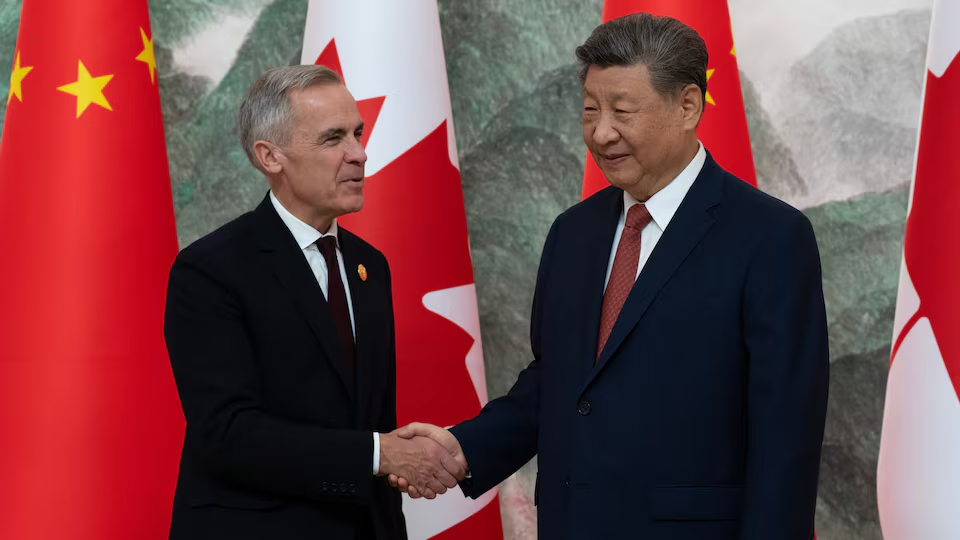
In an interview for the New York Times DealBook Summit on Nov. 18, Prime Minister Mark Carney was asked whether a Chinese move on Taiwan would change Canada’s trade plans with Beijing. He said he was “not sure it changes it,” but that Canada must decide “with whom are you partnering.” Selling China canola, he said, is “basic agricultural trade policy,” not a threat to sovereignty. Supplying satellite or space systems for military use would be different, he said.
A clip of the exchange drew criticism on The Really Big Show, whose hosts said canola is a distraction from what Canada really sells China and buys from it. Trade data support part of that argument. Energy and minerals make up most of Canada’s exports to China, and Canada still buys about twice as much from China as it sells.
Key Takeaways
- Carney drew the sovereignty line at military and space technology, and said selling canola does not cross it.
- In the first half of 2026, energy and minerals made up about 58% of Canada’s exports to China, while canola seed was C$1.42 billion.
- Canada ran a C$23.1 billion goods deficit with China in that period, down 25% from a year earlier.
What Carney said
Carney spoke remotely from Shenzhen, where he had met Chinese President Xi Jinping and, separately, U.S. President Donald Trump. Asked about Taiwan, he did not say how Canada would respond to a Chinese move. He said the question is who Canada chooses as a partner and for what.
The Canadian Press reported that Carney is focused on selling commodities such as iron and oil to China, not sensitive technologies. His office said the deal should “fully respect Canada’s languages, culture and sovereignty.” Carney also said that “deeper integration with one partner is a huge risk,” and called diversification “insurance.”
Canola is a small part of the China trade
The University of Alberta’s China Institute tracked Canada-China trade in the first half of 2026. Exports to China rose 30.1% to C$21.74 billion. Energy products were 35.8% of domestic exports, and metal ores and minerals were another 22.6%.
Crude oil exports more than doubled to C$5.96 billion. Copper ore and concentrate reached C$2.64 billion. Canola seed was C$1.42 billion, up 19.4% after China lowered its tariff.
The show’s hosts argued that energy is what China wants most, because it fuels industry and militaries. The numbers show energy is the largest single category.
Canada still buys more than it sells
Imports from China fell 5.8% to C$44.86 billion in the first half, leaving a goods deficit of C$23.12 billion, which narrowed by 25.2%. Imports of consumer goods and electronics dropped the most. Imports of industrial machinery rose 18.6%, and motor vehicles and parts rose 9.3% to C$2.91 billion.
The hosts said Carney talked only about exports. The data show a two-way relationship in which Canada is the bigger buyer.
Steel and aluminum exemptions extended
On Nov. 17, Canada agreed to extend for two more years existing tariff exemptions for certain Chinese steel and aluminum products, GMK Center reported, citing Reuters and the Prime Minister’s office. The exemptions were due to expire at the end of 2026. In return, China will grant concessions on Canadian farm and fish exports worth about C$400 million.
The hosts said allowing Chinese steel in is a slap in the face to Canadian and American steelworkers. The report GMK cited carried no reaction from Canadian steel producers or unions, and vornews has not found any.
The Russia comparison
The hosts also said Canada’s top import from Russia is aircraft and spacecraft parts. UN trade data compiled by Trading Economics support the ranking, with aircraft and spacecraft at US$27.12 million of US$64.23 million in 2025. The total is small. Canada’s goods imports from China were C$44.86 billion in the first six months of 2026 alone.
Context: two risks, not one
Carney’s distinction is between goods and capabilities. Selling canola is ordinary agricultural trade, as he said. The harder question is concentration. Alberta and British Columbia account for 92.3% of the net increase in exports to China, so a handful of products and two provinces now carry much of the growth. A buyer in that position gains leverage. Carney has described diversification as “insurance” against that kind of exposure. Whether the same logic applies to China is the question the Taiwan prompt was getting at.
Trending News:
Carney’s China Deal Opens Pork, Loosens Steel Rules
LeBlanc Backs Carney on Why Trade Talks Collapsed


Trump Touts Alaska LNG as Canada’s Pipeline Faces Court

Carney on China, Taiwan and Canola: The Trade Data

Checking Carney’s DealBook Claims Against the Data

LeBlanc Backs Carney on Why Trade Talks Collapsed

Navarro Warns Canada on China as Carney Eyes Auto Options

Carney’s China Deal Opens Pork, Loosens Steel Rules

Canada Sheds Jobs Again as Inflation Stays at 3.1%
Canada Loonie Sits Near 19-Month Low as Macklem Plans Exit

Carney Holds Up Shenzhen as a Model for Canada

Poilievre, Liberals Clash Over $560M Brazil Forest Pledge

David Eby Campaign Stumbles Amid Mailer Scandal

EU Parliament Erupts Over Canada’s Associate Member Bid

The Fallout of the Omar Raid: Guilty Until Proven Innocent?

Food Bank Lines Surge in Canada While Carney Pushes Foreign Aid

Carney’s US Trade War a Failure: Cost Shoppers $100M Weekly

Alberta Referendum Results Shift as Vote Tally Continues

DOJ Guidelines on Political Investigations: Rules Explained

RCMP Raids Lion Electric Amid $500M Taxpayer Fraud Probe

Canada’s $82,000 Per Household Debt Crisis Sparks Outcry
LeBlanc Backs Carney on Why Trade Talks Collapsed


-

 News10 months ago
China-Based Billionaire Singham Allegedly Funding America’s Radical Left
-
Politics9 months ago
Ilhan Omar’s Connections to Convicted Somali Fraudsters Surface
-
Politics10 months ago
CNN Delivers Stark Reality Check to Democrats Over Voter ID
-
Politics8 months ago
Rep. Ilhan Omar Faces Heat as Minnesota Voters Seek Change
-
Politics9 months ago
Trump Approval Rating (February 2026 Poll Results, Approve vs Disapprove)
-
United States10 months ago
China Backed US Billionaire Singham Allegedly Funding of Anti-ICE Protests
-
Politics8 months ago
NATO Chief Says 22 Nations Working With US to Keep the Strait of Hormuz Open
-
Politics9 months ago
Calls Mount to Expel Rep. Ilhan Omar from Congress