Crime
DOJ Issues Grand Jury Subpoena to Federal Reserve Over $2.5 Billion Renovation Overruns

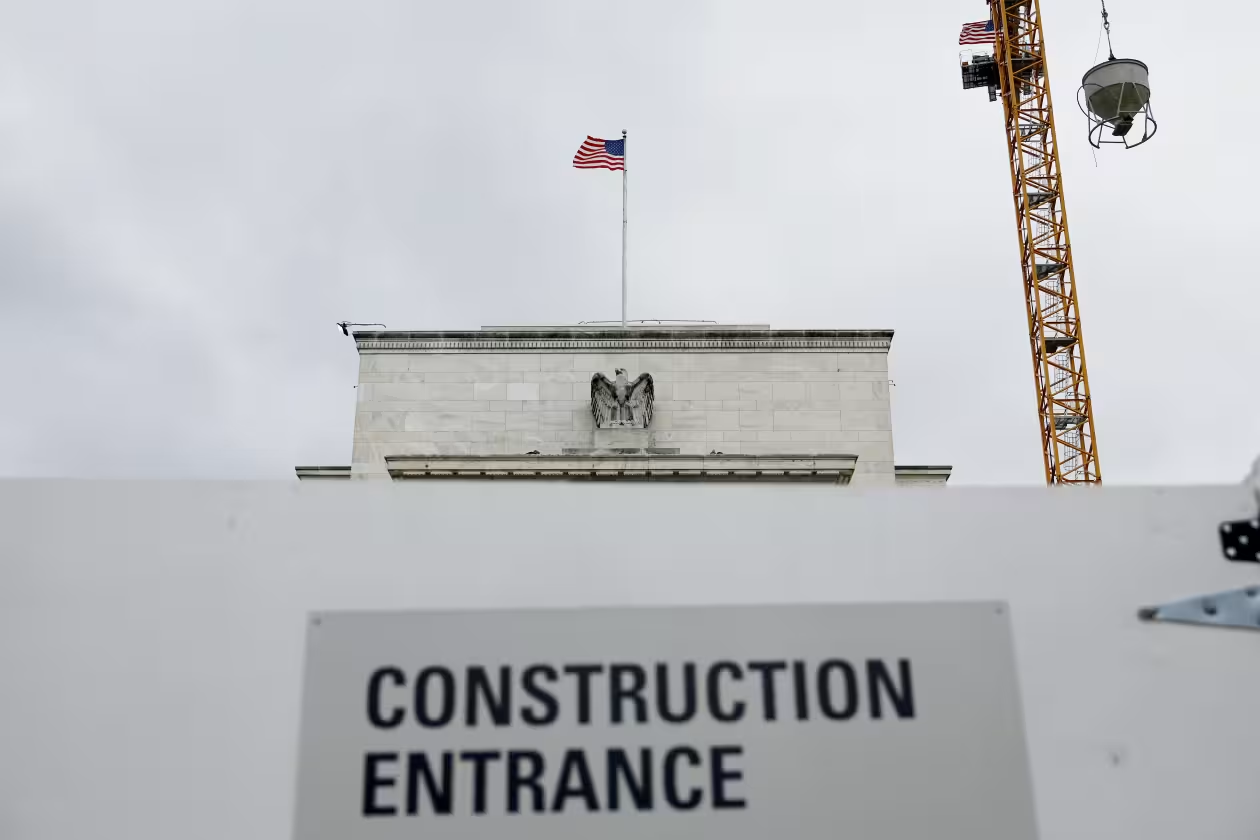
WASHINGTON, D.C. – The U.S. Department of Justice has served grand jury subpoenas on the Fed (Federal Reserve), putting Chair Jerome Powell in the spotlight over his past comments to Congress about the Fed’s major headquarters renovation.
Powell disclosed the subpoenas in an uncommon video statement on Sunday. His announcement added fuel to a tense fight in Washington, where the long renovation of historic Fed buildings has turned into a broader clash between the central bank and the Trump administration.
Powell said the subpoenas were delivered on Friday. They raise the stakes around his June 2025 testimony before the Senate Banking Committee, where he defended the renovation and rejected claims that the Fed was spending freely.
Powell called some of the allegations “misleading and inaccurate.” He also disputed reports of high-end extras, saying the plans did not include “special elevators,” new water features, rooftop gardens, or extra marble other than replacing damaged historic materials.
Cost Overruns Drive a Growing Fight
The project is a five-year effort to upgrade the Marriner S. Eccles Federal Reserve Board Building, built in the 1930s, along with the neighboring 1951 Constitution Avenue Building. Early estimates put the cost near $1.9 billion.
The Fed has said the work is meant to replace aging systems, improve security, remove hazardous materials discovered during demolition, and protect key historic features. The broader goal is to bring more staff into the two buildings and cut long-term leasing costs.
As work moved forward, the estimate rose to about $2.5 billion, an increase of roughly 30 to 35 percent. Federal Reserve renovation officials point to several drivers behind the jump. They cite larger-than-expected asbestos and lead paint removal, higher construction costs tied to inflation, lingering supply chain problems from recent years, worker shortages, and design and process changes required by historic preservation rules. They also point to oversight from groups such as the National Capital Planning Commission.
Powell has argued that big overruns are not unusual for historic building renovations near the National Mall, where rules can limit what crews can change and how quickly projects move.
Powell Says the Fed Probe Is Political Pressure
In his Sunday statement, Powell strongly criticized the investigation and said it has more to do with politics than building costs. He described the subpoenas as “pretexts,” and he said they fit into a larger push by the Trump administration to pressure the Fed.
“This new threat is not about my testimony last June or about the renovation of the Federal Reserve buildings,” Powell said. “It is not about Congress’s oversight role; the Fed, through testimony and other public disclosures, made every effort to keep Congress informed about the renovation project.
Those are pretexts. The threat of criminal charges is a consequence of the Federal Reserve setting interest rates based on our best assessment of what will serve the public, rather than following the preferences of the president.”
Powell said he has served under four presidents, from both parties, and he framed the moment as a test of Federal Reserve independence. He said scrutiny of a $2.5 billion Fed building project is fair. Still, he called the criminal probe an “unprecedented action” tied to ongoing threats.
Trump Team Calls It Wasteful and “Luxury” Spending
President Donald Trump and his allies have used the Fed headquarters cost overrun as a symbol of government waste. They argue the price increase reflects poor oversight and bad planning under Powell, and they repeat claims that costly add-ons pushed the total higher.
The dispute became highly visible during a July 2025 tour of the construction site, when Trump and Powell both wore hard hats. Trump challenged Powell’s figures during the visit and suggested the real total could be even higher than reported.
Officials in the administration, including Office of Management and Budget Director Russell Vought, have described the renovation as “ostentatious” and questioned whether it meets basic standards for fiscal discipline. Trump has also threatened legal action against Powell for “gross incompetence.” At the same time, he has demanded lower interest rates, saying high rates hurt Americans more than any building repair.
Trump told NBC News on Sunday that he did not know details about the Justice Department’s actions. He added that the only “pressure” Powell should feel is from interest rates that he says are too high.
Washington Watches a High-Stakes Test of Independence and Oversight
The fight has stirred a wider argument about how much sway a president should have over the Federal Reserve, which was built to keep monetary policy separate from day-to-day politics. Critics of the probe, including some Republican senators, warn that targeting the chair could weaken trust in the Fed and rattle markets.
Meanwhile, the Eccles Building renovation and the Constitution Avenue work continue behind scaffolding and heavy equipment. Crews are also working within strict preservation limits, which can slow timelines and raise costs. The project is still expected to finish in late 2027.
Powell said the Fed will cooperate with investigators while defending its actions. “No one, certainly not the chair of the Federal Reserve, is above the law,” he said. As the DOJ grand jury Powell investigation unfolds, it could deepen the strain between executive oversight and central bank autonomy.
Related News:
Federal Watchdog Uncovers $550M Fraud in Biden DEI Business Programs
CALIFORNIA – In an era where technology connects us all, the introduction of digital tablets into the prison system was pitched to the public as a humanitarian breakthrough. For the California Department of Corrections and Rehabilitation (CDCR), handing out digital tablets was supposed to be a visionary step forward.
The devices were intended to prepare returning citizens for the modern workforce, provide essential educational materials, and, most importantly, keep incarcerated individuals connected to their families.
During the darkest days of the pandemic, these tablets were seen as a lifeline for those locked behind bars. Families believed they could finally see their loved ones via video calls without driving ten hours across the state. However, what started as a promising rehabilitation initiative has quickly devolved into a full-blown financial and ethical nightmare. A sprawling, multi-million dollar fraud scandal is now being exposed, revealing that the state’s prison tablet program is heavily rigged against the very people it was designed to help.
Investigative reports and consumer law advocates are now sounding the alarm. Behind the glossy touchscreens and the promises of digital literacy lies a highly predatory business model. Telecom giants holding virtual monopolies in the prison technology space have been quietly draining the bank accounts of inmates’ families through hidden fees, while simultaneously monetizing highly sensitive private data.
When correctional facilities began partnering with prison technology companies—most notably industry giants like JPay and ViaPath (formerly GTL)—the promise was simple. They would provide inmates with corrections-grade tablets preloaded with a selection of games, music, educational content, mental health resources, and secure messaging services (Arguelles & Ortiz-Luis, 2021).
However, experts argue that these companies have essentially created a captive market. Because inmates and their families cannot shop around for competing services, these tech firms operate as a modern-day “company store,” leveraging their monopoly to extract maximum profit.
The normalization of private equity firms partnering with public carceral institutions has resulted in what legal scholars call “piecemeal privatization,” an aggressive invasion of “Big Capital” into the carceral state (Appleman, 2023). Families of the incarcerated—often already facing severe financial hardship—are forced to foot the bill, paying inflated rates for basic digital communication.
The Hidden Fees Bankrupting Families
The core of the financial fraud lies in a dizzying array of unregulated micro-transactions. If an inmate wants to send a message, read a book, or listen to a song, it costs money. And those costs add up remarkably fast.
Consumer advocates point to several exploitative fee structures that define this scandal:
- Exorbitant Deposit Fees: Families are routinely charged massive markup fees just to deposit money into an inmate’s account. In some cases, depositing a mere $20 can incur fees that eat up a quarter of the total amount.
- Premium Add-ons: While basic text messages might seem affordable on the surface, attachments like photos or short video clips incur heavy premium charges that far exceed market rates on the outside.
- Content Markups: Digital media, such as movies, music, and even public domain literature, are sold at prices significantly higher than what standard consumers pay on platforms like Apple or Amazon.
By pushing the costs of basic telecommunications and information access onto the families of people under correctional supervision, these companies are essentially profiting off misery. For a mother working two jobs just to send her son a photograph of his newborn niece, these fees are not just unfair; they are devastating.
Security Nightmares and Inmate Hacks
As if the financial exploitation wasn’t enough, the tablets themselves have been plagued by embarrassing security flaws. While technology vendors boast about their state-of-the-art security, the reality inside the cell blocks paints an entirely different picture. The devices aren’t just financially exploitative; they are structurally flawed.
In recent years, clever inmates have repeatedly exposed the fragile software running on these devices. For example, in a widely documented incident in Idaho, incarcerated individuals successfully hacked their JPay tablets to artificially issue themselves hundreds of thousands of dollars in free digital credits. This allowed them to bypass the paywalls entirely and access premium services for free.
Similar vulnerabilities have been reported closer to home. In Napa County, California, officials were forced to temporarily suspend a pilot tablet program after discovering that inmates were trying to reset the devices. Their goal was to bypass the facility’s secure local area network and gain unrestricted internet access (Arguelles & Ortiz-Luis, 2021). These incidents prove that the technology is far from the secure, foolproof system taxpayers were promised.
Monetizing Misery: The Data Privacy Scandal
Perhaps the most alarming element of this massive scandal involves what these companies are doing with the data they collect. According to privacy researchers, correctional technology providers have embarked on a lucrative new line of business: monetizing the involuntary collection, sharing, and analysis of data from their captive consumers.
Every email typed, every video call placed, and every digital footprint left on these tablets is tracked, stored, and potentially leveraged. Because inmates forfeit many of their basic privacy rights upon conviction, these technology vendors operate in a terrifying gray area. They harvest vast amounts of personal data without meaningful regulatory oversight.
This creates a “digital panopticon” that leaves both inmates and their unincarcerated loved ones vulnerable to invasive surveillance and corporate data brokering. Family members who simply want to stay in touch are unknowingly sacrificing their own digital privacy, their voice data, and their financial information to billion-dollar conglomerates.
What’s Next for California’s Inmates?
There is no denying that digital connection is vital. Research consistently confirms that the use of tablets by incarcerated people helps maintain critical connections with loved ones. This connection is a major factor in easing their re-entry into society and fundamentally reducing recidivism. When properly administered and fairly priced, digital literacy programs can be a rare win-win for taxpayers, prison officials, and inmates alike (Arguelles & Ortiz-Luis, 2021).
However, the current system is broken, and the ongoing fraud is unacceptable. To fix this scandal, advocates are demanding immediate legislative action to protect the state’s most vulnerable populations.
- Competitive Bidding: California must implement stricter regulations on how these contracts are awarded to completely dismantle the existing virtual monopolies.
- Capping Fees: Lawmakers need to pass consumer protection laws that legally limit the markup tech companies can charge for digital services in prisons.
- Data Protection: The state must enact strict data privacy guidelines that absolutely prevent vendors from selling or monetizing the personal communications of inmates and their families.
California lawmakers now face mounting pressure to formally investigate the prison tablet program. Until the state decides to put true rehabilitation ahead of corporate profits, the real crime isn’t just happening inside the cells—it’s happening in the boardrooms.
Trending News:
JD Vance Warns California and Other Blue States Over Medicaid Fraud
California Governor Hopeful Katie Porter Admits Democrats Need Illegal Immigrants
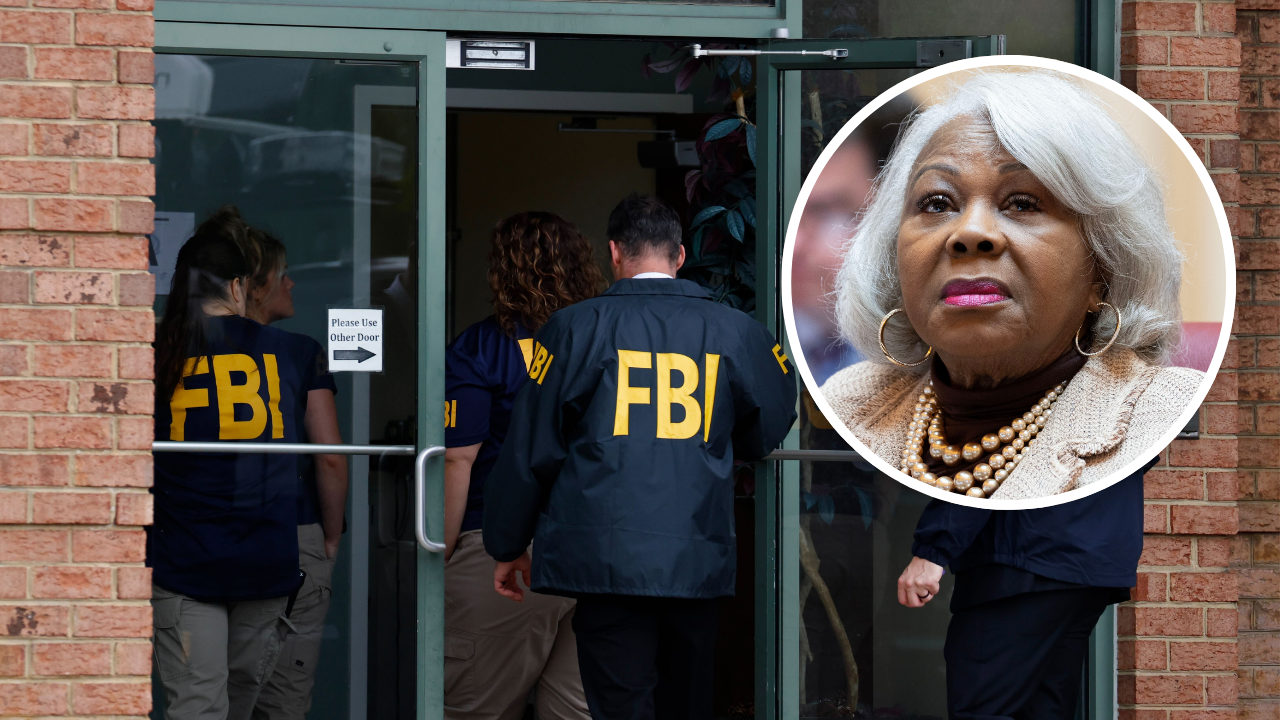
WASHINGTON, D.C. – On Wednesday, May 6, 2026, federal agents conducted a sweeping series of raids targeting Virginia State Senator L. Louise Lucas. The FBI searched her legislative office in Portsmouth, Virginia, along with a nearby cannabis dispensary she co-owns.
According to federal law enforcement sources, the raids are part of a broad investigation into political corruption and illegal marijuana sales. The sudden law enforcement action has sent shockwaves through Virginia politics. Senator Lucas is one of the state’s most powerful Democrats, and the raid comes just weeks after she successfully led a highly contested effort to redraw Virginia’s voting districts.
Here are the key facts you need to know:
- The Targets: The FBI raided at least 10 locations, including Lucas’s Portsmouth office and her business, The Cannabis Outlet.
- The Allegations: Sources say the probe involves federal bribery allegations and the illegal sale of marijuana.
- The Senator’s Reaction: Lucas was present during the raid but told reporters she had no idea why the FBI was there.
- No Arrests Yet: While reports indicate some people were detained at the scene, Senator Lucas has not been charged with any crime.
FBI Agents Search Portsmouth Office
The operation began early Wednesday morning. Witnesses reported seeing multiple FBI vehicles, and in some areas, SWAT teams with weapons drawn. Agents ordered staff members to leave the legislative building and were later seen carrying boxes of documents out of the office.
The FBI’s Norfolk field office confirmed the activity in a brief statement. A spokesperson said agents were carrying out “court-authorized” law enforcement activity and assured the public there was no safety threat. However, they declined to give further details about the investigation.
Senator Lucas arrived at her office while the searches were still happening. When asked by reporters about the event, she kept her answer short. “I don’t know what’s going on,” Lucas said. “I’m just going to wait until they tell me.”
The Cannabis Dispensary Connection
A major focus of the raid appears to be The Cannabis Outlet, a retail shop located right next to the senator’s office. Lucas opened the business in 2021, shortly after she helped pass laws to legalize the possession of small amounts of marijuana in Virginia.
However, Virginia’s marijuana laws are currently in a gray area. While it is legal to possess the drug, the state has not yet set up a legal system for retail sales. Because of this, businesses like The Cannabis Outlet operate in a loosely regulated market.
In the past, the shop has faced heavy criticism. Previous media investigations claimed the store sold products that were mislabeled or contained THC levels much higher than state limits allow. Now, federal investigators are reportedly looking into whether the business is tied to a larger bribery scheme. Interestingly, some sources noted that this investigation actually began during the Biden administration, long before the current raids took place.
To understand the impact of this raid, you have to understand Senator Lucas’s role in the state. At 82 years old, she is a towering figure in Virginia politics. She was first elected to the Virginia General Assembly in 1991 and currently serves as the Senate President pro tempore. This makes her the highest-ranking official in the chamber.
Furthermore, she chairs the powerful Senate Finance and Appropriations Committee. Lucas is known for taking strong stands and using her influence to guide state policy. Beyond her political career, she runs several businesses, including a residential service provider for adults with developmental disabilities.
Political Reactions and Redistricting Tensions
The timing of the raid has caused outrage among many Democrats. Just last month, Virginia voters approved a new map for congressional districts. Senator Lucas was the driving force behind this redistricting plan, which gives Democrats a major advantage in upcoming elections.
Because of this recent political victory, some Democratic leaders are questioning the motives behind the FBI’s actions. They point out that the Justice Department is currently operating under President Donald Trump and FBI Director Kash Patel.
Virginia House Speaker Don Scott, a Democrat from Portsmouth, expressed deep concern. He urged the public to wait for the facts before making judgments. “Given the politicization of this administration… I think people should take this with a grain of salt,” Scott said in a statement.
Similarly, U.S. Representative Bobby Scott released a statement defending the senator’s right to due process. He suggested the raid looks like an attempt to punish political opponents, especially after Lucas helped stop what Democrats called a “power grab” over the state’s voting maps.
Meanwhile, State Attorney General Jay Jones, also a Democrat, stated that these types of investigations can easily damage the public’s trust in federal law enforcement. According to the Associated Press, many local politicians share this fear.
As the dust settles in Portsmouth, Virginia, the city is waiting for answers. Federal authorities have not announced any indictments, and the exact details of the search warrants remain sealed by the court.
Governor Abigail Spanberger, a Democrat who received strong support from Lucas during her campaign, has decided to stay quiet for now. A spokesperson simply said the governor is aware of the situation but will not comment without more information.
For now, Senator Lucas remains free and holds her powerful position in the Senate. The coming weeks will reveal whether this investigation leads to criminal charges or if it simply fades into the background of Virginia’s complex political landscape.
Trending News:
Damaging DOJ Report Exposes Biden FBI of Targeting Christians
Ilhan Omar Refuses to Turn Over Documents to Minnesota Fraud Committee
Crime
Former FBI Director James Comey Indicted for Threatening Instagram Post
A simple beach photo has triggered a massive federal case. Here is everything you need to know about the “86 47” controversy, the clash with President Trump, and what it means for free speech.

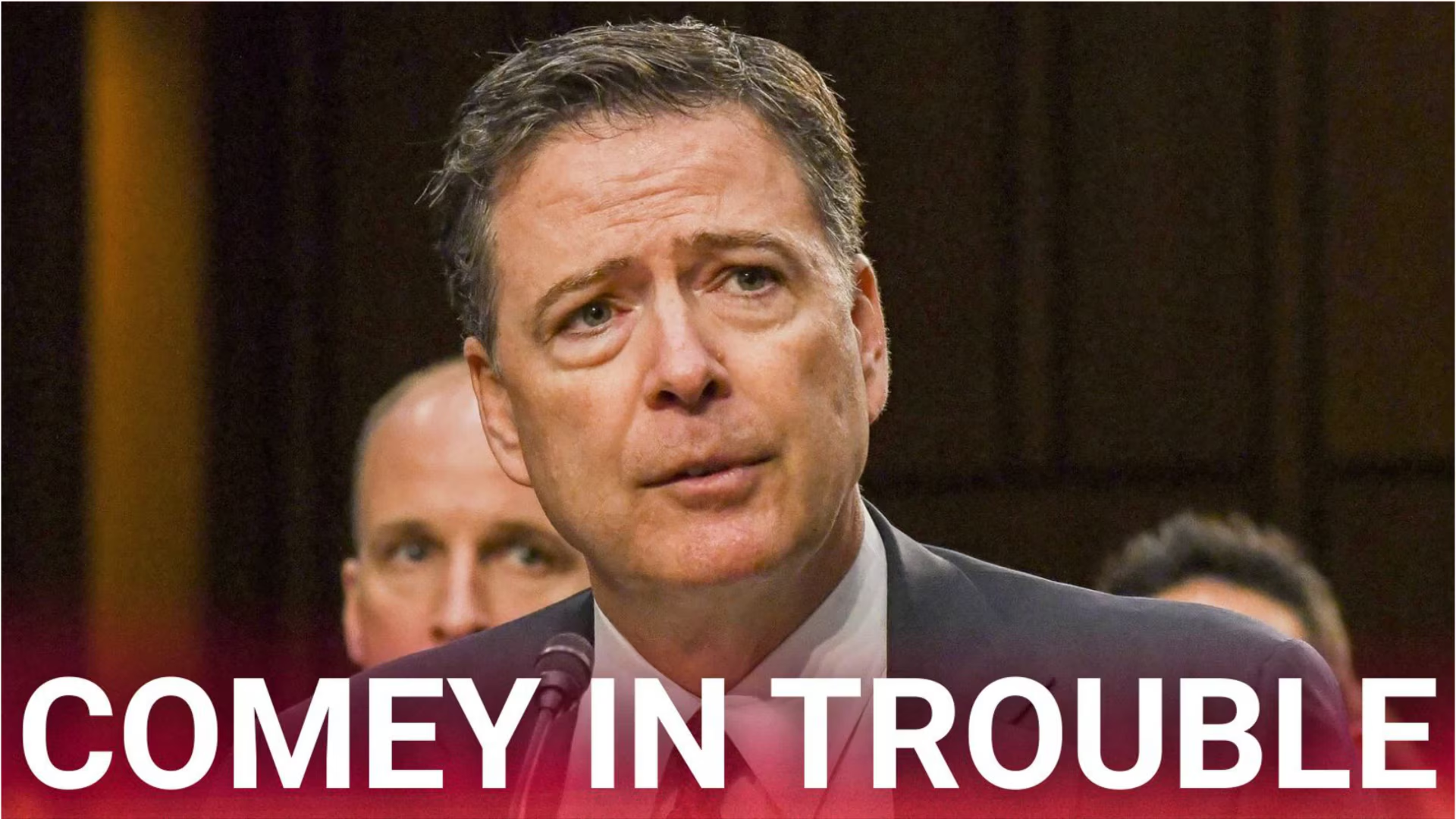
WASHINGTON, D.C. – Former FBI Director James Comey is back in the headlines. In a move that has sparked intense debate across the country, a federal grand jury in North Carolina has indicted the former law enforcement official. The alleged crime? A social media post featuring seashells on a beach.
While it might sound like the plot of a legal thriller, the situation is very real. The Justice Department claims that the photo was a coded, dangerous threat against President Donald Trump. Meanwhile, legal experts and free speech advocates are scratching their heads, wondering how a picture of shells could lead to federal charges.
Let’s break down how a walk on the beach turned into a high-stakes legal battle, the history behind the bad blood between Comey and the president, and why this case could have a massive impact on the First Amendment.
A Walk on the Beach Turns Into a Federal Case
The entire controversy started back in May 2025. According to reports from the Associated Press, Comey was taking a walk along a beach in North Carolina. He snapped a photo of some seashells arranged in the sand. The shells spelled out two numbers: “86” and “47.”
Comey posted the image to his Instagram account with a simple caption: “Cool shell formation on my beach walk.”
Almost immediately, the internet reacted. Some users pointed out that the numbers carried a hidden, political message. In response to the growing uproar, Comey deleted the photo shortly after posting it. He followed up with a message stating that he did not realize some people associated those numbers with violence.
“It never occurred to me, but I oppose violence of any kind, so I took the post down,” Comey wrote.
However, the damage was already done. The very next day, Secret Service agents interviewed Comey. The former FBI director maintained that he simply stumbled upon the shells and did not arrange them himself. Still, the Trump administration saw the post as a clear and present danger, ultimately leading to the recent criminal indictment.
What Does “86 47” Actually Mean?
To understand why the Justice Department cares about a picture of seashells, you have to understand the slang behind the numbers.
The number “47” is straightforward. Donald Trump is the 47th president of the United States. The number “86,” however, is where things get complicated.
In restaurant culture, to “86” an item means to throw it out or remove it from the menu. If a diner runs out of soup, the chef might say, “86 the soup.” By logical extension, some people use “86” as slang for getting rid of a person.
According to the indictment, a reasonable person would view “86 47” as a serious expression of intent to do physical harm to the president. President Trump firmly agreed with this interpretation. In a television interview, he claimed the meaning was obvious.
“A child knows what that meant,” Trump said. “If you’re the FBI director and you don’t know what that meant, that meant assassination. And it says it loud and clear.”
Breaking Down the Federal Charges
The Justice Department is not treating this as a simple misunderstanding. They have formally charged Comey in the Eastern District of North Carolina.
According to reports from PBS News, the indictment includes two specific counts:
- Making threats against the president: The government alleges Comey knowingly and willfully made a threat to take the life of, and inflict bodily harm upon, the president.
- Transmitting a threat in interstate commerce: Because the image was uploaded to the internet and crossed state lines digitally, this triggers a separate federal charge.
Acting Attorney General Todd Blanche, a known loyalist to the president, defended the decision to prosecute during a recent news conference. Blanche pushed back against the idea that the Justice Department was overreaching.
“You are not allowed to threaten the president of the United States of America,” Blanche told reporters. “That’s not my decision, that’s Congress’ decision and a statute that they passed.”
Comey Hits Back: “I Am Still Innocent”
James Comey is not backing down. Shortly after the indictment became public, he released a video statement forcefully denying the allegations.
“This won’t be the end of it,” Comey said in the video. “But nothing has changed with me. I am still innocent, I am still not afraid and I still believe in the independent federal judiciary. So let’s go.”
His legal team echoed this defiant tone. They released a statement declaring they will fight the charges in court and look forward to clearing Comey’s name while defending the First Amendment.
To fully grasp this case, you cannot ignore the deep, bitter history between Donald Trump and James Comey. Their feud has been a defining feature of American politics for nearly a decade.
Here is a quick look at how their relationship unraveled:
- The 2016 Election: Comey led the FBI during the highly controversial investigations into both Hillary Clinton and the Trump campaign.
- The 2017 Firing: Just months into Trump’s first term, the president abruptly fired Comey. This happened while the FBI was looking into potential ties between the Trump campaign and Russia.
- The Loyalty Demand: Comey famously claimed that before his firing, Trump demanded his personal loyalty during a private dinner—a request Comey says he refused.
- The Dismissed 2025 Case: The seashell incident is actually the second time the current Justice Department has tried to prosecute Comey. In late 2025, he was indicted for allegedly lying to Congress. However, a federal judge threw that case out because the interim U.S. attorney who brought the charges was illegally appointed.
Critics of the president argue that this new indictment is just a continuation of a long-running political vendetta. They claim the Justice Department is weaponizing the legal system to punish Trump’s loudest critics.
A Tough Case to Prove in Court
Even if the case goes to trial, legal experts believe the government faces an uphill battle. Proving a “true threat” in a court of law is incredibly difficult in the United States.
As noted by the Washington Post, prosecutors must do more than just show that a message was offensive or in bad taste. They have to prove intent.
Jimmy Gurulé, a law professor at Notre Dame and a former federal prosecutor, expressed serious doubts about the government’s strategy. “Posting numbers constitute a threat? I just don’t accept that,” he said.
Furthermore, a recent 2023 Supreme Court ruling established that prosecutors must show the defendant actually understood the threatening nature of their own words. Because Comey deleted the post and publicly stated he did not intend any harm, prosecutors will have a hard time convincing a jury that he secretly meant to order a hit on the president using seashells.
Beyond the personal drama between two powerful men, this case raises massive questions about free speech in the digital age. Where is the line between a political message and a criminal threat?
If the government can prosecute an American citizen over an ambiguous photo of seashells, free speech advocates worry about the chilling effect it could have on the general public. Will everyday people be afraid to post jokes, memes, or political criticisms online out of fear that a federal agent might knock on their door?
The First Amendment fiercely protects political speech, even when that speech is unpopular, crude, or confusing. For the Justice Department to win this case, they will have to prove that Comey’s Instagram post crossed the line from protected expression into a literal, physical danger.
What Happens Next?
The case now sits with U.S. District Judge Louise Flanagan in North Carolina. In the coming months, Comey’s legal team will likely file motions to dismiss the charges, arguing that the indictment violates his First Amendment rights and lacks hard evidence of a real threat.
Whether the case goes to trial or gets thrown out like the previous one, it guarantees that the bitter feud between James Comey and Donald Trump will remain in the public eye. For now, the nation watches to see if a picture of beach shells is really enough to send a former FBI director to federal prison.
Trending News:
FCC Targets Disney’s ABC Licenses Over DEI and Workplace Discrimination
Alex Jones Announces the Shutdown of Infowars Amid Billion-Dollar Legal Battles

Is Modern Political Empathy Actually Just Hidden Narcissism?

US Trade Moves Put Massive Pressure on Canada

Canada Sheds 68,000 Jobs As Economic Fears Deepen

Pierre Poilievre Critiques Reporter Who Questions His Leadership
How Canada’s Combating Hate Act Stifles Free Speech

Uncovering the Truth Behind Inequality: A Bold New Vision

How Progressivism Replaced Religion With A New Secular Faith
Behind Carney’s $1-Trillion Canada Investment Scheme

Poilievre Blasts Carney’s Plan To Sell Off Airports

Food Insecurity and Surging Prices: Canada’s Inflation Squeeze
How Progressivism Replaced Religion With A New Secular Faith
Uncovering the Truth Behind Inequality: A Bold New Vision
Behind Carney’s $1-Trillion Canada Investment Scheme
How Canada’s Combating Hate Act Stifles Free Speech
Pierre Poilievre Critiques Reporter Who Questions His Leadership
Canada Sheds 68,000 Jobs As Economic Fears Deepen
US Trade Moves Put Massive Pressure on Canada
Is Modern Political Empathy Actually Just Hidden Narcissism?
Food Insecurity and Surging Prices: Canada’s Inflation Squeeze
Poilievre Blasts Carney’s Plan To Sell Off Airports

Jimmy Kimmel Slammed for “Vile” Melania Trump “Expectant Widow” Joke

President Trump Addresses Nation on War with Iran

Trump Warns NATO Allies: America Won’t Protect Slackers After Iran Clash

Senate Hearing on Fraud and Foreign Influence Turns Tense Over Minnesota Scandals

CNN Forced to Backtrack Its Reporting on Trump’s Iran Talks

Joe Rogan Slams Gavin Newsom for Mocking Nick Shirley

Mosque Set Ablaze in Iran a Citizens Revolt Against the Islamic Regime

AOC Accuses Jessie Watters of Fox News of Sexualizing and Harassing Her

JD Vance Exposes Walz’s Fraud and CNN’s Lies in White House Presser

Milestone Card Credit: How the Milestone MasterCard Can Transform Credit


-

 News9 months ago
China-Based Billionaire Singham Allegedly Funding America’s Radical Left
-
Crime10 months ago
YouTuber Nick Shirley Exposes BILLIONS of Somali Fraud, Video Goes VIRAL
-
Politics10 months ago
Ilhan Omar Faces Renewed Firestorm Over Resurfaced Video
-
Politics9 months ago
2026 Midterms Guide: Candidates, Key Issues, and Battleground States
-
Politics8 months ago
CNN Delivers Stark Reality Check to Democrats Over Voter ID
-
Politics8 months ago
Ilhan Omar’s Connections to Convicted Somali Fraudsters Surface
-
Politics7 months ago
Rep. Ilhan Omar Faces Heat as Minnesota Voters Seek Change
-
Politics8 months ago
Trump Approval Rating (February 2026 Poll Results, Approve vs Disapprove)