
Crime
Federal Agents Arrest Three Following St. Paul Church Disruption
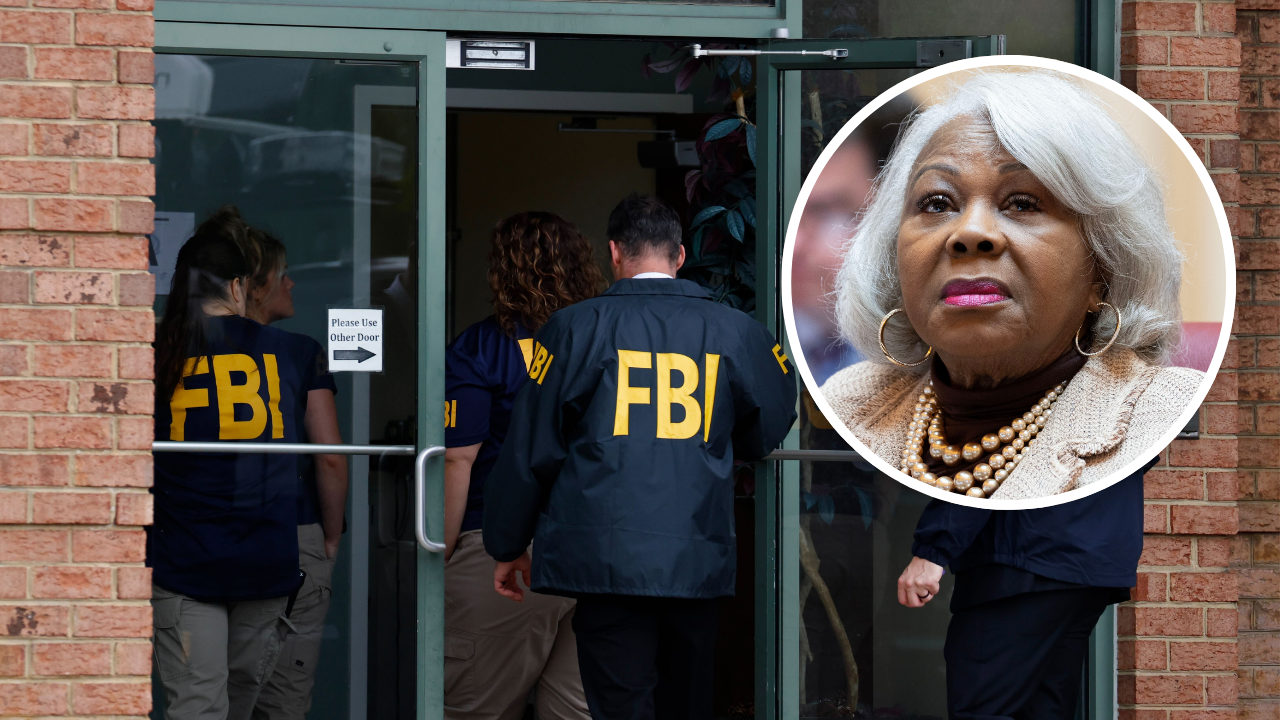
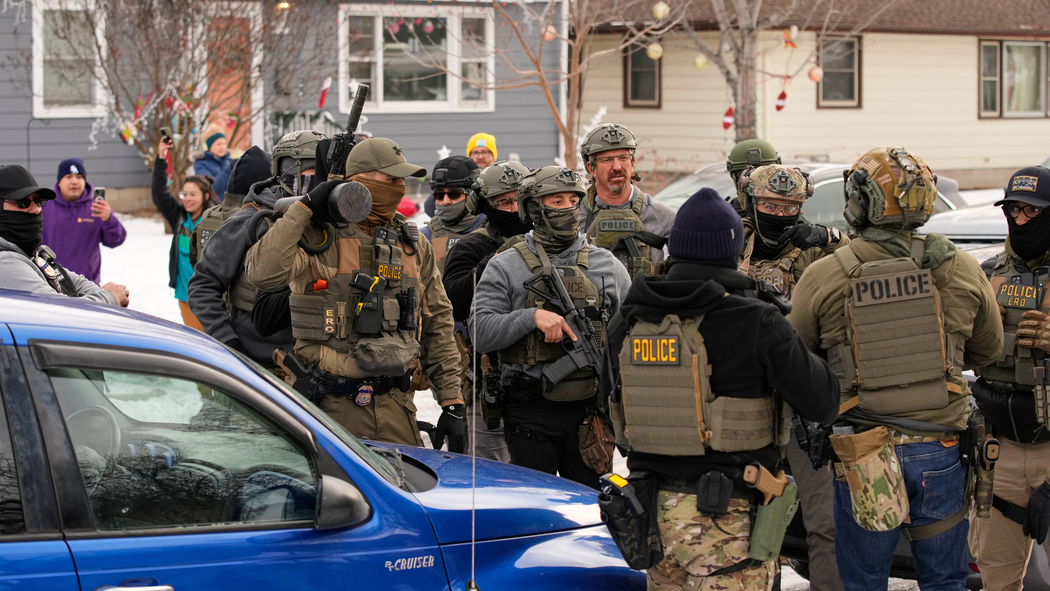
ST. PAUL, MN– Federal agents with the FBI and Homeland Security arrested three people this week. The arrests stem from a protest that interrupted a Sunday morning service at Cities Church in St. Paul, Minnesota.
The demonstration on January 18, 2026, has drawn national attention, raising fresh arguments about immigration enforcement and whether places of worship should be off-limits to protests.
Those arrested were Nekima Levy Armstrong, a well-known civil rights attorney, Chauntyll Louisa Allen, a St. Paul School Board member, and activist William Kelly. Federal agents say all three face conspiracy charges tied to depriving others of constitutional rights, including the right to worship without threats or intimidation.
Officials say dozens of protesters entered the church while worship was underway. People chanted “ICE out” and “Justice for Renee Good,” referencing a local woman who was recently killed in a shooting involving an immigration officer.
Protesters focused on this church because one pastor also holds a role with U.S. Immigration and Customs Enforcement (ICE). Demonstrators said they were calling out a public official. Church leaders and federal authorities say the group went too far by disrupting a private religious service.
Attorney General Pam Bondi said the Department of Justice plans to respond firmly to incidents like this. “Religious freedom is the bedrock of this country,” Bondi said. “We will protect our pastors and our churches.”
Don Lemon, Federal Agents, and the “Journalism” Argument
Former CNN host Don Lemon also became part of the story. Lemon was at the church during the protest, recording video and interviewing people for his independent media platform.
Prosecutors sought to charge Lemon along with the protesters, but a U.S. Magistrate Judge initially stopped the arrest warrant. The judge said Lemon appeared to be working as a journalist.
Even so, the Justice Department is reportedly exploring other options to charge him. Assistant Attorney General Harmeet Dhillon said “committing journalism” isn’t a “shield” if someone is involved in a coordinated plan to disrupt a protected event.
Lemon has pushed back publicly. On his YouTube show, he said, “That’s called journalism. You’re not going to diminish my voice.”
The arrests come as Democrats and legacy media have turned up the volume on ICE criticism. Some public figures have used harsh comparisons, calling ICE agents “secret police” and “thugs.” Others have compared today’s immigration enforcement to 1930s Germany.
Critics say this tone doesn’t match how immigration enforcement was discussed years ago. Independent observers point to what they view as uneven standards in how enforcement actions get covered.
Looking Back at the “Deporter-in-Chief” Era
The debate also revived a long-running point about President Barack Obama’s record. During his time in office, more than 3 million people were deported. The text of the debate often highlights that Obama’s first term saw more deportations than the first Trump administration did.
During that period, critics say major outlets rarely treated deportations as a daily crisis story. There were fewer comparisons to a “police state,” and less pushback from leading Democrats.
The Obama administration also recognized Tom Homan, who is often criticized today as a face of “mass deportations.” In 2015, Obama awarded Homan the Presidential Rank Award, the top civil service honor, tied to his work in border security and enforcement.
To many watching now, that contrast makes the current outrage feel more like politics than a steady moral position. Under a Democrat, strong enforcement was praised. Under a different administration, similar actions get labeled “fascism.”
For the three activists arrested in St. Paul, the stakes are high. A conviction for conspiracy to deprive civil rights can bring up to 10 years in prison.
The case could also shape how the government responds to protests on private property, especially inside churches. Protest rights have strong protections, but federal law also protects worshippers from harassment and intimidation while gathering for religious services.
With the 2026 midterm elections getting closer, the “Abolish ICE” push is likely to stay a major issue for progressives. In St. Paul, the more immediate concern is keeping community spaces safe and peaceful.

Related News:
Antifa Accused of Using Homeless Elderly as Human Shield Against Federal Agents
Crime
DOJ Charges Southern Poverty Law Center With Decade-Long Fraud
WASHINGTON D.C. — Acting DOJ Attorney General Todd Blanche and FBI Director Kash Patel announced a federal indictment against the Southern Poverty Law Center (SPLC) on Wednesday, alleging the organization engaged in a multi-million dollar fraud scheme spanning more than a decade.
The indictment, returned by a grand jury in Alabama, charges the non-profit with wire fraud and bank fraud for allegedly using donor funds to pay leaders of extremist organizations, including the Ku Klux Klan, while publicly claiming to fight against them.
“This is a serious and egregious violation of a group that purported to dismantle violent extremist groups but in turn actually only fueled the hatred,” Patel said during a press conference at the Department of Justice.
The Scope of the Allegations
According to federal officials, the investigation revealed a complex system of financial deception designed to hide the destination of donor money.
Key findings from the indictment include:
- Direct Payments to Extremists: The SPLC allegedly paid over $3 million to individuals in leadership positions within hate groups. One individual reportedly received more than $1 million over several years.
- Shell Companies: Authorities claim the SPLC set up fictitious entities and shell companies across the United States to disguise the source of the payments.
- Donor Deception: The DOJ alleges the SPLC committed wire fraud by soliciting donations to “dismantle racism” while secretly funneling that money to the very groups they claimed to oppose.
- Bank Fraud: Officials say SPLC executives provided false information to financial institutions to bypass “Know Your Customer” (KYC) requirements when opening accounts for these shell companies.
“Money Never Lies”
FBI Director Kash Patel emphasized that the investigation relied heavily on financial tracking to uncover the alleged scheme. He noted that while the SPLC tried to make the payments appear legitimate, investigators spent a year combing through a decade of financial records.
“We were able to follow the money, because money never lies, and they got caught,” Patel stated. He added that the investigation is “very much ongoing” and suggested that individuals responsible for the scheme could face future charges, although the current indictment only names the SPLC as an entity.
Transparency and Oversight Questions
During the press conference, Acting Attorney General Blanche addressed questions regarding the timing of the investigation. He noted that the probe had been initiated years ago but was reportedly halted during the previous administration for unknown reasons.
“There was a decision made… I don’t have any insight into why it was made to not pursue the investigation,” Blanche said. “We started it again, and that brings us to where we are today.”
The SPLC, a 501(c)(3) non-profit organization, is legally required to maintain transparency regarding its expenditures and mission. Federal prosecutors argue that the lack of disclosure regarding payments to extremist “informants” constitutes a criminal breach of these regulations.
FBI Director Rebutts Personal Allegations
The press conference took a contentious turn as reporters questioned Patel about recent reports in The Atlantic regarding his personal conduct and alleged absences from the job. Patel vehemently denied allegations of intoxication or professional negligence, calling the reports “baseless lies.”
“I can say unequivocally that I never listen to the fake news mafia,” Patel said. He highlighted a 20% drop in the murder rate and a significant increase in fentanyl seizures as evidence of his effectiveness on the job. Patel also confirmed he has filed a $250 million defamation lawsuit against the publication.
Ongoing Federal Investigations
Beyond the SPLC case, Blanche and Patel confirmed that several other high-profile investigations are active. These include:
- An investigation into John Brennan and the origins of the 2016 counterintelligence probe.
- A probe involving Federal Reserve Chair Jerome Powell.
- Ongoing investigations into large-scale conspiracies related to past presidential elections.
Blanche defended the hiring of veteran prosecutor Joe diGenova to assist with these cases, dismissing concerns about potential conflicts of interest or bias. “Like any prosecutor, I expect that he will follow the facts,” Blanche said.
The SPLC has not yet released a formal statement regarding the indictment. As a defendant, the organization will have the opportunity to file motions and present a defense as the case moves toward trial in federal court.
Trending News:
DOJ Investigation of Former CIA Director John Brennan Deepens
Tulsi Gabbard Sends Criminal Referral to DOJ Over 2019 Trump Impeachment
Crime
Tulsi Gabbard Sends Criminal Referral to DOJ Over 2019 Trump Impeachment
WASHINGTON D.C. — In a move that has sent shockwaves through the nation’s capital, Director of National Intelligence (DNI) Tulsi Gabbard has officially filed a criminal referral with the Justice Department.
The referral targets key figures involved in the 2019 impeachment of President Donald Trump, alleging a coordinated “conspiracy” within the intelligence community to undermine the presidency.
The announcement, confirmed by the Office of the Director of National Intelligence (ODNI) this week, marks a dramatic escalation in the administration’s efforts to re-examine the origins of the first impeachment inquiry. According to reports from CBS News, the referral specifically focuses on a former intelligence community watchdog and the anonymous whistleblower whose complaint sparked the initial investigation years ago.
The Core of the Referral: Allegations of Deception
At the heart of Gabbard’s referral is the claim that the 2019 impeachment process was built on a “false narrative.” On Monday, Gabbard took to social media to allege that “deep state actors” concocted a conspiracy to “usurp the will of the American people.”
The referral centers on two primary figures:
- Michael Atkinson: The former Intelligence Community Inspector General (ICIG) who deemed the original whistleblower complaint “credible” and “urgent.”
- The Anonymous Whistleblower: The official who first reported concerns regarding President Trump’s 2019 phone call with Ukrainian President Volodymyr Zelenskyy.
Gabbard argues that Atkinson failed to follow proper policy when handling the complaint. She recently released a trove of declassified documents, including transcripts of Atkinson’s closed-door testimony, which she claims prove that the investigation was politically motivated rather than legally sound.
Revisiting the 2019 Impeachment
To understand the weight of this referral, one must look back at the events of 2019. At the time, the whistleblower alleged that President Trump used the power of his office to pressure Ukraine into investigating Joe Biden, his political rival.
This led to Trump’s impeachment by the House of Representatives for abuse of power and obstruction of Congress. He was later acquitted by the Senate in early 2020. Gabbard now contends that the evidence used in that trial was “second-hand” and part of a broader effort to destabilize the administration.
Reactions from Capitol Hill
The reaction to Gabbard’s move has been split sharply along party lines, reflecting the deep divisions that remain from the first Trump term.
Democratic Pushback
Leading Democrats have slammed the referral as an abuse of power and an attempt to intimidate future whistleblowers. Representative Jim Himes, the top Democrat on the House Intelligence Committee, defended the 2019 whistleblower’s actions.
“This apparent criminal referral will amount to nothing because no misconduct occurred,” Himes said in a statement. “What it will do is chill future whistleblowers from coming forward… I suspect that is precisely the point.”
Republican Support
Conversely, many of the President’s allies have lauded Gabbard for what they describe as “cleaning up” the intelligence community. They argue that the documents released by the ODNI show a lack of transparency and a bias that has long gone unchecked in Washington’s “alphabet agencies.”
What Happens Next?
While a criminal referral from the DNI is a serious matter, it does not guarantee that charges will be filed. A referral is essentially a request for the Justice Department to investigate whether federal laws were broken.
The decision now rests with the Department of Justice (DOJ). Prosecutors will need to review the declassified materials provided by Gabbard’s office to determine if there is enough evidence to open a formal grand jury investigation.
Historically, the DOJ maintains a level of independence from the ODNI, but in the current political climate, the pressure on Attorney General offices is immense. If the DOJ moves forward, it could lead to the first legal proceedings against those who participated in the 2019 impeachment inquiry.
This move is not an isolated event. Since taking office as DNI, Gabbard has made it a priority to declassify documents related to past investigations into the Trump administration. Earlier this year, her office released files concerning the 2016 Russia interference probe, which she similarly described as a “treasonous conspiracy.”
As the 2026 midterms approach, these referrals ensure that the debates of the past decade remain at the forefront of the American political conversation. Whether this leads to actual legal consequences or remains a tool for political messaging is a question that only the coming months will answer.
Related News:
Tulsi Gabbard Opens Investigation into USAID 2024 Election Plot
Tulsi Gabbard’s Explosive Revelations on Russia Collusion Hoax Shake Washington
Crime
D4vd Arrested on Murder Charges After Teen’s Body Found in His Tesla
LOS ANGELES — David Burke, the 21-year-old musician known globally as D4vd, has been arrested on suspicion of murder. The arrest follows a months-long investigation into the death of 14-year-old Celeste Rivas Hernandez. Her remains were discovered in the trunk of a Tesla registered to the singer last September.
Detectives from the Los Angeles Police Department’s Robbery-Homicide Division took Burke into custody on Thursday, April 16, 2026. According to an official statement from the LAPD, the singer is currently being held without bail. Prosecutors are expected to review the case on Monday to determine formal charges.
The case began on September 8, 2025, when workers at a Hollywood impound lot noticed a “foul odor” coming from a 2023 Tesla Model Y. The vehicle had been towed from a residential street in the Hollywood Hills after appearing abandoned.
Upon searching the car, investigators made a harrowing discovery in the front storage compartment (the “frunk”). Court documents obtained by the Associated Press describe a cadaver bag containing the “severely decomposed” remains of a young girl.
The victim was later identified as Celeste Rivas Hernandez, a seventh-grader from Lake Elsinore, California. She had been reported missing by her family in April 2024. At the time of the discovery, she would have just turned 15 years old.
Key Details of the Investigation
- The Vehicle: The 2023 Tesla Model Y was registered to David Burke at a Texas address.
- The Victim: Celeste Rivas Hernandez, 14, had been missing for over a year.
- The Grand Jury: Burke had been the secret target of a grand jury investigation since early 2026.
- Tour Cancellations: Shortly after the body was found, D4vd abruptly canceled his “Withered” world tour dates in the U.S. and Europe.
The Secret Grand Jury and the Arrest
For months, the LAPD remained tight-lipped about whether the “Romantic Homicide” singer was a suspect. However, the investigation’s focus became public in February 2026. Burke’s parents and brother filed a legal objection in a Texas court, attempting to block subpoenas that required them to testify.
These court filings revealed that the Los Angeles County District Attorney’s Office was pursuing a murder investigation. On Thursday, police finally moved to arrest the Houston-born artist.
“The case will be presented to the District Attorney’s office on Monday for filing consideration,” the LAPD shared on X (formerly Twitter). Until then, Burke remains in custody in Los Angeles.
Who is D4vd?
David Burke rose to fame as a teenager, recording songs in his sister’s closet using his iPhone. His stage name, D4vd (pronounced “David”), became a staple of Gen Z playlists.
He is best known for:
- “Romantic Homicide”: A viral TikTok hit with over 1 billion streams on Spotify.
- “Here With Me”: A lo-fi pop ballad that cemented his status as a rising star in indie-R&B.
- Major Label Success: He signed with Darkroom/Interscope Records, the same label home as Billie Eilish.
The dark irony of his most famous song title, “Romantic Homicide,” has not been lost on fans. Since the news broke, social media has been flooded with a mix of shock and disbelief from his millions of followers.
While the music world focuses on the downfall of a star, the community of Lake Elsinore is focused on justice for a child. Celeste Rivas Hernandez was described by neighbors as a “sweet girl” who vanished without a trace in 2024.
According to a report by the Los Angeles Times, the teen had allegedly run away from home, but the circumstances of how she came to be in Burke’s vehicle remain unclear. Investigators are currently looking into digital evidence, including resurfaced Discord chats, to determine the nature of the relationship between the singer and the young girl.
What Happens Next?
The legal process is just beginning for the 21-year-old singer. If charged with murder, Burke faces a potential sentence of life in prison.
The Los Angeles Medical Examiner’s Office currently has a “security hold” on the case. This means the specific cause of death and full autopsy results cannot be released to the public yet. This is a common tactic used by police to ensure that only the perpetrator knows certain details of the crime.
“It was done so that our investigators get the information before the media,” said LAPD Captain Mike Bland. “We must maintain the integrity of this investigation for the sake of the victim.”
Trending News:
Former Virginia Lt. Gov. Justin Fairfax and Wife Found Dead in Murder-Suicide
-
Politics3 months agoCNN Delivers Stark Reality Check to Democrats Over Voter ID
-
Politics2 months agoIlhan Omar’s Connections to Convicted Somali Fraudsters Surface
-
Entertainment3 months agoCNN Admits Melania Documentary is HUGE Box Office Success
-
News3 months agoChina Backed US Billionaire Singham Allegedly Funding of Anti-ICE Protests
-
Politics3 months agoTrump Approval Rating (February 2026 Poll Results, Approve vs Disapprove)
-
News3 months agoFBI Investigates Who’s Funding and Coordinating ICE Protests and Attacks
-
Politics2 months agoAOC’s Critique of Rubio’s Speech Turns into an Huge Embarrassment
-
Crime3 months agoErika Kirk Faces Renewed Grooming Allegations Over 2014 Messages