
Politics
Why America is so Polarized in 2026: Expert Analysis of the Main Drivers


Last night it was a normal family group chat, until someone posted a clip about immigration and the thread turned into teams. At work, the same thing happens when talk shifts from prices to politics. In 2026, political polarization has a lot of Americans feeling like every topic gets pulled into the fight.
So why is America so polarized in 2026? Because polarization now looks less like “we disagree” and more like “we don’t trust you.” People sort into camps, assume bad intent, and get angrier faster, even when the issue is local and practical. U.S. polarization reflects this deep divide.
This moment is also shaped by the post-2024 election environment, Trump’s second term policy fights, and the long runway to the 2026 midterms. Candidates, activists, and media outlets all have reasons to keep the temperature high, and everyday stress makes it easier to snap.
This analysis maps the forces pushing Americans apart, including identity and culture battles, media and online echo chambers, incentives in elections and Congress, and real pressures like costs, immigration, and low trust in government. It’s not a “both sides are the same” take. It’s a clear look at what’s driving the split, and what could still cool it down.
The big forces pulling Americans into rival camps in 2026
A lot of today’s political polarization isn’t driven by one big event. It’s the stacking effect of smaller forces: politics becoming personal, trust splitting by education and institutions, and Americans spending more time around people who already agree with them. When those forces line up, it gets harder to treat politics like a normal disagreement and easier to treat it like a threat, fueling affective polarization.
Identity politics got stronger, and compromise started to feel like betrayal
Social identity is simple: it’s the groups you see yourself in, and the groups you feel loyal to. In 2026, politics often plugs straight into that identity. It’s less “I support this policy,” and more “this is who we are.” That shift to ideological polarization changes everything, because it raises the emotional stakes.
When an issue becomes tied to identity, disagreement doesn’t feel like debate. It can feel like disrespect, rejection, or even danger. That’s why some conversations jump from calm to explosive in seconds. People aren’t arguing about a bill, they’re defending their side.
You see this in culture war issues that touch daily life and values, like:
- race and religion
- gender and sexuality
- guns and self-defense
- abortion and family life
- immigration and national belonging
These topics are not just “news items” to many voters. They’re signals about what kind of country we are, and who counts.
The emotional tone changes along with it. Instead of “wrong” or “misinformed,” people reach for moral labels like immoral, dishonest, dangerous, or anti-American, driven by their moral convictions. Once politics becomes a moral test, compromise starts to look like selling out. Even a small concession can feel like betrayal, because it’s framed as giving ground to people seen as harmful.
That’s how you get a cycle: stronger identity attachment leads to more hostility, which pushes people deeper into their camp, which makes the next conflict even harder to cool down.
The “diploma divide” and trust in experts split how people decide what is true
The education split is not just about income, economic inequality, or lifestyle. It’s also about who feels credible.
In many families and friend groups, you can watch two people see the same event and walk away with different “facts,” because they trusted different messengers. One person trusts universities, scientists, teachers, and major news outlets. Another person sees those same institutions as biased, out of touch, or politically motivated.
That gap shows up in everyday disputes, like:
- Public health: One person treats agency guidance as the safest baseline, another treats it as spin, and both think they’re being rational.
- Climate and weather: One trusts broad scientific consensus, another trusts local experience and skeptical media voices.
- School curriculum: One trusts educators to choose age-appropriate materials, another thinks schools hide ideology in lessons.
- Economic statistics: One trusts official indicators, another trusts what they see at the grocery store and believes the numbers are cooked.
Once trust splits, arguments drag on because they’re no longer about the topic. They’re about the referee. If your “expert class” is my “propaganda machine,” we can’t even agree on what counts as proof, so we default back to tribe and instinct.
Where people live and who they spend time with shapes their politics more than they realize
Geography quietly trains politics. Urban neighborhoods tend to feel more diverse and institution-heavy (universities, media, large hospitals). Rural areas often feel more local, self-reliant, and skeptical of faraway power. Suburbs can swing between those worlds, but even there, social circles often sort by values and lifestyle.
The latest Pew-style pattern is still strong: cities lean heavily Democratic, rural areas lean Republican, and suburbs sit in the middle. That creates different “normal” environments. The policies you hear praised, the problems people talk about, and the villains people blame can all change by ZIP code.
Social sorting adds another layer of values-based clusters and partisan sorting. People also cluster by:
- friend groups
- workplaces and industries
- churches and community groups
- group chats and online communities
A real-world sign of this: surveys show many Americans say their friends mostly share their politics. For example, YouGov found people are far more likely to report agreeing with close friends than disagreeing, and weekly political talk is relatively rare, especially across disagreement (YouGov survey on political agreement with friends).
This matters because you lose practice. If everyone around you nods along, you get less exposure to reasonable counterarguments, and more exposure to stereotypes about the other side. Local news might offer a way to get more practice with differing viewpoints closer to home. Over time, politics becomes like sports fandom: not just “my team,” but “your team is bad.”
It’s also worth remembering the hidden diversity. Not every city is deep blue, and not every rural county is deep red. But headlines often flatten the map, and that simple story makes sorting feel even more final than it really is.
How media, social platforms, and AI tools turn disagreement into constant conflict
A normal disagreement used to fade after dinner or after the news ended. In 2026, it can follow you all day, because the systems that deliver information often reward the same thing: attention. The hottest content gets the most clicks, the most comments, and the most shares. That doesn’t just reflect our moods, it shapes them.
The result is a steady pressure toward conflict. Even if you start with a mild opinion, the feed, the headlines, and now cheap AI-made content can push you toward stronger certainty and sharper anger. Over time, it stops feeling like you’re arguing about policy, it feels like you’re arguing about reality.
Echo chambers are not just online, they are designed into the feed
Social media algorithms power most feeds with a simple idea: show you more of what you react to, because that keeps you scrolling. The algorithm doesn’t “decide” what’s true or healthy. It mostly measures what holds your attention.
Here’s a plain “how it works” walkthrough:
- You pause on a post, watch a clip twice, or leave an angry comment.
- The platform reads that as interest, even if you hated it.
- It shows you more posts that match the topic, tone, and point of view.
- You react again, and the loop tightens.
That’s how a feed becomes an echo chamber. Not because you asked for it directly, but because your brain is easier to hook when the content hits a nerve. Over time, you start seeing your side as informed and normal, and the other side as extreme and threatening. Even neutral news starts to feel like “they’re coming for us,” because the feed trained you to expect a fight.
A quick way to spot when someone is stuck in a bubble is to watch behavior, not politics:
- They rely on one main news source and treat it like the only honest one.
- They block or mute anyone who disagrees, including old friends.
- They assume the worst motives, even for normal voters (“they hate America,” “they want to hurt people”).
This dynamic is showing up in real families, not just online, because the feed doesn’t stay on the screen. It changes public discourse and how people interpret each other in real life. For one perspective on the family impact, see Psychology Today on social media and families.
Misinformation spreads because it is simple, fast, and emotional
False or misleading stories often beat true ones for the same reason fast food beats a balanced meal. It’s quick, it’s salty, and it hits right away. Misinformation usually offers three things:
- A villain (a group to blame)
- A quick fix (“one easy move” that “they” don’t want)
- A rush of anger that feels like clarity
That emotional punch matters. Anger makes people share and comment, and comments tell the algorithm a post is “working.” Research has found that outrage helps misinformation travel farther and faster online, because it pushes people to signal loyalty and warn their friends, even before checking facts (Science on outrage and misinformation).
This is also how misperceptions of partisans form. You don’t picture the average voter. You picture the loudest clip, the worst quote, or the most extreme meme, then assume it represents millions of people. Once that happens, normal conversations get tense fast.
That’s why families and friend groups fight more now, even when they agree on basics like wanting safe neighborhoods, fair wages, and good schools. The conflict isn’t only about goals, it’s about who seems trustworthy, and who seems dangerous.
AI deepfakes and cheap content are raising the stakes for the 2026 midterms
AI has made political content cheaper to produce and harder to trust. You don’t need a studio to fake a moment anymore. You can create fake audio, edited video, and realistic screenshots in minutes, then push them into the same engagement machine that already rewards outrage.
During election season, that can look like:
- A fake clip of a candidate saying something inflammatory
- A fake “breaking news” graphic with a made-up headline
- A staged outrage post, “leaked” messages, or “caught on camera” moments with no full context
The big fear experts raise is a “black swan” event: a viral fake clip of political violence, threats, or supposed election misconduct that spreads faster than officials can respond. Even if it’s debunked later, the damage can stick, because it plants doubt right when people are most on edge.
A simple verification habit can slow the spread without turning you into a full-time fact-checker:
- Pause before reacting or sharing.
- Check the source, not just the account that reposted it.
- Search for other outlets reporting the same claim.
- Look for the full video, not just a short clip.
- Ask “who benefits?” if people believe this right now.
Politics rewards the loudest voices, and the system makes it worse
A lot of Americans are more moderate than cable news makes it seem. So why does politics still feel like it’s stuck on “maximum volume” in 2026? Because the rules of the game reward the people who shout, mobilize, and punish compromise. This dynamic fuels elite polarization, where candidates and lawmakers end up more extreme than the average voter.
When most elections are decided before voters even show up in November, the real contest shifts to the smaller elections that happen earlier, the primaries. That’s where the most motivated voters have the biggest say. Add in a Congress with fewer swing-minded lawmakers and two big parties that cram many competing movements into one tent, and you get a system that turns normal governing into constant combat.
Safe districts and primary elections push candidates away from the middle
Think of gerrymandering like drawing a school’s team rosters to guarantee one side wins. District lines get redrawn so one party has a built-in advantage. The result is lots of safe seats, meaning the general election is basically a formality. The real threat to an incumbent is not the other party, it’s a challenger from their own party.
By 2026, a huge share of House races are effectively decided ahead of time, which pushes politicians to treat primaries like the main event. One analysis argues that 81% of House seats are already “decided” for 2026 based on how districts are drawn and how they vote (FairVote’s Monopoly Politics 2026 update).
Here’s the key link to political polarization: primary voters are a smaller, more intense group than general election voters. They show up because politics is personal to them, and they tend to have stronger views. Candidates notice. They start talking to the base first because that’s who can end their career.
A quick scenario shows how it plays out:
- A Republican runs in a deep-red district. Their biggest risk is a primary opponent calling them “soft” on immigration. So they choose punchy, hardline messaging that wins the primary.
- Then the same candidate tries to tone it down for independents in November. But the clips are already out there, and swing voters read it as extreme or fake.
The incentive is simple: in a safe seat, winning the primary matters more than pleasing the middle, even if a lot of voters nationwide sit closer to the center.
Congress has less overlap, so even basic governing turns into a showdown
When people say Congress has “no overlap,” they mean there are fewer lawmakers who mix views across party lines. Fewer conservative Democrats, fewer moderate Republicans, and fewer members who can cross over without getting punished back home. That shows up as more party-line voting and fewer “odd” coalitions.
This also changes what leaders put on the floor. If your conference is tightly sorted, the easiest way to unify your side is to pick votes that anger the other side. Those votes are great for:
- fundraising emails and donation spikes
- viral clips and TV hits
- forcing the other party into a defensive position
The result is constant crisis vibes. Budgets get handled at the last minute, shutdown threats turn into messaging wars, and every deadline becomes a loyalty test. Instead of “How do we solve this?” the question becomes “How do we make them look worse than us?”
The real-world outcome is legislative gridlock in a Congress that looks extreme and unproductive even when many voters want basic competence. Coverage of the House’s recent dysfunction and low output captures the flavor of this era (New York Times on House productivity lows).
Two parties absorb many different movements, so fights happen inside and between parties
In a multi-party system, groups can split into separate parties and form coalitions after an election. In the US, the coalition happens inside the two parties, and that raises the temperature.
That means each party is less like one team and more like a crowded bus. People are headed in the same general direction, but they argue over the route, the driver, and who gets to decide what counts as “the base.” After big elections, those tensions tend to pop because the stakes feel existential.
You can see it in the Republican and Democrat parties:
- In the GOP, factions clash over loyalty, strategy, and how confrontational governing should be.
- Among Democrats, there’s friction over whether to prioritize broad persuasion or base turnout, and how hard to fight versus bargain.
Even when voters agree on some everyday goals, the two-party setup turns politics into an identity badge, with Republican and Democrat wings locked in perpetual tension. If your “team” is the only vehicle you have, then every internal dispute and every general-election fight starts to feel personal, permanent, and zero-sum.
Why 2026 feels especially tense: real problems, low trust, and a high-stakes midterm year
By early 2026, politics doesn’t just feel noisy, it feels loaded with partisan animosity. Many people are dealing with real pressure (prices, safety, housing, jobs), while also feeling like the people in charge don’t listen or don’t tell the truth. When daily stress is high, trust is low, and every headline sounds like a threat, even small disputes can turn into loyalty tests.
That mood shows up in the basics. In January 2026 polling, a majority say the country is on the wrong track, and the generic congressional ballot already hints at a hard fight ahead between Republicans and Democrats. In other words, the public is restless, and both parties think the next election could decide everything.
After the 2024 election, the country stayed split, it just shifted who felt angry
The 2024 election ended with Donald Trump returning to the White House, winning 312 electoral votes to 226. The popular vote was also close, with Trump at about 49.8% and Kamala Harris at about 48.3%. That matters because a tight national margin doesn’t feel like a clear mandate, it feels like a coin flip with huge consequences that shakes faith in democratic institutions.
The bigger story since then has been emotional, not procedural, much like the Gilded Age context of intense divisions. There’s a consistent pattern in U.S. politics: the party out of power feels angrier at the federal government, while the party in power feels more content. Pew found that by late 2025, Democratic anger at the federal government hit 44%, while Republican contentment rose to 40%, with only 9% of Republicans saying they felt angry. That doesn’t mean one side is “better,” it means the same psychology flips depending on who’s steering the car.
When anger rises, trust drops fast. People stop assuming good faith and no longer treat the other side as legitimate opposition. They also start treating everyday news as proof the system is rigged, either against them or against the country.
Policy fights in 2025 and early 2026 touched everyday nerves
A lot of the big 2025 and early 2026 fights weren’t abstract, they landed in people’s routines.
- Tariffs can sound like a jobs policy on TV, but in real life they can feel like higher prices, supply problems, or a direct hit to a local industry.
- Immigration enforcement and travel restrictions map onto identity quickly. If you see it as order and safety, you may feel relief. If you see it as targeting families or communities and hindering racial healing, you may feel fear and disgust.
- Government efficiency cuts (including DOGE-related moves and staffing reductions) hit a different nerve: competence. Some people read cuts as long-overdue cleanup. Others hear “cuts” and picture slower services, fewer inspectors, and more chaos.
- Foreign policy shifts and aid reviews can feel distant, until people connect them to moral identity (are we the kind of country that helps), or to risk (does this make the world less stable).
The conflict often isn’t about the goal. Lots of Americans want safer neighborhoods, good jobs, and a government that works. The fight is over methods and trust, who pays the cost, who gets protected first, and whose voice matters.
For a snapshot of how divided the public is on actions like tariffs, DEI rollbacks, and cuts to government, see Pew’s views on Trump’s key actions.
The 2026 midterms raise the temperature, and fear of political violence hangs over it all
Midterms always feel like a national verdict on the president, and they matter because Congress decides what can pass, what gets blocked, and what gets investigated. Every House seat is up, and many Senate and governor races are, too, so the campaign never really stops.
That constant campaign cycle feeds suspicion. In January 2026, 56% said the country is on the wrong track, and Democrats led Republicans 48% to 42% on the generic ballot, per Emerson’s January 2026 national poll. Early leads don’t predict the finish, but they do encourage both sides to treat the year as high stakes, fueling concerns about democratic backsliding.
Fear also plays a quiet role. Even without major incidents, the expectation of threats or unrest can harden people. When people feel unsafe, they’re more likely to excuse extreme rhetoric, support harsh tactics, and assume the other side is dangerous.
A few stability signals are worth watching as the election gets closer:
- Clear rules that don’t change at the last minute
- Trusted local officials communicating early and often
- Transparent vote-count processes, so people know what to expect
Many people are opting out of party labels, but that does not automatically lower polarization
A record share of Americans now say they’re independents. Gallup reported 45% identify as political independents, a new high, in January 2026 (Gallup’s independents trend). On its face, that sounds like a release valve.
But it doesn’t automatically cool the fight, because a lot of “independents” are not neutral umpires and partisan hostility persists. Some lean strongly toward one party, some swing, and some are disengaged and mostly tuned out until something upsets them.
This is where negative partisanship comes in, plain and simple: people might not love their side, but they really dislike and distrust the other side. That kind of politics runs on fear and disgust, not pride, and it still rewards extreme messaging.
This is the setup for the next question: if 2026 is tense for understandable reasons amid this political polarization, what actually helps bring the temperature down in real life, without pretending the conflicts are fake?
Conclusion
U.S. polarization in 2026 is not just about policy, it’s about trust. This political polarization includes asymmetric polarization, where the parties have drifted apart unevenly; identity fights turn compromise into betrayal, the diploma divide splits who counts as “credible,” and geographic sorting makes each side feel like the other is from a different country. Media feeds reward anger, misinformation stays sticky because it’s fast and emotional, and cheap AI content makes it harder to agree on what’s real. Add safe districts and primary incentives, a high-stakes midterm cycle, and daily stress around costs and security, and you get a politics that runs on outrage more than problem-solving.
Here are realistic ways to lower the heat without waiting for a national reset:
- Diversify your news diet, add at least one outlet you don’t normally read.
- Verify before sharing, especially clips and screenshots that spike anger.
- Talk to real people, not stereotypes; practice intellectual humility in conversations, start with shared problems (prices, schools, safety).
- Support a local civic group (PTA, library board, service club, union, faith group).
- Vote in primaries, that’s where the loudest incentives hit hardest.
- Reward calmer leaders with attention, donations, and votes, skip performative rage.
- Set ground rules at home or work for tough talks (no insults, no clips, no pile-ons).
Thanks for reading, if more people stop feeding the outrage machine, conflict won’t vanish, but the country can cool down enough to govern again.
Trending News:
China-Based Billionaire Singham Allegedly Funding America’s Radical Left


WASHINGTON, D.C. – In a major military move that shook energy markets, President Donald Trump ordered U.S. forces to hit key military targets on Iran’s Kharg Island. Supporters of the operation say the strike stripped away what they call Iran’s long-running “oil terror premium.”
U.S. forces targeted naval mine depots, missile bunkers, and other military sites, while leaving the island’s oil export facilities untouched. Instead of triggering an oil supply disaster, backers say the attack exposed years of fear-driven pricing tied to petrodollar trading and repeated threats from Tehran.
Warnings about soaring oil prices and global shortages quickly lost steam. Treasury Secretary Scott Bessent moved to calm investors and shippers, saying the Strait of Hormuz remains open and free of mines. He said the recent jump in prices came from speculation, not from any real break in supply. At the same time, Lloyd’s of London began working through new terms, while the U.S. introduced its own vessel insurance backstop to keep tankers moving.
Supporters say this is not just another flashpoint in the Middle East. In their view, it marks the start of the end for a system built on fear, market panic, and pressure tied to oil transit.
The Kharg Island Strike: A Focused Hit, Not a Broad Attack
Kharg Island is central to Iran’s oil trade. The small island in the Persian Gulf handles as much as 90 percent of Iran’s crude exports. For years, it stood as a symbol of Tehran’s ability to threaten global energy flows.
On March 14, President Trump said the U.S. had “totally obliterated” military assets on the island. Footage released by the White House showed precise strikes hitting missile bunkers and mine storage areas. Oil terminals were left alone.
“We hit only military targets,” Trump said. “The oil stays for now, out of decency. But if they close the Strait, everything changes.”
U.S. Central Command said the mission destroyed more than 90 targets and did not damage civilian sites or oil infrastructure. Iranian officials confirmed the strikes but tried to minimize them. Still, the signal was hard to miss: the U.S. could remove military threats without sending the global economy into shock.
The operation came after weeks of rising tension. Iran had warned it could shut the Strait of Hormuz, the narrow waterway that carries about one-fifth of the world’s oil. Yet Bessent later said no mines had been placed there. Shipping traffic continues.
Scott Bessent Pushes Back on Oil Crisis Claims: “Not Mined, Not a Crisis”
Treasury Secretary Scott Bessent went on CNBC and addressed the growing panic head-on. “The Strait of Hormuz has not been mined,” he said. “We’ve seen more and more tankers moving through. Iranian ships are getting out. We’re fine with that, we want the world well-supplied.”
He also said some media outlets were trying to turn the moment into a crisis when the facts did not support that view. Oil prices rose for a short time because traders reacted to uncertainty, but the basic supply picture stayed strong.
According to Bessent and other officials, the bigger problem came from London’s insurance market. War-risk premiums for tankers in the Gulf jumped two to five times almost overnight. Spot traders added to the pressure. As a result, some ships paused not because Iran had blocked traffic, but because insurance costs had shot up.
The U.S. response came quickly. The Development Finance Corporation launched a $20 billion government-backed reinsurance program. Bessent and DFC officials rolled it out under Trump’s direction. The plan offers political-risk coverage for both hull and cargo at lower rates.
Meanwhile, Lloyd’s of London, the biggest name in maritime insurance, entered talks with U.S. officials. Market sources say the discussions focus on how the two systems can work together. The U.S. program is meant to fill the gap where London pricing became too expensive. As rates stabilize, more ships are returning to normal routes, and oil shipments are moving again.
Backers of the policy say that the response shows the real issue was financial, not physical. In their view, the disruption came from pricing pressure in insurance markets, not from any actual shutdown at sea.
The Iran Terror Premium: A Hidden Cost on Every Barrel
Behind the military headlines is a broader claim about oil prices. For years, analysts close to the Trump camp have argued that Iran’s threats added a hidden premium to crude.
Peter Navarro, Trump’s senior trade and manufacturing adviser, laid out that case in a recent report. He said tension around the Strait of Hormuz added between $5 and $15 per barrel to oil prices. In his view, that put crude 7 to 21 percent above levels justified by normal supply and demand.
Over the last 25 years, Navarro argued, that extra cost drained about $10 trillion from global GDP. He said families, companies, and governments all paid the price, while speculators and petrodollar systems benefited, especially in London and other finance centers.
Navarro called the premium a “parasite” on the world economy. Because Iran sits next to one of the most important oil routes on earth, every missile test, proxy strike, or threat against shipping could push up futures prices and insurance costs.
Supporters of the Kharg Island operation argue that Trump’s strike changed that pattern in a lasting way.
Barbara Boyd: A Blow Against a 50-Year Financial System
Barbara Boyd, speaking for Promethean Action, says the Kharg Island strike was much more than a military operation. In her piece, “Trump’s Kharg Island Strike Ends Iran’s Oil Terror Premium,” she describes it as a controlled takedown of a 50-year-old financial system.
Boyd argues that the operation was aimed at more than Iran’s weapons sites. In her view, it also challenged what she calls London’s Iran oil scam. She ties together the petrodollar structure, oil speculation, and the terror premium, saying they formed a network that enriched financiers while putting the burden on ordinary people.
She points to several parts of the response. Trump chose not to hit the oil terminals. The U.S. rolled out an insurance backstop almost at once. Bessent publicly pushed back against panic as events unfolded.
Boyd says the strike was not a spur-of-the-moment move. She describes it as part of a larger strategy, one meant to replace an old system of fear-based oil pricing with a different model.
In her telling, Trump recognized the problem years ago. The premium, she argues, came not only from Iranian threats but also from a market structure that rewarded panic and speculation.
America’s Preparations: Energy Output, Alliances, and Long-Term Planning
Boyd also says the strike did not happen in isolation. She points to four major conditions that, in her view, made the operation workable and reduced the risk of a wider oil shock.
- U.S. energy independence: The United States now produces oil at very high levels. Expanded shale output and new drilling, she argues, reduced America’s exposure to foreign pressure. That domestic supply gives the market a buffer during short-term disruptions.
- Russian oil positioning: She says strategic purchases and deals involving Russia helped support alternative supply lines. In her view, that kept global markets steadier as Gulf tensions rose.
- The Abraham Accords: Normalized ties between Israel and several Arab states created a stronger regional front against Iran. Those agreements, she argues, turned former rivals into security and energy partners.
- U.S.-Saudi civil nuclear cooperation agreement: Boyd says this agreement, signed under Trump, points the Gulf toward a future that relies less on oil alone. Saudi Arabia would gain civilian nuclear technology for power generation and desalination, opening a path beyond the old oil-only model.
Taken together, she presents these moves as part of a larger plan for a nuclear-focused development path in the Middle East.
Boyd calls that vision “Trump’s Mideast Nuclear Century.” In her view, Gulf states would expand nuclear power for electricity and water, while oil would remain a stable export rather than a political weapon. Under that model, Iran’s threat to world energy markets would lose much of its force.
What May Come Next: Lower Oil Prices and a Different Energy Market
Markets have already started to respond. Oil futures eased after Bessent’s public remarks. Some analysts now say the so-called terror premium could disappear over time, which would lower prices by $5 to $15 per barrel in the long run.
If that happens, the effects would be broad. Drivers would pay less for fuel. Companies would face lower shipping and input costs. Governments could gain breathing room in their budgets.
Trump also warned Iran that more strikes could follow if needed, even saying they could come “just for fun.” Even so, the current focus appears to be on preserving oil infrastructure for what supporters describe as a post-terror phase in the region.
Analysts such as Boyd see the Kharg Island operation as the start of a much larger shift. In their view, the old petrodollar order is weakening, while a new system built around U.S. energy strength, regional alliances, and nuclear development begins to take shape.
Their message is simple: no more fear premium, no more market panic driven by threats, and a more secure energy supply for the global economy.
From that perspective, the Kharg Island strike did not start an oil war. It brought one long-running chapter closer to an end, one that supporters say had quietly drained the world economy for decades.
Related News:
Allies Abandoning US Over Iran Sparks Fears of Trump Dumping NATO
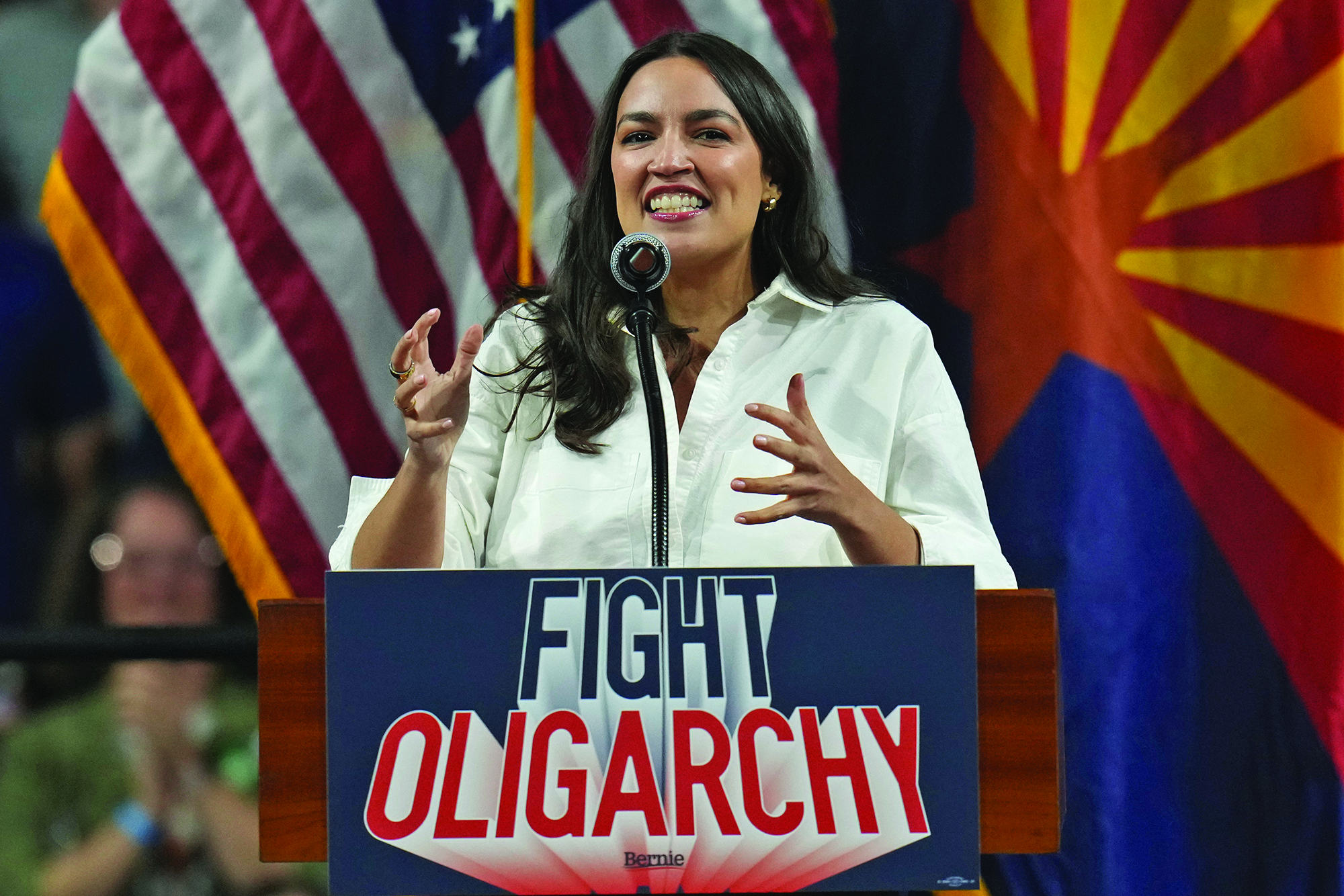
NEW YORK – A clear split is growing inside the Democratic Party. Establishment voices and many moderates are now taking direct aim at the progressive wing led by Rep. Alexandria Ocasio-Cortez (AOC).
Party insiders, donor networks, and policy groups say far-left messaging turns off swing voters and puts future elections at risk. That argument got louder at a recent gathering of top Democrats in South Carolina, where speakers urged the party to step away from what they called “toxic” progressive positions.
At the center of the clash is a familiar complaint. Moderates say the Progressive Squad, including AOC, Ilhan Omar, Rashida Tlaib, and Ayanna Pressley, makes Democrats harder to sell in battleground states.
With 2028 already shaping strategy, many in the party’s middle want to limit the Squad’s influence. This piece breaks down how the feud grew, who is driving it, and what it could mean for Democrats next.
How the Progressive Squad Rose, and Why It Matters
The Progressive Squad became a national story in 2018. That year, AOC shocked the party by beating a long-time incumbent in a New York primary. Soon after, Omar, Tlaib, and Pressley joined her as a highly visible bloc. Together, they backed big ideas like the Green New Deal, Medicare for All, and defunding the police. They also framed themselves as outsiders pushing back on corporate power and party leadership.
- Where they’ve had wins: Over time, the Squad helped pull the party conversation back. Their priorities showed up in parts of Biden’s Build Back Better push and in Harris’s economic messaging. In addition, their focus on climate and racial justice has fired up many younger voters and voters of color.
- Why some Democrats blame them: Moderates argue that the same rhetoric can push away suburban and working-class voters. After 2024 losses, some party voices pointed to the left as a reason Democrats struggled in key places.
At first, leaders like Nancy Pelosi brushed off the group’s reach. Pelosi once described them as “four people and that’s how many votes they got.” Even so, the Squad became more prominent over time. Still, recent results have exposed weak spots. Primary defeats for allies like Cori Bush and Jamaal Bowman also suggest the movement can be beaten when money and messaging line up against it.
Establishment Democrats Raise the Stakes
Now, criticism is no longer vague. More insiders are calling out progressives directly, and AOC sits at the top of the target list. Groups such as Third Way and the Progressive Policy Institute have put out reports saying “far-left” stances on immigration, energy, and identity politics hurt Democrats at the ballot box. Meanwhile, major donors, including those tied to Wall Street and Silicon Valley, are shifting support toward more moderate candidates.
- What polling is being used to argue: Some surveys show Democratic numbers drop in swing areas when voters link the party to progressive branding. A 2025 poll from the Democratic Leadership Council, for example, found 60% of independents viewed the Squad’s agenda as “too extreme,” and critics say that could cost seats in the 2026 midterms.
- How donors are reacting: Some high-profile donors have signaled they may pull back from candidates who echo Squad-style proposals. Reid Hoffman, for instance, has said he’ll hold support from candidates who endorse certain Squad-backed efforts, putting “electability” ahead of ideology.
That mood came into sharper focus at the South Carolina Democratic Strategy Summit in early 2026. More than 200 party leaders attended the meeting, which the Democratic National Committee hosted. The agenda centered on rebuilding after recent setbacks. Even so, the loudest message was simple: don’t let the party get tagged with “toxic far-left positions.” Speakers also singled out Bernie Sanders and AOC as symbols of what they want to avoid.
The South Carolina Summit Becomes a Flashpoint
The Charleston gathering became a moment where the party fight felt official. Governors, senators, consultants, and strategists met to map out the next few cycles. Moderates held the microphone most of the time, and they stressed center-left approaches on the economy, immigration, and national security.
- Comments shared at the summit:
- A senior DNC official said, “We can’t let the extremes define us. Positions like those from AOC on defunding ICE or aggressive climate mandates are scaring away voters we need.”
- Gov. Gavin Newsom, often mentioned as a 2028 contender, said, “The party must return to pragmatic progressivism, not radical overhauls that alienate the middle.”
- A think tank representative added, “Polling shows the progressive wing is a liability in purple districts. For 2028, we need to prioritize unity over division.”
Beyond speeches, attendees discussed tactics to isolate the progressive wing. Ideas included shifting resources away from Squad-endorsed candidates and helping moderates in primaries. The tone matched earlier warnings from figures like Elaine Kamarck, who raised concerns in 2025 about whether Democrats were seen as “too liberal.”
The Moderate Playbook for 2028: Limit the Left’s Reach
With 2028 on the horizon, many establishment Democrats are working on a strategy to reduce progressive power inside the party. The plan shows up in several areas:
- Primary pressure: Backing moderate challengers against Squad members, even in safe Democratic seats. Groups like the New Democrat Coalition are looking for recruits.
- Platform shifts: Pushing a party message that avoids sweeping progressive demands. Instead, they want to focus on “kitchen table” issues such as inflation and health care costs.
- Media framing: Feeding stories to major outlets that paint progressive leaders as extreme or divisive. In turn, those stories often place AOC at the center.
- Bigger coalitions: Reaching out to independents and center-right Republicans. Supporters point to cross-party coalitions, including partnerships that stretch from the Squad to Liz Cheney.
Progressives say this approach risks breaking the base. Leaders like Pramila Jayapal warn that running as “Republican light” won’t work. They argue Democrats win when they offer a clear contrast.
AOC and the Squad Push Back
AOC has responded aggressively. In interviews and online, she has defended the progressive agenda as a direct answer to inequality and the climate crisis.
- AOC’s message: “The establishment is scared because we’re fighting for working people, not corporations. This war on progressives is a war on the future of the party.”
- What the Squad is doing next: The group is leaning harder on grassroots organizing. Justice Democrats has also supported new challengers such as Donavan McKinney for 2026. In addition, progressives have joined Bernie Sanders on the “Fighting Oligarchy Tour,” which has drawn big crowds.
Even after some setbacks, AOC still raises serious money. Reports say she brought in $9.6 million in Q1 2026, which signals a strong donor base. At the same time, internal strain has shown up through staff shakeups and pressure to work more closely with party leadership. Those cross-currents make the next phase harder to predict.
What This Fight Means for Democrats as a Party
The clash is about more than personalities. It’s also about what the party wants to be. Moderates worry the party looks too far left. Progressives argue the party fails when it plays it safe. Nina Turner and others say the establishment is smearing the left, including over issues like Palestine.
Several outcomes are possible:
- A stronger centrist push could make Democrats feel safer in swing districts, but it could also limit bold policy ideas.
- If the feud keeps growing, Democrats could enter 2026 and 2028 weakened and distracted.
- A renewed progressive surge might energize core voters, but it could also create problems with independents.
Some analysts expect fewer progressive insurgents in the coming cycles, with the argument that “there won’t be another AOC.” Still, Bernie Sanders and others keep making the same point. Without major change, many voters may look elsewhere.
From Newcomers to Targets: The Squad’s Changing Role
The Squad’s story looks a lot like other left-wing waves in American politics. In the 2010s, many Democrats treated the movement as the party’s future. Now, critics often use it as a catch-all explanation for losses. Books such as The Squad: AOC and the Hope of a Political Revolution describe the strain of trying to stay anti-establishment while operating inside government.
Online politics adds fuel. Social media posts and viral clips frame the situation as “Democrats Just DECLARED WAR on AOC,” which keeps the drama in the spotlight. Commentators like Glenn Greenwald also highlight party attacks on third-party efforts, and they connect those fights to how progressives get treated inside the party.
What Think Tanks and Analysts Are Saying
Policy groups and commentators are driving much of the argument. The Liberal Patriot has suggested AOC and Sanders reflect different moments, and it claims AOC’s problems come from symbolic politics that don’t translate well in swing areas. Dissent Magazine has pointed to another tension, saying the Squad’s shift from pure opposition to compromise has split parts of the left.
- Predictions and warnings:
- Elaine Kamarck has argued Democrats need to figure out whether voters see them as too liberal or not bold enough.
- Matthew Yglesias has said centrist Democrats need real change, not reflexive loyalty to party leadership.
Voters and Polls Show a Split Audience
Public opinion looks mixed. Many younger Democrats still like progressive ideas. At the same time, older voters and moderates tend to prefer a more cautious approach. A 2025 NPR discussion on the future of progressives highlighted the same arc, a fast rise, followed by a tougher stretch.
In states like Pennsylvania and Michigan, some data points suggest that linking Democrats closely to AOC can hurt support with key groups. For many party strategists, that link is a major reason the pushback has grown louder.
The Road to 2028: Unity, or a Longer Fight
As 2028 gets closer, the party has to choose a path. Moderates want to contain AOC’s influence through efforts like the ’28 Mission. Meanwhile, progressives are countering with endorsements, organizing, and tours, and they keep arguing that bold action is the only winning message.
Either way, the result could reshape the party. If moderates win this internal battle, Democrats may shift closer to the center. If progressives hold their ground, the conflict may keep running through every primary and platform fight.
The party’s move against AOC and the Progressive Squad shows a deep divide that isn’t going away soon. Establishment Democrats see the left as a risk to electability. Progressives see moderation as surrender. After the South Carolina summit, both sides have drawn clearer lines for 2026 and beyond.
Related News:
Top Democrats Abandon Zohran Mamdani as His Radical Plan Backfires
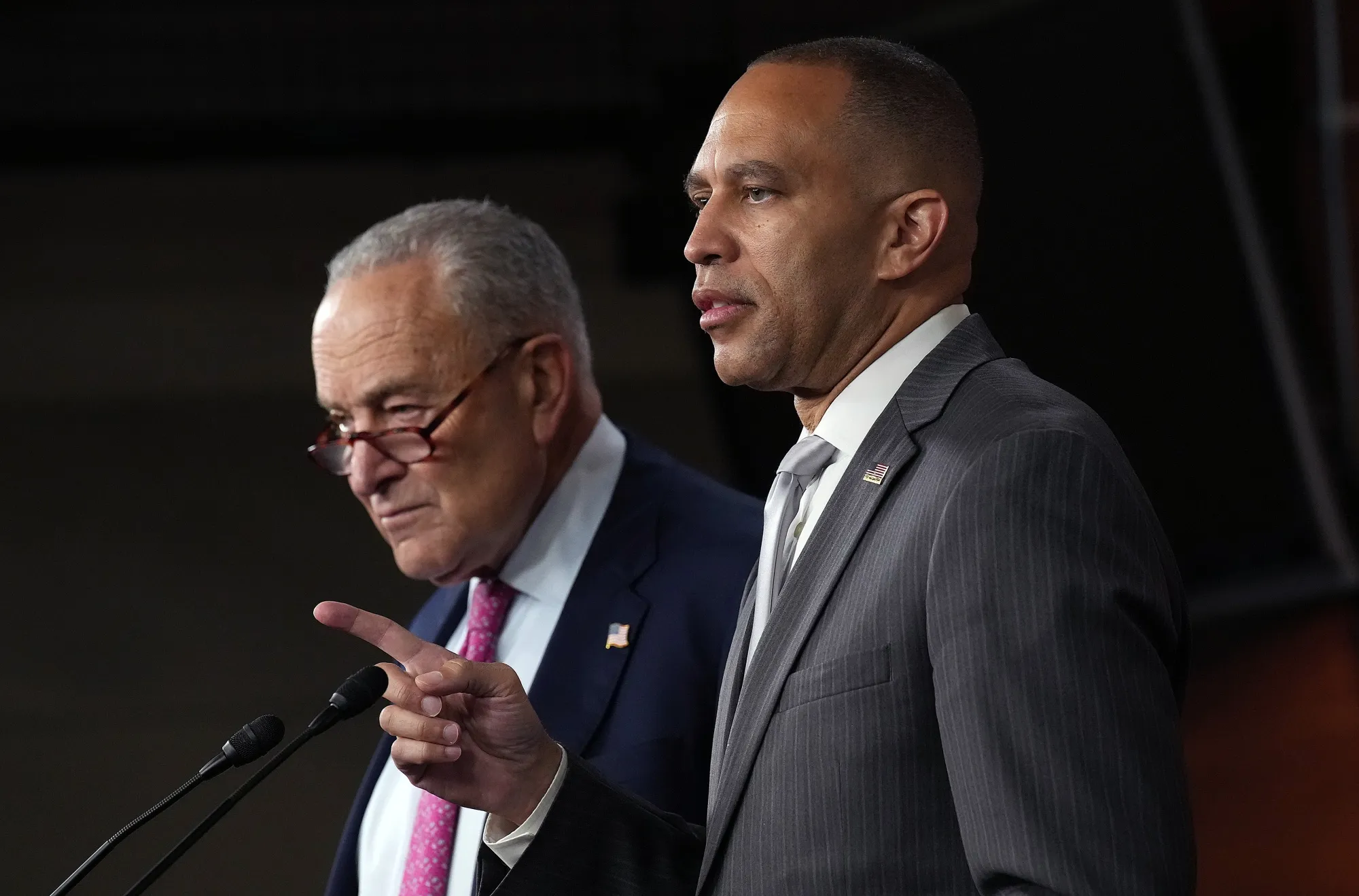
WASHINGTON, D.C. – After recent election losses and continued clashes with the Trump administration, a loud group of progressive Democrats has turned up its criticism of House Minority Leader Hakeem Jeffries (D-N.Y.).
These critics say Jeffries isn’t forceful enough when confronting Republicans, and they argue he doesn’t fight hard for big progressive goals. As a result, talk of leadership challenges and primary threats has grown, and it’s putting the party’s internal divides in the spotlight.
Many on the left call Jeffries an ineffective opposition leader. They point to what they see as caution on issues such as immigration enforcement, foreign policy, and economic inequality. At the same time, polls and grassroots chatter suggest broader frustration, with some Democrats labeling party leadership as “weak” or “ineffective” after 2024.
Top Complaints Coming From Progressives
- Seen as too soft in fights with Republicans: Progressives cite Jeffries’ comments that Democrats have “no leverage” in some congressional battles. For activists pushing constant pressure on Trump-era policies, that message lands badly.
- Not progressive enough on major policy: Critics say he favors a centrist, donor-friendly approach over sweeping plans. They often point to demands like defunding or abolishing ICE, tougher climate policy, and wealth redistribution.
- Too close to party power players: Some progressives argue Jeffries aligns with establishment interests, including groups like AIPAC and moderate donors, which they say pushes the left flank away.
Because of these concerns, some activists and coalitions have openly urged Jeffries and Senate Minority Leader Chuck Schumer to step aside. They want leaders they believe will oppose “runaway militarism” and challenge conservative policy more directly.
Where AOC and “The Squad” Fit In
Alexandria Ocasio-Cortez, along with “The Squad,” including Reps. Ilhan Omar (D-Minn.) and Ayanna Pressley (D-Mass.) remain a symbol of the party’s progressive drive. Since her 2018 upset win over an establishment Democrat, AOC has stayed at the center of calls for bolder action.
Still, even though AOC has criticized party leaders on issues like government funding and immigration, she has publicly avoided backing a direct push to unseat Jeffries. In late 2025, after New York City Council member Chi Ossé filed paperwork to primary Jeffries in 2026, AOC said it was “not a good idea right now.” She stressed unity going into the midterms. That position upset some farther-left voices, who accused her of shielding the establishment even though she built her own image as an insurgent.
Meanwhile, other Squad members and allied progressives have pressed harder for changes, including calls to abolish ICE and to take a tougher line against foreign intervention. Their messaging adds to the argument that party leaders don’t match the base’s priorities.
Claims That Socialists Are Pulling Democrats Left
On the other side, critics on the right, and some moderates, say progressive and socialist-leaning groups have “hijacked” the Democratic Party. They point to the rise of self-described democratic socialists, including New York Mayor-elect Zohran Mamdani, and the visibility of figures linked to the Democratic Socialists of America (DSA).
- The Squad’s push for Medicare for All, the Green New Deal, and stronger critiques of capitalism has moved more debate to the left.
- Big wins, including Mamdani’s mayoral victory, are seen by supporters as proof that younger activists are gaining control.
- In contrast, establishment Democrats warn the party could lose swing voters, especially in competitive districts.
Even so, progressives often bring energy and crowds, including on tours with Bernie Sanders. Yet their demands for strict ideological alignment often collide with leaders who focus on building majorities.
What This Means for Democrats Going Forward
The backlash against Jeffries shows a party still wrestling with its identity after setbacks. Polling and party talk suggest Democrats remain split. Some want sharper ideological lines, while others care most about winning elections. Progressives argue the party needs a bold contrast with Trump, while moderates warn that public infighting could help Republicans in 2026.
As House Democrats look toward a possible majority shift, the argument over leadership keeps growing. For now, the tension between the progressive wing and the centrist core continues, and neither side shows signs of backing down.
Related News:
CNN Warns 58% of Americans Say Democrats Have Moved Too Far Left


Trump’s Kharg Island Strike Cuts Iran’s Oil Fear Premium

Allies Abandoning US Over Iran Sparks Fears of Trump Dumping NATO

Karoline Leavitt Slams Joe Kent’s Resignation Letter Says Many False Claims Made

Jasmine Crockett Security Guard Killed by Dallas S.W.A.T.

VOR News: The Voice of the Republic for Readers Who Want Clarity

Democrat Party Insiders Turning on AOC Move Against the Progressive Squad

CNN’s Fareed Zakaria Says Democrat Mayors Are “Destroying Their Own Cities”

Top Democrats Abandon Zohran Mamdani as His Radical Plan Backfires

Progressive Democrats Step Up Calls to Replace Hakeem Jeffries

Panic Engulfs CNN as Ellison’s Paramount Skydance Wins Takeover Bid

Thai Billionaire Charged With Lese Majeste Over Facebook Post

Russia Bans Facebook, Meta Says It’ll Do “Everything” To Restore Service

Facebook Login Feature – Clash of Clans

4 Things you can do to take your Facebook Lead Generation to the Next Level

Zuckerberg to Allow Violent Speech on Russia After Facebook Blocked

Facebook Loses $200 Billion as Users Shift to TikTok

Downloading Facebook Videos Anonymously with High Quality Video through Snapsave app

The Best Site to Buy Real Facebook Likes and Followers in 2022

Chinese Man Arrested for Using Facebook to Dupe Cryptocurrency Investor

Google and Facebook Under Huge Pressure Over User Privacy

Mosque Set Ablaze in Iran a Citizens Revolt Against the Islamic Regime

AOC Accuses Jessie Watters of Fox News of Sexualizing and Harassing Her

JD Vance Exposes Walz’s Fraud and CNN’s Lies in White House Presser

Milestone Card Credit: How the Milestone MasterCard Can Transform Credit
-

 Crime3 months ago
YouTuber Nick Shirley Exposes BILLIONS of Somali Fraud, Video Goes VIRAL
-

 China2 months ago
China-Based Billionaire Singham Allegedly Funding America’s Radical Left
-
 Politics3 months ago
Ilhan Omar Faces Renewed Firestorm Over Resurfaced Video
-

 Politics1 month ago
CNN Delivers Stark Reality Check to Democrats Over Voter ID
-

 Business3 months ago
Tech Giant Oracle Abandons California After 43 Years
-

 Midterm Elections3 months ago
2026 Midterms Guide: Candidates, Key Issues, and Battleground States
-

 Crime3 months ago
Minnesota Fraud Scandal EXPANDS, $10 Billion in Fraudulent Payments
-

 Politics3 months ago
Accusations Fly Over Alleged Zionist Takeover of (TPUSA) Turning Point USA