
Tech
How AI is Changing Political Campaigns in 2026

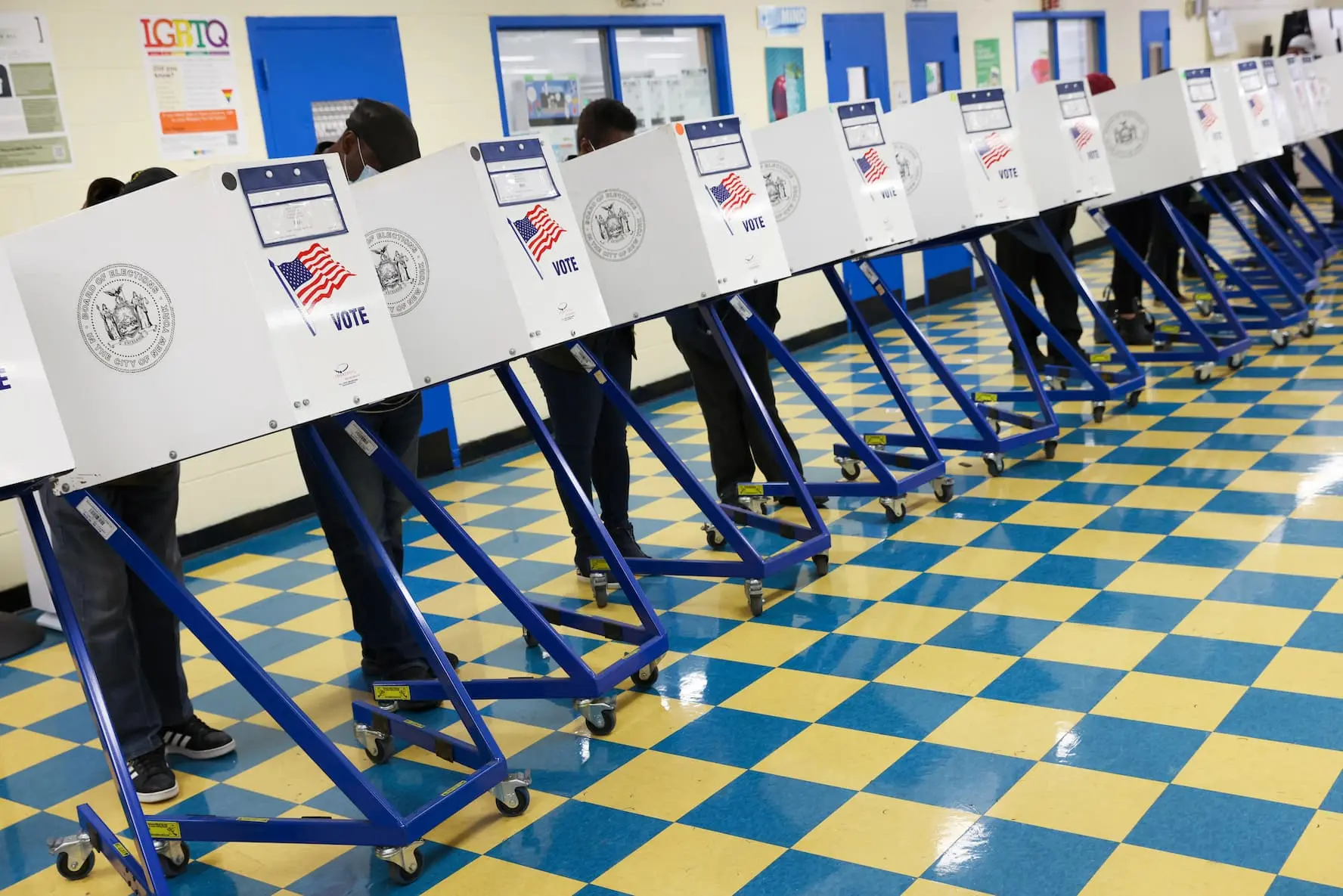
It’s 8:07 a.m. on a Tuesday, and a political campaign is already running a full sprint. A volunteer lead is texting supporters about a weekend canvass. A rapid-response team is clipping a candidate’s town hall into shareable vertical videos. Someone’s posting a meme that answers a fresh attack ad before lunchtime. Meanwhile, a fundraising email is being tested in six versions, and the best one will be sent to hundreds of thousands of inboxes by noon.
That’s the feel of a modern race, and in 2026, AI in campaigns is part of the daily routine. Think of it as software that writes, predicts, edits, and automates. It drafts emails, suggests which voters need a nudge, helps teams make lots of ad versions fast, and flags what’s trending before it turns into a headline.
The upside is speed and reach. The downside is trust. When AI can produce realistic audio, images, and video on demand, it also makes deception easier. Even lawmakers are scrambling to keep up, as described in governments eye rules on AI ads. In 2026, the best question for voters isn’t “Is this political content persuasive?” It’s “Is it even real?”
Where campaigns use AI the most in 2026 (and why it works)
Campaigns aren’t using AI because it’s trendy. They’re using it because it saves time, stretches budgets, and helps teams respond faster than the news cycle. A state house candidate can now do some of what only a presidential campaign could do a few cycles ago: test messages quickly, target voters more precisely, and keep fundraising running even at 2:00 a.m.
Three patterns show up in race after race.
First, content output. Generative tools can turn a policy memo into a punchy email, a set of talking points, and a batch of social captions in minutes. Staff still edit, but they start from a draft instead of a blank page. That means more posts, more variations, and faster response when something breaks.
Second, testing and iteration. Campaigns have always tried different slogans and subject lines, but AI makes it cheaper to produce many options and measure what works. The winner becomes the “control,” and the cycle repeats.
Third, more accessible analytics. AI can summarize voter notes, highlight patterns in feedback, and support decision-making without a dedicated data team for every small campaign. That doesn’t replace experienced strategists, but it can raise the baseline for everyone.
Micro-targeted messages at scale: different voters, different versions of the same pitch
Micro-targeting sounds mysterious, but the basic idea is simple: campaigns build voter “models,” which are educated guesses about what you care about and how likely you are to vote. Those guesses come from public records, commercial data, past turnout, surveys, and digital behavior where legally available.
In 2026, AI makes micro-targeting feel less like a spreadsheet and more like an assembly line. Campaigns can generate hundreds of ad variations that share a core message but swap details to match different groups. A suburban parent might see an education-focused version. A veteran might see a version that leads with benefits and the VA. A younger renter might get a cost-of-living hook and a different visual style.
This is also where rapid A/B testing becomes routine. Teams run small tests, watch what gets clicks or donations, then push the best-performing version. Some firms advertise the ability to generate large batches of creative quickly, and political shops across parties are building workflows around that idea.
Down-ballot races feel the impact most. Instead of paying an agency to build 20 polished ads, a smaller campaign can test 200 rough variations, then spend money only on the winners.
AI is also shaping relational organizing, the old-school idea that voters trust people they know. New tools can help volunteers write more personal outreach texts and emails, suggest follow-ups, and keep notes organized. The message still comes from a real person, but the tool helps that person communicate better and more consistently.
Fundraising that never sleeps: AI-written emails, texts, and donor discovery
If you want to understand why campaigns love automation, look at fundraising. Money comes in waves, and those waves often hit after breaking news, a debate moment, or a viral clip. The fastest campaign can turn attention into donations while the story is still hot.
In 2026, AI helps campaigns do three things at once:
1) Draft and re-draft asks fast.
Tools can produce multiple versions of an email or text based on a few inputs: the news hook, the candidate voice, the goal, and the target audience. Staff still need to approve tone and claims, but AI can generate options quickly.
2) Segment supporters more precisely.
Instead of one giant list, campaigns slice audiences by past giving, likely issue interest, geography, and engagement. AI supports that segmentation and can suggest which groups might respond to which message.
3) Find donors beyond the “usual suspects.”
Some platforms are designed to surface likely donors by connecting data points that humans would miss. That can help campaigns expand their donor base, not just hit the same people with more emails.
The practical result is fewer staff hours, more experiments. One staffer can run a testing program that used to require a whole team. That doesn’t guarantee better politics, but it does change the pace. The fundraising machine can run around the clock, tweaking subject lines, timing, and calls to action while humans sleep.
The new battleground: AI misinformation, deepfakes, and “cheap fakes.”
The scariest part of AI in politics isn’t that campaigns can write better subject lines. It’s that fake media can move faster than verification.
A deepfake is synthetic media that imitates a real person’s face or voice. A “cheap fake” can be simpler, like a misleading edit, a re-captioned clip, or a slowed-down video that changes how someone sounds. Both can be effective because they hit the brain before the fact-check.
What makes 2026 different is volume and speed. A single bad actor can produce dozens of versions of a lie: different captions, different crops, different voice-overs, different platforms. Even if one gets removed, another survives, and screenshots live forever.
Campaigns are responding with monitoring teams and quick rebuttals, but the real problem is time. A false clip can rack up millions of views in hours. A correction can take days, and it rarely travels as far.
How deepfakes can shape a race before the facts catch up
Most viral political fakes follow a few playbooks because they work.
Fake gaffes: a candidate “says” something offensive in a short audio or video clip.
Fake scandal leaks: a “recording” appears to show private comments, often dropped at the worst moment.
Fake endorsements: a celebrity or respected local figure appears to back a candidate, even if they never did.
Altered clips: a real video gets trimmed or re-ordered so the meaning flips.
Even when a clip is proven false, it can still land the punch. People remember the emotional hit, not the correction. That’s why some campaigns now plan for deepfakes the way they plan for weather: not because they want them, but because they assume they’ll show up.
There are also real-world warnings from the last two years. An AI voice robocall that sounded like President Biden targeted New Hampshire voters in 2024, and federal regulators later announced a major penalty against the person tied to it. That case mattered because it showed how cheap it can be to imitate someone’s voice, and how hard it is for regular voters to know what’s real in the moment.
In 2026, the best defense is speed plus proof. Campaigns that can quickly post full videos, original audio, and behind-the-scenes context tend to recover faster than campaigns that argue with screenshots.
Foreign and domestic influence: when AI makes disinformation cheaper to run
AI doesn’t create new motives. It reduces costs.
Influence campaigns used to need large teams to write posts, translate talking points, and manage fake accounts. Now a smaller group can generate endless comments, plausible bios, and targeted messages, tuned to different communities. AI can also rewrite the same narrative in multiple tones: angry, sympathetic, “just asking questions,” or “I’m a lifelong voter but…”
Foreign actors are still a concern. Researchers and platforms have reported attempts by states and aligned groups to use AI tools for influence work, including generating posts and media. At the same time, plenty of viral misinformation is domestic, created by partisans, grifters, or random accounts chasing engagement.
The hard part for voters is that manipulation doesn’t always look like propaganda. It can look like a normal local Facebook post, a “leaked” audio message, or a short clip with a confident caption. AI helps that content scale, and scaling is what turns a rumor into a story people feel forced to respond to.
Rules, ethics, and the trust gap: what is allowed in 2026, and what should change
As of January 2026, the rules around AI in campaigns are uneven. There’s no single standard that covers every race in every state, and the lines between protected speech, satire, and deception are messy. Courts also treat political speech as highly protected, which makes broad bans hard to write and even harder to enforce.
That’s why most meaningful action so far has been at the state level, often focused on disclosure, timing windows near elections, and prohibitions on impersonation. A helpful snapshot of how widespread these efforts have become is in the new 2026 state laws on AI and elections, which report that numerous state laws targeting AI and deepfakes take effect in 2026.
In practice, campaigns and platforms are filling gaps with policies, labels, and internal ethics rules. The problem is consistency. A label on one platform may not appear on another, and a screenshot strips labels instantly.
Trust is now a campaign asset, not just a candidate trait. The teams that treat authenticity as part of their strategy tend to avoid self-inflicted damage.
Disclosure and accountability: Should campaigns have to label AI ads and AI images?
Labels sound like the obvious answer, and for many voters, they help. If an ad uses AI-generated images or synthetic audio, a clear disclosure can reduce confusion and discourage the worst tricks.
Still, labels have limits:
- They can be removed when content is re-posted as a clip or screenshot.
- They don’t explain intent, meaning the label could cover harmless editing or serious deception.
- They’re hard to standardize, since “AI used” could mean anything from color correction to a full synthetic video.
Even with those limits, disclosure is a strong baseline. Ethical campaigns already do some version of it because the alternative is a credibility crisis. If a team gets caught using synthetic media without telling voters, the backlash can last longer than the ad’s impact.
Accountability also matters behind the scenes. Campaigns that use AI for voter outreach and fundraising need tighter controls on approvals, claims, and source material. If an AI draft invents a quote or misstates a statistic, the campaign is still responsible for sending it.
A simple checklist for voters: how to sanity-check political content in the AI era
You don’t need to be a forensic expert. You just need a few habits that slow down the spread of bad information.
- Pause before sharing. If it makes you furious instantly, that’s a red flag.
- Find the source. Who posted it first, and can you trace it back?
- Check the date and context. Old clips get recycled with new captions.
- Watch the full clip. Short edits can flip meaning.
- Look for odd visuals or audio. Strange lip sync, warped hands, robotic pacing, and lighting shifts can signal manipulation.
- Search for independent reporting. If it’s real, more than one credible outlet usually confirms it.
- Verify through official channels. Candidate websites and verified accounts often post full speeches and statements.
- Be extra careful with “breaking scandal” posts. That’s prime territory for fakes.
This isn’t about becoming cynical. It’s about staying steady when content is designed to rush you.
Conclusion
AI is reshaping 2026 political campaigns in two opposite ways at the same time. It helps campaigns communicate, test, and organize faster, which can make outreach more responsive and less expensive. It also makes deception cheaper, faster, and harder to spot, which pushes trust to the center of every race.
Expect more automation, more personalized messaging, and more synthetic media attempts as Election Day gets closer. The real check on all of it is ordinary behavior: slow down, verify, and share carefully. In the AI era, attention is power, and where you give it still matters.
Related News:
Who Is Leading the Democratic Party in 2026?

G42 welcomes the decision by the White House to approve the export of advanced AI semiconductors to the company. This step shifts the UAE-US AI corridor from planning into real deployment, reflecting strong mutual trust and a shared focus on secure, scalable AI infrastructure.
Accelerating Major AI Infrastructure Projects
This approval speeds up key AI projects already in progress in the UAE. One of the most important is Stargate UAE, a 1-gigawatt AI compute cluster built by G42 for OpenAI, in partnership with Oracle, Cisco, NVIDIA, and SoftBank Group. Stargate UAE is part of the wider UAE-US AI Campus, a 5-gigawatt AI hub designed to provide large-scale compute power and low-latency inferencing for the broader region.
The decision also supports deeper technology partnerships with leading US hyperscalers and chipmakers. These include Microsoft, AMD, Qualcomm, Cerebras, and others that are working with G42 to grow a secure and powerful AI ecosystem.
A Shared Framework For Secure Technology Use
Licensing these advanced chips builds on a shared view of risk, security, and opportunity developed through close UAE-US cooperation. The goal is to support the safe global spread of US technology.
All of these systems will run under the Regulated Technology Environment (RTE), a world-class technology and compliance model created by G42. The RTE has been approved in line with guidelines from the US Department of Commerce and the Bureau of Industry and Security (BIS).
A New Chapter For UAE-US AI Collaboration
Peng Xiao, Group CEO of G42, said:
“This announcement marks a defining moment for G42 and our partners as we move from planning into execution. Our shared infrastructure model sets a new benchmark for secure, high-performance compute that is designed to serve the needs of both nations. What we build in the UAE, we will continue to match in the U.S., maintaining symmetry and trust at every layer.”
The UAE is still the only country in the region that has delivered AI infrastructure at this scale while working fully in line with US regulatory standards, export controls, and governance rules.
Khaldoon Khalifa Al Mubarak, Secretary General of the Artificial Intelligence and Advanced Technology Council, added:
“This decision affirms the depth of trust that underpins the UAE–U.S. relationship. It reflects a shared strategic outlook – where technology is not merely a tool of progress, but a platform for stability, economic resilience, and long-term cooperation. The UAE is proud to play a constructive role in shaping that future.”
Global AI Infrastructure Footprint
G42 already operates some of the most powerful AI systems in the world. Its deployed AI infrastructure includes three of the Top500 supercomputers worldwide, including the second and third largest in the region. G42 also recently announced its Maximus-01 supercomputer in New York, which ranks 20th globally.
The company’s AI infrastructure footprint now spans several key locations. These include Abu Dhabi, France, and multiple sites across the United States, such as California, Minnesota, Texas, and New York.
About G42
G42 is a technology holding group and a global leader in advanced artificial intelligence that aims to build a better future. Founded in Abu Dhabi and active around the world, G42 promotes AI as a force for good across many sectors.
From molecular biology to space exploration, and many fields in between, G42 works to turn bold ideas into real solutions today.
Trending News:
International Air Chiefs Meet in Dubai for 12th DIACC


Canada’s Carney Betrays the US Condemns Defensive Strikes on Iran

Karoline Leavitt Slams CNN’s Kaitlan Collins Over Killed U.S. Soldiers

Jasmine Crockett’s Loses Democratic Texas Senate primary

Iran’s International Law Claims Ring Hollow Amid Decades of Violations

Trump Orders Complete Freeze on Economic Ties with Spain

Ilhan Omar Accused of Leaking U.S. Strike Plans to Iran as Tensions Rise

Trump Pushes Back on War Hawks, Choosing Deals Over a Long Iran Overthrow Plan

Trump Says He’s “Very Disappointed” in Starmer Over Iran

Trump Critics Fume as Iranians Around the World Celebrate

US Ambassador Calls Out Iran at Tense UN Security Council Meeting

Thai Billionaire Charged With Lese Majeste Over Facebook Post

Russia Bans Facebook, Meta Says It’ll Do “Everything” To Restore Service

Facebook Login Feature – Clash of Clans

4 Things you can do to take your Facebook Lead Generation to the Next Level

Zuckerberg to Allow Violent Speech on Russia After Facebook Blocked

Facebook Loses $200 Billion as Users Shift to TikTok

Downloading Facebook Videos Anonymously with High Quality Video through Snapsave app

The Best Site to Buy Real Facebook Likes and Followers in 2022

Chinese Man Arrested for Using Facebook to Dupe Cryptocurrency Investor

Google and Facebook Under Huge Pressure Over User Privacy

Mosque Set Ablaze in Iran a Citizens Revolt Against the Islamic Regime

AOC Accuses Jessie Watters of Fox News of Sexualizing and Harassing Her

JD Vance Exposes Walz’s Fraud and CNN’s Lies in White House Presser

Milestone Card Credit: How the Milestone MasterCard Can Transform Credit
-

 Crime2 months ago
YouTuber Nick Shirley Exposes BILLIONS of Somali Fraud, Video Goes VIRAL
-

 China1 month ago
China-Based Billionaire Singham Allegedly Funding America’s Radical Left
-
 Politics2 months ago
Ilhan Omar Faces Renewed Firestorm Over Resurfaced Video
-

 Politics3 months ago
Ilhan Omar’s Ties to Convicted Somali Fraudsters Raises Questions
-

 News3 months ago
Walz Tried to Dodges Blame Over $8 Billion Somali Fraud Scandal
-

 Crime3 months ago
Somali’s Accused of Bilking Millions From Maine’s Medicaid Program
-

 Crime3 months ago
Minnesota’s Billion Dollar Fraud Puts Omar and Walz Under the Microscope
-

 Business2 months ago
Tech Giant Oracle Abandons California After 43 Years