Immigration & Border Policy
Trump Targets Fentanyl While Democrats Shield Illegal Drug Dealers


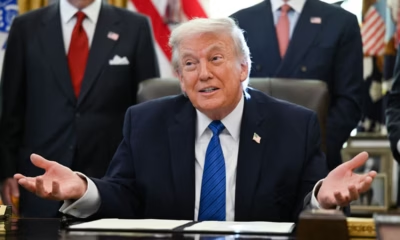
WASHINGTON D.C. – In a move his team calls historic, President Donald J. Trump has signed an executive order that classifies illicit fentanyl and its key precursor chemicals as a Weapon of Mass Destruction (WMD).
The order was signed in the Oval Office during a ceremony that also honored border security officials with medals. The setting highlighted how central the fentanyl crisis has become to the administration’s security and immigration agenda.
“No bomb does what this is doing,” Trump said, claiming fentanyl kills between 200,000 and 300,000 Americans each year. “We are officially labeling fentanyl as a weapon of mass destruction, because that is exactly what it is.”
In the text of the executive order, illicit fentanyl is described as “closer to a chemical weapon than a narcotic.” Just two milligrams, about the size of 10 to 15 grains of table salt, can be fatal.
By using the WMD label, the administration wants to pull in America’s national security agencies and treat fentanyl more like a biological or nuclear threat than a street drug.
Some legal scholars and policy analysts question how much the label will change on-the-ground enforcement, since current laws already allow long prison terms for fentanyl trafficking. The White House insists the change is more than symbolic. Officials say it pushes the crisis into the top tier of security threats and warns that fentanyl could be used for “concentrated, large-scale terror attacks” by hostile actors.
What the Executive Order on Fentanyl Actually Does
The order directs a broad group of federal agencies to increase action against fentanyl and its supply networks:
- The Attorney General is instructed to ramp up investigations, prosecutions, and sentencing enhancements for fentanyl-related crimes.
- The Departments of State and Treasury are ordered to target and sanction banks, companies, and individuals tied to fentanyl production, finance, or distribution.
- The Department of Homeland Security is asked to apply WMD-focused intelligence tools to track smuggling routes and criminal networks.
- The Departments of Defense and Justice must review when and how military resources could be used in cases of extreme fentanyl-related emergencies.
The move builds on earlier decisions, including labeling major cartels as Foreign Terrorist Organizations, raising tariffs on China, Mexico, and Canada, and authorizing strikes on international drug-smuggling vessels.
The administration argues that fentanyl profits fund cartel violence, corrupt foreign institutions, and weaken U.S. security from within.
A Crisis Still Killing Tens of Thousands
Fentanyl remains the top cause of death for Americans between 18 and 45 years old. While overdose numbers have improved from earlier peaks, the damage is still severe.
After years above 100,000 total drug deaths annually, overdoses involving synthetic opioids, mainly fentanyl, fell in 2024 to an estimated 60,000 to 70,000 deaths. Even with this drop, the toll is staggering.
Provisional CDC data show that synthetic opioids like fentanyl are involved in roughly 70 percent of recent overdose deaths. The White House highlights long-term totals and points to several hundred thousand lives lost to fentanyl over the last decade.
Families who have lost loved ones to fentanyl have been visible at Trump’s events, sharing stories of sudden loss, counterfeit pills, and addiction fueled by cheap, powerful drugs.
How Fentanyl Reaches the United States
Most illicit fentanyl that ends up in the United States is cooked in Mexico by powerful cartels, especially the Sinaloa Cartel and Cartel Jalisco Nueva Generación (CJNG). These groups buy or receive precursor chemicals mainly from China and India, then synthesize fentanyl in clandestine labs.
Smugglers move the finished drug mostly through ports of entry on the southern border. It is often hidden in cars, trucks, or commercial shipments, and mixed into fake prescription pills or cut into other street drugs.
According to the DEA, Mexican transnational criminal organizations control much of the fentanyl supply chain, from chemical sourcing to wholesale distribution. The same groups are tied to kidnappings, extortion, and brutal violence across Mexico and beyond.
Trump has publicly pressured foreign governments, using tariffs and hints of military force, and has accused some rivals of allowing or encouraging the flow of fentanyl that kills Americans.
White House Strategy: Using Every Policy Tool
The WMD designation is part of a wider strategy that blends border enforcement, foreign policy, intelligence work, and criminal prosecutions.
The administration points to:
- Tougher border security measures and more resources at ports of entry
- Terrorist designations for major cartels
- The HALT Fentanyl Act, which permanently placed fentanyl-related substances in Schedule I
- Increased seizures of fentanyl at the border and inside the country
Officials argue that these steps, paired with local and state efforts, have played a role in reducing overdose numbers. They stress that fentanyl is not just a public health concern, but a threat that demands military, intelligence, and diplomatic tools.
Democrats Push Back on Trump’s Approach
Democratic lawmakers and many public health experts say the WMD label is more about politics than policy. Some legal experts describe the move as a “political exercise” that adds little, since fentanyl trafficking is already heavily punished.
Democrats and many treatment advocates prefer a focus on:
- Expanding addiction treatment
- Increasing access to medications like buprenorphine and methadone
- Supporting harm-reduction programs such as naloxone distribution
- Addressing mental health and the economic roots of substance use
These critics argue that enforcement alone will not solve the problem and that decades of harsh drug policies have not stopped addiction.
They also point out that the recent decline in overdose deaths is likely influenced by several factors, such as changing drug use patterns among younger people and shifts in the illegal drug supply, rather than enforcement alone.
Some warn that when law enforcement is shifted away from drug investigations to handle immigration tasks, it can weaken efforts to target traffickers and major supply networks.
Sanctuary Policies and the Fight Over Local Cooperation
Republicans in Congress and conservative commentators often connect fentanyl trafficking to immigration debates, especially in cities with “sanctuary” policies.
They argue that Democratic governors and mayors in sanctuary jurisdictions block federal immigration enforcement and, in doing so, shield criminal networks that traffic drugs.
In cities like Chicago, Denver, Boston, and New York, local policies limit cooperation with ICE detainers unless there is a criminal warrant or certain serious charges. These rules generally prevent local jails from holding people longer solely for immigration purposes.
House Oversight Committee hearings earlier this year put mayors from sanctuary cities under scrutiny. Republican members accused them of creating loopholes that let repeat offenders, including suspected traffickers, avoid deportation.
The mayors and their allies counter that:
- Sanctuary policies do not stop police from arresting or prosecuting criminals
- Local officers still honor court-approved warrants
- Community trust increases when residents do not fear immigration arrests for reporting crimes
- Research has often linked sanctuary policies with equal or lower crime rates compared to similar cities
Conservatives remain unconvinced and argue that defiance of federal immigration authorities gives cartels and gangs room to operate. Proposals to cut federal funds from jurisdictions that refuse to cooperate with ICE are still being debated in Congress.
A Defining Fight in Trump’s Second Term
Trump has framed the fentanyl crisis as one of the defining battles of his second term. His team says they are using “every available tool” against cartels, chemical suppliers, and financial middlemen who profit from the drug.
Supporters see the WMD designation as a long-overdue recognition of how deadly fentanyl has become. Critics warn that dramatic language without strong treatment and prevention policies could repeat the mistakes of earlier drug wars.
As the executive order rolls out and agencies adjust their strategies, the country will see whether treating fentanyl like a weapon of mass destruction changes the course of an epidemic that has taken hundreds of thousands of American lives.
Related News:
Democrats in Turmoil Over Hopeless Impeachment Drive Against HHS Secretary RFK Jr.
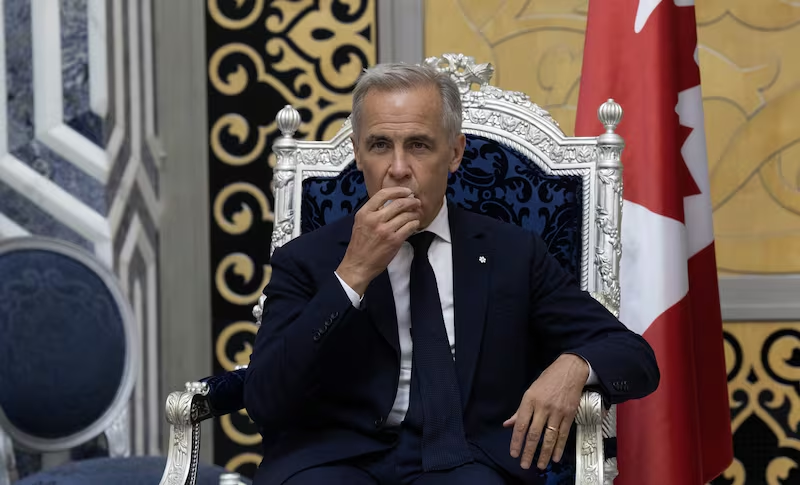
OTTAWA – Prime Minister Mark Carney continues to paint a picture of a resilient and growing Canadian economy. He frequently highlights his government’s efforts to build a strong financial foundation for the future. However, the reality facing ordinary citizens tells a vastly different and much darker story.
A recent report from the Office of the Superintendent of Bankruptcy completely contradicts the optimistic claims coming out of Ottawa. Household budgets are clearly stretched to their absolute limits as the cost of living soars. Canadians are now filing for insolvency at rates we have not witnessed since the devastating 2009 financial crisis.
Key Takeaways
- Historic Insolvency Levels: Consumer insolvency filings reached 37,523 in the second quarter of 2026, marking the highest quarterly volume since 2009.
- Political Contradiction: Prime Minister Mark Carney’s claims of economic resilience clash directly with federal data showing surging bankruptcies and financial distress.
- Piling Debt: High borrowing costs, expensive groceries, and rising tax debts are pushing ordinary households past their financial breaking points.
A Stark Contrast Between Political Promises and Reality
During his campaign, Mark Carney promised Canadians the fastest-growing economy in the entire G7. He assured voters that his policies would bring stability, affordability, and prosperity to the middle class. Yet, the nation has experienced consecutive quarters of economic contraction, meeting the technical definition of a recession.
Carney has repeatedly defended his administration’s economic agenda despite these highly alarming economic indicators. He recently stated that the current economic weakness reflects deliberate policy choices. The Prime Minister argues these shifts are necessary to rewire the economy and deal with ongoing trade uncertainties.
However, telling families that their financial pain is part of a grand policy shift offers little comfort. When you look past the political spin, the economic statistics reveal a very grim reality for Canadian households. The gap between government messaging and the daily struggles of citizens has never felt more profound.
The OSB Report Delivers a Bleak Verdict
The newest data released in August 2026 by the Office of the Superintendent of Bankruptcy is incredibly revealing. It shows that consumer insolvencies have reached staggering new heights across the country. In June alone, an astonishing 13,254 insolvencies were filed, representing an 11.5 per cent jump from last year.
This marks the second-highest monthly total ever recorded in Canadian history, which is a deeply troubling milestone. Furthermore, the broader quarterly picture reinforces the immense financial pressure squeezing Canadian households today. The second quarter of 2026 saw 37,523 consumer insolvency filings, a significant 6.9 per cent increase from 2025.
These are not just abstract numbers on a government spreadsheet; they represent real families losing their livelihoods. This trajectory puts the country dangerously close to its worst-ever annual insolvency total. Over the past twelve months ending in June, over 150,000 insolvencies were filed nationwide.
Flashing Warning Signs from the 2009 Financial Crisis
To truly understand the gravity of the current situation, we must look back to the Great Recession. The last time Canada saw consumer insolvency numbers this high was in the direct aftermath of 2009. During that era, the global financial system was collapsing, and massive job losses were devastating communities everywhere.
Today, the underlying causes of this financial distress are slightly different, but the outcome is equally painful. Experts note that a toxic combination of high interest rates and stubborn inflation is driving this crisis. Everyday expenses have risen much faster than average incomes, forcing families to bridge the gap with credit.
While some argue that population growth naturally increases the raw number of insolvencies, the trend remains highly alarming. Even when adjusted for a larger population, the sheer velocity of these debt failures cannot be ignored. The financial buffers that once protected Canadian families have been completely eroded over the past few years.
The Unbearable Weight of the Cost of Living
For the average Canadian, the root of this insolvency crisis is visible in every single daily transaction. The cost of living has skyrocketed, making necessities feel like luxury items for many working-class families. Groceries, rent, and transportation costs have all surged, consuming a massive portion of monthly household budgets.
Many consumers have exhausted their savings accounts and are now entirely reliant on high-interest credit cards. Equifax recently confirmed that one in four Canadians can only manage to make minimum payments on their credit cards. When an unexpected expense arises, these financially fragile households are instantly pushed over the financial edge.
Furthermore, homeowners are increasingly finding themselves caught in this terrifying wave of consumer insolvencies. Mortgage renewals at significantly higher interest rates are causing monthly housing payments to double for some unfortunate families. When borrowing costs remain this elevated, debt problems become incredibly difficult to reverse without formal legal relief.
Political Backlash and Unsustainable Government Spending
The severe disconnect between Mark Carney’s rhetoric and the economic data has sparked fierce political backlash. Opposition parties are aggressively pointing to these insolvency numbers as proof that the Prime Minister’s policies have failed. They argue that excessive government spending has directly fueled the inflation that is now crushing ordinary citizens.
The Parliamentary Budget Officer recently issued a stark warning that the current government’s spending trajectory is entirely unsustainable. The national deficit has ballooned, pushing the federal debt closer to the unprecedented two-trillion-dollar mark. This massive public borrowing directly impacts the cost of living by maintaining upward pressure on interest rates.
Critics maintain that every dollar the government carelessly spends ultimately comes out of the pockets of taxpayers. While the Prime Minister tries to sell the illusion of affordability, Canadians are experiencing weakened purchasing power. The political fallout from this economic mismanagement is likely to dominate the upcoming legislative sessions in Ottawa.
Rewiring the Economy at What Cost?
Prime Minister Carney defends his economic record by emphasizing long-term structural changes to the Canadian economy. He claims that reining in immigration and navigating complex trade agreements will eventually yield strong economic dividends. According to his administration, the current financial pain is merely a temporary symptom of a necessary transition.
However, economists argue that a transition cannot be considered successful if it bankrupts the middle class. You cannot simply ask families to endure historic levels of insolvency while waiting for a promised economic utopia. The human cost of these sweeping macroeconomic policy shifts is currently being measured in broken households and repossessions.
While GDP per capita may show some minor improvements, the average person is clearly struggling to survive. The wealth gap is widening, and the financial foundation of the working class is crumbling at record speed. If the economy is truly settling into a stronger state, nobody has bothered to inform the average consumer.
Finding a Path Forward for Struggling Families
The August 2026 insolvency report must serve as a massive wake-up call for our federal policymakers. Ignoring the daily realities of citizens in favour of optimistic political talking points will not solve this crisis. Concrete actions are desperately needed to address the crushing debt loads that are suffocating Canadian households today.
Financial experts strongly advise individuals facing unmanageable debt to seek professional help before reaching a total breaking point. Licensed insolvency trustees can provide crucial guidance and formal relief options for those drowning in financial obligations. Early intervention is often the only way to prevent a difficult financial situation from becoming a permanent disaster.
Ultimately, true economic resilience cannot be built on a fragile foundation of record-breaking consumer debt and insolvency. Until the federal government acknowledges the severe depth of this crisis, meaningful solutions will remain completely out of reach. Canadians deserve an economy that actually works for them, not just one that looks good in political speeches.
Trending Canada News:
Mark Carney Appoints American Democrat as Chief of Staff
Mark Carney Snaps At Another Female Reporter: Critics Ask: Is He a Misogynist?
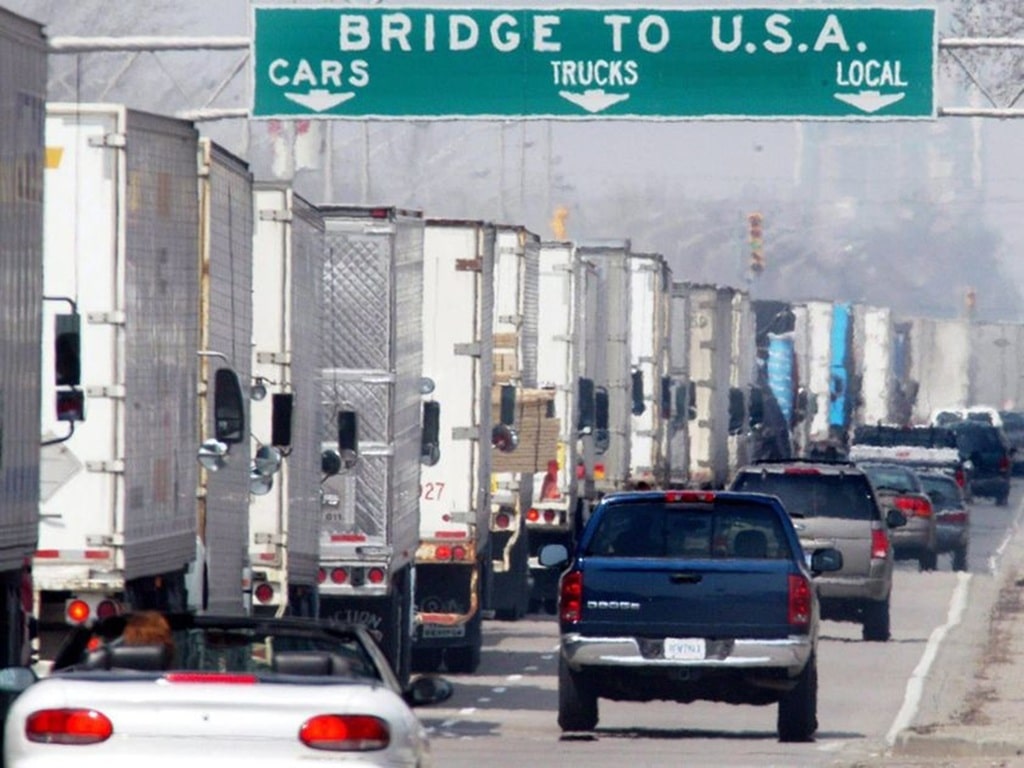
OTTAWA – The threat of steep new trade taxes is shaking the foundations of Canadian business. U.S. President Donald Trump recently announced a massive 50 percent tariff on many Canadian exports.
This bold move has left business owners in a state of high anxiety and confusion. Now, many companies face a tough choice to stay in Canada or move their operations south.
Trade uncertainty has pushed local manufacturers to their absolute limits over the past year. A staggering 42 percent of Canadian manufacturing companies are now considering moving production to the United States.
They simply cannot afford to lose access to their biggest and most profitable market. For many business leaders, the safest bet is setting up shop directly inside American borders.
Key Takeaways
- Massive Tariffs Proposed: A new 50 percent tariff on Canadian goods is forcing companies to reconsider their locations.
- Manufacturers are Relocating: Over 40 percent of Canadian manufacturers are thinking about moving production to the U.S.
- Fast Transitions Planned: Among those eyeing a move, nearly 80 percent plan to shift operations within two years.
The Trump administration’s trade policy aims to protect American workers and boost domestic manufacturing. However, this strategy creates serious headaches for Canadian exporters who rely heavily on American buyers. Over the last few months, trade negotiations have grown increasingly tense and unpredictable. Canadian officials, including Prime Minister Mark Carney, have called the current talks incredibly tough.
For years, existing trade agreements shielded lots of Canadian exports from heavy border taxes. However, these new tariffs will apply to many goods regardless of any previous trade pacts. This means that everything from raw materials to finished products could become too expensive to sell. Canadian companies are quickly realizing that business as usual is no longer a viable strategy.
Why Canadian Manufacturers Are Looking South
Many Canadian businesses are deciding they can no longer wait for politicians to solve the problem. According to a recent KPMG survey, trade tensions are driving long-term investment decisions across the country. Of the companies considering a move, 77 percent expect to make the transition within two years. This highlights a growing panic among manufacturers who fear losing their competitive edge completely.
Business experts understand this struggle well and warn of the dangers of delayed action. Ian McLean, a local chamber of commerce president, notes that nothing hurts business planning like constant uncertainty. Small and medium-sized businesses simply do not have the profit margins to absorb a 50 percent tax. Therefore, shifting production to the U.S. is becoming a basic survival tactic for many companies.
Large corporations often have the cash reserves to weather temporary trade wars and new tariffs. Small exporters, on the other hand, face immediate hiring and investment freezes just to survive. A recent report found that nearly 78 percent of exporters believe these tariffs destroy their competitiveness. They simply cannot pass a massive 50 percent price increase onto their American customers.
Instead of raising prices, many small companies are completely rethinking their supply chains and operations. Some are trying to source materials locally in the U.S. to avoid cross-border taxes altogether. Others are actively searching for warehouse spaces in border states like New York and Michigan. For these small business owners, expanding into the United States is no longer optional.
What It Takes to Cross the Border
Moving a business to another country is never a simple or completely cheap process. Companies must involve tax and immigration advisors early to ensure a smooth and legal transition. These experts help Canadian owners figure out the best way to structure their new American operations. Without proper guidance, businesses could easily fall into legal traps or face unexpected tax bills.
Interestingly, many Canadian businesses are choosing specific corporate structures to limit their tax liabilities. For example, legal experts strongly recommend setting up a U.S. C-Corp rather than a standard LLC. This specific legal framework works much better for Canadian residents expanding their companies into America. Furthermore, businesses must also adapt their customer contracts to comply with complex American state laws.
This massive shift in manufacturing could change the North American economy for decades to come. As Canadian factories close or downsize, local towns will likely face major job losses. One sporting goods business owner noted that tariffs have already forced him to cut his staff drastically. Meanwhile, American border towns could see a sudden boom in new factories, investments, and jobs.
Ultimately, this aggressive tariff strategy seems to be achieving its primary and highly publicized goal. By making imports incredibly expensive, the U.S. is forcing foreign companies to invest in American soil. Canada must now figure out how to stop the bleeding and keep its successful businesses home. Until a solid trade deal is reached, the steady march of companies heading south will continue.
Trending News:
Global Traders Are Shorting the Canadian Dollar Amidst Tariff Threats
Canadadian Military Bans Chaplin’s From Using Religious Language in Public
Immigration & Border Policy
Freedom at Last: Chinese Activist Detained in Thailand Arrives in Canada


VANCOUVER, B.C. – A prominent Chinese activist has finally reached safety in Canada after a tense standoff in Thailand. Zhang Xinyan, a 55-year-old democracy campaigner, safely landed at Vancouver International Airport early Monday morning. Her arrival gracefully ends a terrifying month of severe uncertainty following a blocked attempt to leave Bangkok.
Joyful supporters happily gathered at the busy airport to welcome Zhang as she stepped off the plane. She was previously held in a strict Thai immigration detention center, facing the terrifying threat of deportation. Her safe arrival proudly marks a major international victory for human rights groups and dedicated Western diplomats.
Key Takeaways
- Chinese activist Zhang Xinyan has safely arrived in Vancouver, Canada, after being unjustly detained in Thailand.
- She narrowly escaped a forced deportation to Hong Kong, where she faces severe charges under the National Security Law.
- Intense and ongoing diplomatic pressure from Canada and the United Nations helped successfully secure her final freedom.
Zhang first fled her home country back in 2014 to escape severe religious and targeted political persecution. She desperately sought permanent refuge in Thailand because of her deep, personal involvement with the Falun Gong. This specific spiritual movement has been strictly banned and heavily targeted by the Chinese government for decades.
For nearly ten long years, Zhang lived a remarkably quiet life as an unrecognized refugee in Thailand. However, her daily personal safety was always extremely fragile due to her complete lack of legal immigration status. Southeast Asian nations unfortunately face heavy political pressure from Beijing to quickly return fleeing political dissidents.
The difficult situation took a very dark turn on May 7 of this current calendar year. Thai authorities suddenly arrested Zhang in Bangkok on specific criminal charges of overstaying her temporary tourist visa. She was quickly transferred to the notoriously overcrowded and highly secured Suan Phlu immigration detention center.
The Growing Threat of Forced Deportation to China
This sudden police arrest sparked immediate, widespread panic among her loyal supporters and international human rights advocates. They deeply and genuinely feared Thai immigration officials might maliciously deport her directly back to mainland China. If successfully deported, she would face unusually severe physical punishment and a very lengthy political prison sentence.
Thankfully, Zhang had already successfully secured official international refugee status from the recognized United Nations refugee agency. Because of her highly vulnerable personal situation, Canadian immigration officials moved incredibly quickly to approve her resettlement application. They desperately wanted to quickly get her out of Bangkok before the Chinese government could successfully intervene.
The Canadian embassy in Thailand meticulously arranged a special rescue flight to Vancouver on July 8. However, Thai border officials surprisingly blocked Zhang from properly boarding the passenger plane at the very last minute. She was forcibly sent right back to her jail cell, leaving frustrated international diplomats scrambling for immediate answers.
Blocked Flights and Severe Hong Kong Arrest Warrants
The legal personal stakes for Zhang were incredibly high due to aggressive actions taken by Hong Kong authorities. In July 2025, Hong Kong police publicly issued severe criminal arrest warrants for Zhang and 18 other overseas activists. They were formally and aggressively accused of government subversion under the highly controversial, Beijing-imposed National Security Law.
The aggressive police force even offered massive financial bounties for the successful international capture of these exiled activists. The promised cash rewards ranged from 200,000 to a staggering 1 million Hong Kong dollars per person. According to the Bangkok Post, Zhang would have been the first person deported and unfairly jailed under this security law.
Following the unfairly blocked flight, Canada and the United Nations strongly increased their urgent and widespread diplomatic pressure. Prominent Thai lawmakers and global human rights organizations also bravely stepped in to strongly demand her immediate release. They strongly and publicly urged the Thai national government to fully honor its binding international human rights obligations.
Intense Diplomatic Pressure Secures Her Eventual Freedom
Sheng Xue is a well-known, highly respected activist based in Toronto who closely monitored this entire complex case. She recently reported that Thai authorities eventually realized Canada would not simply back down on this crucial issue. They finally dropped their stubborn political resistance and formally agreed to let Zhang safely leave the Asian country.
The final airport departure involved incredibly heavy police security to ensure absolutely nothing else would go terribly wrong. Senior Thai police officers personally and carefully escorted Zhang to Suvarnabhumi Airport on the quiet night of her flight. Dedicated government drivers and Canadian diplomats stayed right by her side until she safely boarded the waiting plane.
Sheng Xue happily and publicly described this highly successful rescue as a massive defeat for the Chinese Communist Party. She correctly noted that it strongly pushes back against China’s highly aggressive attempts at long-arm global political jurisdiction. It clearly shows that global international cooperation can successfully stop dangerous transnational political repression in Southeast Asia.
A Major Defeat for Transnational Repression Tactics
However, not all political dissidents currently hiding in Thailand have been as incredibly lucky as Zhang recently was. Around the same time her first flight was blocked, Thai police sadly detained Chinese journalist Bai Zhaodong. He remains firmly locked inside a miserable immigration detention facility while China strongly demands his direct criminal extradition.
The Chinese national government officially accuses Bai of committing serious financial extortion and engaging in widespread corporate bribery. However, his fiercely loyal supporters strongly deny these wild claims and angrily call them entirely politically motivated. His ongoing jail detention sadly highlights the continuous safety risks that fleeing human rights activists face while living in Thailand.
For now, Zhang can finally breathe a deep, relaxing sigh of relief as she comfortably settles in Canada. The Canadian federal government proudly provides exceptionally strong legal protections for recognized global refugees fleeing harsh political persecution. She happily and safely joins a rapidly growing community of exiled democracy advocates comfortably living in Canada.
Trending News:
US Slaps Heavy Sanctions on Major Chinese Oil Refinery
Canada’s Fiscal Watchdog Sounds the Alarm on Liberals’ Uncontrolled Spending


Is Modern Political Empathy Actually Just Hidden Narcissism?
US Trade Moves Put Massive Pressure on Canada
Canada Sheds 68,000 Jobs As Economic Fears Deepen
Pierre Poilievre Critiques Reporter Who Questions His Leadership
How Canada’s Combating Hate Act Stifles Free Speech

Uncovering the Truth Behind Inequality: A Bold New Vision

How Progressivism Replaced Religion With A New Secular Faith
Behind Carney’s $1-Trillion Canada Investment Scheme
Poilievre Blasts Carney’s Plan To Sell Off Airports

Food Insecurity and Surging Prices: Canada’s Inflation Squeeze
Behind Carney’s $1-Trillion Canada Investment Scheme
How Progressivism Replaced Religion With A New Secular Faith
Uncovering the Truth Behind Inequality: A Bold New Vision
How Canada’s Combating Hate Act Stifles Free Speech
US Trade Moves Put Massive Pressure on Canada
Is Modern Political Empathy Actually Just Hidden Narcissism?

Jimmy Kimmel Slammed for “Vile” Melania Trump “Expectant Widow” Joke

President Trump Addresses Nation on War with Iran

Trump Warns NATO Allies: America Won’t Protect Slackers After Iran Clash

Senate Hearing on Fraud and Foreign Influence Turns Tense Over Minnesota Scandals

CNN Forced to Backtrack Its Reporting on Trump’s Iran Talks

Joe Rogan Slams Gavin Newsom for Mocking Nick Shirley

Mosque Set Ablaze in Iran a Citizens Revolt Against the Islamic Regime

AOC Accuses Jessie Watters of Fox News of Sexualizing and Harassing Her

JD Vance Exposes Walz’s Fraud and CNN’s Lies in White House Presser

Milestone Card Credit: How the Milestone MasterCard Can Transform Credit


-

 News9 months ago
China-Based Billionaire Singham Allegedly Funding America’s Radical Left
-
Crime10 months ago
YouTuber Nick Shirley Exposes BILLIONS of Somali Fraud, Video Goes VIRAL
-
Politics10 months ago
Ilhan Omar Faces Renewed Firestorm Over Resurfaced Video
-
Politics9 months ago
2026 Midterms Guide: Candidates, Key Issues, and Battleground States
-
Politics8 months ago
CNN Delivers Stark Reality Check to Democrats Over Voter ID
-
Politics8 months ago
Ilhan Omar’s Connections to Convicted Somali Fraudsters Surface
-
Politics7 months ago
Rep. Ilhan Omar Faces Heat as Minnesota Voters Seek Change
-
Politics8 months ago
Trump Approval Rating (February 2026 Poll Results, Approve vs Disapprove)