China
China-Based Billionaire Singham Allegedly Funding America’s Radical Left
Shanghai Expat Faces Claims of Funding Far-Left Groups, Boosting Pro-China Messaging, and Fueling Division
Congress Scrutiny Grows as Reported CCP Links Trigger National Security Concerns
SHANGHAI, China, Far from the Chicago area where he grew up, American tech billionaire Neville Roy Singham now lives in Shanghai. In his early 70s, Singham, who sold his IT consulting company Thoughtworks for $785 million in 2017, sits at the center of a widening dispute over foreign influence, political funding, and alleged connections to the Chinese Communist Party (CCP).
Singham calls himself a socialist and has said he’s admired Maoist ideas since his early years in activist circles. From his base in Shanghai, he runs businesses that critics say overlap with Chinese state interests. A series of investigations, including a widely cited 2023 New York Times report, describes him as a key force behind an international network.
That network is accused of routing hundreds of millions of dollars through U.S. nonprofits to support causes that match Beijing’s view of the world. It also reportedly promotes defenses of China’s positions on human rights, Xinjiang, Taiwan, and global affairs.
Opponents say the same funding stream supports far-left groups in the United States and abroad. They argue it helps spread anti-American messaging, backs pro-Palestinian campus activism, and feeds protest movements that sometimes turn disorderly.
In this telling, the operation mixes real concerns like poverty, inequality, and anti-imperialism with messaging that mirrors CCP talking points, using social justice campaigns as a channel for foreign propaganda.
Singham Operates Through Shanghai
Singham has described himself as a communist, and his background in activism goes back decades. Reports often point to his early involvement with the League of Revolutionary Black Workers, a Black nationalist and Maoist group.
Observers also say he appears to operate in Shanghai with little interference, which they read as a sign of support or protection from the CCP. He has shared office space with groups such as the Maku Group, a media organization that promotes “the miracles that China has created on the world stage.”
He has also attended CCP workshops on promoting the party abroad and joined ventures tied to Chinese local governments. Some of these projects focus on anti-poverty messaging that lines up with state priorities.
Singham denies taking direction from any government or political party. Even so, lawmakers from both parties have raised concerns. House committees, including Oversight and Ways and Means, have opened inquiries and requested records tied to nonprofits linked to him, including The People’s Forum in New York.
Reporting has said Singham sent more than $20 million to related groups through shell companies and donor-advised funds, sometimes without clear public disclosure. Some organizations connected to the network have faced claims that they should register under the Foreign Agents Registration Act (FARA). Those claims have fueled calls for Justice Department reviews and potential Treasury sanctions.
Far Left Radical Organizations
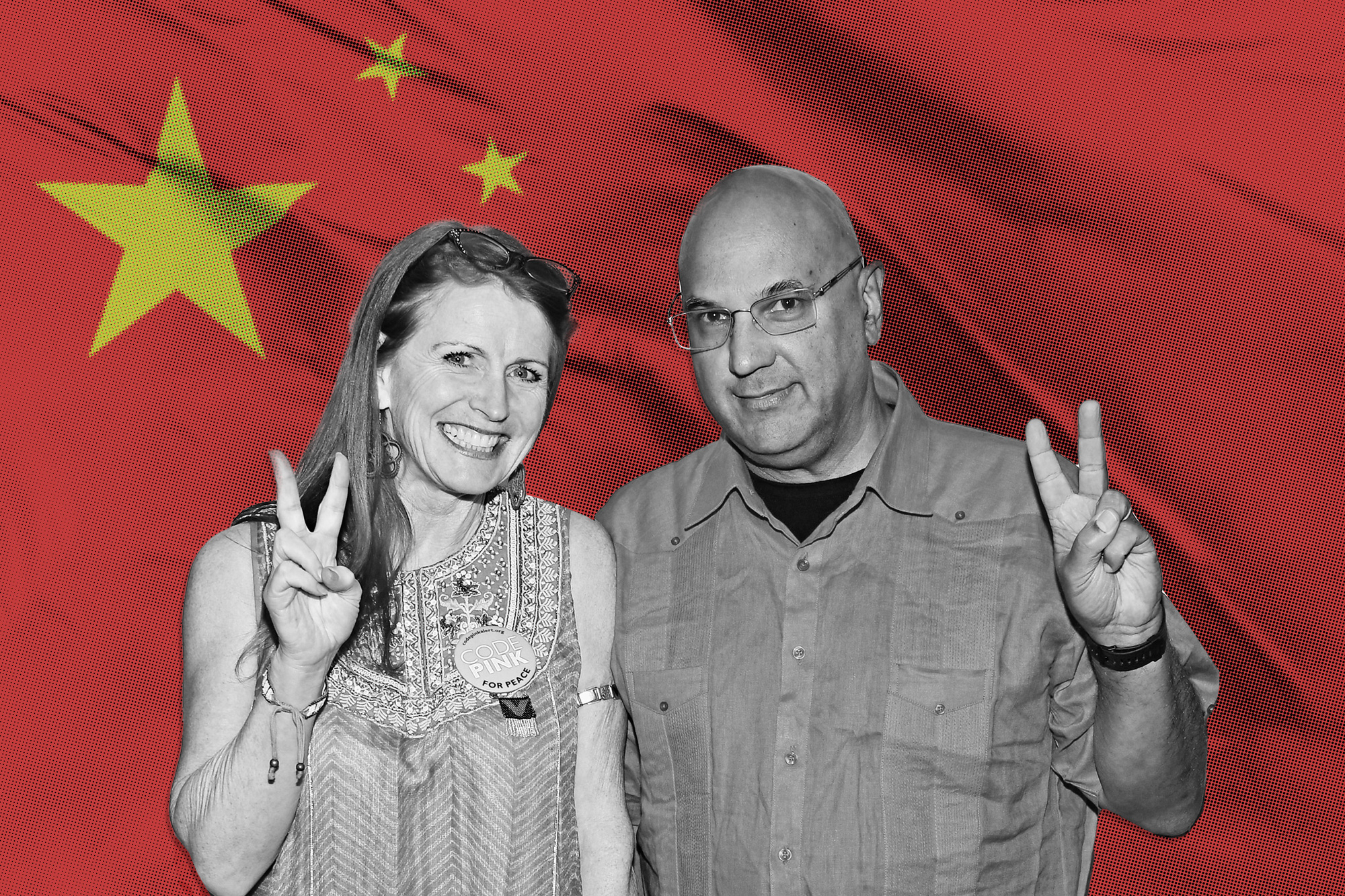
The reported funding network also reaches groups such as CODEPINK (co-founded by Singham’s wife, activist Jodie Evans), the ANSWER Coalition, the Party for Socialism and Liberation, and media outlets abroad like NewsClick in India and Brasil de Fato in Brazil.
These groups have been tied to protests that include anti-ICE actions and campus demonstrations against U.S. foreign policy. In South Africa, reporting has said money supported training schools and political parties that blend left-wing goals with pro-China positions.
In the United States, critics have linked parts of the network to unrest in cities such as Los Angeles and Minneapolis, saying organizers mobilized quickly through connected groups.
Conservative outlets have pushed the story hard. Bill O’Reilly’s No Spin News has repeatedly pointed to Singham as a behind-the-scenes donor working from overseas to weaken American stability. On shows and radio segments, O’Reilly and guests have described him as a major force behind protest energy.
One discussion on Mark Simone’s program called out what it framed as limited attention from mainstream news. NewsNation coverage has also described how Singham’s wealth, built through Thoughtworks and its work with clients like Microsoft and major banks, now helps support a wide web of nonprofit groups. Critics say the money helps promote messages they view as divisive and aligned with the CCP.
Shaped by Marxist politics
Singham’s shift from software executive to political donor did not happen overnight. Born in 1954 to a Sri Lankan academic father, he studied economics and built Thoughtworks into a global agile consulting firm.
After the 2017 sale, he moved to China, married Evans, and focused more on giving shaped by Marxist politics. Critics say the structure of the network adds to suspicion, including reports of nonprofits using UPS Store addresses and layered transfers that make the money harder to track.
With tensions rising between Washington and Beijing, Singham’s story has become a case study in worries about foreign influence on domestic activism. House Republicans, including Rep. Anna Paulina Luna and Oversight Chairman James Comer, have pressed for records and urged steps such as asset freezes. They describe the activity as part of a CCP “Strategy of Sowing Discord” meant to exploit divisions inside the United States.
Supporters paint Singham as a sincere backer of anti-poverty and anti-war efforts, and they say he’s not controlled by the CCP. Critics respond that the paper trail, shared office arrangements, and reported participation in party workshops point to a close, mutually helpful relationship that serves Beijing’s soft-power goals.
It’s still unclear whether any legal action will follow. Either way, the controversy highlights a newer kind of influence campaign, a U.S. citizen who made his fortune in American business and now works from China while shaping political messaging back in the United States. As congressional probes move forward, the full reach of Singham’s role in radical politics may become easier to see.
Related News:
FBI to Launch Sweeping Crackdown on Left-Wing Extremists in Minnesota
China
China’s Military in Disarray After Top General Removed From Command
BEIJING – China’s political and military circles are reeling after a major shake-up at the top of the People’s Liberation Army (PLA). General Zhang Youxia, China’s highest-ranking officer in uniform and long viewed as a close ally of President Xi Jinping, has been put under investigation for “grave violations of discipline and the law.”
China’s Ministry of National Defense announced the move on January 24, a sharp escalation in Xi’s long-running drive to stamp out corruption and lock in party control over the armed forces. Zhang, 75, served as vice chairman of the Central Military Commission (CMC), the top body that runs China’s military and is led by Xi. As the senior vice chairman, Zhang sat just below Xi on military matters.
He is a combat veteran and a well-known “princeling,” the son of a revolutionary-era Red Army figure. He also stayed in office past the usual retirement age, a sign that Xi had placed unusual trust in him. Their families have deep ties going back decades, and some outside commentary has even described Zhang as unusually close to Xi and his family.
In a brief statement, the ministry accused Zhang and another senior commander, General Liu Zhenli, of conduct that “seriously trampled on and undermined” the CMC chairman’s responsibility system. In plain terms, that points to violating the system built around Xi’s direct authority over the PLA.
The statement also said their actions had fueled “political and corruption problems,” weakened Communist Party leadership inside the military, and caused “immense harm” to combat readiness.
Xi’s Purge in China
The announcement lands in the middle of a broader wave of removals that has hollowed out the CMC leadership team Xi first unveiled at the start of his third term in 2022. Of the original seven members, only Xi and one remaining uniformed figure, Zhang Shengmin (who handles discipline work), are still in place.
Others have already fallen, including former CMC Vice Chairman He Weidong, who was expelled from the Communist Party in October 2025 on graft allegations. Admiral Miao Hua, once head of the CMC’s Political Work Department, was suspended in late 2024 and later pushed out. The Rocket Force has also been hit hard, alongside former defense ministers such as Li Shangfu and Wei Fenghe.
Many analysts say the scope is hard to overstate. One expert quoted in international reporting called it the effective wipeout of the top command. While Beijing has framed these actions as anti-corruption enforcement, the pattern now looks bigger than money alone.
Outside observers increasingly read the campaign as a search for political reliability, with Xi moving against perceived disloyalty, rival networks, or threats to his control, even among officers he helped promote.
This turmoil lands at an awkward moment for China’s military plans. Xi has tied PLA modernization to his broader national goals through 2049. Under his leadership, the PLA has pushed major reforms, built new theater commands, and prioritized joint operations, all aimed at reaching “world-class” capability.
Still, repeated scandals, especially inside the Rocket Force that manages key missile and nuclear forces, have highlighted long-running weaknesses such as pay-to-play promotions and corrupt procurement.
Xi Installing Sicophants
The latest purge is also feeding debate about readiness. Some Western analysts argue that constant leadership turnover could slow near-term military action, including any fast move against Taiwan, because Xi is putting political loyalty ahead of battlefield performance.
Others see a different path: Xi may be clearing out the old guard to install younger commanders who match his line, which could tighten control and improve long-term cohesion, even if it causes short-term disruption.
Inside China, state media has sold the investigation as proof that party discipline reaches everyone. PLA Daily praised the move as a major win for discipline, stressing that rank and connections don’t put anyone above the rules.
At the same time, China’s political system offers little transparency. Official details remain thin, and rumors range from bribery tied to earlier promotions to broader claims about loyalty failures. None of those claims has been confirmed in public.
Outside China, the fallout is being watched closely. Governments and intelligence agencies have long struggled to read Beijing’s military plans because decision-making remains tightly held. The downfall of a figure as prominent as Zhang, once seen as untouchable, sends a clear signal about how unstable elite power can be, even for people once considered part of Xi’s inner circle.
For everyday Chinese citizens and observers abroad, the episode underlines how far Xi has pushed to centralize control. The PLA is now more directly bound to Xi’s authority than at any time in recent decades. As the purges continue, attention will stay fixed on whether this upheaval weakens China’s military in the near term or produces a tighter, more loyal force over time, all while regional tensions keep rising.
Zhang Youxia’s sidelining isn’t just a routine staffing change. It shows how China’s one-party system works at its hardest edge, where loyalty to the top leader comes first. With Beijing facing pressure at home and abroad, the stability of PLA leadership will keep shaping China’s direction and its growing role on the world stage.
Related News:
Trump Signs New Taiwan Law Amid Heightening Tensions With China
China
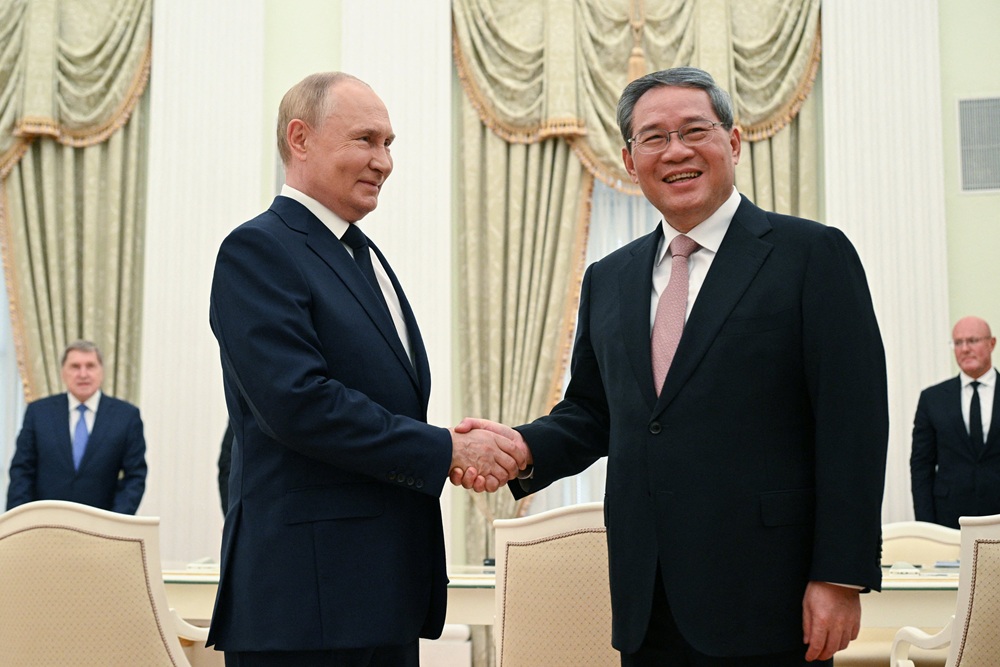
China’s Premier Li Qiang’s Attends SCO Meeting in Russia
MOSCOW – As China’s Premier Li Qiang is going to attend the 24th Meeting of the Council of Heads of Government of the Shanghai Cooperation Organization (SCO) in Moscow on November 17–18, expectations are rising across Eurasia for renewed vitality in regional cooperation, strengthened developmental synergy, and a shared commitment to peace and stability.
Premier Li’s trip comes at a pivotal moment. As the global landscape continues to undergo transformation marked by geopolitical uncertainty, sluggish economic recovery, and complex security challenges, the SCO stands out as a key platform for dialogue, collaboration, and regional solidarity. China’s participation, rooted in principles of mutual respect, mutual benefit, and win-win cooperation, reinforces its long-standing role as a stabilizer and growth engine across the vast Eurasian region.
For example, SCO meetings serve as important confidence-building measures among member countries. Prime Minister Modi’s attendance at the Tianjin Summit this year could positively reshape China–India relations. Thus, member states can use this useful platform for a good neighborhood, a good understanding, and better ties. Li Qiang’s engagement and meetings with participants in Moscow may establish more good links with neighboring countries.
As China charts innovation and new growth drivers as its economic engine for its 2026–30 Five-Year Plan, this will create huge opportunities for SCO countries. It may also help align China’s development agenda with that of other SCO member states.
A Strong Commitment to Multilateralism and Shared Security
Since its establishment more than two decades ago, the SCO has grown into one of the world’s largest and most influential regional organizations, representing nearly half of the world’s population and a significant share of global economic output. Its importance is felt not only in economic and cultural fields but also in security cooperation, where member states share a determination to combat terrorism, separatism, and extremism.
Premier Li’s attendance signals China’s unwavering support for true multilateralism, a concept China continues to champion at a time when unilateral actions and protectionism pose significant challenges to global stability.
In recent years, the SCO has played a crucial role in facilitating security dialogue and fostering trust among neighboring states. China’s contributions, from joint anti-terrorism exercises to intelligence exchange mechanisms, have helped strengthen collective security capabilities. This year’s meeting is expected to deepen these efforts, emphasizing cooperation in border security, cybersecurity, and counter-narcotics operations.
China’s approach is guided by the concept of a shared community of security, one that focuses on addressing the root causes of conflict, encouraging political dialogue, and promoting the peaceful resolution of disputes. In this context, Premier Li’s presence in Moscow highlights China’s readiness to work collaboratively, to consolidate security partnerships, and to maintain regional stability in the face of evolving risks.
Driving High-Quality Economic Growth Across Eurasia
Economic collaboration remains the backbone of SCO cooperation. At a time when global economic recovery is uneven, SCO members are seeking new drivers of shared growth. China, with its vast market, robust industrial base, and growing technological capabilities, continues to serve as a key engine of regional development.
In Moscow, Premier Li is expected to emphasize China’s commitment to high-quality, practical cooperation, especially in areas such as digital trade, cross-border logistics, green development, and technological innovation. Over the past decade, China’s trade with other SCO members has expanded steadily, and investment partnerships have deepened from energy pipelines to industrial parks and transport infrastructure.
A central theme of the meeting will be enhancing interconnectivity. The synergy between the Belt and Road Initiative (BRI) and the development strategies of the SCO countries has already produced significant results. New rail routes, upgraded highways, and streamlined customs procedures have facilitated smoother trade flows and strengthened supply chain resilience.
Looking ahead, China aims to work with partners to advance projects that support economic modernization, including e-commerce cooperation zones, green energy corridors, and industrial digitalization initiatives. These efforts are expected to unlock new opportunities, create jobs, and support sustainable development across the region.
Championing Innovation and Green Development
As the global community confronts climate change and strives for greener growth paths, China has put forward a wide-ranging vision for environmental cooperation within the SCO framework. Premier Li is expected to reiterate China’s readiness to share its experience in renewable energy deployment, environmental protection, and climate governance.
Over the years, the SCO has increasingly prioritized environmental cooperation, recognizing that issues such as desertification, water scarcity, and extreme weather events require collective solutions. China’s technological advancements in solar power, wind energy, smart agriculture, and ecological restoration have provided a valuable reference model for many member states.
In Moscow, new cooperation proposals in green finance, carbon reduction technology, and digital solutions for ecological monitoring are likely to be discussed. These initiatives reflect China’s broader goal: helping the region transition toward low-carbon, innovation-driven development, while ensuring that no member state is left behind.
Enhancing People-to-People Connectivity
Beyond security and economics, China has consistently emphasized the importance of cultural and people-to-people exchanges as a foundation for long-term friendship among SCO members. Educational programs, youth exchanges, tourism cooperation, and cultural festivals have all played a role in strengthening societal ties.
As cross-border travel gradually rebounds in the post-pandemic era, China is expected to encourage expanded cooperation in education, vocational training, media collaboration, and cultural preservation. Initiatives that support language learning, student mobility, and cultural tourism will continue to foster mutual understanding and goodwill among the peoples of the region.
Premier Li’s visit also coincides with growing enthusiasm among young people in SCO countries to explore new opportunities from innovation programs to entrepreneurship training offered through various SCO channels. Such initiatives play a crucial role in shaping the next generation of Eurasian cooperation.
Strengthening the SCO’s Global Influence
In recent years, the SCO has welcomed new dialogue partners and observers, broadening its international footprint. The organization’s expanding membership demonstrates its growing attractiveness as a platform for inclusive cooperation.
China firmly supports an open, inclusive, and forward-looking SCO that continues to enhance its role in global and regional affairs. As more countries express interest in engagement, the SCO’s collective voice in shaping international economic and security governance becomes stronger.
Premier Li’s participation in this year’s meeting underscores China’s commitment to strengthening the organization’s institutional capacity, improving coordination mechanisms, and enhancing the SCO’s ability to respond to global challenges. By advancing cooperation in trade, finance, innovation, and sustainable development, China continues to help consolidate the SCO’s position as a model of multilateral cooperation in Eurasia.
China’s Steadfast Support for a Shared Future
As Premier Li arrives in Moscow for the SCO Government Heads Meeting, China stands ready to work hand-in-hand with all partners to build a more peaceful, prosperous, and interconnected region. In an era of uncertainty, the SCO represents a valuable platform for cooperation rooted in equality, mutual trust, and shared benefit.
China’s approach remains clear: support regional stability, promote high-quality development, enhance people-to-people bonds, and strengthen multilateralism. Through these efforts, China continues to contribute positively to a future in which Eurasian nations grow together, support each other, and collectively shape a more balanced and harmonious global order.
Related News:
China’s Multi-Billion Dollar Push to Shape U.S. Media and Academia
China
China’s Multi-Billion Dollar Push to Shape U.S. Media and Academia
WASHINGTON, D.C. – China is investing billions each year to influence media and education in the United States, according to findings from the U.S. State Department and independent researchers.
The Chinese Communist Party (CCP) is driving this investment to share pro-China perspectives, quietly opposing opinions, and secure influence within American institutions. While these efforts have produced mixed outcomes, the size and intent of China’s campaign raise real concerns about the integrity of American information sources and the independence of its universities.
China has worked for years to guide public opinion beyond its borders, but these activities have grown under President Xi Jinping. Since 2013, Xi has pushed for efforts to “tell China’s story well” by using state-funded media and related organizations to push Beijing’s message.
The U.S. State Department’s Global Engagement Center (GEC) estimated in 2023 that China spends billions annually on efforts to shape foreign information, using tactics like state-sponsored propaganda, misleading content, and censorship to protect its interests. In the United States, media organizations and academic institutions are the two main targets.
According to the GEC, China uses five main tactics: spreading propaganda, censoring opposition, promoting its model of digital control, building global partnerships, and controlling Chinese-language media.
The goal is to fill the information space with narratives that support Beijing while pushing aside critical views. In the U.S., this means working to shape public debate, gently sway policy makers, and limit criticism of China’s actions, including human rights issues in Xinjiang and territorial claims in the South China Sea.
How China Works with Media: Buying Space, Blocking Critics
China’s spending in American media is one of the most noticeable parts of this campaign. Filings under the Foreign Agents Registration Act (FARA) reveal that from 2019 to 2021, the government-run China Daily paid over $7 million for ad space in top U.S. newspapers, including The Wall Street Journal and The New York Times.
These ads, labelled “China Watch”, are made to look like news, giving Beijing’s message an appearance of legitimacy. However, as these practices draw public criticism and stricter rules, many outlets have cut back or ended these deals.
China has also tried to buy shares in foreign media firms and sign sharing agreements. The GEC found that state-run China Central Television (CCTV) offers free video content to over 1,700 news agencies outside China.
These materials are often reused without credit, allowing state-approved content to shape news in other countries subtly. In parts of Africa, China’s StarTimes company controls access to digital TV and often drops Western news outlets from the channel list, a move that could spread elsewhere.
Social media is another focus. The GEC identified about 100 influencers who spread Chinese government messages in over 20 languages, to a combined audience of over 11 million. Many of these are not linked to China and post regularly on platforms like YouTube and Twitter.
In addition, WeChat, which has millions of users outside China, has become a tool to target Chinese-speaking communities in the U.S. with political messaging, especially during tense times like the Hong Kong protests in 2019. Analysis by the Australian Strategic Policy Institute shows that WeChat monitors messages for sensitive words, even among users in free societies.
China’s strategy has at times involved pressure and threats. The GEC documented cases where U.S. media have been discouraged from covering topics Beijing sees as sensitive. For instance, when an ESPN executive voiced support for pro-democracy protests in Hong Kong in 2019, the company faced challenges with its business in China, followed by an internal warning to avoid political commentary.
LinkedIn has also blocked U.S.-based journalists in China over restricted topics, suggesting some companies hesitate to risk their business in China by allowing open discussion. These incidents show how China can use its economic connections to shape what is reported or discussed.
Academic Influence
China’s reach into U.S. universities has also raised flags. There have been reports online claiming China has spent up to $57 billion on American research institutions, but there is little direct evidence to support these figures.
More reliable sources, such as Freedom House, say China has used Confucius Institutes and other funding to tilt discussion within universities toward government-approved topics. These Confucius Institutes have faced criticism for repeating official narratives and steering away from issues like Taiwan or Tibet.
This pressure has led to the closure of many of these centres in the U.S. and other Western countries.
Outside these programs, China has also offered grants and other financial support in hopes of accessing research and technology. The U.S. Justice Department’s China Initiative, now discontinued, tried to address such risks but drew backlash for unfairly targeting Chinese-American academics. Still, concerns about spying and improper influence remain, especially in key technology fields like artificial intelligence and computer chips.
Even with its large investments, China’s influence isn’t winning over everyone. Freedom House’s 2022 report points out that platforms like China Global Television Network and China Radio International fail to draw much interest, with audiences often finding their news flat and unoriginal.
Around the world, state-owned Chinese media face bans and greater checks, limiting their impact. High-profile incidents, like the widespread closure of Confucius Institutes and awkward attempts at spreading state-friendly stories, have led to backlash. U.S. lawmakers and tech companies are becoming more skilled at spotting and blocking these moves.
The GEC received a funding increase of over $150 million from Congress, helping efforts to fight foreign misinformation. Major tech companies such as Google and Meta are now better at marking state-backed media and removing questionable content. But China’s tactics keep changing, and many expect it may use artificial intelligence to make its efforts harder to detect in the future.
What’s at Stake for Security and the Economy
China’s influence threatens both U.S. security and the economy. By steering narratives, China looks to blunt criticism of its actions and gain ground in key industries. The GEC warns that unchecked, these activities could hurt free speech and nudge decision-making in ways that help Beijing.
China’s role in supplying telecommunications gear, particularly through Huawei, has led to U.S. bans because of concerns over data security and surveillance.
China’s broader aim is to catch up with, or overtake, American leadership in technology sectors like artificial intelligence and microchips. A 2025 article in The New York Times highlights China’s ambition in these fields, with $150 billion in government support for semiconductors alone. Paired with influence operations, these investments could challenge America’s role as a tech leader and economic powerhouse.
As tensions between the U.S. and China keep rising, Beijing will likely step up these efforts. The American response requires careful action: improving defences against foreign interference while protecting academic openness and avoiding unfair treatment of Chinese-American groups. Greater transparency, such as tighter enforcement of FARA, along with public awareness, can help reduce China’s footprint in the media. In education, keeping research open but secure is essential.
China’s huge spending on influence is part of a larger strategy to shift the global balance. While not always successful, the size of these operations means they can’t be ignored. As one State Department official put it, China could shape the basic information people rely on if left unchecked. The U.S. will need both defensive steps and strong support for its core democratic values to respond.
For more details on China’s influence activities, readers can visit the U.S. State Department’s Global Engagement Center at state.gov or see Freedom House’s 2022 report at freedomhouse.org.
Related News:
GoGoX CEO Steven Lam Honoured at World Economic Forum
-
Crime1 month agoYouTuber Nick Shirley Exposes BILLIONS of Somali Fraud, Video Goes VIRAL
-
Politics2 months agoIlhan Omar’s Ties to Convicted Somali Fraudsters Raises Questions
-
News2 months agoWalz Tried to Dodges Blame Over $8 Billion Somali Fraud Scandal
-
Asia2 months agoAsian Development Bank (ADB) Gets Failing Mark on Transparancy
-
Crime2 months agoSomali’s Accused of Bilking Millions From Maine’s Medicaid Program
-
Crime2 months agoMinnesota’s Billion Dollar Fraud Puts Omar and Walz Under the Microscope
-
Politics2 months agoSouth Asian Regional Significance of Indian PM Modi’s Bhutan Visit
-
Asia2 months agoThailand Artist Wins the 2025 UOB Southeast Asian Painting of the Year Award