



WASHINGTON, D.C. – Late Thursday, Senate Democrats and the White House agreed on a plan to prevent a partial government shutdown. The deal would fund most federal agencies through the end of the fiscal year, while giving the Department of Homeland Security (DHS) a short-term extension.
The announcement came after tense talks, with a funding deadline set for midnight Friday, January 30, 2026. The agreement avoids an immediate interruption to many government services and gives lawmakers more time to fight over immigration enforcement rules.
The dispute centered on a broader spending package often called a “minibus” bill. It combined funding for several departments and was meant to replace another short-term continuing resolution.
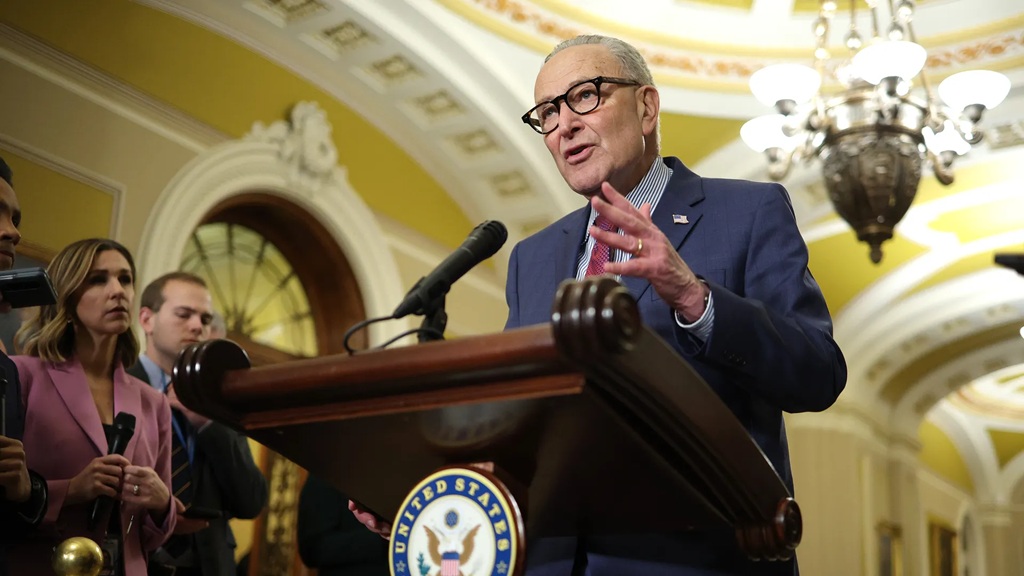
But the plan hit trouble earlier in the week after Senate Democrats, led by Minority Leader Chuck Schumer of New York, warned they would block it unless it included tighter rules for federal immigration agents under President Donald Trump’s administration.
Democrats pointed to recent incidents tied to immigration enforcement, including the fatal shooting of U.S. citizen Alex Pretti in Minneapolis during an ICE operation. They argued these events showed the need for stronger oversight.
Their proposals included limits on what they described as “indiscriminate” patrols, a requirement for judicial warrants before agents enter homes, required body cameras, and a ban on officers covering their faces during operations. Republicans and the White House pushed back, saying those changes were policy add-ons that didn’t belong in must-pass spending bills.
By Thursday, the conflict had raised the stakes. The Senate failed an initial procedural vote to move the full package forward, fueling shutdown worries. Federal workers and contractors faced uncertainty, and disruptions to services such as national parks and air traffic control were on the table. Concerns also spread to Social Security payments, IRS work, and military readiness.
Key Terms of the Agreement
The final agreement, worked out among Senate Democratic leaders, Republicans, and White House negotiators, pulls DHS funding out of the main package. The rest of the spending moves forward on a full-year basis.
Five spending bills will fund the Departments of Defense, Health and Human Services, Education, Labor, Transportation, State, and Treasury, along with the federal judiciary, through September 30, 2026. That keeps most government operations funded for the remainder of the fiscal year.
DHS, which includes Immigration and Customs Enforcement (ICE) and Customs and Border Protection (CBP), would receive only a two-week extension at current levels. The short window gives negotiators time to keep working on the “guardrails” Democrats want, aimed at limiting what they call overly aggressive tactics tied to Trump’s mass deportation push.
President Trump backed the plan in a Truth Social post. He said Republicans and Democrats had agreed to fund most of the government until September, while noting the shorter DHS fix. He urged lawmakers to support it and called for a bipartisan “YES” vote.
Schumer confirmed the deal and said splitting DHS from the larger package allows funding to move ahead while immigration oversight talks continue. People familiar with the negotiations said the White House stayed involved throughout, a sign of pressure to avoid broader disruption.
Political Impact and Early Reactions
The compromise reflects a divided Congress. Democrats influence the Senate, even in the minority, while Republicans control the House and the White House. Separating DHS lets both sides claim wins. Democrats keep focus on immigration reforms without taking the blame for a wider shutdown, while Republicans and the administration lock in funding for major defense and domestic programs.
Some Democrats welcomed the deal but cautioned that the two-week clock is tight. Sen. Mark Warner (D-Va.) said he was encouraged by the White House staying engaged, but he also stressed that real changes should be written into law, not left to informal promises.
On the right, some conservatives complained about giving ground to Democrats. Still, Trump’s public support helped quiet much of the pushback.
The episode also shows the ongoing strain in Washington’s budget process. Shutdown threats have become a regular tactic, often tied to policy fights that go far beyond spending levels. This time, the pressure point was immigration, a core Trump issue, and the conflict quickly collided with a hard funding deadline.
What Happens Next
Senate leaders moved to fast-track the agreement, using a “hotline” process to speed up a vote, possibly as soon as Thursday night. If the Senate approves it, the bill would head to the House when members return Monday. The final passage would send it to the president for signature. A breakdown at any stage could still trigger a short lapse in funding, but the late-week momentum suggested the deal had a strong chance.
The two-week DHS extension sets up another round of high-stakes talks. Democrats want clear limits on ICE and CBP conduct, and the administration wants room to carry out its deportation agenda. Whether that ends in a lasting compromise or another deadline crisis remains unclear.
For now, the agreement avoids immediate disruption and shows that bipartisan cooperation can still happen when essential services are on the line. At the same time, it leaves federal workers and the public facing another round of uncertainty tied to the next funding cliff.
government shutdown 2026, Senate Democrats White House deal, avert partial shutdown, DHS funding extension, Chuck Schumer immigration reforms, Trump spending agreement, ICE guardrails negotiations, bipartisan funding package, minibus appropriations bill, Alex Pretti Minneapolis shooting.