Politics
Major Lawsuit Questions Eric Swalwell’s California Governor Eligibility
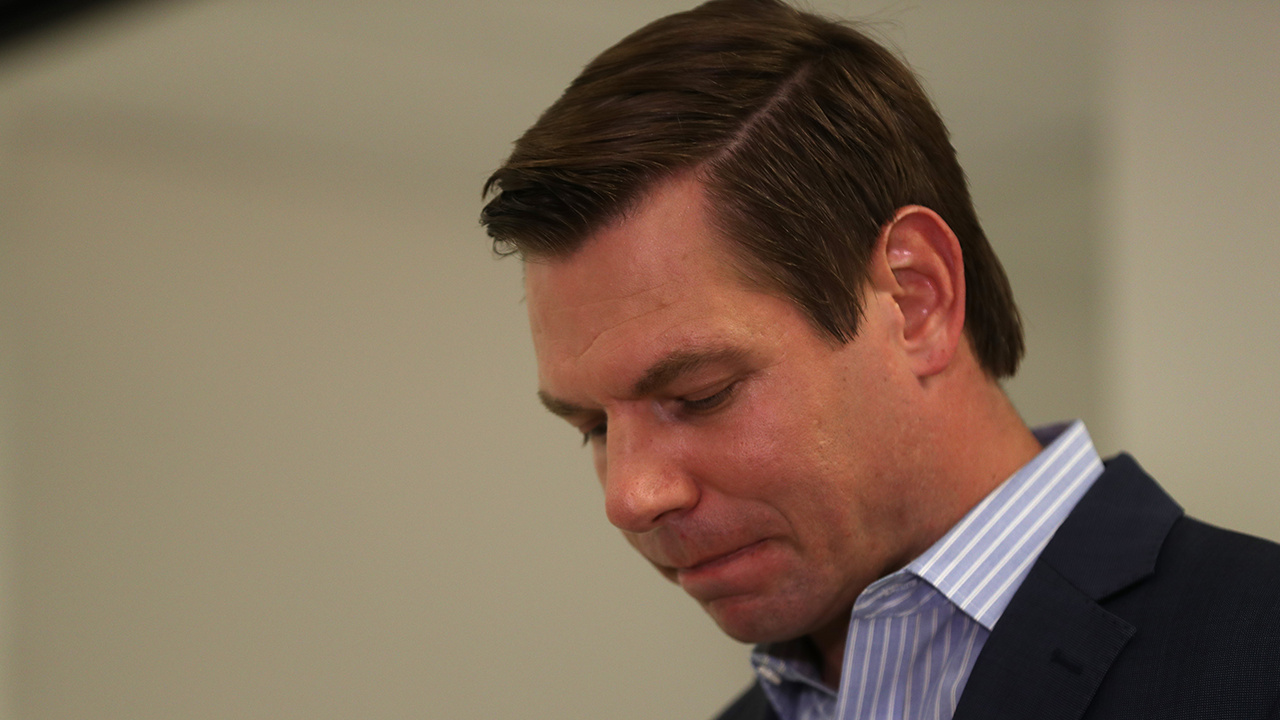
LOS ANGELES – A major lawsuit has put Democratic Rep. Eric Swalwell back in the headlines, this time over whether he can run for California governor in 2026. The case, filed in early January 2026 in Sacramento County, argues that the seven-term East Bay congressman does not meet California’s residency rules. As a result, it has kicked off a loud fight over political domicile, safety concerns, and election integrity in one of the country’s most watched governor’s races.
Residency Fight Hits Swalwell’s Governor Run
The petition, filed by conservative filmmaker and activist Joel Gilbert, claims Swalwell’s real home is in Washington, D.C., not California. That matters because the California Constitution sets a clear bar. Under Article V, Section 2, a candidate for governor must have lived in the state for at least five years right before the election.
Gilbert says public records show Swalwell does not currently own or lease a California home in his name. He also points to mortgage paperwork where Swalwell allegedly listed a D.C. property as his main residence.
In addition, the suit calls out Swalwell’s campaign paperwork for using a Sacramento attorney’s office address instead of a home address. Gilbert claims that the choice amounts to perjury and asks Secretary of State Shirley Weber to keep Swalwell off the ballot.
Gilbert, who has produced films with a right-wing message, has pushed the allegations on a dedicated website and through conservative media. He presents the case as a simple constitutional check, not a political attack. “By his own sworn declaration, Eric Swalwell is not domiciled in the state of California,” the filing argues, adding that the law focuses on “domicile, not mere mailing address.”
All of this lands as Swalwell tries to lock in a top spot in a crowded Democratic race to replace term-limited Gov. Gavin Newsom. Early polling has placed him near the front. His supporters point to his national visibility as a sharp Trump critic and his long-time ties to the Bay Area. Swalwell launched his campaign in late 2025 and said he would focus on affordability, public safety, and health care.
Swalwell’s Campaign Pushes Back, Citing Safety and Past Practice
Swalwell’s campaign has waved off the lawsuit as politically driven and without merit. Consultant Kate Maeder called it “nonsense” and said it distracts from real issues. “Eric has always maintained a residence in the Bay Area,” she said. She also pointed to what the campaign calls the usual signs of California domicile. According to the team, Swalwell holds a California driver’s license, pays California state taxes, and votes in California.
The campaign also says there is a practical reason for using a campaign or an attorney’s address on public forms. It describes the practice as legal and common in California politics, especially for officials who face credible death threats. Swalwell has dealt with repeated harassment and hostile online attention, and his team says security is why they do not want his home address widely circulated.
At the same time, some legal watchers say residency cases rarely come down to one document. Nonpartisan analyst Chris Micheli has said courts often look at intent and day-to-day ties, such as voter registration, tax filings, and family connections, not just property ownership or constant physical presence. “A judge will ultimately decide based on the totality of circumstances,” Micheli said in recent coverage.
Swalwell has flatly denied the accusations. He has told supporters the challenge will not survive in court. He has also noted that many members of Congress keep links to both California and Washington, D.C., because their jobs require time in the capital.
What This Could Mean for California Politics
The dispute puts a spotlight on a long-running gray area. High-profile officials often split time between their home districts and Washington. Because of that, residency rules can be hard to enforce in a clean, consistent way. Critics say cases like this show how candidates might slip through gaps in the process.
Supporters of Swalwell, on the other hand, see the lawsuit as a partisan move in a tough race. Similar legal fights have happened in other states, although few have drawn as much attention as one tied to Swalwell’s name.
The residency case also comes as Swalwell faces other scrutiny. A separate federal matter tied to mortgage issues has been referenced after a referral by a Trump administration official. Swalwell has denied wrongdoing and responded with his own privacy lawsuit. While that dispute is separate from the residency claim, the timing of multiple legal fights has increased talk about possible weak spots in his gubernatorial campaign.
For now, California political watchers are tracking the court schedule closely. A decision could steady Swalwell’s path forward or push Democrats to reshuffle the field. Still, he has said he plans to fight the challenge and stay focused on his policy pitch to voters.
Some legal experts expect the case could stretch into the spring. If either side appeals an early ruling, it could take even longer. Either way, the fight shows how intense the scrutiny gets in California’s high-pressure race for governor.
Related News:
California Governor Under Fire as Court Freezes Housing Rule
Politics
Republican Senators Grill Minnesota AG Keith Ellison in Explosive Capitol Hill Hearing
Republican Senators Press Minnesota AG Keith Ellison in Heated Capitol Hill Hearing on Major Fraud and Alleged CCP-Tied Funding
GOP lawmakers say state leaders let taxpayers get ripped off, raise alarms about foreign influence tied to anti-ICE protests
WASHINGTON, D.C. – Republican senators grilled Minnesota Attorney General Keith Ellison on Thursday during a Senate Homeland Security and Governmental Affairs Committee oversight hearing. The exchange stayed tense from the start.
Lawmakers focused on claims of large-scale fraud in federal aid programs, especially those expanded during the pandemic. They also raised concerns about possible foreign involvement, including money they said could connect to the Chinese Communist Party (CCP).
As the hearing moved along, arguments grew sharper. Republicans framed Minnesota as a prime example of weak oversight. Democrats pushed back and called the session political. Meanwhile, immigration enforcement and national security worries sat at the center of the fight.
Sen. Josh Hawley (R-Mo.) drove much of the questioning. He accused Ellison of moving too slowly as fraud networks allegedly drained huge sums from programs tied to child care, nutrition, and welfare. Hawley highlighted the “Feeding Our Future” case, where federal prosecutors charged multiple people with stealing money from a nonprofit that claimed to provide meals to kids during COVID-19 shutdowns.
At one point, Hawley told Ellison, “You ought to be indicted.” Hawley pointed to a 2021 meeting where Ellison allegedly met with people later tied to the scheme. He also suggested Ellison helped suspects by stepping into an investigation. Ellison strongly denied that claim.
Ellison, a Democrat and former U.S. representative, responded with equal force. He called the accusations partisan attacks. He also said his office has pursued fraud cases tied to the same networks.
At the same time, Ellison criticized federal immigration actions in Minnesota, including the Trump administration’s “Operation Metro Surge.” He said the large federal presence led to conflict on the ground. Ellison also demanded more transparency after two U.S. citizens died in shootings during enforcement activity in Minneapolis, and he urged better cooperation from federal agencies.
Fraud Claims Drive the Hearing
Republicans used the hearing to argue that Minnesota became a hub for pandemic-era fraud. Witnesses, including Minnesota State Sen. Mark Koran (R), told senators that Gov. Tim Walz and Ellison oversaw systems that failed basic checks. As a result, they said, fraudsters stole billions through programs tied to childcare reimbursements, SNAP, and other benefits.
In addition, journalists and watchdog groups described what they called fake businesses collecting real money. They pointed to examples like empty or inactive daycare sites that still received large reimbursements. One case repeatedly cited in related discussions involved “Quality Learning Center” in Minneapolis. Critics described it as a front operation, and they referenced a video showing a site that appeared deserted while billing for services.
Sen. Ted Cruz (R-Texas) and other Republicans used those examples to push policy changes. They argued for tighter rules and stronger proof before federal payments go out in childcare programs. Cruz also referenced photos of facilities he said showed the scale of the problem and the failure of oversight under Minnesota’s Democratic leadership.
Republicans claimed the overall losses in Minnesota could reach $9 billion or more. They said that the estimate does not include separate schemes tied to nutrition and welfare programs. They also argued Ellison shares responsibility, either because he did not act fast enough or because of political connections. Some Republicans pointed to campaign donations from people they said had links to suspects.
Republican Claims of CCP-Linked Money and Foreign Influence
Republicans also elevated another theme, alleged foreign funding tied to fraud and activism. Several witnesses described “dark money” networks they said connect to transnational crime and foreign rivals, including entities linked to the Chinese Communist Party.
Before the hearing, Hawley said senators would show how stolen funds in Minnesota could connect to wider networks. He claimed money may have been moved overseas or used to support protest activity. Witnesses argued that foreign actors can exploit U.S. aid programs and also back groups that oppose immigration enforcement, including anti-ICE organizing.
Still, Republicans did not present direct evidence that Ellison personally received CCP-linked money. Even so, the topic became a major talking point. Senators tied it to other congressional attention on political funding networks, including scrutiny of groups allegedly connected to U.S. expat Neville Roy Singham, who has been accused of sending CCP-aligned money to far-left organizations. Some of those groups have been active in Minneapolis protest activity.
Ellison rejected the foreign funding claims as unsupported. He shifted the focus back to federal enforcement, arguing that Washington has overreached in Minnesota. He urged lawmakers to limit ICE operations and protect due process during enforcement actions.
Personal Clashes and Sharp Exchanges
Tempers flared several times during the hearing. Sen. Ron Johnson (R-Wis.) accused Ellison of “smirking” while senators discussed anti-ICE Signal chats used by activists. Johnson called Ellison’s reaction “despicable.” Ellison fired back and called Johnson’s approach “theatrical.”
Later, Hawley and Ellison talked over each other in a shouting match. Hawley demanded resignation and accountability. Ellison defended his record and accused Republicans of staging a show for cameras.
Democrats on the committee tried to widen the scope. They pointed to fraud and misconduct, which they said happened under the current administration. They also argued that Republicans ignored broader problems outside Minnesota.
What It Could Mean for National Policy
The hearing showed how Republicans plan to connect state-level fraud to national security threats. They argued that foreign adversaries and criminal groups take advantage of weak controls. Hawley and others called for broad reforms to stop future abuse and reduce the chances of money flowing to bad actors.
Ellison’s testimony is unlikely to be the last confrontation. He is expected to appear before the House Oversight Committee in March, alongside Gov. Walz. Meanwhile, federal investigations tied to Minnesota fraud cases continue to expand, and prosecutors have signaled more charges could follow.
As fights over immigration, federal spending, and foreign influence grow louder, Thursday’s hearing captured the mood in Washington. Fraud claims ran headfirst into accusations of political theater, and warnings about CCP meddling added even more heat to an already volatile debate.
Related News:
Midterm Election Predictions: Where Do President Trump and the Republicans Stand?
Politics
New York’s Mamdani’s Tax the Rich Scheme Sparks Mass Exodus Fears
NEW YORK – New York City Mayor Zohran Mamdani has kicked off a heated fight in Albany and at home. Just six weeks into the job, he is asking state lawmakers to approve a 2% increase in personal income taxes for residents who earn more than $1 million a year.
Mamdani says the city inherited a serious budget problem, so he wants a long-term fix. However, business groups, several lawmakers, and conservative voices warn that the plan could push high earners to leave the city faster.
Before becoming mayor, Mamdani served in the New York State Assembly and represented Astoria in Queens. He took office on January 1, 2026, as the city’s 112th mayor. He is also the first Muslim and South Asian mayor, and one of the youngest in modern city history.
During the campaign, he promised big changes aimed at making life cheaper for working New Yorkers. Those promises included free bus service, tuition-free college, and more investment in public transit. To pay for it all, Mamdani has repeatedly argued that top earners and large companies should pay more.
On February 11, Mamdani testified at a New York State Senate budget hearing, a day many locals call “Tin Cup Day.” During that appearance, he asked Albany to approve both the millionaire tax hike and a higher combined corporate tax rate, topping 22%.
He said a person making $1 million a year can handle an extra $20,000 in taxes. He also framed the increase as a steady source of revenue that could help balance the books without cutting services.
“The wealthiest individuals and most profitable corporations should contribute a little more so that everyone can live lives of dignity,” Mamdani told lawmakers. He pointed to recent improvements in the city’s numbers. For example, the projected shortfall dropped from about $12 billion to roughly $7 billion.
He credited stronger-than-expected Wall Street bonuses, cost savings, and updated revenue forecasts. Still, he said the city remains “on a ledge.” In his view, the tax hike could cover close to half the remaining gap while also supporting his broader agenda.
Under the plan, the city’s local income tax rate for top earners would rise to 5.86%. As a result, the combined state and city marginal rate would hit 16.76%, on top of the federal top rate of 37%. That would put New York City’s tax burden on high-income residents near the top nationally.
Critics Warn of a Bigger Millionaire Exodus
Opponents quickly argued the plan could backfire. For years, business groups and many Republicans have blamed New York’s high taxes for people moving out. Recent data has shown the city’s share of the nation’s millionaires shrinking. Some estimates also tie about $3 billion in lost yearly revenue to wealthy residents relocating to lower-tax states such as Florida and Texas.
During the hearing, State Sen. Monica Martinez, a Democrat from Suffolk County, pressed Mamdani on the issue. She called his brush-off of flight concerns “a little disingenuous,” given recent trends. Meanwhile, Senate Republicans, including Thomas O’Mara, said higher taxes could scare off the taxpayers and employers the state depends on.
Cable news and major outlets have repeated those warnings. Fox News aired a segment where New York Post columnist Miranda Devine criticized the plan and pointed to the “potential exodus” of wealthy residents.
The New York Post also argued the tax hike would worsen out-migration. At the same time, POLITICO reported that Gov. Kathy Hochul’s long-standing resistance to new taxes on the rich has gained support, partly because the city’s finances look better than expected, even if risks remain.
Mamdani has rejected the idea that a tax increase will empty the city. In earlier interviews, he said these same warnings appear every time progressives propose higher taxes on top earners.
Supporters also say the scale of millionaire migration gets overstated. They point out that many wealthy residents have deep ties to New York through jobs, families, and social networks. One forecast said the change could still raise close to $4 billion, even if some high earners move.
What This Fight Means for New York’s Next Chapter
This tax battle taps into bigger tensions in post-pandemic New York. Remote work, empty office buildings, and high living costs have already pushed many middle-class families to look elsewhere. Mamdani says his plan takes pressure off working people. In other words, he wants to fund affordability programs instead of filling the gap with service cuts.
Still, skeptics say the city is taking a gamble. New York already ranks high in many lists of combined corporate tax rates. Because of that, critics argue that raising rates even more could cool investment and slow hiring. Groups such as the Citizens Budget Commission and the Empire Center for Public Policy have also warned that higher taxes could weaken the city’s economic base.
For now, the proposal faces a tough path. Hochul has repeatedly opposed higher taxes on high earners and corporations. On top of that, any change to New York City’s income tax requires state approval. Mamdani’s hard push has also created tension with moderates in his own party. Some City Council members say a “tax-the-rich agenda” is taking over budget talks.
As the state budget talks move forward, this plan has become an early test of Mamdani’s administration. Supporters see it as a fair way to stabilize city finances and pay for new public programs. Opponents see it as a move that could drive away the very taxpayers the city relies on.
Trending News:
Major Lawsuit Questions Eric Swalwell’s California Governor Eligibility
Politics
Pam Bondi Unleashes on Becca Balint In Blazing House Clash
Explosive Exchange Highlights Deep Partisan Divide in Oversight of Justice Department
Attorney General Deflects Questions on Trump Officials’ Epstein Ties, Turns Tables on Democrat Lawmaker
WASHINGTON, D.C. – Attorney General Pam Bondi forcefully defended the Trump administration during a tense House Judiciary Committee oversight hearing on Wednesday. She stood her ground as Democrats pressed her on the Department of Justice and the newly released Epstein files.
The sharpest exchange came during a long back-and-forth with Rep. Becca Balint of Vermont, where Bondi sidestepped questions about Jeffrey Epstein ties and pushed back with claims that Balint was helping fuel antisemitism.
What was supposed to be a standard DOJ oversight hearing turned combative fast. Democrats focused on the release of millions of pages tied to Epstein, records that have renewed attention on powerful people who crossed paths with the late convicted sex offender. Epstein survivors sat in the audience, which raised the stakes and added a heavy emotional presence in the room.
Balint, a Jewish lesbian lawmaker known for her progressive politics, led one of the toughest lines of questioning. She asked whether the DOJ had interviewed senior Trump administration officials mentioned in unredacted material, including Commerce Secretary Howard Lutnick, Navy Secretary John Phelan, and Deputy Secretary of Defense Steve Feinberg.
Balint Pressed Pam Bondi
Balint also pointed to Lutnick’s own comments about visiting Epstein’s private island years after Epstein’s 2008 conviction for soliciting prostitution from a minor.
Balint pressed Bondi directly on whether the Justice Department had questioned Lutnick about those connections. Bondi replied briefly that Lutnick “has addressed those ties himself,” and she wouldn’t say whether DOJ investigators had spoken with him. As Balint pushed for a clearer answer, the tension rose.
Balint accused Bondi of stonewalling. “This is pathetic. I am not asking trick questions here. The American people have a right to know the answers to this. These are senior officials in the Trump administration,” she said.
Bondi shot back, first correcting Balint for calling her “secretary,” then saying she was “stunned” Balint was focusing on Epstein instead of issues like border security. The exchange stayed sharp, with both women talking over each other at points.
Then Bondi changed the subject. She criticized Balint for voting against a House resolution that condemned the phrase “from the river to the sea, Palestine will be free” as antisemitic. Bondi suggested Balint’s vote fed what she called an “antisemitic culture right now.” That landed hard.
Pam Bondi Unloads on Balint
Balint snapped back, raising her voice as she challenged Pam Bondi’s point. She referenced her family history, saying her grandfather was lost in the Holocaust. She then left the committee room in protest.
The walkout drew audible reactions from the crowd, and video of the moment spread quickly across social media and news coverage. Bondi stayed composed in the room, and later told reporters she believed the confrontation mattered because it exposed what she described as partisan double standards.
The Bondi Balint clash was only part of a hearing filled with conflict. Earlier, Rep. Pramila Jayapal (D-WA) pressed Bondi to apologize to Epstein survivors in attendance. Bondi refused and instead demanded Dthat emocrats apologize to President Trump. In another tense moment, Bondi called Rep. Jamie Raskin (D-MD), the committee’s top Democrat, a “washed-up loser lawyer” during an argument.
Republicans on the House Judiciary Committee rallied around Bondi. They praised her aggressive posture and steered attention toward the administration’s public safety messaging, including claims of lower crime and other DOJ priorities. They framed Democratic questions as an effort to tarnish Trump allies, not a serious look at department operations.
Calls for deeper investigations
The Epstein files have stayed in the headlines since the DOJ released a portion of the records last month. Critics say the government used heavy redactions to shield influential names. Democrats argue the administration is protecting people with documented Epstein links. Pam Bondi has defended the DOJ’s approach as careful and open, and she has stressed that the documents have not produced new criminal charges.
Balint has said she reviewed parts of the unredacted material and described her questions as basic accountability for public officials. Her response to Bondi’s antisemitism claims, tied to her family’s Holocaust history, highlighted how charged this topic has become and how quickly it can turn personal.
Wednesday’s hearing also showed how oversight in Washington often turns into a political brawl. Bondi’s approach reinforced her image as a fierce Trump ally who won’t concede ground when challenged.
Now, the fallout is building. The exchange has fueled new calls for deeper investigations into Epstein-related ties connected to the administration. It’s unclear what action will follow, but the Bondi Balint showdown is already being treated as a standout moment in the continuing fight over justice, politics, and accountability.
Related News:
Democrats Turn Their Backs on Bill and Hillary Clinton
-
Crime2 months agoYouTuber Nick Shirley Exposes BILLIONS of Somali Fraud, Video Goes VIRAL
-
China2 weeks agoChina-Based Billionaire Singham Allegedly Funding America’s Radical Left
-
Politics2 months agoIlhan Omar’s Ties to Convicted Somali Fraudsters Raises Questions
-
News2 months agoWalz Tried to Dodges Blame Over $8 Billion Somali Fraud Scandal
-
Crime2 months agoSomali’s Accused of Bilking Millions From Maine’s Medicaid Program
-
Asia3 months agoAsian Development Bank (ADB) Gets Failing Mark on Transparancy
-
Crime2 months agoMinnesota’s Billion Dollar Fraud Puts Omar and Walz Under the Microscope
-
Asia3 months agoJapan’s Growing Militarism Threatens Regional Security