Business
Trump Tariff Revenue Jumps 300% as Supreme Court Fight Nears
Trump Tariff Windfall: Customs Revenue Jumps About 300% as Supreme Court Fight Nears
Tariff revenue hits $124 billion so far this fiscal year, with January collections at $30.4 billion, fueling talk of debt payoff and direct checks
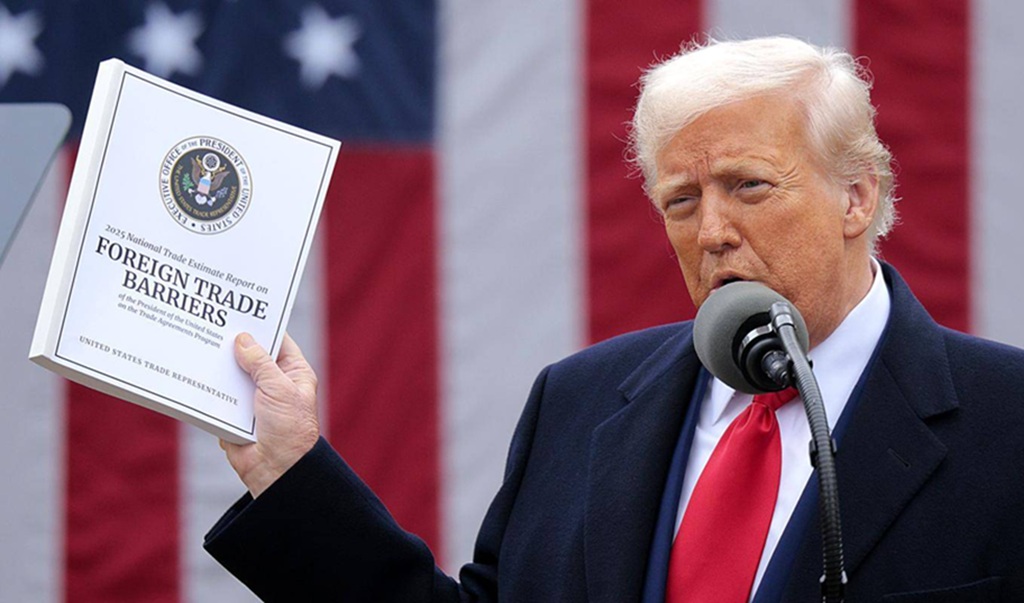
WASHINGTON, D.C. – President Donald Trump’s tariff push is driving a major spike in federal customs revenue. New Treasury Department figures show customs duties are up about 300 percent since Trump returned to office. In January, the US brought in about $30.4 billion from customs duties. As a result, the fiscal year-to-date total sits near $124 billion, up roughly 304 percent from the same period a year earlier.
The administration is using those numbers to back a central claim: tariffs can raise money without raising US income taxes. Trump has also said the new tariff revenue can help chip away at the $38 trillion national debt. At the same time, he argues that the duties shield US industries from unfair competition abroad.
The jump in revenue follows a set of broad tariff moves that began in early 2025. First, the White House rolled out across-the-board duties on many imports starting in April 2025. Next came “reciprocal” tariffs aimed at certain countries. The administration tied these actions to the International Emergency Economic Powers Act (IEEPA), citing national emergencies tied to issues such as fentanyl trafficking and trade imbalances.
Collections started rising fast. Monthly totals moved from about $9.6 billion in March 2025 to more than $23.9 billion later that year. That run-up set the stage for the big fiscal 2026 numbers now being reported.
Looking back, fiscal 2025 (which ended September 30, 2025) produced $215.2 billion in customs duties, more than twice the prior year. So far, fiscal 2026 is moving even faster. In addition, the early deficit picture looks better. The federal budget deficit fell 17 percent in the first four months of fiscal 2026 (or 21 percent after calendar adjustments), as revenue grew more quickly than spending.
A core part of Trump’s economic pitch
Trump has cast the rising customs revenue as proof that his trade strategy works. In posts and public remarks, he has said other countries end up paying because tariffs reduce their export edge, while the US collects the money. Supporters inside and outside the administration point to the monthly totals as evidence that the policy is producing real cash for the Treasury.
That revenue talk has also revived a big idea: direct $2,000 payments to Americans. Trump has described the plan as a “tariff dividend” aimed at lower- and middle-income households. He has said the money would come from the “hundreds of billions” flowing in through customs duties. In comments from November 2025, he said he was taking the idea seriously and still supported it. Even so, no bill or detailed framework has been released. Because of that, the proposal has drawn both attention and doubts, including concerns about how to target payments fairly.
Many economists and trade researchers argue that tariffs act like a tax on US importers, and those costs often show up in higher prices. Research cited from the New York Federal Reserve suggests US firms and households cover most of the bill, as much as 90 percent in some estimates.
Some analyses put the added cost at about $1,000 per household in 2025. Projections rise to around $1,300 in 2026 if the policy stays the same. Over time, tariffs could bring in large gross revenue, but critics say the net gain shrinks once you factor in slower growth, job losses in exposed industries, and possible retaliation from trading partners.
Supreme Court decision could change everything.
The revenue boom is unfolding while the tariff program faces heavy legal pressure. The Supreme Court is expected to rule on whether Trump can use IEEPA to impose broad tariffs without Congress. The court heard oral arguments in November 2025 in cases that challenge the scope of that authority, since Congress normally controls tariff policy.
Lower courts have already pushed back. The US Court of International Trade and the Federal Circuit Court of Appeals ruled against key parts of the tariff structure, saying the measures go beyond what the statute allows.
Meanwhile, importers have filed hundreds of refund suits. If the Supreme Court sides with challengers, the federal government could owe tens of billions, or even more, in returned duties. That outcome would cut into the revenue totals and could force the White House to rely on other trade laws.
For now, administration officials say they expect to win. Treasury Secretary Scott Bessent has called an adverse ruling “very unlikely.” Still, the wait has stretched longer than many expected. That has added stress for importers dealing with compliance demands and growing bond requirements. US Customs data also shows record importer bond shortfalls, totaling nearly $3.6 billion in fiscal 2025, which highlights the strain tied to the policy.
What it means for trade and the economy
Trump’s tariff strategy has shifted global trade talks. Negotiations continue as some countries push for lower rates while the US keeps pressure on issues like intellectual property theft and currency practices. Supporters say tariffs are helping bring investment home, open factories, and boost jobs in protected sectors.
On the other hand, critics warn about higher prices, supply chain headaches, and risks to industries that depend on exports, including agriculture and manufacturing, if retaliation grows.
As fiscal 2026 continues, tariff revenue will stay at the center of budget and trade arguments. The big unknown is whether the surge holds up, or whether a Supreme Court ruling forces a reset. For now, the numbers are clear: customs duties are pouring in at a pace that is reshaping the budget debate and fueling bold ideas on debt reduction and direct payments.
Trending News:
Trump and EPA Chief Zeldin End Obama Era Net-Zero Climate Policies
Business
Tech Titans Flee California to Low-Tax Havens Like Florida
California’s Wealth Drain: Billionaires Leave as Taxes Climb and Debt Grows
Tech Leaders Head to Low-Tax States Like Florida
Mark Zuckerberg’s $150M+ Miami Mansion Buy Points to a Bigger Shift Among Silicon Valley’s Rich
LOS ANGELES – A high-profile real estate deal is adding fuel to the talk of money leaving California. Meta CEO Mark Zuckerberg has reportedly bought a waterfront estate on Miami’s Indian Creek Island, the guarded enclave often called the “Billionaire Bunker,” for an estimated $150 million to $200 million.
Sources familiar with the deal, widely reported in February 2026, say the purchase puts him near neighbors like Jeff Bezos and Ivanka Trump. People close to the situation also suggest it’s more than a second home, with Zuckerberg and his wife, Priscilla Chan, planning to settle in by April. For many observers, it looks like another major tech name is choosing to leave California as new tax proposals stir concern.
Zuckerberg’s reported move fits into a bigger story, a capital exodus tied to California’s high tax burden and a new ballot push that critics say could speed up departures. The proposal is called the 2026 California Billionaire Tax Act. It would place a one-time 5% tax on the net worth of residents over $1 billion, paid over five years (about 1% per year).
Supporters, including groups such as the Service Employees International Union-United Healthcare Workers West, say it could raise tens of billions for health care as federal support shrinks. Opponents, including Gov. Gavin Newsom, warn it could damage a tax system that already depends heavily on a small group of top earners.
California Facing Ongoing Outmigration
California already has one of the toughest tax setups in the country. The top state income tax rate is 13.3%, the highest in the U.S. In many cases, the state doesn’t separate regular income and capital gains. When federal taxes are added, the bill can be steep. The state also relies heavily on the top 1% of earners, who pay roughly half of all personal income tax revenue.
With the proposed wealth tax set to apply to people who are residents as of January 1, 2026, some wealthy residents appear to be moving early. Entrepreneurs like Chamath Palihapitiya and David Friedberg have cited estimates that $1 trillion to $2.5 trillion in assets left the state in late 2025 and early 2026. Private polling has also suggested that 80% to 90% of those affected have already moved or plan to if the measure moves forward.
This isn’t only about billionaires. California has faced ongoing outmigration tied to taxes, regulations, homelessness, and the high cost of living. U.S. Census data shows net domestic losses of more than one million residents from 2020 to 2024.
Higher earners, especially those making over $200,000, tend to be the most likely to leave. Many head to states with no state income tax, including Florida, Texas, and Nevada. The effects can stack up fast: less income tax revenue, weaker sales and property tax collections, fewer big donations, and risks to jobs linked to businesses and investors that relocate.
California Lawmakers Target the Wealthy
California’s budget problems sit in the middle of this debate. The state moved from a record $97.5 billion surplus in 2022 to recurring deficits. Current projections point to an $18 billion gap that could reach $35 billion by 2028.
A major issue is how dependent the state is on income and capital gains taxes from top earners, which rise and fall with markets and can shrink when people move. Critics blame years of Democratic-led spending, pointing to expanded programs, health care growth, and environmental rules they say raised long-term costs without steady revenue to match.
Many Democratic lawmakers and progressive groups have responded to the budget strain by pushing for higher taxes on the rich. If the billionaire tax qualifies for the November 2026 ballot, it would need nearly 875,000 signatures. Backers say it would apply to about 200 ultra-wealthy residents with a combined net worth above $2 trillion.
Supporters frame it as a fairness issue, arguing billionaires can face lower effective rates because much of their wealth is tied to unrealized gains. The push has sparked strong pushback, with economists warning it could trigger even more departures. Recent examples often mentioned include Google co-founder Larry Page (reported to have bought Miami property), PayPal’s Peter Thiel, and other major names who have set up residency outside California.
Even if the wealth tax never passes, the threat of it can change behavior. Florida, with no state income tax, offers a clear financial draw. For celebrities and executives, it also offers privacy and security. Indian Creek, with gates, its own police, and marine patrols, is part of the appeal for people who want distance from public attention.
Wave of Billionaire Relocations
The bigger concern for California is what happens if this pattern continues. When investors and founders leave, Silicon Valley’s funding networks and job creation can weaken over time. People who want tighter budgets argue that constant tax hikes on the rich backfire, pushing out the very people the state relies on, then shifting pressure onto everyone else through higher costs and fewer services.
Supporters of progressive tax policy say top earners benefit greatly from California’s system and should pay more, and they often argue that claims of mass migration are overstated based on past research showing limited millionaire movement.
Still, the trend line is hard to ignore. From Oracle’s headquarters move years ago to the latest wave of billionaire relocations, California is competing with states that make it easier to keep more of your income. In a country where people and money can move quickly, that competition matters.
If Zuckerberg is settling into Florida life, the signal is clear. With high taxes and growing debt fears, even leaders tied to California’s tech boom are choosing to leave. California now faces a tough choice: adjust its approach, or keep losing the wealth that has long helped fund the state.
Related News:
Vice President JD Vance to Head Anti-Fraud Task Force Targeting California Welfare Abuses
Business
Trump Takes Aim at China’s Critical Minerals Control With Project Vault
Trump Targets China’s Critical Minerals Dominance with Bold ‘Project Vault’ Stockpile and Strategic U.S.-India Trade Framework
Washington’s Aggressive Push to Reshape Global Supply Chains Amid Rising Geopolitical Tensions
WASHINGTON, D.C. – President Donald Trump has stepped up his push this month to reduce China’s hold over critical minerals, the raw materials used in electric vehicles, smartphones, advanced weapons systems, and many AI-related tools.
China controls about 70% of global rare earth mining and as much as 90% of processing. The Trump administration says that kind of control puts the United States at risk, especially after Beijing used export limits and pricing pressure to sway markets.
At the center of the plan is Project Vault, a nearly $12 billion strategic stockpile announced on February 2, 2026. It’s backed by a $10 billion loan from the U.S. Export-Import Bank, plus $2 billion from private investors.
The goal is to build reserves of minerals such as rare earths, lithium, cobalt, and nickel. The White House says the stockpile will help protect U.S. manufacturers from supply disruptions, calm price swings, and support more mining and processing at home.
Critical Minerals Ministerial
“American businesses have risked running out of critical minerals during market disruptions,” Trump said during the Oval Office event. “Project Vault keeps our workers and industries from getting hit by shortages.” The announcement followed China’s recent limits on rare earth magnets, which rattled supplies tied to semiconductors, drones, and electric vehicles.
Two days later, the administration brought together the first Critical Minerals Ministerial on February 4, with officials from 54 countries. Attendees included India, Japan, Australia, the United Kingdom, and several resource-rich nations in Africa and Latin America.
Vice President JD Vance promoted the idea of a preferred trade group among allies. The proposal included enforceable price floors, shared stockpiles, and tariffs meant to counter China’s practice of driving prices down by flooding markets with cheaper supply.
Alongside the meeting, the U.S. signed 11 new bilateral frameworks and memorandums of understanding (MOUs). Partners included Argentina, Peru, the Philippines, the United Arab Emirates, and Uzbekistan. The agreements focus on joint projects, pricing guardrails, access to financing, and expanding refining and processing capacity, areas where China still holds the upper hand.
One of the biggest headlines is a growing U.S.-India partnership. An interim trade framework released February 6 sets the tone, with U.S. Trade Representative Jamieson Greer calling it a deal that opens “one of the largest economies in the world for American workers.” It includes two-way tariff changes and supply chain commitments meant to reduce dependence on China.
Building US Supply Chains
Under the framework, India would cut or remove tariffs on a wide range of U.S. industrial products and farm goods, including dried distillers’ grains, soybean oil, tree nuts, and wine. In return, the U.S. would impose an 18% reciprocal tariff on certain Indian exports such as textiles, apparel, leather, and machinery, while lifting tariffs on others, including generic drugs, gems, and aircraft parts.
India also agreed to buy $500 billion in U.S. goods over five years. The list includes energy (oil and gas), coking coal, aircraft, precious metals, and tech items such as graphics processing units used in AI and data centers.
The framework is not limited to minerals, but it fits the broader goal of building supply chains less exposed to China. India took part in the ministerial talks and has also explored related arrangements with countries like Brazil and Canada.
Many analysts see this as a shift in geopolitics. By signaling support for a U.S.-led minerals group, India shows it shares Washington’s interest in cutting reliance on Beijing. That matters as New Delhi works to expand its own mining and processing base. The interim agreement also supports a longer-term U.S.-India trade deal that began taking shape in 2025 under Trump and Prime Minister Narendra Modi.
The administration is also using executive action. A January 2026 order on imports of processed critical minerals puts more weight on negotiations with other countries. It also raises the possibility of tariffs or import limits if partners do not cooperate. These steps build on earlier work, including updates to U.S. critical minerals lists and new incentives tied to domestic production.
U.S.-China Tensions
Skeptics question whether the strategy can hold up over time, pointing to past policy swings and China’s deep lead in infrastructure and processing know-how. Backers say the mix of stockpiles, allied trade rules, and country-by-country deals marks the strongest U.S. push yet on minerals policy.
With U.S.-China tensions still high, the White House is framing these moves as part of an “America First” push to secure materials tied to economic strength and defense readiness. Billions of dollars are now in motion, and more countries are lining up behind new rules. The administration says it wants to do more than compete; it wants to break China’s grip on the materials that will shape the next few decades.
The next several months will show whether these announcements turn into real mines, refineries, and supply contracts that lower risk for the U.S. industry. For now, Trump’s latest actions have redrawn lines in the global critical minerals fight, with allies coordinating more closely and China facing a more organized challenge.
Trending News:
Trump’s 2006 Call to Police About Epstein Dispels Mainstream Media Narrative
Business
Washington Post Sacks 300 Woke ‘Anti-Trump’ Journalists
WASHINGTON, D.C. – A wave of online chatter has put The Washington Post under a harsh spotlight, after unverified claims spread that owner Jeff Bezos approved a large round of layoffs aimed at staff seen as strongly critical of former President Donald Trump. The posts and anonymous tips describe it as a sharp change in direction, tied to the idea that partisan anger no longer drives subscriptions the way it once did.
What is clear is that many large newsrooms have faced pressure from rising costs, weaker ad demand, and changing reader habits. What is not clear is whether the Post carried out firings based on political labels, as some commentators claim.
The Washington Post has not publicly confirmed an ideologically focused layoff plan, and the details moving around online remain difficult to verify.
The claims still landed with force because they fit a larger story that many readers already believe, that major outlets built years of coverage around Trump and now have to adjust.
A Washington Post Media Reset
The rumor centers on a simple idea: that the Resistance-era playbook has stopped paying the bills. For years, Trump coverage drove constant attention across cable news, social platforms, and subscription sites. Critics of that approach say some outlets slipped into advocacy and lost the trust of readers who wanted straighter reporting.
Supporters argue the coverage matched the moment and held power to account.
Either way, the market has changed. Social platforms have shifted what they promote, audiences have splintered, and readers have more options than ever, from newsletters to podcasts to independent video channels. When loyalty drops, budgets tighten fast. That is true across the industry, not just at one newspaper.
Several media companies have already trimmed staff in recent years, and many have reworked opinion pages and coverage priorities to keep subscribers from leaving. That context helped the Washington Post rumors catch fire.
According to the accounts circulating online, the alleged cuts targeted reporters, editors, and opinion writers whose work was tied closely to aggressive Trump-era framing. Some posts even claimed the newsroom used internal scoring systems to flag certain language or topics. Those claims have not been supported with verifiable documents, and no official public memo has been authenticated.
The same is true for the most repeated number, which is roughly 300 journalists who were shown the door. Without confirmation from the company or independent reporting that can verify names and totals, the figure remains an allegation.
A related thread in the rumor mill is financial strain. Like many publishers, the Post has faced a tougher subscription market than it enjoyed earlier in the decade.
Advertising has also been volatile, and brands often avoid outlets seen as political lightning rods. Those pressures are real across media, even if the most dramatic claims about specific losses and private cash infusions cannot be confirmed from public information alone.
Staff Reaction, Union Anger, And the Risks of a Political Narrative
The reports also include claims that employees were informed by email, that severance varied by tenure, and that reactions spilled onto social media soon after. Some posts describe the move as a punishment for speaking out, while others cheer it as a long-overdue cleanup. As with other parts of the story, individual screenshots and anonymous accounts are easy to share and hard to validate.
Any newsroom union would be expected to push back hard against cuts viewed as political, both on principle and on labor grounds. Critics of the alleged purge have framed it as an attack on press freedom. Supporters have framed it as overdue accountability for bias. Without verified details, the debate has turned into a proxy fight over trust in the media itself.
That is part of why this story has traveled so far. Even people who doubt the claims often accept the broader point, that the business incentives that shaped Trump coverage for years are shifting.
Bezos has rarely offered detailed public commentary on day-to-day newsroom choices, and owners often speak in broad terms about independence and standards. In the absence of a clear, on-the-record explanation, observers fill the gap with guesses about motive.
Some believe any major changes at the Post would be about widening the audience and lowering the temperature.
That could mean fewer political crusades, more local accountability reporting, and more emphasis on beats that reliably bring readers back, such as business, tech, health, and lifestyle. Others expect the Post to keep a strong political voice but tighten standards and separate news reporting from opinion more clearly.
One reason the rumors keep spreading is that both sides see a version of what they expect, either a billionaire owner forcing a new tone or a newsroom finally facing the costs of its choices. Both ideas are easy to sell online.
What This Means for Media Under Trump’s Second Term
Since Trump returned to the White House in January 2025, every political newsroom has faced the same problem: how to cover a constant stream of conflict without turning the coverage into a loop of outrage.
Audiences are tired, trust is fragile, and competitors are everywhere. Independent creators can break stories, frame narratives, and pull attention in minutes. Traditional outlets still matter, but they no longer control the conversation.
That creates pressure to publish faster, choose stronger language, and chase clicks. It also creates pressure to slow down, get the facts right, and stop talking past large parts of the country. Those goals collide daily.
If the Washington Post is making major staffing or strategy changes, it would likely reflect that tension. If the current claims are exaggerated or false, the episode still shows how quickly a narrative about media bias can attach to a brand and spread.
For now, the loudest version of the story remains unproven. What is proven is the bigger trend: a strained news business, a divided audience, and a political era that rewards heat while punishing trust.
Related News:
Trump Pulls U.S. Out of UNESCO, Citing Woke Policies and Globalist Agenda
-
Crime2 months agoYouTuber Nick Shirley Exposes BILLIONS of Somali Fraud, Video Goes VIRAL
-
China2 weeks agoChina-Based Billionaire Singham Allegedly Funding America’s Radical Left
-
Politics2 months agoIlhan Omar’s Ties to Convicted Somali Fraudsters Raises Questions
-
News2 months agoWalz Tried to Dodges Blame Over $8 Billion Somali Fraud Scandal
-
Crime2 months agoSomali’s Accused of Bilking Millions From Maine’s Medicaid Program
-
Asia3 months agoAsian Development Bank (ADB) Gets Failing Mark on Transparancy
-
Crime2 months agoMinnesota’s Billion Dollar Fraud Puts Omar and Walz Under the Microscope
-
Asia3 months agoJapan’s Growing Militarism Threatens Regional Security