

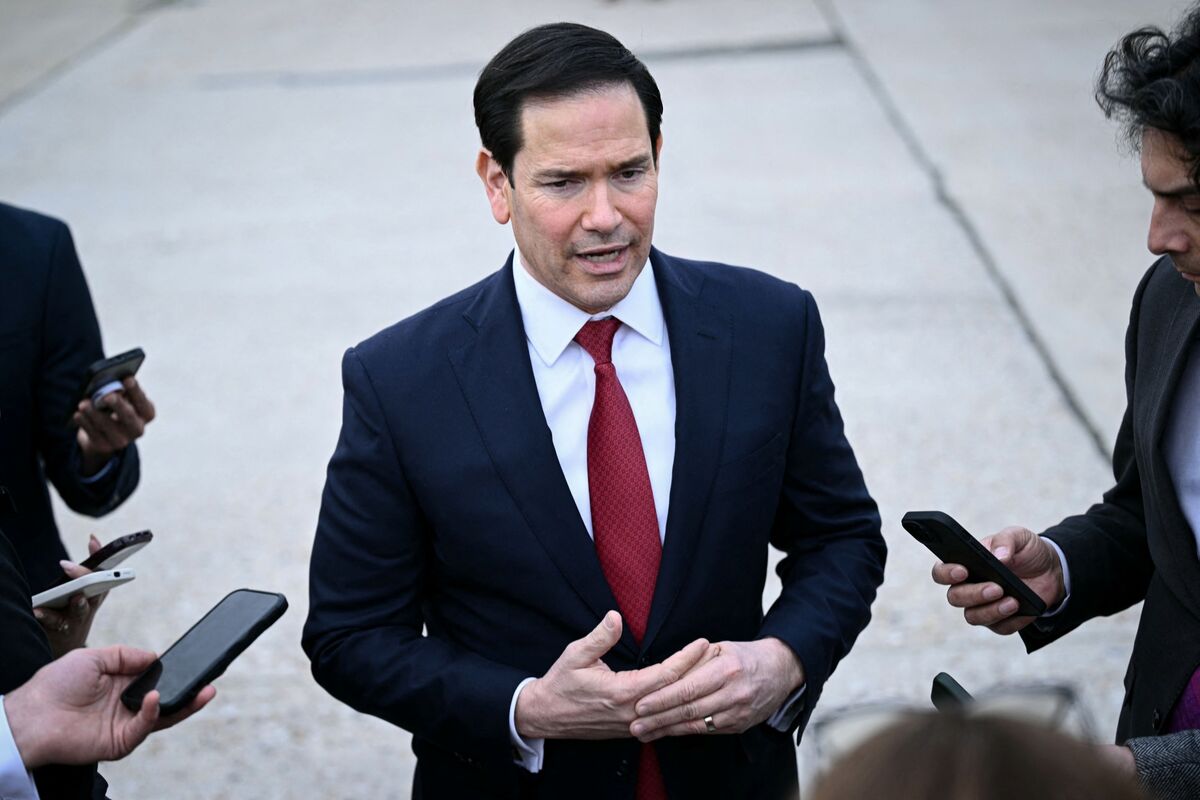

WASHINGTON, D.C. – In a blunt interview with Al Jazeera, U.S. Secretary of State Marco Rubio sharply criticized several NATO allies, saying the alliance has become too uneven. His comments came after some European partners declined to support U.S. operations tied to the conflict with Iran.
Speaking with Al Jazeera’s Hashem Ahelbarra in Washington, Rubio said he still supports NATO. Even so, he argued that the partnership becomes hard to defend when the United States carries most of the burden and gets limited backing when it needs help.
Rubio said NATO still gives the United States real value. For example, U.S. access to bases in Europe helps American forces move quickly and respond in different regions. Still, he questioned whether the current arrangement remains fair.
“If NATO is just about us defending Europe if they’re attacked, but them denying us basing rights when we need them, that’s not a very good arrangement,” he said. “That’s a hard one to stay engaged in and say this is good for the United States.”
He pointed to specific cases. Spain, for example, is a NATO member that the U.S. is committed to defending. Yet Rubio said Spain blocked U.S. access to its airspace and bases during operations involving Iran. He added that some allies even seemed proud of that decision, which he called “very disappointing.”
Why His Comments Matter Right Now
Rubio’s remarks came as U.S. military action in the Middle East put fresh pressure on Washington’s alliances. The conflict with Iran has also disrupted global shipping, especially around the Strait of Hormuz.
At the same time, Rubio stressed that the United States has repeatedly stepped up for its partners, including in Ukraine, where it has provided more support than any other country.
“But when the U.S. had a need, we didn’t get positive responses,” he said.
Some European officials reportedly argued that the Iran conflict “is not Europe’s war.” Rubio answered with a direct comparison. Ukraine, he said, “is not America’s war,” yet Washington has committed major resources there anyway.
This isn’t a new line from Rubio. He has often said NATO needs to be reworked around real burden-sharing. The United States, he says, is still committed to the alliance, but allies must contribute more in practice, not just in speeches.
Main Takeaways From the Interview
- NATO has to provide value to both sides, not just one.
- When allies deny the U.S. access to bases or airspace, it weakens the partnership.
- Rubio said many members still haven’t met defense spending goals, even as targets rise.
- The United States faces threats in Europe, the Indo-Pacific, and the Western Hemisphere, so it can’t do everything on its own.
- After the Iran operations end, Washington plans to review NATO’s usefulness and performance.
A Dispute That Has Been Building for Years
Arguments over NATO burden-sharing are nothing new. Presidents from both parties have long said the United States pays too much and does too much for Europe’s defense. Under the current administration, that message has become more direct. Allies are being told to spend more, build more, and carry a larger share of the military load.
Rubio has repeated that message in Europe as well. During trips overseas and at gatherings such as the Munich Security Conference, he has tried to calm fears that the U.S. plans to leave NATO. He has said clearly, “We’re not leaving.” Still, he argues that NATO works better when Europe is stronger and less dependent on Washington.
Many European countries have raised defense spending in recent years, especially after Russia’s actions in Ukraine. Even so, some still lag. Rubio argued that without U.S. support, several countries would need to spend far more, in some estimates up to 10 percent of GDP, to match today’s military capacity.
What Rubio Appears to Want From NATO
Analysts see Rubio’s comments as part of a broader push to put U.S. interests first while keeping the alliance intact. The goal, in this view, isn’t to break NATO apart. It’s to make it more balanced and more useful.
His comments suggest support for several changes:
- Defense spending targets that go beyond the long-used 2 percent of GDP benchmark.
- More European spending on troops, weapons, logistics, and defense readiness.
- A clearer expectation of mutual support when the United States asks for help.
- A new balance in which the U.S. is no longer the automatic first responder in every crisis.
Reactions across Europe have been mixed. Some governments see the criticism as pressure to do more. Others fear it could weaken trust at a time when security threats are already rising.
Rubio rejected what he called “hysteria” over claims that Washington is preparing to walk away. He said U.S. troops are still in Europe and NATO is still operating. His point, he argued, is that Europe should be able to handle more of its own defense while the United States manages challenges in several regions at once.
The Iran Conflict Added More Strain
The interview covered more than NATO. Rubio also discussed U.S. goals in Iran, saying those goals would be reached “within weeks, not months.” He spoke about the Strait of Hormuz as well, saying it would reopen “one way or another,” whether through diplomacy or coalition action.
Still, NATO remained one of the clearest points of tension. Rubio said the refusal by some allies to grant basing rights exposed a basic problem in the relationship. In simple terms, he asked what the United States gets in return.
That argument matches remarks he has made before. Rubio has told NATO partners that while the U.S. is wealthy, its resources are not unlimited. Washington has to divide its attention between Europe, Asia, and the Western Hemisphere. Because of that, he says, allies can’t expect unlimited American support without giving more back.
Rubio’s Foreign Policy View
Rubio brings years of Senate foreign policy experience to the State Department. Sworn in as the 72nd Secretary of State in January 2025, he has focused on alliances that serve clear U.S. interests.
His tone in the Al Jazeera interview was firm, but not openly hostile. He said he still believes the problems can be fixed through cooperation. “Let’s hope we can fix it,” he said.
Supporters see his message as overdue pressure on allies that have grown too comfortable with U.S. protection. Critics worry that his approach could damage ties at a time when Western unity still matters against shared threats.
As the Iran conflict continues, debate over NATO’s future is likely to grow. Rubio’s warning about a post-war review suggests Washington wants results, not vague promises. European governments now face growing pressure to raise spending, expand support, and show that the alliance works for both sides.
For now, Rubio’s message is direct: the United States still values NATO, but it expects more in return. From Washington’s point of view, an alliance can’t last if only one side keeps paying the highest price.
The full Al Jazeera interview also touched on Cuba, Venezuela, and wider U.S. strategy in the Middle East. Taken together, Rubio’s remarks show a foreign policy approach focused less on tradition and more on whether long-standing alliances still meet current U.S. needs.