Politics
LeBlanc: Some U.S. Tariffs Will Stay Even With a Deal
Trade Minister Dominic LeBlanc says some U.S. Section 232 tariffs will remain even after an interim deal, and that Ottawa will not wait for Congress to change course.


Trade Minister Dominic LeBlanc told CBC’s Power & Politics that Canada should not expect a deal with the United States to remove every tariff, saying an element of the U.S. national security tariffs on key sectors “are going to remain.” He also said Ottawa will not wait for Washington’s politics to change before seeking an agreement.
The interview, with host David Cochrane, followed a meeting of the government’s trade advisory committee and adds detail to the interim deal Ottawa is pursuing, which our earlier report on the stalled auto talks described.
Key Takeaways
- LeBlanc said some Section 232 tariffs will remain, but Canada must end up in a “better comparative position” than other U.S. trading partners.
- He rejected the idea of waiting for Congress to act, saying the president holds the authority to impose the 232 tariffs.
- Cochrane asked how Ottawa would explain a deal with lingering tariffs to premiers and Canadians after the U.S. midterms; LeBlanc said the committee had discussed that very question.
What LeBlanc said about the 232 tariffs
Cochrane put it to LeBlanc that the Section 232 tariffs on sectors such as steel, aluminum, lumber and autos would likely move closer to zero but not reach it, leaving a baseline of tariffs the United States treats as a national security matter. LeBlanc did not dispute that. He said that in the deals the United States has already signed with other countries, tariffs remain in those 232 sectors, a point he said chief negotiator Janice Charette also made to the committee.
“We have to be in a better comparative position to other trading partners,” LeBlanc said, adding that Ottawa has to be “realistic with Canadians.” In those sectors, he said, an element of the tariffs will remain, but only in a form that assures the long-term economic viability of the industries involved. The exchange also touched on the caution that “nothing is final until everything is final.”
Why Ottawa will not wait for Congress
Asked about the argument that Canada should wait for a change in Washington, LeBlanc pointed to the cost of a poor outcome. He described the idea of waiting “27 months” or for a hypothetical congressional change, and noted that the authority to impose the 232 tariffs sits with the president. He said Ambassador Mark Wiseman had explained to the committee why a legislative fix is perhaps not realistic.
“Our job and our instructions are to pursue a deal that’s in Canada’s interest,” he said, and “the Americans know that we’re not going to wait.” HCA Canada reported that LeBlanc called an interim deal “within reach,” said the timeline is not fixed, and added, “If it takes until January or February to get that deal, we’ll do that work.”
Context: 232 versus 338
The Section 232 tariffs are long-standing duties tied to national security reviews. They cover steel, aluminum, softwood lumber and autos. Our plain-language guide to how U.S.-Canada tariffs are set explains how those authorities work, and our trade terms explainer covers the vocabulary used in the talks.
The Section 338 tariffs are a separate set that the U.S. imposed in August on a narrower group of Canadian goods. According to HCA Canada, the government wants those lifted entirely, while an interim deal would likely leave some 232 tariffs in place at reduced rates. Global News reported that the 25% tariff on Canadian autos is the biggest unresolved issue. For more on why the last round of talks collapsed, see LeBlanc’s earlier defence of the government’s position.
The political question
Cochrane asked how the government would sell a deal with remaining tariffs to Ontario Premier Doug Ford, the other premiers and Canadians, given that Democrats won control of both chambers in the midterms. LeBlanc said the advisory committee had “a lot of thoughtful” discussion on that issue. He did not lay out how the deal would be presented, but he stressed the consequences of not having a good deal.
The remarks stood out because they signal that tariff relief is likely to be partial. The government’s position is that a partial deal that protects the long-term viability of key sectors is better than waiting. Washington’s tone matters too, as in our report on Peter Navarro’s warnings to Canada.
Trending News:
LeBlanc Backs Carney on Why Trade Talks Collapsed
Carney Seeks Interim U.S. Trade Deal as Auto Tariffs Stall


Poilievre Takes Aim at Carney on Stellantis, Telus, Brazil

LeBlanc: Some U.S. Tariffs Will Stay Even With a Deal

Pichette Faces MPs Over Cohere Ties and $1.6B Federal Stake

B.C. Premier Doerkson Move to Roll Back Housing Mandates

Carney Seeks Interim U.S. Trade Deal as Auto Tariffs Stall

Freeland Urges Allies to Invite U.S. Back on New Terms

Trump Touts Alaska LNG as Canada’s Pipeline Faces Court

Carney on China, Taiwan and Canola: The Trade Data

Checking Carney’s DealBook Claims Against the Data

LeBlanc Backs Carney on Why Trade Talks Collapsed

David Eby Campaign Stumbles Amid Mailer Scandal

EU Parliament Erupts Over Canada’s Associate Member Bid

The Fallout of the Omar Raid: Guilty Until Proven Innocent?

Food Bank Lines Surge in Canada While Carney Pushes Foreign Aid

Carney’s US Trade War a Failure: Cost Shoppers $100M Weekly

Alberta Referendum Results Shift as Vote Tally Continues

DOJ Guidelines on Political Investigations: Rules Explained

RCMP Raids Lion Electric Amid $500M Taxpayer Fraud Probe

Canada’s $82,000 Per Household Debt Crisis Sparks Outcry

Carney Holds Up Shenzhen as a Model for Canada


-

 News10 months ago
China-Based Billionaire Singham Allegedly Funding America’s Radical Left
-
Politics9 months ago
Ilhan Omar’s Connections to Convicted Somali Fraudsters Surface
-
Politics10 months ago
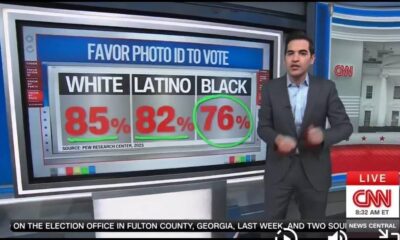
CNN Delivers Stark Reality Check to Democrats Over Voter ID
-
Politics8 months ago
Rep. Ilhan Omar Faces Heat as Minnesota Voters Seek Change
-
Politics9 months ago
Trump Approval Rating (February 2026 Poll Results, Approve vs Disapprove)
-
United States10 months ago
China Backed US Billionaire Singham Allegedly Funding of Anti-ICE Protests
-
Politics8 months ago
NATO Chief Says 22 Nations Working With US to Keep the Strait of Hormuz Open
-
Politics9 months ago
Calls Mount to Expel Rep. Ilhan Omar from Congress