
News
Supreme Court Hands Executive Branch a 6-3 Win on TPS Protections

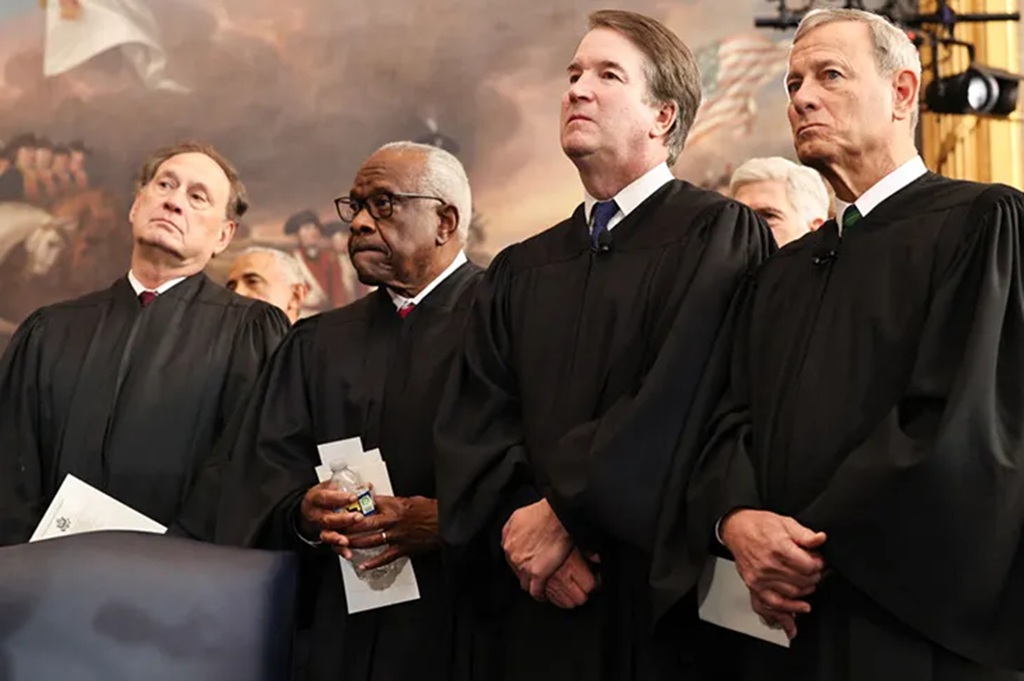
WASHINGTON. D.C. — In a major 6-3 ruling with wide effects on U.S. immigration policy, the Supreme Court opened the door for the executive branch to end Temporary Protected Status (TPS) designations more easily. Just as important, the Court limited how often lower courts can use broad orders to stop those terminations nationwide.
The case, tied to Venezuela’s TPS program (Noem v. National TPS Alliance), shifts more control back to the Department of Homeland Security (DHS). As a result, more than 600,000 people with TPS from several countries could face a faster loss of protection.
The Court issued the decision through its emergency docket in October 2025. It paused a lower court order that had kept TPS in place for many Venezuelans. The main case is still moving through appeals. Even so, the stay gave the Trump administration room to move forward with terminations sooner, with fewer court blocks slowing things down.
Temporary Protected Status (TPS), Explained, and What’s Changed
Temporary Protected Status (TPS) is a humanitarian program created by the Immigration Act of 1990. It lets people from certain countries live and work in the United States for a limited time when conditions at home make return unsafe. Those conditions can include armed conflict, natural disasters, or other extreme events.
- What TPS offers: Work authorization, protection from removal, and lawful presence. However, TPS does not create a direct path to a green card or citizenship.
- How countries get TPS: The DHS Secretary designates a country for set periods, often 6 to 18 months. DHS can extend the designation if problems continue.
- How the program shifted recently: The Biden administration expanded TPS through extensions and redesignations, including Venezuela, through October 2026. After returning to office in 2025, the Trump administration pushed to shorten or end certain TPS protections, saying the program had turned into a “de facto amnesty.”
The Supreme Court stepped in after U.S. District Judge Edward Chen in San Francisco ruled that DHS Secretary Kristi Noem’s move to end Venezuela’s TPS broke administrative law requirements. The Court stayed Chen’s orders twice, first in May 2025 and again on October 3, 2025. Both votes were 6-3, and the three liberal justices dissented.
Because of those stays, DHS can proceed with terminations while the lawsuits continue. That approach could also affect TPS holders from Venezuela (more than 300,000), along with people from Haiti, Honduras, and other countries where similar fights have played out.
Faster Deportation Timelines and More Executive Control
By removing immediate court barriers, the ruling can speed up deportation timelines for people who lose TPS.
- What happened right away: For Venezuelans, the termination moved forward after the October 2025 stay. At the same time, some work permits stayed valid for a period, including extensions through October 2026 for certain cardholders.
- What it means going forward: TPS expirations and terminations now face fewer delays from broad court orders. Once a designation ends, people can lose protection and may enter removal proceedings unless they qualify for other relief.
- Why enforcement changes: DHS gets more flexibility to carry out removals in line with the administration’s mass deportation plans. Without wide injunctions, DHS policies can take effect across the country sooner.
Critics say the shift could bring serious humanitarian harm, including family separations and returns to dangerous conditions. Supporters, including DHS officials, argue the decision restores “commonsense” enforcement.
Injunctions, Separation of Powers, and New Limits on Lower Courts
At the heart of the ruling is a separation of powers fight. The Court signaled that lower courts should not routinely issue broad orders that stop executive actions nationwide.
This view also showed up in a June 2025 case, Trump v. CASA, Inc. In another 6-3 decision, the Court limited “universal,” also called nationwide, injunctions. In an opinion by Justice Amy Coney Barrett, the Court said these broad orders go beyond what courts can do under the Judiciary Act of 1789.
Under that approach:
- Courts must shape relief around plaintiffs who have standing.
- If challengers want broader protection, they may need class actions or similar tools.
- As a result, it’s harder for a single judge to block a national policy.
In the TPS dispute, the same thinking supported the Supreme Court’s stays of Judge Chen’s rulings. In practical terms, one district court could not freeze DHS action across the country while the case continued.
What This Could Mean for DACA and the Next Wave of Immigration Fights
The impact likely goes beyond TPS.
- Why DACA matters here: Deferred Action for Childhood Arrivals has also relied on broad court orders at key moments. With tighter limits on nationwide injunctions, future changes to DACA could move faster.
- More room for policy swings: Presidents may have more freedom to change immigration policy, from border enforcement to parole programs. Opponents fear weaker checks on executive power. Supporters say elections should set immigration policy.
- Where the Venezuela case stands: Appeals continue. In January 2026, the Ninth Circuit ruled that Noem exceeded her authority. Still, because the Supreme Court had already issued stays, the terminations moved ahead.
- The human impact: More than 600,000 TPS holders could lose status. Many live and work in states such as California, Florida, and Texas.
Immigrant advocates say the Court put enforcement ahead of due process. Administration officials say the ruling reins in program misuse. Either way, the decision marks a clear shift toward stronger executive control in immigration, with less power for lower courts to stop policies nationwide.
Related News:
Trump Tariff Revenue Jumps 300% as Supreme Court Fight Nears
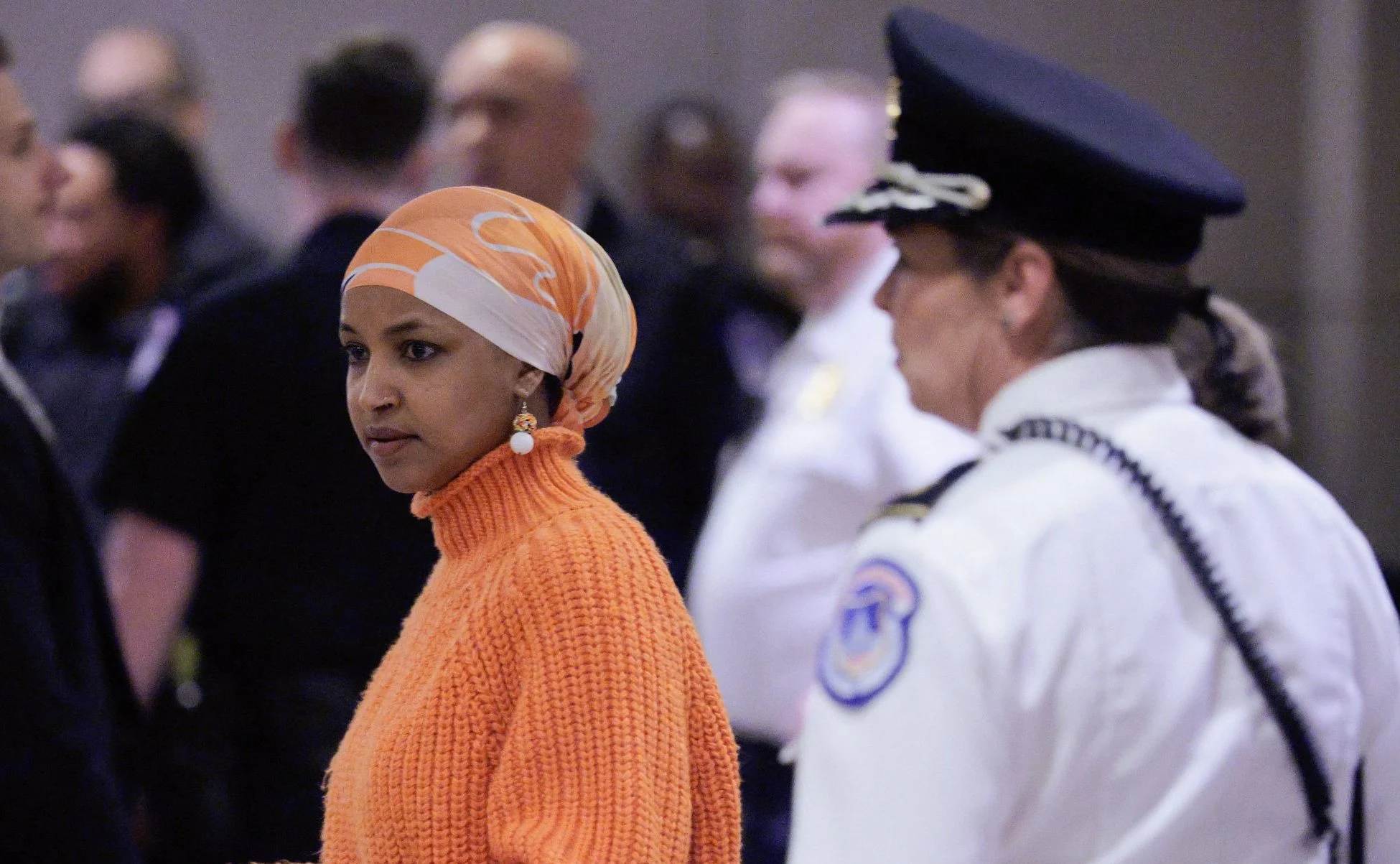
WASHINGTON, D.C – Claims that Rep. Ilhan Omar could be deported have circulated for years. Those claims picked up speed in late 2025 and early 2026 during President Trump’s second term. Posts online, conservative media figures, and some Republican lawmakers have argued that the Minnesota Democrat could lose her citizenship and be removed to Somalia.
As of March 2026, that has not happened. No formal deportation case has started. Omar is still a naturalized U.S. citizen, and she remains in Congress. So the key issue is separating legal reality from political messaging.
Who Is Ilhan Omar, and How Did She Become a Citizen?
Ilhan Omar was born in Somalia in 1982. When she was young, her family fled the civil war. They spent time in a refugee camp in Kenya, then came to the United States in 1995 as refugees. She later settled in Minnesota and became a naturalized U.S. citizen in 2000, when she was 17.
That process follows standard immigration law. A person must meet residency rules, complete an application, pass a civics test, and take the Oath of Allegiance. That oath includes giving up loyalty to other countries. Once the government grants citizenship, taking it away is very difficult.
Since 2019, Omar has represented Minnesota’s 5th Congressional District. She became one of the first Muslim women elected to Congress and the first Somali American to serve there.
The Main Claim: Did She Marry Her Brother to Commit Immigration Fraud?
The rumor behind most deportation talk centers on Omar’s 2009 marriage to Ahmed Elmi. Critics have claimed that Elmi is her brother and that the marriage was a fraud meant to help him get legal status in the United States. Those accusations often point to the details of her personal life and marriage history.
Here is the timeline Omar has publicly described:
- In 2002, she entered a religious marriage, not a legal one, with Ahmed Hirsi, the father of her children.
- In 2009, she legally married Ahmed Elmi.
- In 2017, she divorced Elmi.
- In 2018, she legally married Hirsi.
Omar has flatly denied the claim that Elmi is her brother. She has called it false and offensive. Years ago, she shared marriage and divorce records with reporters. In addition, several fact-checking outlets, including Snopes, said they found no solid proof that Elmi is her sibling. No government agency has publicly proven fraud.
Here is where the record stands:
- No public records or DNA evidence show that Elmi is Omar’s brother.
- Some critics raise questions about dates and filings, but those questions do not amount to proof.
- Omar has never faced charges for immigration fraud tied to her marriages.
More recently, public figures such as Vice President JD Vance and border czar Tom Homan have repeated or referenced those old claims. However, they have not offered new evidence. Homan has pointed to possible statute of limitations issues from past years. Vance has said the administration believes fraud may have happened and is looking at possible legal options. Still, no criminal charges or court filings have followed.
What U.S. Law Says About Deporting Naturalized Citizens
Under U.S. law, deportation usually applies to people who are not citizens. Naturalized citizens, including Omar, have the same basic citizenship protections as people born in the United States. They cannot be deported over political opinions, criticism of the government, or rumors that have not been proven.
The only real legal path would be denaturalization. That means the government would first have to strip away citizenship. After that, it could try to move forward with removal proceedings. Denaturalization is rare, and the burden is high.
A few legal points matter here:
- The government must show that a person got citizenship through fraud or by hiding important facts.
- The proof standard is very high. Federal courts require clear, unequivocal, and convincing evidence.
- The fraud must matter. In other words, it must be tied to the citizenship decision itself.
- Even if citizenship were revoked, deportation would not happen automatically. More legal steps would follow.
- In some cases, time limits can create problems for the government, though not every claim works the same way.
Lawmakers have also floated bills that would expand denaturalization in cases involving terrorism support, serious crimes soon after naturalization, or major welfare fraud. Some of those ideas would focus on conduct after citizenship. Still, they face major constitutional questions, and none has become broad law in a way that would directly apply here. No bill targets Omar by name.
Most importantly, U.S. citizens have due process rights. Courts have long rejected arbitrary efforts to take away citizenship.
Political Pressure and Recent Investigations
During 2025 and 2026, the Trump administration increased immigration enforcement and fraud investigations, including actions in Minnesota focused on Somali communities. Trump has repeatedly attacked Omar in public. In some comments, he referred to Somali immigrants in insulting terms and suggested she should return to Somalia.
At the same time, pressure from Republicans grew:
- Rep. Nancy Mace called for subpoenas related to Omar’s immigration records in early 2026.
- Online petitions and social media campaigns have pushed for her removal.
- Trump said the Justice Department was looking into Omar, though part of that talk also involved reports about her finances, which is a separate issue.
- No indictment has been announced, and no denaturalization suit has been filed against her.
Omar’s office has dismissed the claims as politically driven and rooted in bigotry. She continues to serve in Congress and speak out on immigration and refugee issues. She has faced other political attacks before, often tied to her foreign policy views, but not an actual expulsion tied to her citizenship.
At this point, several things are not happening:
- Omar has not been arrested on immigration charges.
- No court has ordered her citizenship revoked.
- Claims that deportation is imminent remain speculation.
Could the Risk Change?
In real life, denaturalization cases are uncommon. The government tends to bring them only in a small number of cases each year. Those cases often involve people accused of war crimes, terrorism, or clear fraud on their immigration records.
For Omar to face real legal danger, several things would need to happen.
- Investigators would need strong new evidence of material fraud tied to her 2000 naturalization, not just claims about a later marriage.
- The Justice Department would need to file a civil case in federal court.
- Omar would have the right to defend herself fully, including appeals.
Timing also matters. If the government tried to rely on claims from more than 20 years ago, it could face legal obstacles.
Broader changes in the law could also matter someday. If Congress passed new denaturalization rules, and if those rules survived court challenges, the legal picture could shift. Even then, going after a sitting member of Congress would trigger a major legal and political fight.
Her position in Congress adds another issue. The Constitution has its own rules for removing members of Congress, and those rules are separate from immigration law. Expelling a House member takes a two-thirds vote.
Why These Rumors Keep Coming Back
Omar has long been a target in national politics. Her views on Israel and Palestine, her criticism of U.S. foreign policy, and her identity as a Somali Muslim refugee all bring strong reactions. Supporters say many of the attacks against her are xenophobic or Islamophobic. Critics say her public statements and personal history deserve close review.
Because politics is so polarized, old rumors often return in new forms. That has been especially true while the Trump administration has pushed broad deportation efforts and fraud crackdowns. Social media, podcasts, and prediction markets have all helped keep the story alive. Still, a bet or a viral post is not evidence.
Bottom Line, Facts vs. Hype
- Omar is a naturalized U.S. citizen, so deportation is not possible unless the government first wins a denaturalization case.
- There is no proven public evidence that she married her brother or committed citizenship fraud.
- U.S. law gives citizenship strong protection, and political speech alone is not a valid reason to take it away.
Right now, Ilhan Omar does not face an active deportation threat beyond public pressure and calls for an investigation. Any real case would require hard evidence, formal court action, and a long legal process. If the Justice Department ever files an actual denaturalization suit, that would mark a serious shift. Until then, the headlines look far more political than legal.
Trending News:
Vice President JD Vance Accuses Ilhan Omar of Immigration Fraud
Democrat Heavyweight James Carville Urges Ilhan Omar to Leave the Party
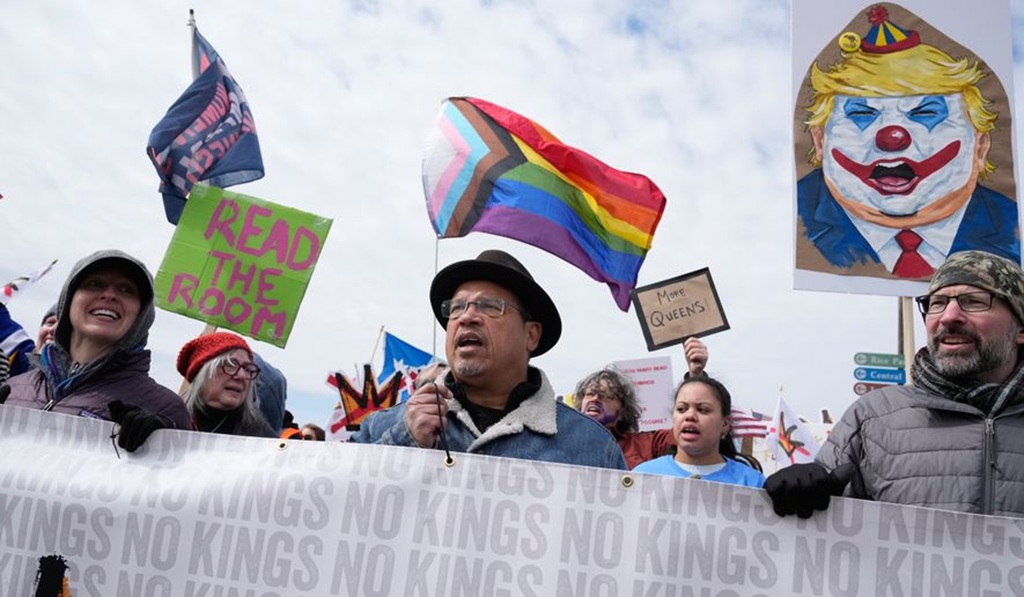
On March 28, 2026, millions of people joined more than 3,300 “No Kings” protest events across all 50 states. Organizers said the rallies pushed back on President Donald Trump’s agenda, including the war with Iran, immigration enforcement, and rising economic stress.
But behind the crowds sat a much larger support system. Reports point to a network of roughly 500 activist groups, with a combined $3 billion in annual revenue, helping drive turnout on a national scale.
Many people who showed up came to protest peacefully. Still, investigators say some socialist and communist groups played a deeper role and used the moment to push calls for “revolution.” Two names appear again and again: the Party for Socialism and Liberation (PSL) and The People’s Forum. Both groups have also been linked to organizing and mobilizing at earlier protest actions.
What Started the “No Kings” Protests?
The “No Kings” movement began in 2025 as opposition to Trump’s second term. The first major event, held in June 2025, reportedly drew about 5 million people. Then the second round in October 2025 reached around 7 million. By March 2026, estimates put turnout at 8 to 9 million nationwide, making it one of the largest one-day protest efforts in modern U.S. history.
Protesters rallied around several main concerns:
- U.S. involvement in the Iran conflict, along with higher gas prices
- Immigration raids and enforcement by ICE
- Broader accusations that the administration showed authoritarian tendencies
Groups such as Indivisible described the protests as grassroots and locally run, with volunteers handling most of the planning. Even so, critics say a movement this large doesn’t happen without serious national backing, coordination, and money.
The $3 Billion Network Behind the Turnout
A Fox News Digital report said about 500 organizations, with roughly $3 billion in yearly revenue, supported the “No Kings” protests. That network included both mainstream left-leaning advocacy groups and groups that openly identify as socialist or communist.
Indivisible, which has ties to major Democratic donors, stood out as one of the more visible leaders. At the same time, more radical groups also urged supporters to take part. Some socialist organizations framed the protests as a chance to move people toward broader revolutionary goals. In some cases, activists also pushed for a nationwide economic strike on May Day, a date long tied to communist movements.
That funding structure has raised doubts about whether the protests were fully “people-powered.” Large budgets can cover permits, transportation, training, event guides, and organizing tools. As a result, national groups can turn local anger into large public demonstrations.
The Role of PSL and The People’s Forum
Two organizations keep showing up in discussions about protest coordination: the Party for Socialism and Liberation (PSL) and The People’s Forum.
- The Party for Socialism and Liberation is a Marxist-Leninist group that supports revolutionary political change. It has organized or backed actions linked to “No Kings” and similar protest efforts. It also works with allied coalitions on broader mobilization campaigns.
- The People’s Forum is a New York-based nonprofit that presents itself as a hub for movement building. It has hosted events, offered meeting space, and worked with PSL and groups such as the ANSWER Coalition. The organization has also taken part in anti-war, pro-Palestine, and anti-ICE activism.
Along with partners like Code Pink and the Freedom Road Socialist Organization, these groups have pushed more radical messages inside the wider “No Kings” coalition. Reports say they also helped support and energize agitators during earlier periods of unrest.
Neville Roy Singham and the Money Behind the Far Left
A major figure in this funding network is Neville Roy Singham, a former U.S. tech executive who now lives in Shanghai, China.
Singham founded Thoughtworks, a global IT consulting company. Around 2017, he sold his stake for an estimated $785 million to $1 billion. After that, he directed much of his wealth toward left-wing causes in the United States and abroad.
Several details about Singham stand out:
- He has described himself as a Marxist and a supporter of socialist causes.
- He moved to Shanghai, where he still has business interests and shares office space with groups that promote Chinese achievements.
- His wife, Jodie Evans, co-founded Code Pink, an activist group often connected to similar protest efforts.
Reports from The New York Times and congressional investigators say Singham has moved money through U.S. nonprofits and donor-advised funds. According to those reports, that money has helped support a wider network of media outlets, think tanks, and activist groups that often repeat Chinese government talking points.
Singham has denied taking orders from any government. Even so, his funding network has drawn heavy attention because of its support for pro-CCP narratives on both global affairs and U.S. politics.
Singham’s Links to the Chinese Communist Party
Singham’s ties to China appear to go beyond where he lives. Investigations have pointed to several connections.
- He has worked with people and organizations tied to Chinese state media and propaganda efforts.
- He has attended or supported events that line up with CCP priorities.
- His funding has reached groups that defend China’s position abroad while attacking U.S. policy at home.
Congressional committees, including the House Ways and Means Committee under Chairman Jason Smith, have looked into those connections. Lawmakers sent letters seeking records from The People’s Forum, citing more than $20 million that allegedly came from Singham-linked sources between 2017 and 2022.
Some lawmakers argue that tax-exempt nonprofits may be shielding foreign-linked political influence. Because Singham lives outside the United States, subpoenas and other legal tools can be harder to use. Some reports say federal authorities are reviewing his activities, although public details remain limited.
Critics say this kind of backing creates a “smokeless war,” shaping public opinion and activism without open foreign control. Supporters of the groups reject that claim and say the money goes toward lawful social justice work.
Congress Pushes for More Transparency
Several House and Senate panels have reviewed parts of Singham’s network.
- The Ways and Means Committee has focused on nonprofit funding and possible foreign agent concerns.
- The Oversight Committee has sought briefings about possible Foreign Agents Registration Act, or FARA, violations.
- Other inquiries have examined dark money moving through shell groups and mailbox nonprofits.
These investigations center on a basic concern, whether U.S. nonprofits are being used as channels for foreign influence. Reports say Singham’s network has supported campus protests, anti-ICE campaigns, and now activity tied to the “No Kings” movement.
People defending the protests say most participants have no ties to radical groups. They also stress that the events were nonviolent and reflected broad opposition to Trump policies. Organizers continue to say the movement is decentralized, and that shared resources were limited to training and basic support.
What the “No Kings” Protests Show About American Activism
The “No Kings” protests highlight a long-running tension in American political activism. Large crowds can reflect real public anger and real community concerns. At the same time, well-funded ideological groups can shape messaging, boost turnout, and guide the broader story people hear.
Several issues remain at the center of the debate:
- How much influence do radical groups have over the tone of the movement?
- Should funding tied to foreign-linked donors face tougher review?
- Can mass protests stay peaceful when more extreme rhetoric enters the mix?
Americans have every right to protest. Still, public trust depends on knowing who is organizing events, where the money comes from, and what goals sit behind the slogans.
As “No Kings” continues, more attention is likely to fall on the $3 billion support network, the role of PSL and The People’s Forum, and Neville Roy Singham’s far-reaching funding ties. Congress and outside watchdogs say they plan to keep pressing for answers.
What may look like a spontaneous wave of public outrage can also reflect years of planning, nonprofit coordination, ideological organizing, and, in some cases, international connections.
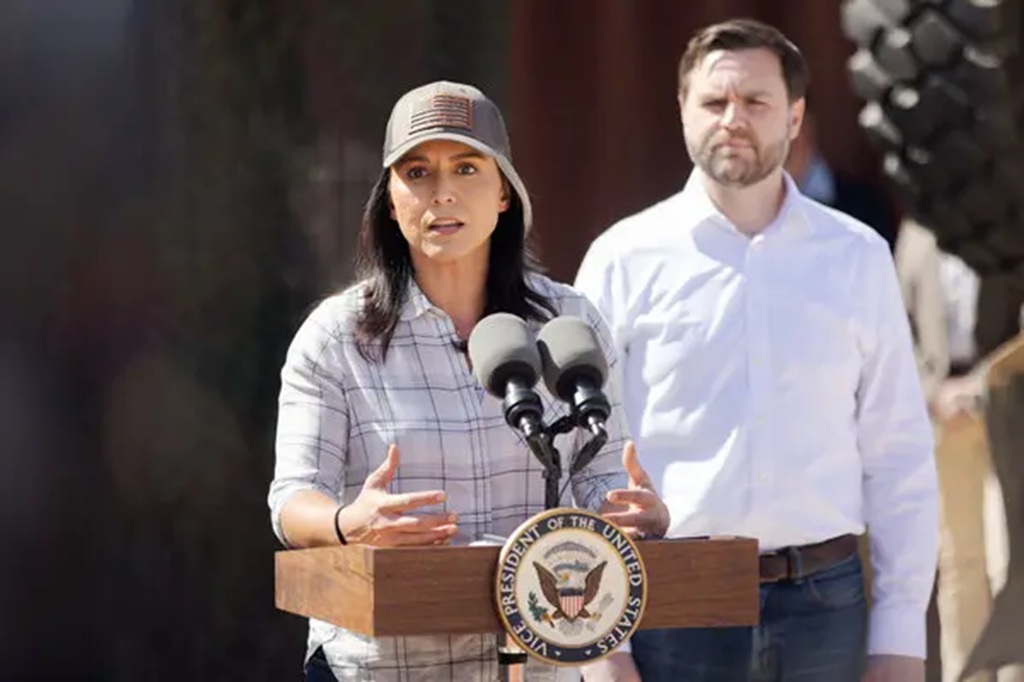
WASHINGTON, D.C. – Director of National Intelligence Tulsi Gabbard has started a far-reaching investigation into claims that U.S. tax dollars sent to Ukraine through USAID may have been secretly redirected to help President Joe Biden’s 2024 reelection campaign.
The review follows declassified intelligence intercepts from 2022 and has renewed concern about possible foreign interference, along with why the Biden administration did not fully pursue the matter at the time.
The issue came to light after newly declassified documents became public. Tulsi Gabbard’s office has now instructed USAID to search its records and decide whether the case should be referred to the FBI for possible criminal review. So far, officials say they have seen little sign that the allegations were seriously examined while Biden was in office.
What the Declassified Intelligence Says
Based on the declassified summary, U.S. intelligence captured communications involving Ukrainian government officials. Those talks reportedly focused on sending hundreds of millions of dollars, originally meant for clean energy and infrastructure work in Ukraine, back to the United States.
According to the report, the alleged plan used an infrastructure project as a cover. From there, as much as 90% of the money would be redirected to the Democratic National Committee and Biden’s 2024 campaign. USAID operations in Kyiv were named as a key route, and the planning allegedly involved both Ukrainian figures and some unnamed U.S. personnel.
Here are the main claims described in the intercepts:
- Hundreds of millions of dollars in USAID funds were allegedly considered for diversion.
- A clean energy project in Ukraine was reportedly used as the front.
- About 90% of the funds were allegedly meant for the DNC and Biden’s 2024 campaign.
- Ukrainian officials and USAID staff in Kyiv were said to be part of the discussions.
- The intercepts date to 2022, when U.S. aid to Ukraine was surging.
These details come from a declassified intelligence report obtained by Just the News. The report also drew attention from President Donald Trump, who shared related coverage online.
Why the Investigation Matters Now
Tulsi Gabbard, who was confirmed as DNI in early 2025, reportedly learned of the intercepts only recently. Her office says the communications do not appear to be tied to Russian disinformation. Even so, the claims raise serious concerns about foreign involvement in a U.S. election, a threat intelligence agencies have warned about for years.
Critics of the Biden administration say the bigger problem is the lack of action when the intercepts first surfaced. Because there appears to have been little follow-up, the case has fueled concerns about uneven oversight and possible conflicts of interest.
Supporters of the review say the issue is simple: accountability. The United States sent billions of dollars to Ukraine during its war with Russia. If any of that money was diverted for domestic political use, it would mark a major abuse of public funds.
USAID’s Role and the Larger Ukraine Aid Picture
USAID has been a central part of the U.S. civilian aid effort in Ukraine. That support has included help for energy systems, government functions, and economic stability. Since Russia’s full-scale invasion in 2022, the United States has committed hundreds of billions in total aid, including both military and civilian assistance.
A large share of civilian funding has gone toward keeping basic services running and helping Ukraine reduce its dependence on Russian energy. Clean energy projects fit within that mission. Still, tracking huge amounts of aid in an active war zone has always been hard.
Because of that complexity, the alleged plan would have been difficult to spot right away. By presenting the transfers as legitimate project funding, large sums could, in theory, move through contractors without immediate scrutiny.
What Investigators Are Looking For
Tulsi Gabbard’s order to USAID is broad and direct. Officials have been told to:
- Review internal records for signs that the plan went beyond talk
- Find out whether any funds were actually redirected
- Examine whether U.S. personnel played a role
- Recommend next steps, including a possible FBI referral
This goes well beyond a routine records check. It touches on election integrity, foreign aid oversight, and public trust in federal institutions.
At this stage, there is no public proof that the alleged scheme was carried out. The intercepts describe discussions and planning, not confirmed transfers. Because of that, investigators will need to track contracts, banking records, and communications from the period in question.
Political Reaction and Growing Fallout
The story has triggered a sharp political debate. Trump boosted the reporting on social media and pointed to it as another example of what he says are troubling Ukraine-related ties involving Biden and his allies.
On the other side, Democrats and some foreign policy analysts have urged caution. They point to Gabbard’s long-standing criticism of U.S. aid to Ukraine and warn against treating unverified intercepts as fact.
Still, even many skeptics agree on one point: any credible claim that foreign-linked money may have entered a U.S. campaign deserves serious review. Election interference, whether it comes from an adversary or a partner nation, damages public confidence.
Biden ultimately lost the 2024 race. If evidence later shows that foreign-connected funds shaped campaign spending or messaging, it could change how that election is remembered.
Wider Stakes for Foreign Aid and Election Security
The investigation also fits into a larger debate about how the United States manages aid overseas. Every year, billions of dollars move through agencies such as USAID. Taxpayers expect that money to reach the people and projects it was meant to support, not end up in campaign accounts.
At the same time, the case highlights weak points in election finance controls. Campaigns must report donors and spending, and foreign money is banned. A scheme built around layered international transfers could create a hidden path around those rules.
Transparency sits at the center of the issue. The Biden administration’s apparent failure to aggressively pursue the intercepts has raised new doubts. Some critics say the matter may have been brushed aside too quickly, while others want to know whether officials had reasons not to press harder.
Gabbard’s team says the inquiry is being handled as a fact-finding effort, not a political exercise.
What Comes Next
USAID now faces the job of gathering records and fully cooperating with the review. There is no clear timeline yet, and investigations involving intelligence can take months. If the findings support a criminal referral, the FBI could open a formal case.
Congress may also step in. Lawmakers in both parties have long shown interest in oversight of Ukraine aid, although partisan fights often slow that work.
For now, the public is watching closely. At a time when trust in major institutions is already weak, clear answers could help restore confidence. If agencies stall or withhold information, skepticism will only grow.
The investigation remains in its early phase. Gabbard has said her office will follow the evidence wherever it leads. The core issue is simple: Americans deserve to know whether their tax dollars stayed in Ukraine for energy and infrastructure support, or whether some of that money found its way into U.S. politics.
In the end, the case turns on records, intercepts, and the money trail. A full review will show whether the claims were just talk or something much more serious.
Trending News:
Marco Rubio Announces Sweeping Changes to American Foreign Policy


Is Ilhan Omar at Risk of Deportation? The Facts and U.S. Immigration Law

Marco Rubio Criticizes NATO Says Current Setup “Not a Very Good Arrangement”

Iran Rejects China’s Mediation Offer in Ongoing War with US and Israel

“No Kings” Protests Funded By American Communist in China

China’s Leading Chipmaker Faces Sanctions for Supplying Semiconductors to Iran’s Military

Vice President JD Vance Accuses Ilhan Omar of Immigration Fraud

Iran Blocks Chinese Container Ships from Entering the Strait of Hormuz

Tulsi Gabbard Opens Investigation into USAID 2024 Election Plot

Israeli Strike Kills Iran’s Navy Commander Alireza Tangsiri

New Cicada COVID Variant Emerges: What to Know About BA.3.2

Thai Billionaire Charged With Lese Majeste Over Facebook Post

Russia Bans Facebook, Meta Says It’ll Do “Everything” To Restore Service

Facebook Login Feature – Clash of Clans

4 Things you can do to take your Facebook Lead Generation to the Next Level

Zuckerberg to Allow Violent Speech on Russia After Facebook Blocked

Facebook Loses $200 Billion as Users Shift to TikTok

Downloading Facebook Videos Anonymously with High Quality Video through Snapsave app

The Best Site to Buy Real Facebook Likes and Followers in 2022

Chinese Man Arrested for Using Facebook to Dupe Cryptocurrency Investor

Google and Facebook Under Huge Pressure Over User Privacy

Senate Hearing on Fraud and Foreign Influence Turns Tense Over Minnesota Scandals

CNN Forced to Backtrack Its Reporting on Trump’s Iran Talks

Joe Rogan Slams Gavin Newsom for Mocking Nick Shirley

Mosque Set Ablaze in Iran a Citizens Revolt Against the Islamic Regime

AOC Accuses Jessie Watters of Fox News of Sexualizing and Harassing Her

JD Vance Exposes Walz’s Fraud and CNN’s Lies in White House Presser

Milestone Card Credit: How the Milestone MasterCard Can Transform Credit
-

 China2 months ago
China-Based Billionaire Singham Allegedly Funding America’s Radical Left
-

 Politics2 months ago
CNN Delivers Stark Reality Check to Democrats Over Voter ID
-

 Midterm Elections3 months ago
2026 Midterms Guide: Candidates, Key Issues, and Battleground States
-
 News3 months ago
Mosque Set Ablaze in Iran a Citizens Revolt Against the Islamic Regime
-

 Health3 months ago
RFK Jr Introduces the New Food Pyramid to “Make America Healthy Again”
-

 News3 months ago
Turning Point USA Under Scrutiny Over Alleged Shady Dealings
-

 Politics1 month ago
Ilhan Omar’s Connections to Convicted Somali Fraudsters Surface
-

 Entertainment3 months ago
Epstein Files Get Broken Down By Alex Jones and Nick Fuentes