
News
Washington D.C. Police Chief Resigns Amid Explosive Allegations of Falsified Crime Statistics

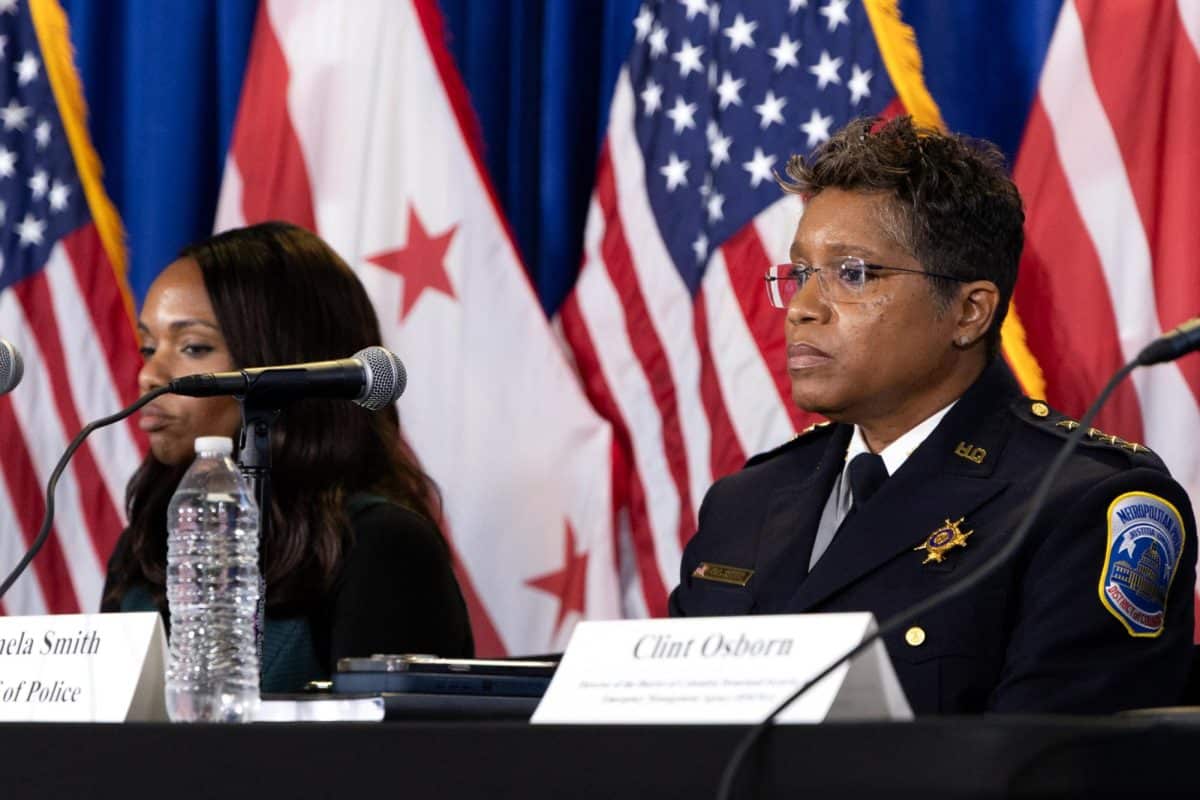
WASHINGTON, D.C. – Metropolitan Police Department (MPD) Chief Pamela A. Smith will resign effective December 31. Her exit comes days after a House Oversight Committee report said she led a broad push to alter crime data.
The report draws from testimony by MPD whistleblowers and commanders. It describes a leadership style focused on good headlines, not safer streets. It also claims the goal was simple: make crime look lower in a Democrat-run city that has struggled with public safety for years.
On December 14, the House Committee on Oversight and Government Reform, led by Rep. James Comer (R-KY), released an interim report titled “Leadership Breakdown: How D.C.’s Police Chief Undermined Crime Data Accuracy.” The report is based on transcribed interviews with commanders from all seven patrol districts, plus one former commander who was suspended.
The committee’s main conclusion is blunt. It says Smith “pressured and at times directed commanders to manipulate crime data in order to maintain the appearance of low crime in the nation’s capital.”
Commanders told investigators the department ran on “fear, intimidation, threats, and retaliation.” Several said they were punished when they reported real spikes in crime. One commander described being embarrassed in front of peers during briefings. Others said they were transferred or pushed aside when they refused to re-label serious incidents.
The report describes briefings where commanders were scolded so harshly that some felt blamed if they had committed the crimes themselves. Over time, that kind of pressure sends a clear message: protect the numbers or pay the price.
How Crimes Were Reclassified to Reduce the Public Count
The report also lays out examples of how crimes were allegedly downgraded. Commanders said assaults with dangerous weapons, including shootings where no one was hurt, were sometimes changed to lesser charges such as “endangerment with a firearm.” They also said burglaries could become “unlawful entry and theft.”
Those changes mattered because they could keep incidents out of daily public crime reports. That means residents might see “improvement” on paper while offenders still stay active on the street.
The committee report frames this as a top-down effort, not a few bad calls. It says Smith pushed “lowering publicly reported crime numbers over reducing actual crime,” and it describes “intense pressure” on commanders to produce low numbers “by any means necessary.”
Whistleblowers, Old Allegations, and a New Investigation
The Oversight investigation began in August 2025 after whistleblower claims and allegations that reached back years. The report also references a lawsuit tied to similar claims that was settled.
The issue gained more attention after President Trump declared a crime emergency and sent federal help, including the National Guard. The report’s findings give weight to those concerns and suggest the public didn’t get a straight picture of what was happening in D.C.
Chairman Comer summed up the committee’s view: “Testimony from experienced and courageous MPD commanders has exposed the truth: Chief Pamela Smith coerced staff to report artificially low crime data and cultivated a culture of fear to achieve her agenda.” He said her resignation was overdue and urged her to leave sooner.
Washington City Hall Pushback and Smith’s Denial
D.C. leaders defended Smith. Mayor Muriel Bowser praised her for what she called a sharp drop in crime tied to Smith’s leadership, and she treated the probe as politics.
Smith denied wrongdoing and said her departure was a personal choice, not linked to the report. Still, her December 8 announcement landed soon after committee interviews wrapped up, and that timing is hard to ignore.
Some news coverage focused on reported drops in violent crime (28% year-to-date, based on MPD data). The report warns that those figures could still be “at risk of manipulation” even after Smith, since crime classification can be bent if leadership allows it.
This is not just about stats. It’s about safety. When leaders push staff to “fix” the numbers, residents lose the truth they need to protect their families and neighborhoods. Visitors and tourists also lose a clear sense of risk in the nation’s capital.
Critics say the alleged cover-up protected soft-on-crime politics, from defund-the-police messaging to weak prosecution and revolving-door justice. When the public sees lower numbers, pressure for real change fades. That is the point, and it’s why the allegations are so serious.
The report also raises doubts about the story of a clean turnaround after the city’s recent crime spikes. Many still remember 2023, with a record 274 homicides and close to 1,000 carjackings. Those numbers drove reforms like the Secure D.C. Act. Now the report suggests later “declines” may have been boosted by re-labeling and selective reporting.
Commanders told the committee that federal support helped add resources. The report argues that the focus on optics pulled attention away from core policing and hurt morale. It also says experienced officers left while trust in leadership sank.
What Comes Next: Oversight, Transparency, and Leadership Changes
The committee recommends that Bowser appoint an independent chief who will commit to accurate reporting and end retaliation. A separate Justice Department review raised similar concerns. It described a “coercive culture of fear” that encouraged manipulation, though it did not go as far as criminal charges.
Comer said the stakes are simple: “Every single person who lives, works, or visits the District of Columbia deserves a safe city, yet it’s now clear the American people were deliberately kept in the dark.”
Smith’s resignation may close one chapter, but it doesn’t fix the underlying problem. If the allegations are true, the city needs more than a new name on the door. It needs a clean break from number-policing, real accountability for anyone who joined in, and a system that makes accurate reporting non-negotiable.
Interim chief Jeffery Carroll now steps into the spotlight. The department’s next moves will show whether D.C. chooses honest crime reporting and real public safety, or more political cover.
Trending News:
Minnesota Fraud Scandal EXPANDS, $10 Billion in Fraudulent Payments
Pressures Mount on Rep. Ilhan Omar Over Alleged Marriage to Brother

TERRAN, Iran, On March 20, 2026, anger spread around the world after Iranian authorities publicly hanged three young men, including a 19-year-old wrestling prospect, over their alleged involvement in anti-government protests in January. Critics say the executions sent a blunt message: oppose the state, and risk death.
These were the first known hangings linked to the nationwide protests that broke out late last year. Rights groups quickly denounced the move, calling it a clear breach of fair trial rules and a sign that the Islamic Republic is relying more heavily on fear.
Iranian state outlets, including the judiciary-linked Mizan news agency, said the hangings took place on March 19 in Qom, south of Tehran. The three men, Saleh Mohammadi, Mehdi Ghasemi, and Saeed Davoudi, had been convicted of “moharebeh,” or waging war against God, which carries the death penalty under sharia law.
Officials said the men killed two police officers during clashes in Qom on January 8. State media also accused them of carrying out “operational actions” on behalf of Israel and the United States. According to official reports, the executions happened in front of a group of people, which led many observers to describe them as a public warning.
Human rights groups have offered a far darker account. They say the men were tortured into confessing, denied proper legal help, and pushed through rushed court proceedings with little or no due process.
Saleh Mohammadi’s Case Draws Global Attention
Saleh Mohammadi’s execution has sparked the strongest reaction abroad. The teenager had turned 19 only days before his death. He was part of Iran’s national wrestling team and won a bronze medal at the 2024 Saitiev Cup in Russia. He had competed outside Iran and was seen as a rising talent in the country’s wrestling scene.
Relatives and friends say Mohammadi rejected the charges in court and said his confession had been forced. Amnesty International had already raised alarm about his case, saying the fast-track process looked nothing like a real trial.
The other two men, Mehdi Ghasemi and Saeed Davoudi, were also young protesters arrested during the same unrest. Less is publicly known about their personal backgrounds, but authorities tied all three to the deadly confrontations in Qom.
How the January Protests Spread Across Iran
The case grew out of protests that began in late December 2025, after living costs soared and the national currency plunged. At first, people took to the streets over economic pain. Soon, the demonstrations turned political and spread to 180 cities in all 31 provinces by early January 2026.
Protesters called for major change, creating one of the most serious challenges to the clerical system since the 1979 Islamic Revolution. Security forces answered with deadly force. The U.S.-based Human Rights Activists News Agency, HRANA, says more than 7,000 people were killed, most of them protesters, including children. Iranian officials put the toll at more than 3,000, including members of the security forces.
At the same time, internet shutdowns and communication blackouts made it hard to record the crackdown as it happened. Rights groups now warn that many more detainees are facing capital charges tied to the uprising.
Governments, Athletes, and Rights Groups Speak Out
Reaction from abroad came quickly and sharply:
- Amnesty International said the trials were a sham and called for an urgent inquiry into reports of torture.
- Iran Human Rights, based in Norway, warned that more executions could follow and said the state is using fear because it sees its own people as the biggest threat to its rule.
- White House spokesperson Olivia Wales called Iran a “terrorist regime” and said the killings showed why current U.S. military action against Iran remains necessary.
- Olympians and athletes around the world expressed support for Mohammadi and said the regime is even targeting young sports figures.
- The European Union and Sweden issued strong condemnations, especially after Iran separately executed a dual Iranian-Swedish citizen one day earlier.
Activists, including Iranian-American campaigner Masih Alinejad, pushed the issue across social media and urged governments to impose tougher sanctions and back Iranian protesters.
Now, many countries are calling for urgent steps to stop more hangings. Reports say dozens of other protesters remain on death row.
Iranian officials have defended the executions. Judiciary chief Gholamhossein Mohseni Ejei said there would be “no leniency” for anyone convicted of violent acts during the protests. Meanwhile, state media described the men as terrorists acting under foreign influence.
The executions also come during Iran’s war with Israel and the United States. Strikes in late February killed Supreme Leader Ayatollah Ali Khamenei, deepening the regional crisis. Since then, officials have blamed the January unrest on what they call terrorist activity backed by Washington and Tel Aviv.
Warnings of More Executions Ahead
Rights groups fear these hangings may be only the start. Iran Human Rights said it is deeply worried about political prisoners who could be executed in the “shadow of war.” Hundreds of cases are still pending.
At the same time, activists are raising concerns about other detained athletes. They fear the authorities may go after more sports figures because those athletes carry public appeal and can become symbols of resistance.
Iran already ranks second only to China in the number of executions carried out each year. Last year alone, the country reportedly carried out at least 1,500 hangings. Earlier crackdowns, including the protests of 2022 and 2023 and the 2025 conflict with Israel, also ended with dozens of executions.
What the Hangings Could Mean for Iran and the World
Analysts say the public nature of these executions shows Tehran’s approach clearly. The state appears determined to frighten anyone thinking about joining the opposition. During war and economic collapse, the government seems set on projecting control through fear.
Still, the move has drawn even stronger backlash abroad. Calls for harsher sanctions, diplomatic pressure, and more support for Iranian dissidents are growing louder. Human rights groups are pressing the United Nations and Western governments to act before more young prisoners are killed.
For many people, Saleh Mohammadi now stands as the face of this crackdown. The teenage wrestler, whose future ended at the gallows, has become a symbol of a wider campaign of repression. His international profile has also pushed more of the world to pay attention.
As anger keeps building, one demand is coming through clearly from capitals across the globe: Iran must stop the executions. The world is watching.
Trending News:
Trump’s Kharg Island Strike Cuts Iran’s Oil Fear Premium
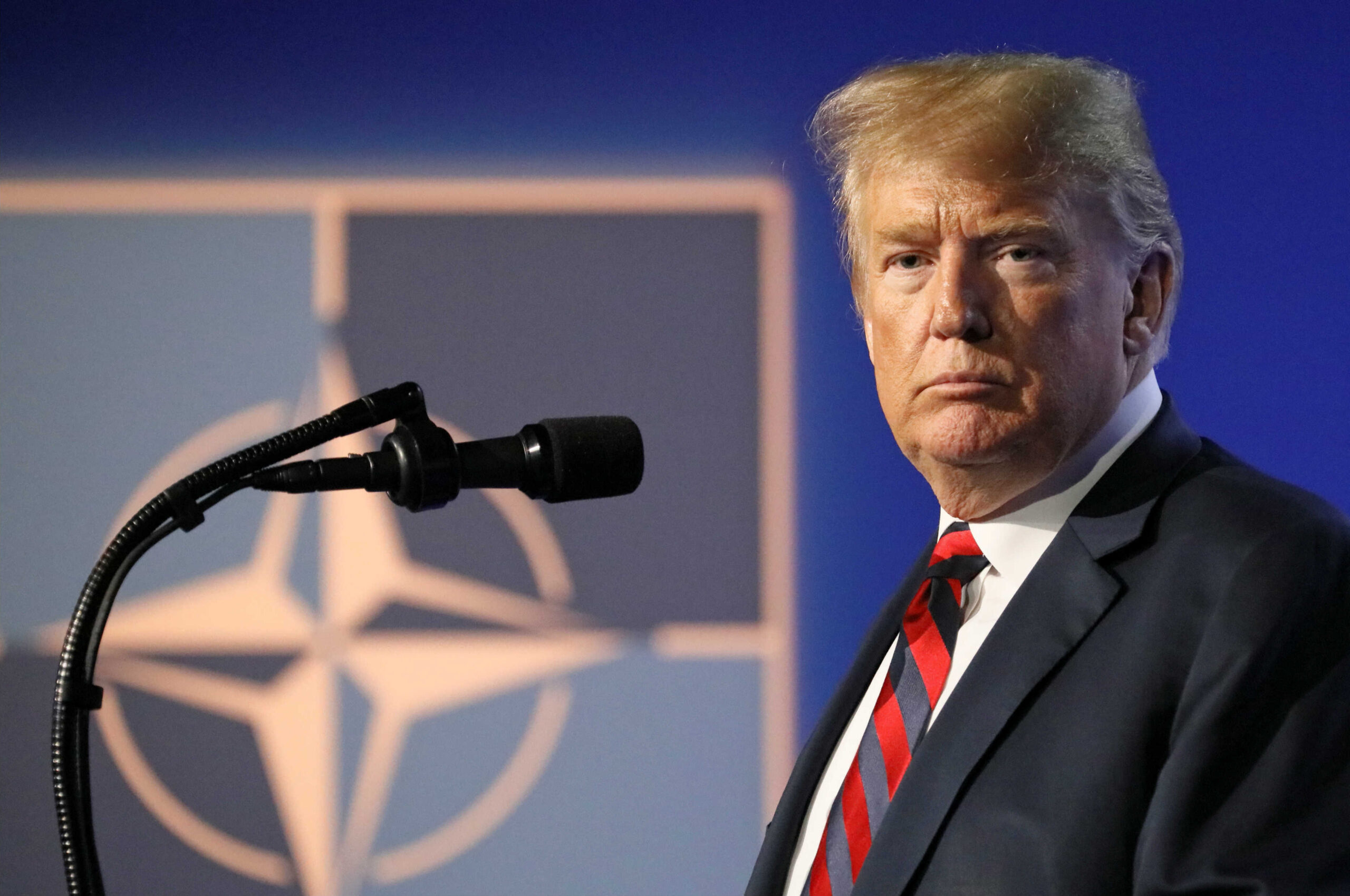
WASHINGTON, D.C. – President Donald Trump is seriously weighing a U.S. withdrawal from NATO after European allies rejected his request to help protect shipping in the Strait of Hormuz. If that happens, it could end America’s 75-year role in the world’s strongest military alliance.
For months, Trump has pushed NATO members to carry more of the defense load. Now, their refusal during a major crisis appears to have pushed him to the edge. “This was a great test,” he said, arguing that America’s allies failed it.
The dispute comes as the United States and Israel remain at war with Iran, a conflict that began in late February 2026. In response, Iran closed the Strait of Hormuz. That narrow passage handles about one-fifth of the world’s oil. Its shutdown has driven up global energy prices and raised fresh fears about supply chains.
Trump’s Long Campaign to Pressure NATO
Trump’s anger with NATO didn’t start with this crisis. Since returning to the office in January 2025, he has repeatedly challenged the alliance’s value. He has also demanded that member states spend at least 2 percent of GDP on defense, a mark many still have not reached.
In recent months, he stepped up those loyalty tests. He attacked allied support levels in Afghanistan and Ukraine. “We’ve been very sweet,” Trump told the Financial Times. “We didn’t have to help them with Ukraine… Now we’ll see if they help us.”
Then came the Hormuz standoff, which appears to have become the tipping point. Trump asked NATO countries to send warships, minesweepers, and naval escorts. He presented the request as a modest return for decades of U.S. protection.
Why the Strait of Hormuz Matters
The Strait of Hormuz lies between Iran and Oman. Oil tankers cross it every day, carrying crude from the Persian Gulf to world markets. After U.S. and Israeli strikes, Iran used mines, drones, and speedboats to block the route.
As a result, oil prices climbed fast. Europe and Asia felt the shock first. Trump called on “countries that receive oil through the Hormuz Strait” to join the effort to reopen it. He also reached out to China and other nations outside the alliance.
“We have had such Military Success,” Trump wrote on Truth Social. “We no longer ‘need,’ or desire, the NATO Countries’ assistance — WE NEVER DID!”
Still, he made clear that the refusal could damage NATO itself. “If there’s no response or if it’s a negative response, I think it will be very bad for the future of NATO.”
European Allies Say No
European governments pushed back hard. Many described the fighting as “Trump’s war,” not a NATO mission. Here’s how key allies responded:
- Germany: A spokesman for Chancellor Friedrich Merz said, “This war has nothing to do with NATO. It is not NATO’s war.” Defense Minister Boris Pistorius added, “What does Trump expect a handful of European frigates to do… This is not our war; we have not started it.”
- France: French officials showed no sign they would send ships. Earlier, President Emmanuel Macron had called the Iran strikes “illegal.”
- United Kingdom: Prime Minister Keir Starmer said Britain would not be “drawn into a wider war.” Trump had already brushed off any British carrier support.
- Other NATO members: Italy, Luxembourg, and several others took the same line. EU foreign policy chief Kaja Kallas said the strait falls “out of NATO’s area of action” and added that there was “no appetite” for involvement.
Luxembourg’s Xavier Bettel called Trump’s demand “blackmail.” Retired British Gen. Nick Carter said the request was ironic because NATO is a defensive alliance, not a tool for “wars of choice.”
Only a few smaller member states showed limited openness. Most did not budge.
Trump Hits Back, Calls NATO a “One-Way Street”
Trump responded angrily from the Oval Office. “All of the NATO allies agreed with us, but they don’t want to help us, which is amazing.” He described NATO as a “one-way street,” saying the United States spends hundreds of billions defending others and gets little back.
When reporters asked whether he might reconsider U.S. membership, Trump said, “It’s certainly something that we should think about. I don’t need Congress for that decision.” He added that he had “nothing currently in mind” but was “not exactly thrilled.”
Legal experts point to a 2023 law that requires Senate approval for a NATO withdrawal. Trump says he could get around that through a legal loophole.
Sen. Lindsey Graham, one of Trump’s closest allies, echoed the mood. After speaking with the president, he wrote, “Never heard him so angry in my life.”
Why This Could Matter Worldwide
A U.S. exit from NATO would shake global security. The alliance was created after World War II to counter Soviet power. Today, it includes 32 members. Without the United States, Europe’s defense posture against Russia could weaken sharply.
Meanwhile, energy markets are already under strain. Oil prices rose after the blockade, and those higher costs are spreading to consumers. Europe now faces the risk of tighter energy supplies and more inflation.
The crisis also puts pressure on support for Ukraine. Europe has relied heavily on U.S. backing there. At the same time, Trump’s focus on Iran, along with sanctions waivers for Russian oil, has made the picture even more complicated.
Military Risks and Political Fallout
Retired military leaders warn that escorting tankers through the strait would be dangerous. Mines and Iranian attacks make the route risky, even for the U.S. Navy.
Analysts say the dispute cuts to the heart of NATO’s purpose. As Gen. Carter put it, “NATO was created as a defensive alliance.” It was never meant to let one member launch a conflict and then expect everyone else to join in.
Some European officials are worried in private. They fear losing U.S. protection while Russia watches closely. Others say the moment confirms that Trump puts “America First” above long-term alliances.
Trump insists the United States can reopen the Strait on its own. “We do not need the help of anyone,” he said. Even so, his repeated requests for support show how much pressure the situation has created.
What Comes Next
The White House has said little about its next move. Trump could answer allied resistance with tariffs or cuts in aid. Congress, however, may challenge any serious attempt to pull the U.S. out of NATO.
For now, the Hormuz blockade remains in place. American forces are operating without allied backing, and oil tankers are still steering clear.
This crisis may mark a major turning point. Trump’s long effort to test NATO loyalty has reached its peak, and Europe’s refusal could drive the biggest shift in transatlantic ties since 1949.
The alliance that helped win the Cold War is now facing one of its hardest tests, and this time, the threat is coming from inside.
Related News:
Allies Abandoning US Over Iran Sparks Fears of Trump Dumping NATO
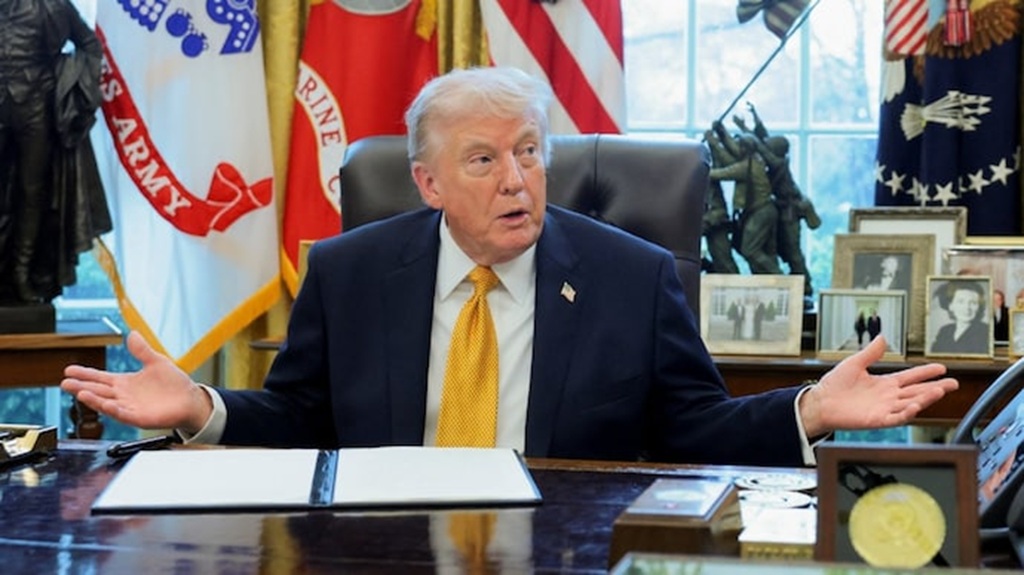
WASHINGTON, D, C. – President Donald Trump took aim at US allies on Tuesday after they refused to join US defensive moves tied to Iran. He said the United States no longer needs their backing after years of carrying most of the alliance’s defense costs.
Speaking from the Oval Office, Trump said the US covers about 62 to 70 percent of NATO’s total defense spending, roughly $980 billion in 2025 alone. He called the allies’ refusal a “very foolish mistake” and framed it as a loyalty test that showed who stands with America in a crisis.
His remarks quickly stirred alarm in Washington and across Europe. Lawmakers and foreign policy analysts now say Trump could move closer to pulling the US out of NATO. At the same time, the White House is pushing ahead with a new group, the “Board of Peace,” which many see as a step away from the 77-year-old alliance and other long-standing global institutions.
Trump Criticizes Allies: “They Don’t Want to Get Involved”
Trump made the comments during a media appearance centered on US operations in the Middle East. He said most NATO members told American officials they would not take part in strikes or naval efforts tied to securing the Strait of Hormuz.
“I think NATO is making a very foolish mistake,” Trump said. “Everyone agrees with us on Iran, but they don’t want to help. We no longer ‘need,’ or desire, the NATO countries’ assistance.”
He then added, “I’ve long said I wonder whether or not NATO would ever be there for us. So this was a great test.”
The moment comes with tensions already running high. US forces are leading defensive strikes on Iranian targets under Operation Epic Fury. NATO allies offered diplomatic support, yet they stopped short of military action because of domestic pressure and fears of a wider conflict.
The US Share of NATO Spending: A Long-Running Complaint
Trump again pointed to what he sees as an unfair financial split inside NATO. Recent alliance figures support the broad point he has made for years.
Here are the numbers he highlighted:
- The United States spent an estimated $980 billion on defense in 2025.
- That accounts for about 62 percent of NATO’s total combined spending, around $1.59 trillion.
- Some estimates place the US share closer to 70 percent when nuclear deterrence and global logistics are included.
- The rest of NATO spent far less, with the United Kingdom next at $90.5 billion.
- All 32 members reached the 2 percent of GDP target in 2025, but the US is still far outspending every other ally at 3.2 percent of GDP.
Trump has long said this gap makes NATO a poor deal for American taxpayers. On Tuesday, he tied that argument directly to the Iran standoff, saying the burden is even harder to justify when allies refuse to act.
Refusal to Help Fuels Fears of a US Break From NATO
European leaders moved fast to contain the fallout. Germany, France, and the United Kingdom released statements supporting US leadership, but none promised troops or ships. One senior NATO diplomat, speaking privately, told reporters, “No one wants to get dragged into another Middle East war.”
That response only added to the sense that relations may be nearing a breaking point. Trump has threatened to leave NATO before, and now some officials believe he may try to act. Congress passed a law in 2023 requiring its approval for any formal withdrawal. Still, legal experts say a president determined to test that limit could create a major crisis by cutting troop levels in Europe or refusing to honor Article 5.
Some former Trump officials say the Iran dispute struck a personal nerve. One insider put it this way: “This was the moment allies were supposed to step up. Instead, they left America holding the bag again.”
What a US Exit From NATO Could Mean
A full US withdrawal is no longer treated as just a theory. For years, think tanks and military planners have studied what could happen if America walked away.
Here is what many of those assessments suggest:
- Europe would face an immediate security gap: Without US forces, bases, and nuclear protection, Russia could test NATO’s eastern edge. Countries like Poland and the Baltic states already fear hybrid attacks or worse.
- Nuclear deterrence would weaken: Britain and France have nuclear weapons, but many experts say they cannot fully replace the American shield. Some scenarios show renewed debate over nuclear arms across Europe.
- The US would lose access and reach: America depends on European ports, airfields, and intelligence links. Without them, projecting force into the Middle East and Africa would get harder and more costly.
- Russia and China could benefit: Moscow might push harder in Ukraine or elsewhere. Beijing could use the split to press its own interests in Asia. Some war games predict a Russian move against NATO territory within three years.
- Europe would spend more, but not fast enough: Non-US NATO members have raised spending to about 2.3 percent of GDP. Even if they climbed to 3 or 4 percent, they would still lack many US capabilities, including airlift, satellites, and heavy armor.
- Washington would face legal and political turmoil: Courts would likely weigh in on presidential power, while Congress could try to block funding or force a showdown.
- One-on-one security deals could replace the alliance model: Trump could favor direct pacts with countries like Poland or the UK while pushing others aside. That would fit the more transactional style he has often preferred.
- Economic effects could spread quickly: Supply chains could take a hit, oil prices could jump if threats around the Strait of Hormuz grow, and a more divided Europe could trigger new sanctions fights.
In short, NATO might still exist without the United States, but it would look much weaker. Europe would face more risk, while the US might save money in the short term but lose influence over time.
Trump’s “Board of Peace” Signals a Different Path
While criticizing NATO, Trump is also building what he presents as an alternative. His new Board of Peace held its first major meeting in February 2026. Under its charter, Trump serves as chairman for life.
The group is described as a lean, deal-focused body built around practical outcomes, starting with Gaza reconstruction. It has already secured $5 billion in pledges. Unlike NATO or the United Nations, membership requires major financial commitments and follows America’s priorities.
Supporters point to several key differences:
- Trump has permanent control.
- The group centers on peace through strength and economic pressure, not long committees.
- It includes select partners, even some outside the usual Western circle, while leaving out reluctant European allies.
- It addresses global flashpoints like Gaza without using NATO-style collective defense rules such as Article 5.
People close to the administration describe the Board of Peace as Trump’s long-term answer to what they see as outdated global structures. One adviser summed it up this way: “NATO was useful in the Cold War. The Board of Peace is built for today’s world.”
Part of Trump’s Broader Fight Against Global Institutions
The clash over Iran fits into Trump’s larger battle with what he calls the “globalist elite.” For years, he has argued that organizations like NATO, the UN, and the World Economic Forum put outside interests ahead of US priorities.
His message has stayed the same: Allies should pay more, or America should step back. In his view, the Iran dispute proves the point. He says Europe’s hesitation was not just about one conflict. He sees it as more proof that allies still resist sharing real risk and real cost.
Critics say that the approach could leave America isolated. Supporters argue it finally puts “America First” into practice.
Democrats, along with some Republicans, warn that abandoning NATO would hand a strategic win to Russia and China. Trump argues the current system already weakens the US by asking it to do too much for too many.
What Happens Next
The White House has not announced any formal move to leave NATO. Even so, Trump’s team is reviewing US troop levels in Europe. At the same time, staff tied to the Board of Peace are expanding contacts in Asia and the Middle East.
European leaders are set to hold emergency NATO meetings next week. Several governments have also started quiet bilateral talks with Washington to protect their own interests if tensions grow.
For now, one point stands out. Trump’s patience with allies he sees as free-riders appears to be gone. The Iran dispute showed exactly where each side stands. Whether that leads to a full US break from NATO, or a reshaped security order built around the Board of Peace, may become the biggest foreign policy story of 2026.
American voters are paying close attention. After years of hearing complaints about unfair deals, many now say they want change. The next few weeks may show whether Trump’s sharp words turn into a historic shift.
Related News:
Carney and Starme’s Iran U-Turn Betrays Their Closest Ally
Trump Slams UK’s Starmer Over Too-Late Aircraft Carrier Offer
Trump Announces U.S. Forces Totally Obliterated Iran’s Kharg Island


Global Outrage Explodes as Iran Publicly Hangs Teen Wrestling Star

Republicans Gain Ground in California While Businesses Flee Blue States

Chuck Norris Dies at 86, Family Withholds Official Cause

CNN Reveals Says Trump Has a Perfect 100% Approval Rating Among MAGA Voters

CNN Shows Shocking 2028 Polling Numbers for Marco Rubio

Trump Eyes Historic NATO Exit as Allies Prove Their Disloyalty

Trump’s Kharg Island Strike Cuts Iran’s Oil Fear Premium

Allies Abandoning US Over Iran Sparks Fears of Trump Dumping NATO

Karoline Leavitt Slams Joe Kent’s Resignation Letter Says Many False Claims Made

Jasmine Crockett Security Guard Killed by Dallas S.W.A.T.

Thai Billionaire Charged With Lese Majeste Over Facebook Post

Russia Bans Facebook, Meta Says It’ll Do “Everything” To Restore Service

Facebook Login Feature – Clash of Clans

4 Things you can do to take your Facebook Lead Generation to the Next Level

Zuckerberg to Allow Violent Speech on Russia After Facebook Blocked

Facebook Loses $200 Billion as Users Shift to TikTok

Downloading Facebook Videos Anonymously with High Quality Video through Snapsave app

The Best Site to Buy Real Facebook Likes and Followers in 2022

Chinese Man Arrested for Using Facebook to Dupe Cryptocurrency Investor

Google and Facebook Under Huge Pressure Over User Privacy

Mosque Set Ablaze in Iran a Citizens Revolt Against the Islamic Regime

AOC Accuses Jessie Watters of Fox News of Sexualizing and Harassing Her

JD Vance Exposes Walz’s Fraud and CNN’s Lies in White House Presser

Milestone Card Credit: How the Milestone MasterCard Can Transform Credit
-

 Crime3 months ago
YouTuber Nick Shirley Exposes BILLIONS of Somali Fraud, Video Goes VIRAL
-

 China2 months ago
China-Based Billionaire Singham Allegedly Funding America’s Radical Left
-

 Politics3 months ago
Ilhan Omar Faces Renewed Firestorm Over Resurfaced Video
-

 Politics1 month ago
CNN Delivers Stark Reality Check to Democrats Over Voter ID
-

 Business3 months ago
Tech Giant Oracle Abandons California After 43 Years
-

 Midterm Elections3 months ago
2026 Midterms Guide: Candidates, Key Issues, and Battleground States
-
 News2 months ago
Mosque Set Ablaze in Iran a Citizens Revolt Against the Islamic Regime
-

 Politics3 months ago
Accusations Fly Over Alleged Zionist Takeover of (TPUSA) Turning Point USA