


Politics
Democrats Push Back on Sen. Marsha Blackburn’s Fraud Accountability Act
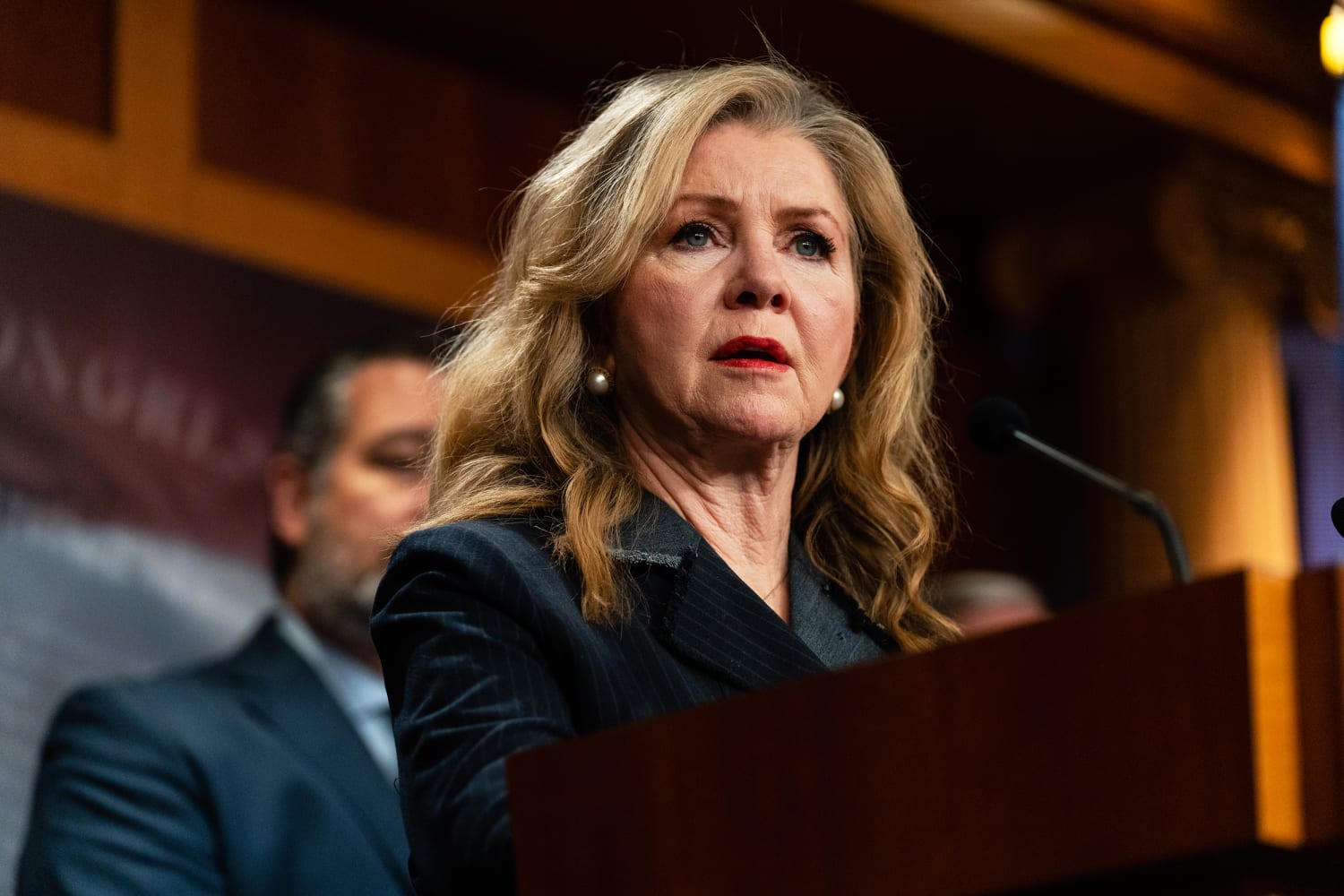
WASHINGTON, D.C. – The first weeks of the 119th Congress are Democrats bringing a new fight, this time over immigration enforcement and how the federal government protects taxpayer dollars. Sen. Marsha Blackburn (R-Tenn.), joined by several Republican senators, has introduced the Fraud Accountability Act, a bicameral proposal that would tighten immigration penalties tied to fraud in federal programs.
The bill would treat fraud convictions as clearly deportable offenses under the Immigration and Nationality Act (INA). It would also allow the federal government to revoke naturalized citizenship for people convicted of fraud or other deportable crimes.
The push comes as federal investigators continue to unravel an alleged fraud network in Minnesota. Prosecutors say the losses could top $9 billion, tied to operations that presented themselves as child care centers, food programs, and health clinics. Reports have also pointed to involvement from parts of Minnesota’s Somali community, which has added fuel to Republican claims that oversight has been weak for years.
What the Fraud Accountability Act Would Do, and Why Republicans Say It’s Needed
Blackburn introduced the bill in early January 2026 with Sens. John Cornyn (R-Texas), Tom Cotton (R-Ark.), and Ted Budd (R-N.C.). The Fraud Accountability Act would update the long-standing INA by adding fraud, including fraud aimed at government programs, private people, or businesses, to the list of deportable offenses.
Supporters say the goal is simple: deter abuse, protect taxpayer funds, and make clear that immigration benefits come with obligations. Blackburn has framed the issue in blunt terms. In a press release, she said people who come to the United States and steal from taxpayers through fraud should be deported.
She has also linked the bill directly to the Minnesota fraud scandal, pointing to Trump administration actions tied to ongoing investigations. That includes freezing over $10 billion in federal grants to states under fraud review, including Minnesota, California, Colorado, Illinois, and New York.
Republicans also argue the bill responds to policy choices that they believe opened the door to abuse. They often cite a 2024 move to drop attendance verification requirements tied to child care funding. Blackburn has described the Minnesota case as a betrayal of taxpayers, pointing to allegations that empty or barely operating sites still collected millions in federal dollars.
In the House, a matching bill is led by Rep. Earl “Buddy” Carter (R-Ga.). The effort has also drawn backing from immigration enforcement groups, including NumbersUSA.
Democrats’ Response, and Why They Say the Bill Goes Too Far
Democrats have moved quickly to criticize the proposal. They describe it as too harsh, vulnerable to misuse, and aimed more at politics than policy. No major Democratic replacement bill has been introduced yet. Still, party leaders and progressive groups have pushed back on the idea of making deportation and denaturalization a central tool for dealing with fraud.
A common Democratic argument is that fraud should be punished, but the solution should focus on stronger safeguards across federal programs, no matter who commits the crime. They say the bill puts a heavy focus on immigration consequences while skipping broader steps that could prevent fraud in the first place.
Some Democrats also warn that the messaging around the Minnesota case has been reckless. They point to public references that use phrases like “Somali scammers,” and say that kind of language can stir anti-immigrant anger and paint entire communities with a broad brush.
They argue Minnesota’s alleged fraud points to deeper problems in how programs are managed and monitored, and they blame years of weak controls from both parties. They also say oversight offices have not had enough funding or staff to keep up.
Blackburn, for her part, has accused Democrats of ignoring fraud concerns for years, including during the Biden era. A Fox News segment highlighted “pushback from Democrats” against the bill and suggested it may face steep resistance in a closely divided Senate.
Immigration reform advocates aligned with Democrats have called for a more balanced approach, one that improves program integrity without widening the grounds for deportation or opening the door to more citizenship revocations, which they view as extreme.
The fight fits a familiar pattern in the early Trump administration era. Even when both parties agree fraud is a problem, they clash over whether immigration penalties should be central to the solution.
What This Could Mean in 2026
The Fraud Accountability Act is now waiting for committee action, and its path forward is unclear. Immigration votes are still tough, and bipartisan deals remain rare. Supporters may try to attach the bill to a larger must-pass package. Opponents are signaling they’re ready for a long debate.
The proposal has sparked a wider discussion about how Washington handles federal spending fraud, whether white-collar crimes should trigger stronger immigration penalties, and how enforcement debates intersect with national origin and community trust.
With the Minnesota investigation still unfolding, and with probes underway in other states, the Fraud Accountability Act may become a major test of how this Congress plans to talk about taxpayer protection and border security at the same time.
Related News:
Mainstream Media and Democrats Pivot on Portland Shooting Amid DHS Revelations
Politics
Hillary Clinton Calls for Transparency Wants Televised Congressional Hearing
WASHINGTON, D.C. – In a sharp twist in the House investigation into Jeffrey Epstein’s sex-trafficking network, former Secretary of State Hillary Clinton is calling for her testimony, and that of her husband, former President Bill Clinton, to happen in a public, televised hearing.
She says it shouldn’t take place in a closed-door setting.
Her demand comes only days after the Clintons agreed to sit for depositions with the House Oversight Committee, a move that helped them avoid a possible contempt of Congress vote.
On February 5, 2026, Hillary Clinton posted on X and directly challenged Rep. James Comer (R-KY), who leads the House Oversight and Government Reform Committee. She wrote: “Let’s stop the games. If you want this fight, @RepJamesComer, let’s have it, in public.
You love to talk about transparency. There’s nothing more transparent than a public hearing, cameras on. We will be there.” The message landed hard because it contrasted with the Clintons’ earlier stance. When the committee issued subpoenas in August 2025, they pushed back and fought them.
What the Committee Is Investigating
The House Oversight Committee’s Epstein probe has looked at Epstein’s ties to powerful people and how the government handled related cases. Lawmakers have been reviewing items like flight logs, visitor records from Epstein’s properties, and actions taken by officials across multiple administrations.
The focus has stayed on who knew what, when they knew it, and whether opportunities to act were missed.
Comer’s committee subpoenaed both Clintons last summer. The subpoenas were part of a larger sweep that also targeted former attorneys general, FBI directors, and records tied to the Department of Justice.
The committee wants answers about any knowledge of Epstein’s conduct. Bill Clinton’s connection has drawn attention because he is documented as having taken flights on Epstein’s private jet and had a social relationship with Epstein before Epstein died in federal custody in 2019.
At first, the Clintons challenged the subpoenas. They argued the requests lacked a real legislative purpose and were driven by politics. The conflict escalated in January 2026, when the committee advanced steps toward holding both Clintons in contempt of Congress. That effort had some bipartisan support, including votes from a few Democrats. A contempt vote could have sent the issue to the Justice Department for possible prosecution.
On February 2, the Clintons changed course. Their attorneys told Comer they would comply. Hillary Clinton’s deposition is set for February 26, and Bill Clinton’s is scheduled for February 27. Both sessions are expected to be transcribed and video-recorded, but held privately.
Why Comer Wants Closed-Door Depositions
Comer has said private depositions are routine in investigations like this. He argues they allow detailed questioning without the pressure of live coverage. He has also left the door open to a public hearing later if the depositions justify it.
He has framed the approach as a way to deliver “transparency and accountability” while keeping the process controlled, especially when sensitive information could come up.
Clinton Tries to Flip the Script
By demanding an open hearing, Hillary Clinton is trying to reset the story. She is casting the Clintons as willing to show up on camera, while suggesting Republicans are only “pro-transparency” when it suits them.
Her criticism echoes what many Democrats have been saying. They question why the committee is putting so much attention on the Clintons, while other well-known people connected to Epstein, across both parties, have not faced the same level of focus in this specific House probe.
The Politics Around Epstein Still Burn Hot
Epstein’s case remains explosive. In recent years, unsealed court filings have described parts of his network and included the names of prominent figures. Still, for many of those people, the documents have not led to new criminal charges.
Ghislaine Maxwell, Epstein’s convicted associate, is still serving her sentence. At the same time, public anger continues over why more cases were not brought, and why the system seemed to stall for so long.
Supporters of the Clintons say the subpoenas look like a partisan hit job under a Republican-led House. Critics, including some conservatives, say a public hearing is the best way to test the Clintons’ statements about their Epstein ties and expose any gaps or contradictions.
Comer’s allies have pushed back on Clinton’s demand. They describe it as a way to turn the process into a media spectacle. Some Republicans on the committee argue private sessions help protect sensitive details while still creating a full record.
What Happens Next
With the February deposition dates close, the fight over format could grow louder. If Comer keeps the depositions private, the Clintons may still appear as planned while continuing to call for cameras. If either side backs out, the threat of contempt could return, though the recent agreement makes that less likely.
The Epstein investigation has already produced document releases and witness interviews. So far, it has not produced major new public findings beyond what has surfaced through civil lawsuits and reporting.
For now, Hillary Clinton’s demand has added fresh tension to an already charged debate, and it puts a spotlight on what Congress means when it says “transparency.”
Related News:
Democrats Join Republicans to Advance Contempt Resolution Against Bill Clinton
Politics
CNN Delivers Stark Reality Check to Democrats Over Voter ID
CNN Polling Numbers Clash With “Jim Crow” Claims in the SAVE Act Fight
WASHINGTON, D.C – CNN chief data analyst Harry Enten laid out polling this week that challenges Senate Minority Leader Chuck Schumer’s claim that strict voter ID rules amount to modern “Jim Crow” policy.
The discussion aired as Congress argues over the Safeguard American Voter Eligibility (SAVE) Act. Enten’s numbers point to broad public support for photo ID at the polls, and that support holds across race, ethnicity, and party.
The SAVE Act has cleared the House and now sits at the center of Senate talks. The bill would require proof of U.S. citizenship when registering to vote in federal elections. It would also strengthen photo ID requirements in many places.
Republicans say the bill is about election integrity and stopping non-citizen voting. Schumer and other Democrats say it would block eligible voters, hitting minority communities and low-income voters hardest, especially people who may not have easy access to ID documents.
Schumer’s “Jim Crow” Warning
Speaking on the Senate floor, Schumer said he would oppose any package that includes the SAVE Act. He called it “Jim Crow type laws” pushed nationwide and described it as a “poison pill” that could blow up bipartisan deals. He framed Democratic resistance as a stand against voter suppression.
Enten’s Take: The Public Is Mostly On Board
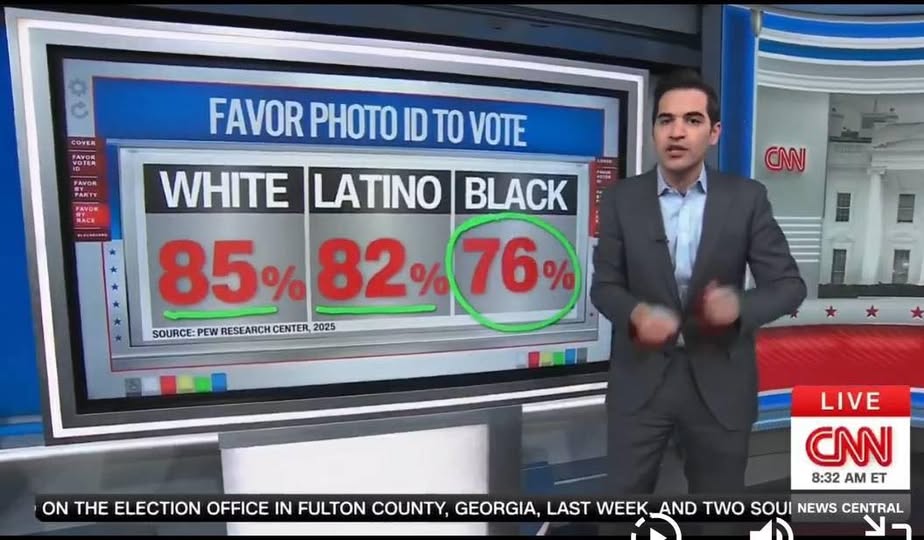
Enten pointed to recent Pew Research Center polling that CNN has used in its coverage. The top-line number was clear: 83% of Americans support requiring a photo ID to vote. He noted that support has stayed high for years, sitting around the mid-70s since 2018 and rising to the current level.
Party Numbers Show Rare Agreement
Enten also broke down support by party, and it wasn’t the sharp split many expected on election policy.
- 95% of Republicans support photo ID requirements.
- 71% of Democrats support them.
Talking with anchor John Berman, Enten said this kind of overlap is unusual on a political issue that gets so much attention. His point was simple: the gap exists, but the common ground is bigger than many assume.
Support Holds Across Racial and Ethnic Groups
Enten also highlighted the racial and ethnic breakdown from Pew. These figures cut against the claim that voter ID is broadly seen as unfair in communities of color.
- 85% of White Americans support photo ID requirements.
- 82% of Latino Americans support them.
- 76% of Black Americans support them.
Enten described photo ID as a low-drama issue for most Americans. He said it isn’t a major point of conflict by party or race, based on what the polling shows.
A Pop Culture Moment That Helped the Segment Travel
The segment picked up extra attention after a reference to rapper Nicki Minaj, who has voiced support for voter ID on social media. Enten joked that the public is “with Nicki Minaj,” which helped the clip spread beyond the usual political crowd.
A Tough Spot for Democrats on Messaging
For Schumer and other Democratic leaders, the numbers create a messaging problem. Democrats often argue that opposing voter ID laws protects voters who face higher hurdles.
But when majorities of Black, Latino, and Democratic voters say they support photo ID, that framing gets harder to sell. Enten’s segment stood out because it used straightforward polling to challenge a familiar party argument, and it happened on a network many viewers see as friendly to progressive viewpoints.
Where the Fight Goes Next
The SAVE Act debate is happening while election integrity remains high on many voters’ lists, shaped by disputes from recent cycles and renewed attention under the current administration. The bill includes more than photo ID, especially the proof-of-citizenship requirement, but Enten’s polling breakdown suggests verification policies still have strong backing, including from many Democrats.
Enten’s analysis is a reminder for both parties that public opinion does not always match the loudest talking points in Washington. Schumer has drawn a hard line, and Senate procedure gives him ways to slow or block action.
Still, the data Enten highlighted adds pressure to explain why a policy with wide voter ID support is being described in the starkest terms.
As Congress moves through funding deadlines and broader policy fights, the voter ID debate shows something that gets overlooked: on some election rules, voters are more aligned than the politicians who speak for them.
The polling doesn’t decide the SAVE Act’s future, but it does narrow the gap between claims and what many Americans say they want.
Trending News:
Senate Democrats and White House Strike Deal to Head Off Shutdown
Politics
Dan Bongino Blast MEGA Grifters as Dipshits Bums and Losers
FLORIDA – Former FBI Deputy Director Dan Bongino stormed back into conservative media with a message aimed at his own side. In his first show since leaving government, the longtime podcaster and Trump ally said parts of the MAGA movement are being used by people chasing money and attention. He accused them of turning real frustration into clicks, donations, and chaos, and he said he’s done staying quiet.
Bongino’s comeback episode aired live in early February 2026. It was his first full broadcast since his rocky run as the FBI’s second-in-command under Director Kash Patel. The stream started late because of technical problems, but once it began, Bongino went straight into attack mode.
He called himself the “podfather” again and promised to “take back this movement.”
“I want to address the grifters out there who mistakenly thought I wasn’t coming back,” he said during the livestream. He also claimed the MAGA movement “has been hijacked by a small group of dipshits and bums and losers,” adding that they sell doom under the frame of accountability.”
Those comments matched what he posted online when he left the FBI. At the time, he said he wouldn’t let the movement be handed to “black-pillers, life-losers, grifters and bums.” In pro-Trump circles, “black-pillers” is slang for people who push nonstop defeat and cynicism, the opposite of the action-first attitude Bongino says the base needs.
Dan Bongino is back
Bongino’s time at the FBI drew heat from day one. He’s a former Secret Service agent who became a right-wing commentator with a huge audience. For years, he built his brand by attacking the “deep state” and promoting claims about election interference, January 6, and other flashpoint topics. When he landed the job in 2025, critics pointed to his lack of Fan BI background and his history of conspiracy-leaning commentary.
While in the role, he dealt with internal friction and outside pressure. Reports described disputes tied to high-profile issues, including review and release decisions around files connected to Jeffrey Epstein. Some online MAGA voices blasted Bongino and the bureau for not producing the kind of shocking disclosures they wanted. Bongino now says that outrage wasn’t all organic; he framed a lot of it as bad-faith attacks.
On the relaunch episode, he defended how the FBI handled sensitive cases, then pivoted hard toward his critics. He said too many influencers are more focused on drama, merch, and fundraising than on helping conservatives win, especially with midterm elections getting closer. President Trump also called into the show, praising Bongino and hinting that his media platform might matter more than his time in government.
A fresh fight over “grifting” inside MAGA
Bongino’s rant reopened a long-running argument in the pro-Trump world. Claims of “grifting,” meaning cashing in on outrage with products, subscriptions, or constant fundraising without real results, have followed the movement for years. Other figures have made similar complaints, but Bongino’s former insider status and blunt tone gave this round extra punch.
Many supporters applauded him and said someone needed to call out the worst actors. Others saw it as rich coming from a host who’s earned big money in the same media space, often covering the same themes.
The show also put a spotlight on a bigger split, expectations for what the Trump administration should deliver, and how fast. Some supporters say progress has been too slow on promises like draining the swamp or launching major investigations, and that frustration feeds the “doomer” attitude Bongino attacked. He pushed back by calling for unity and action, saying internal fights only help the opposition.
What it means for the midterms and the movement’s direction
Bongino framed his return as a push to get focused again. He wants Republicans thinking about winning elections, not tearing each other apart online. He said the movement should stick to core conservative beliefs instead of chasing the latest outrage cycle or turning on its own people.
It’s still unclear if his push will weaken the voices he’s targeting. The MAGA world is spread across podcasts, social media, and independent outlets, and no single person controls it. Still, Bongino has a loyal audience built overthe years, and that gives him real influence.
For now, he’s made his position clear. He sees an internal threat to MAGA that’s as serious as any outside enemy. And even without naming every target directly, he signaled that his post-FBI chapter won’t just be commentary; it’ll be a fight over what MAGA becomes next.
Related News:
FBI Deputy Director and Patriot Dan Bongino to Step Down
-
Crime1 month agoYouTuber Nick Shirley Exposes BILLIONS of Somali Fraud, Video Goes VIRAL
-
Politics2 months agoIlhan Omar’s Ties to Convicted Somali Fraudsters Raises Questions
-
China2 weeks agoChina-Based Billionaire Singham Allegedly Funding America’s Radical Left
-
News2 months agoWalz Tried to Dodges Blame Over $8 Billion Somali Fraud Scandal
-
Crime2 months agoSomali’s Accused of Bilking Millions From Maine’s Medicaid Program
-
Asia3 months agoAsian Development Bank (ADB) Gets Failing Mark on Transparancy
-
Politics3 months agoSouth Asian Regional Significance of Indian PM Modi’s Bhutan Visit
-
Crime2 months agoMinnesota’s Billion Dollar Fraud Puts Omar and Walz Under the Microscope