
Politics
Hillary Clinton Calls for Transparency Wants Televised Congressional Hearing

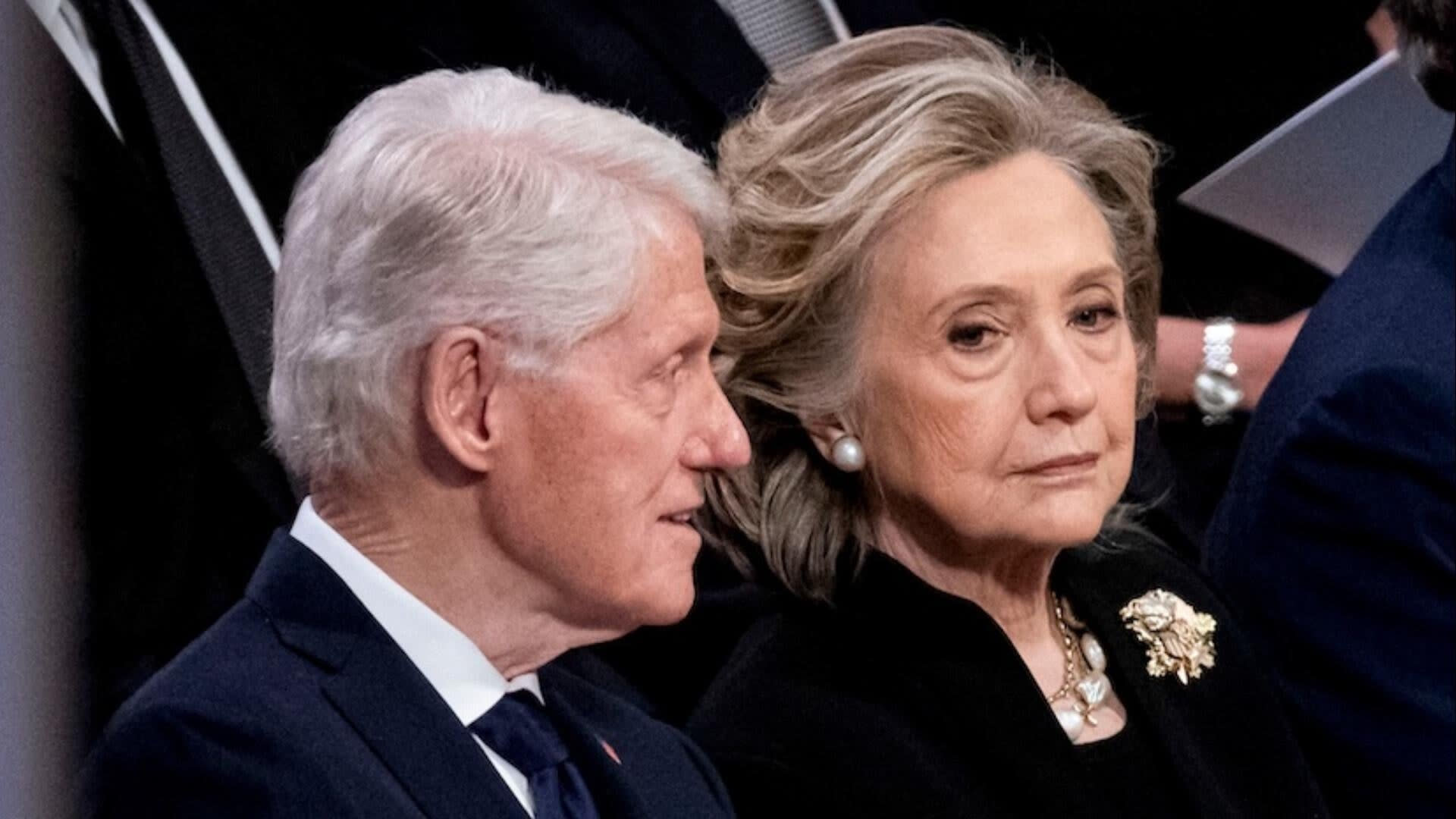
WASHINGTON, D.C. – In a sharp twist in the House investigation into Jeffrey Epstein’s sex-trafficking network, former Secretary of State Hillary Clinton is calling for her testimony, and that of her husband, former President Bill Clinton, to happen in a public, televised hearing.
She says it shouldn’t take place in a closed-door setting.
Her demand comes only days after the Clintons agreed to sit for depositions with the House Oversight Committee, a move that helped them avoid a possible contempt of Congress vote.
On February 5, 2026, Hillary Clinton posted on X and directly challenged Rep. James Comer (R-KY), who leads the House Oversight and Government Reform Committee. She wrote: “Let’s stop the games. If you want this fight, @RepJamesComer, let’s have it, in public.
You love to talk about transparency. There’s nothing more transparent than a public hearing, cameras on. We will be there.” The message landed hard because it contrasted with the Clintons’ earlier stance. When the committee issued subpoenas in August 2025, they pushed back and fought them.
What the Committee Is Investigating
The House Oversight Committee’s Epstein probe has looked at Epstein’s ties to powerful people and how the government handled related cases. Lawmakers have been reviewing items like flight logs, visitor records from Epstein’s properties, and actions taken by officials across multiple administrations.
The focus has stayed on who knew what, when they knew it, and whether opportunities to act were missed.
Comer’s committee subpoenaed both Clintons last summer. The subpoenas were part of a larger sweep that also targeted former attorneys general, FBI directors, and records tied to the Department of Justice.
The committee wants answers about any knowledge of Epstein’s conduct. Bill Clinton’s connection has drawn attention because he is documented as having taken flights on Epstein’s private jet and had a social relationship with Epstein before Epstein died in federal custody in 2019.
At first, the Clintons challenged the subpoenas. They argued the requests lacked a real legislative purpose and were driven by politics. The conflict escalated in January 2026, when the committee advanced steps toward holding both Clintons in contempt of Congress. That effort had some bipartisan support, including votes from a few Democrats. A contempt vote could have sent the issue to the Justice Department for possible prosecution.
On February 2, the Clintons changed course. Their attorneys told Comer they would comply. Hillary Clinton’s deposition is set for February 26, and Bill Clinton’s is scheduled for February 27. Both sessions are expected to be transcribed and video-recorded, but held privately.
Why Comer Wants Closed-Door Depositions
Comer has said private depositions are routine in investigations like this. He argues they allow detailed questioning without the pressure of live coverage. He has also left the door open to a public hearing later if the depositions justify it.
He has framed the approach as a way to deliver “transparency and accountability” while keeping the process controlled, especially when sensitive information could come up.
Clinton Tries to Flip the Script
By demanding an open hearing, Hillary Clinton is trying to reset the story. She is casting the Clintons as willing to show up on camera, while suggesting Republicans are only “pro-transparency” when it suits them.
Her criticism echoes what many Democrats have been saying. They question why the committee is putting so much attention on the Clintons, while other well-known people connected to Epstein, across both parties, have not faced the same level of focus in this specific House probe.
The Politics Around Epstein Still Burn Hot
Epstein’s case remains explosive. In recent years, unsealed court filings have described parts of his network and included the names of prominent figures. Still, for many of those people, the documents have not led to new criminal charges.
Ghislaine Maxwell, Epstein’s convicted associate, is still serving her sentence. At the same time, public anger continues over why more cases were not brought, and why the system seemed to stall for so long.
Supporters of the Clintons say the subpoenas look like a partisan hit job under a Republican-led House. Critics, including some conservatives, say a public hearing is the best way to test the Clintons’ statements about their Epstein ties and expose any gaps or contradictions.
Comer’s allies have pushed back on Clinton’s demand. They describe it as a way to turn the process into a media spectacle. Some Republicans on the committee argue private sessions help protect sensitive details while still creating a full record.
What Happens Next
With the February deposition dates close, the fight over format could grow louder. If Comer keeps the depositions private, the Clintons may still appear as planned while continuing to call for cameras. If either side backs out, the threat of contempt could return, though the recent agreement makes that less likely.
The Epstein investigation has already produced document releases and witness interviews. So far, it has not produced major new public findings beyond what has surfaced through civil lawsuits and reporting.
For now, Hillary Clinton’s demand has added fresh tension to an already charged debate, and it puts a spotlight on what Congress means when it says “transparency.”
Related News:
Democrats Join Republicans to Advance Contempt Resolution Against Bill Clinton


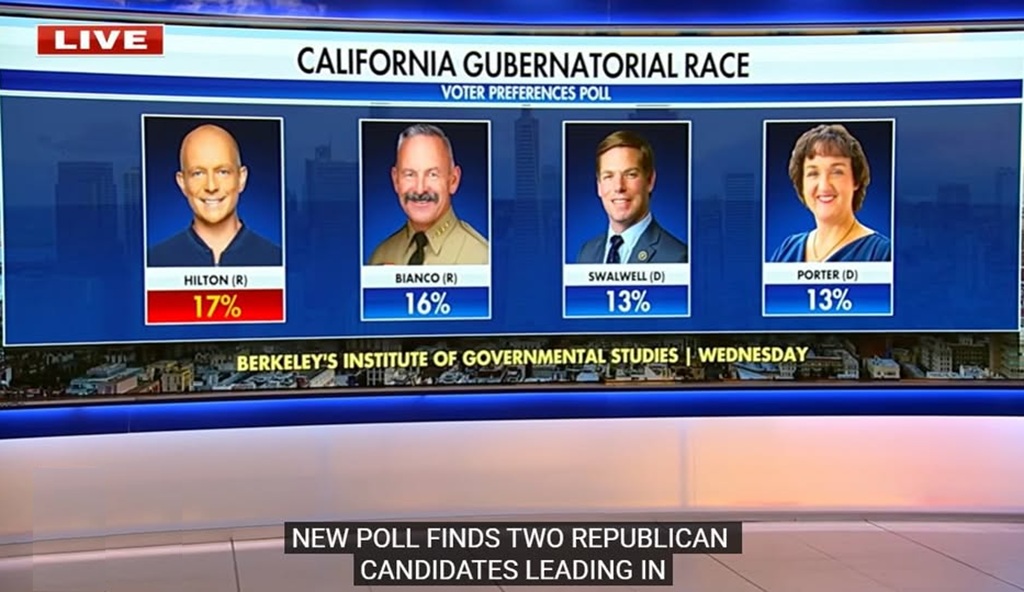
California’s 2026 governor race is starting to look very different from what many expected. New polling shows two Republicans at the front of the crowded nonpartisan primary. At the same time, thousands of residents and major employers are leaving the state, along with other blue states, for places with lower taxes and lighter regulation.
Many voters seem worn out by high prices, strict rules, and daily quality-of-life concerns. The trend is hard to miss. Californians are leaving in large numbers, and that frustration now appears to be shaping the early race for governor.
Poll Surprise: Republicans Move to the Front in the Primary
California’s June 2026 primary follows the state’s top-two system. The two highest vote-getters move on to November, no matter what party they belong to.
Recent surveys point to a close but meaningful contest. A UC Berkeley Institute of Governmental Studies poll released this week showed conservative commentator Steve Hilton at 17 percent and Riverside County Sheriff Chad Bianco at 16 percent. Several Democrats followed behind them, including Congressman Eric Swalwell at 13 to 14 percent, former Rep. Katie Porter at 13 percent, and activist billionaire Tom Steyer at 10 percent.
Other polling has shown a similar pattern. In February, the Public Policy Institute of California found Hilton and Bianco among the top five candidates, both in double digits. Emerson College polls in recent months also placed Republicans near or at the top, while Democrats split support across several campaigns and many voters stayed undecided, in some cases as high as 25 to 28 percent.
That matters because Republicans almost never lead statewide polls in heavily Democratic California. Still, the Democratic field is crowded, with nine candidates dividing liberal voters. That gives Republican contenders a clear opening. Hilton has centered his campaign on lower costs and pro-business changes. Bianco has focused on public safety and reducing red tape. Both are speaking to voter anger over affordability and regulation.
Why Blue States Are Losing Residents at a Record Pace
California posted a net loss of 229,000 residents to other states between July 2024 and July 2025, according to U.S. Census Bureau data. That was the biggest domestic migration loss in the country. New York and Illinois also saw major outflows.
Over the last five years, blue states together lost nearly 3.8 million people through net internal migration. Meanwhile, red and purple states added millions.
Top reasons many Californians give for leaving:
• Very high home prices and rent
• California’s top state income tax rate of 13.3 percent, along with proposed wealth taxes
• Tough business and environmental rules
• Homelessness, crime, and a high overall cost of living
• Better job options in other states
A proposed 2026 “Billionaire Tax” on net worth above $1 billion appears to have added to the rush. Tech executives and investors say the one-time 5 percent levy, applied retroactively to January 1, 2026, pushed many wealthy residents to relocate sooner. Some estimates say $1 trillion to $2 trillion in wealth has already left California, or is preparing to do so.
The same pattern has shown up elsewhere. New York, New Jersey, Illinois, and Massachusetts all posted net losses as people moved to states with lower taxes and fewer restrictions.
Companies Are Leaving Too, and the List Keeps Growing
The flow of people out of California mirrors what many businesses are doing. In 2025 alone, several major companies moved out of the state:
• Chevron moved its headquarters to Houston, Texas
• In-N-Out Burger relocated to Tennessee
• John Paul Mitchell Systems moved to Wilmer, Texas
• Public Storage shifted to Texas
• Playboy Enterprises relocated to Miami, Florida
Tesla, SpaceX, and X, formerly Twitter, had already moved under Elon Musk. Oracle left years earlier. Reports show that hundreds of headquarters have exited California since 2017, and the pace appears to be picking up. One analysis found that 3 percent of California businesses relocated out of the state in 2025.
Why companies are leaving:
• High corporate taxes and heavy regulation
• Rising labor and energy costs
• Easier permits and lower taxes in states like Texas and Florida
• Better access to growing markets without the same level of red tape
Texas and Florida led the way in attracting new businesses. Both states have no state income tax, lower overall tax burdens, and policies widely seen as business-friendly. In addition, North Carolina, Tennessee, South Carolina, and Idaho ranked high for inbound moves in 2025 U-Haul and Census data.
How the Exodus Is Affecting the Governor’s Race
Voters are paying attention to the outflow. Polls show affordability is the top issue for nearly two-thirds of likely voters. Because of that, views on taxes, housing, and jobs are shaping support more than party labels in many cases.
Independent voters have split their support between Hilton, Bianco, and the top Democratic candidates. Many say they want a break from the status quo. Bianco has argued that California needs bold new ideas to lower costs and grow jobs, a message that lines up with the frustration behind so many moving trucks heading out of state.
Hilton has made a similar case, saying California must reduce regulations that push employers away. Both Republicans say they want to make the state competitive again. Democrats in the race offer different answers, but they also face pressure to explain why California keeps losing residents after years of Democratic control.
Democrats still have an edge in a general election because of voter registration. Even so, the early Republican lead points to broad dissatisfaction. If one or both Republicans reach November, the race could center on taxes and regulation, the same issues driving many people and businesses to leave blue states.
A Bigger Pattern Across Blue States
California is not alone in dealing with this shift. New York, Illinois, and New Jersey are seeing similar trends. Census data shows that several red states continue to gain residents:
• Texas: +67,000 net domestic migrants
• Florida: +22,000, lower than pandemic highs but still positive
• North Carolina: +84,000, the highest in the nation
• South Carolina, Tennessee, and Idaho also posted strong gains
These states tend to offer lower taxes, fewer rules, cheaper housing, and in many cases stronger public safety. In simple terms, people move to places where they believe life will be easier for their families and better for their businesses.
Economists say this shift is also costing blue states large amounts of tax revenue. California alone has lost tens of billions of dollars in recent years. The pattern has continued into 2026, and fears over new wealth taxes seem to be speeding it up.
What’s Next for California?
The June primary will decide which two candidates move on. Early polling gives Republicans their strongest opening in decades to reach the November ballot. Whether they win or not, the message from voters is getting harder to ignore: high taxes and heavy regulation are pushing people and jobs elsewhere.
Leaders in blue states are now under pressure to respond. They can lower costs and ease rules, or they can watch more residents and employers move to lower-tax states.
For now, the numbers point in the same direction. Republicans are gaining momentum in California’s governor race. The migration data helps explain why. Families and businesses are choosing places with lower taxes and fewer barriers. The 2026 race may show whether California is ready to change course, or keep losing more people and investment.
Related News:
Midterm Election Predictions: Where Do President Trump and the Republicans Stand?
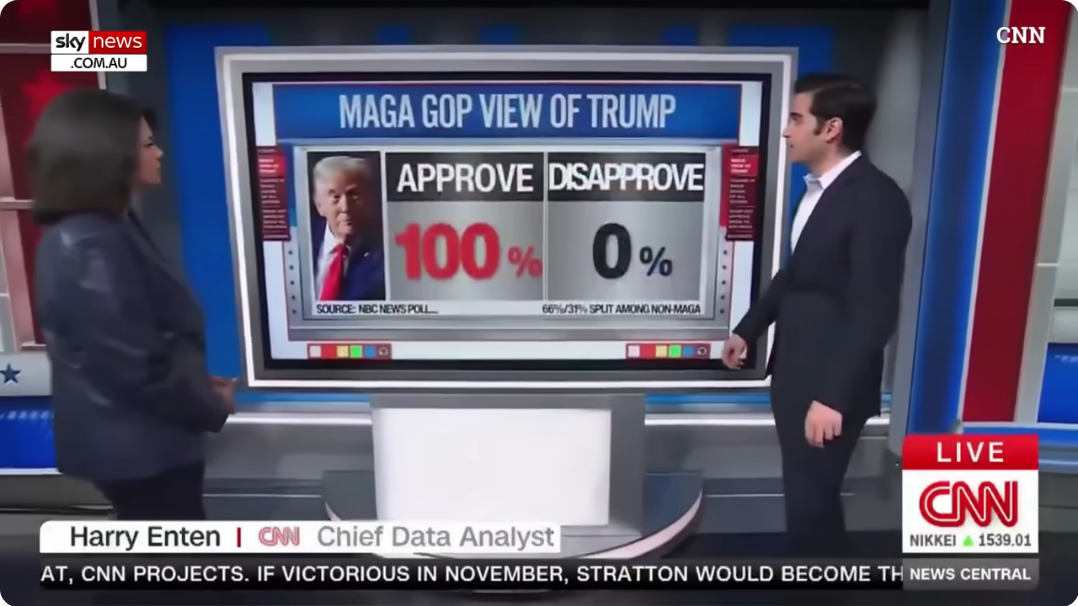
ATLANTA. Ga – CNN chief data analyst Harry Enten delivered a headline-making moment this week. During an on-air breakdown, he pointed to a new poll showing President Donald Trump with a full 100 percent approval rating among voters who call themselves MAGA. Not one person in that group said they disapproved.
That goes beyond strong support. It’s total support. And it comes while critics have argued that Trump’s coalition is starting to crack over the war in Iran.
Enten, known for his blunt and data-driven style, said the numbers were the kind that “jump off the screen.” Since then, the clip has spread widely online. Supporters praised it, while critics argued over how much the result really tells us.
Harry Enten’s CNN Breakdown: “You Can’t Go Higher Than 100%”
On Wednesday’s episode of CNN News Central, Enten joined the show to discuss Trump’s current standing. The segment centered on whether there was any real split inside MAGA. Some critics had pointed to people like Tucker Carlson, who has attacked Trump’s military moves in Iran.
Enten pushed back quickly, using fresh numbers from an NBC News poll.
“Sometimes you look at the polling data and there are numbers that just jump off the screen at you, and this is one of those,” Enten said.
He then showed the chart on air. The numbers were simple: among MAGA Republicans, Trump’s approval stood at 100 percent, while disapproval stood at 0 percent.
“You don’t have to be a mathematical genius to know you can’t go higher than 100%,” Enten said with a smile. “He is the 1972 Miami Dolphins.”
That comparison landed hard. The 1972 Miami Dolphins are still the only undefeated team in NFL history, finishing 17-0 and winning the Super Bowl. Enten used that image to make one point clear, Trump’s bond with his core supporters remains as strong as ever.
CNN anchor Sara Sidner summed it up in one line: “MAGA has the floor.” Enten answered right away, “MAGA has the floor, 100%.”
What the NBC News Poll Found
The poll came from Hart Research and Public Opinion Strategies and surveyed about 1,000 registered voters. The overall margin of error is plus or minus 3.1 points. Even so, the MAGA subgroup drew the most attention because of how one-sided the result was.
Here are the key findings:
- 100% of self-identified MAGA voters approve of President Trump
- 0% disapprove of President Trump among MAGA supporters
- 90% of MAGA voters approve of U.S. strikes on Iran
- Only 5% disapprove of the Iran action within the MAGA group
- 30% of Americans now identify as MAGA, up from 28% right after the 2024 election
Enten stressed a key point during the segment. Some Republicans may disapprove of Trump, but he said those voters are not part of the MAGA movement. His takeaway was direct: if someone identifies as MAGA, that person approves of Trump.
The MAGA Base Is Growing, Not Fading
A lot of political observers expected MAGA support to cool off after the election. Enten argued the data shows the opposite.
The share of Americans who say they are MAGA has inched up to 30 percent. That’s a modest gain from 28 percent in November 2024. So, according to Enten, Trump’s 100 percent approval with MAGA is not happening because the group got smaller or more isolated.
“That 100% that Donald Trump has among MAGA GOP, that is not an artifact of MAGA shrinking,” he said. “It’s just an indication of how strong Donald Trump’s grip is on that MAGA base.”
In other words, the group is still large and has even grown a bit. That cuts against recent claims that internal fights over Iran, immigration, and other issues are pulling the movement apart.
No Sign of a MAGA Break Over Iran
The timing makes the poll stand out even more. The U.S. military operation in Iran is now in its third week, and concerns over oil prices and a wider conflict have spread.
At the same time, some high-profile figures on the right have spoken out. Tucker Carlson called the campaign “absolutely disgusting and evil.” Other conservative voices have raised doubts as well. Because of that, many expected Trump’s support among his own voters to soften.
Enten rejected that idea. The segment itself carried the line, “Tucker Carlson be darned.”
He also pointed out that Trump had dismissed Carlson by saying he “is not MAGA.” The poll numbers appear to support that argument. Even under pressure, the self-identified MAGA base remains firmly behind Trump.
Outside that group, the picture looks very different. A Quinnipiac poll from March 9 found that 57 percent of Americans disapproved of Trump’s handling of Iran. Still, among MAGA voters, support remains nearly complete.
What 100% Approval Means for Trump’s Second Term
That kind of loyalty could matter a lot as Trump heads deeper into his second term and Republicans prepare for the 2026 midterms.
A united base can help in a few major ways:
- It can boost turnout in key races
- It can reduce the risk of right-wing primary challenges
- It can give Trump more freedom to push major policies
The 90 percent support for strikes on Iran inside MAGA also suggests Trump has room to act on foreign policy without losing his core supporters. Enten highlighted that number as another sign that the base is staying with him.
Still, Trump’s broader national numbers are weaker. The same NBC poll, along with others, shows trouble on issues like gas prices and the cost of living. Enten has described some of those broader figures as “nightmare stats” for Republicans heading into future elections.
Even so, the MAGA numbers stand apart. They show that the center of Trump’s movement is still fully committed.
Critics Say the Result May Be Obvious
Not everyone treated the 100 percent figure as a shock. Some analysts argued that the finding is almost built into the label itself.
After all, MAGA means “Make America Great Again,” and the slogan has been tied to Trump for years. So, asking self-described MAGA voters whether they approve of Trump may seem a lot like asking loyal fans whether they support their favorite team.
Mediaite and other outlets also noted that the MAGA subgroup is relatively small, around 200 people, which means the margin of error is wider for that slice of the poll. They also pointed out that MAGA identification had reached 36 percent earlier in 2025 before settling back to 30 percent.
Even so, Enten’s point was not that Trump is popular with random voters. His point was narrower. He used the data to challenge the claim that MAGA is breaking apart over Iran.
Trump’s Long Hold on MAGA Supporters
Trump introduced the MAGA slogan in 2015. It quickly became the center of his 2016 campaign and remained a powerful symbol through 2020. Even after leaving office in 2021, the movement stayed active through rallies, online communities, and a deeply loyal following.
His return in 2024 pushed MAGA back into the center of national politics. Now, in his second term, this new poll suggests that the connection between Trump and his core supporters has not weakened.
Enten, who also hosts CNN’s Margins of Error podcast, has followed these trends for years. He often delivers data points that cut across easy political storylines, and this week was another example.
Political Reactions Came Fast
Trump allies and conservative commentators quickly celebrated the clip. Eric Trump shared it online and called it the “nightmare stat” for Trump’s critics. Social media users posted jokes and graphics comparing Trump to the undefeated 1972 Dolphins.
On the left, reactions were mixed. Some dismissed the result as predictable. Others said it showed MAGA is still a serious political force that Democrats cannot afford to ignore.
The story also spread outside the U.S. press. Sky News Australia and other outlets picked it up quickly, pointing out that a CNN analyst had delivered a data point that strongly favored Trump.
No poll result stays fixed forever. The economy, global events, and the outcome of the Iran conflict could still test Trump’s support over time. For now, though, Enten’s message was simple. Among voters who proudly identify as MAGA, Trump has total approval. The number is hard to miss, and on CNN this week, it grabbed everyone’s attention.
Related News:
CNN Data Analyst Harry Enten Flags a Red State Boom and aBlue State Slump
ATLANTA, Ga – A new twist has hit the early 2028 presidential race, and it could reshape the Republican field. CNN chief data analyst Harry Enten says fresh polling and prediction market numbers now show Secretary of State Marco Rubio rising into possible front-runner status. Rubio, once viewed as a long shot, is suddenly drawing serious attention as his odds climb fast, while Vice President JD Vance faces a tougher fight to stay on top.
In a recent CNN News Central segment, Enten highlighted Rubio’s sharp rise and tied it to strong Republican support for his foreign policy record. At the same time, Vance remains a major player, and conservative group Turning Point USA has already promised to help elect him in 2028.
This early shift comes as Republicans look ahead to a post-Trump race. With no sitting president in the mix, the field is open. Right now, new numbers suggest Rubio may be moving faster than many expected.
Harry Enten Lays Out Rubio’s Rapid Rise
Harry Enten, known on CNN for breaking down polls and betting data in plain terms, gave Rubio a glowing review in a recent appearance. After looking at updated prediction market numbers, he described Rubio as “hot, hot, hot, like a summer heat wave.”
Enten pointed to Kalshi’s market for the 2028 Republican nomination, where Rubio’s odds climbed to 27 percent. Just six months earlier, he sat at 7 percent.
Even Enten sounded surprised by the jump. “He was just at 7% six months ago. Hello, up like a rocket. 27% chance now,” he said. “That’s quadrupling his chances in four months’ time.”
Rubio is also gaining in broader White House markets:
- On Kalshi’s general election market, Rubio reached 20 percent, just ahead of JD Vance and Democratic favorite Gavin Newsom, who both stood at 18 percent.
- On Polymarket, Rubio posted 18.8 percent for the presidency, narrowly topping Newsom at 18.5 percent and Vance at 17.3 percent.
Those numbers mark a big change from earlier this year. At that point, Vance led GOP betting markets with roughly 48 percent for the nomination. He also posted strong primary numbers in New Hampshire, where he drew 51 percent support, a lead Enten had earlier called “unprecedented.”
Now, Rubio’s upward trend suggests he could move past Vance and take the top spot. Political analysts often say betting markets can reflect changing voter mood long before the first primary ballot is cast.
Why Rubio Is Climbing, Approval Ratings, and Trump Ties
Rubio’s rise appears closely tied to his role as Secretary of State. Recent U.S. action involving Iran won broad support from Republican voters. Among GOP voters, 89 percent approved, and support was nearly unanimous among MAGA Republicans.
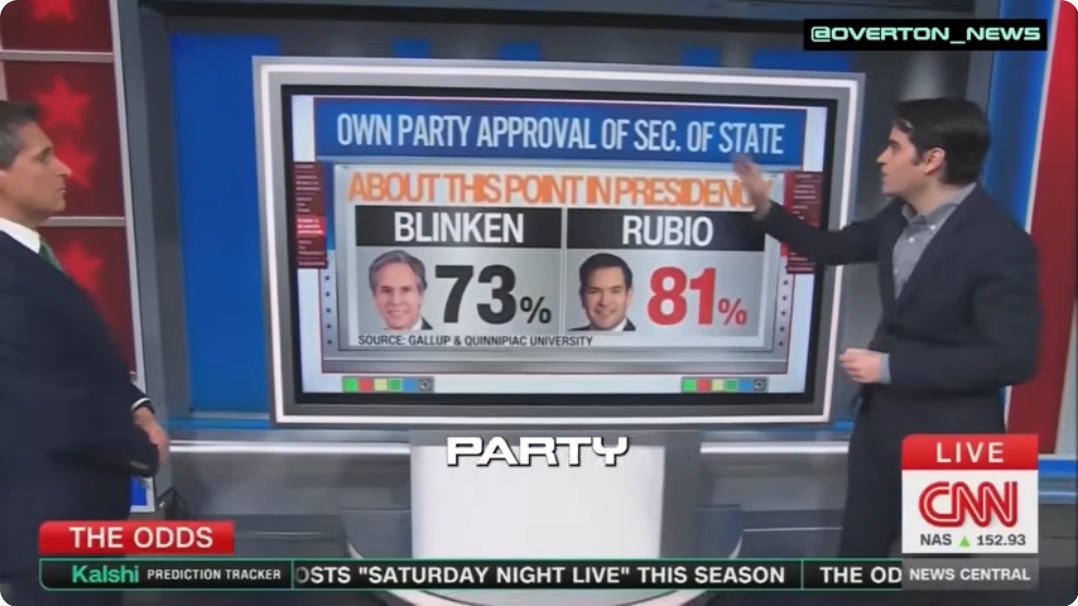
Enten also said Rubio’s personal approval rating among Republicans has reached 81 percent. That puts him ahead of recent Secretaries of State, including Antony Blinken during the Biden years. History also helps Rubio’s case, since six former secretaries of state have later won the presidency.
Enten added that Rubio’s close connection to Trump matters, too. He pointed to their public chemistry and said Rubio seems to be benefiting from the administration’s good standing without losing support from the party base.
Rubio has also stayed active on issues Republicans care about most, including immigration and the economy. Those issues played a major role in Trump’s wins. His background in Florida and his years in the Senate also give him appeal in key battleground states.
JD Vance Remains a Strong Rival Despite Rubio’s Momentum
Even with Rubio getting fresh buzz, JD Vance is still firmly in the race. Early polling shows he keeps strong backing among working-class voters, and he still benefits from the name recognition that came with the 2024 ticket.
Earlier, Enten praised Vance’s lead in colorful terms. He compared Vance to Mario Andretti and said the rest of the field looked like “go-karts.” For months, Vance controlled New Hampshire polls and led prediction markets.
Today, he still holds a strong place near the top. His America First message and appeal to younger conservatives keep him in the fight. In addition, his role as vice president gives him direct access to donors, party activists, and voters across the country.
The battle between Rubio and Vance could shape where the Republican Party heads next. Rubio brings a foreign policy record. Vance speaks more directly to domestic populism. Both fit into the broader Trump movement, but they carry it in different ways.
Turning Point USA Backs JD Vance for 2028
Turning Point USA has already made its position clear. Erika Kirk, the group’s new CEO and the widow of founder Charlie Kirk, said the organization plans to throw its support behind Vance.
Speaking at a recent Turning Point event, she told the crowd, “We are going to get my husband’s friend JD Vance elected for ’28 in the most resounding way possible.”
Kirk also said one of Charlie Kirk’s final conversations centered on support for Vance. She later told reporters that efforts to back a possible JD Vance presidential run are already underway.
Turning Point USA plans to organize young conservative voters, run turnout efforts, and spread Vance’s message online and on college campuses. Because the group has strong reach with Republicans under 30, its support could matter in early primary states.
That endorsement reinforces Vance’s standing inside the MAGA movement. At the same time, it shows how unsettled the race still is, with major allies lining up behind different contenders.
What Rubio’s Surge Means for the 2028 Race
Rubio’s rise comes at an important moment. President Trump has not named a preferred successor, and reports say he has weighed both Rubio and Vance in discussions with donors.
Polls and prediction markets can swing quickly. Still, Enten’s read on the data points to real momentum behind Rubio. If his approval numbers stay high and his foreign policy record continues to help him, he could strengthen his grip on the Republican nomination fight.
Vance, on the other hand, still has a clear path. He can lean on grassroots support, his vice presidential profile, and Turning Point’s organizing power. His team is also likely to focus on domestic wins tied to the current administration.
Other possible Republican names, including Nikki Haley and Tulsi Gabbard, remain far behind in current markets, both below 10 percent. On the Democratic side, Gavin Newsom has started to emerge as an early favorite in some betting models.
Voters continue to rank the economy and border security as top concerns. Recent Harvard CAPS/Harris polling shows both Rubio and Vance perform well on those issues.
No one has officially launched a 2028 campaign yet, but the race is already gaining heat. Early fundraising, endorsements, and public visibility will shape who breaks through first.
Rubio vs. Vance, Key Strengths at a Glance
- Marco Rubio: Strong foreign policy profile, 81 percent GOP approval, rising odds that reached 27 percent for the nomination, plus a historical boost from the secretary of state’s track record.
- JD Vance: Early primary strength, including 51 percent in New Hampshire, support from Turning Point USA, a loyal MAGA base, and the visibility that comes with serving as vice president.
- Shared advantage: Both closely align with Trump’s agenda on immigration and the economy.
Analysts still warn against reading too much into early data. Prediction markets show a moment in time, not an outcome. Even so, Rubio’s rise has been fast enough to grab attention across the political world.
Enten’s latest breakdown makes one thing clear: Rubio is gaining ground quickly and now looks capable of challenging, and maybe passing, the rest of the field.
As 2028 moves closer, more polls, more endorsements, and more surprises are sure to follow. For now, Rubio’s jump in the numbers has put him in a strong spot at the front of the Republican race.
The next several months will show whether Rubio can keep that momentum going, or whether Vance’s organized support helps him reclaim the lead. One thing is clear: the 2028 race is underway, and the drama has already started.
Trending News:
Trump Eyes Historic NATO Exit as Allies Prove Their Disloyalty


China’s Military Breakthrough Claims Face Fresh Doubt as Top Scientists Disappear

Iran Regime Threatens to Strike Tourist Spots Around the World

NATO Chief Says 22 Nations Working With US to Keep the Strait of Hormuz Open

Global Outrage Explodes as Iran Publicly Hangs Teen Wrestling Star

Republicans Gain Ground in California While Businesses Flee Blue States

Chuck Norris Dies at 86, Family Withholds Official Cause

CNN Reveals Says Trump Has a Perfect 100% Approval Rating Among MAGA Voters

CNN Shows Shocking 2028 Polling Numbers for Marco Rubio

Trump Eyes Historic NATO Exit as Allies Prove Their Disloyalty

Trump’s Kharg Island Strike Cuts Iran’s Oil Fear Premium

Thai Billionaire Charged With Lese Majeste Over Facebook Post

Russia Bans Facebook, Meta Says It’ll Do “Everything” To Restore Service

Facebook Login Feature – Clash of Clans

4 Things you can do to take your Facebook Lead Generation to the Next Level

Zuckerberg to Allow Violent Speech on Russia After Facebook Blocked

Facebook Loses $200 Billion as Users Shift to TikTok

Downloading Facebook Videos Anonymously with High Quality Video through Snapsave app

The Best Site to Buy Real Facebook Likes and Followers in 2022

Chinese Man Arrested for Using Facebook to Dupe Cryptocurrency Investor

Google and Facebook Under Huge Pressure Over User Privacy

Mosque Set Ablaze in Iran a Citizens Revolt Against the Islamic Regime

AOC Accuses Jessie Watters of Fox News of Sexualizing and Harassing Her

JD Vance Exposes Walz’s Fraud and CNN’s Lies in White House Presser

Milestone Card Credit: How the Milestone MasterCard Can Transform Credit
-

 Crime3 months ago
YouTuber Nick Shirley Exposes BILLIONS of Somali Fraud, Video Goes VIRAL
-

 China2 months ago
China-Based Billionaire Singham Allegedly Funding America’s Radical Left
-

 Politics3 months ago
Ilhan Omar Faces Renewed Firestorm Over Resurfaced Video
-

 Politics2 months ago
CNN Delivers Stark Reality Check to Democrats Over Voter ID
-

 Business3 months ago
Tech Giant Oracle Abandons California After 43 Years
-

 Midterm Elections3 months ago
2026 Midterms Guide: Candidates, Key Issues, and Battleground States
-
 News2 months ago
Mosque Set Ablaze in Iran a Citizens Revolt Against the Islamic Regime
-

 Politics3 months ago
Accusations Fly Over Alleged Zionist Takeover of (TPUSA) Turning Point USA