
Politics
Ilhan Omar’s Finances Under Fire Amid Minnesota’s Massive Fraud Scandal

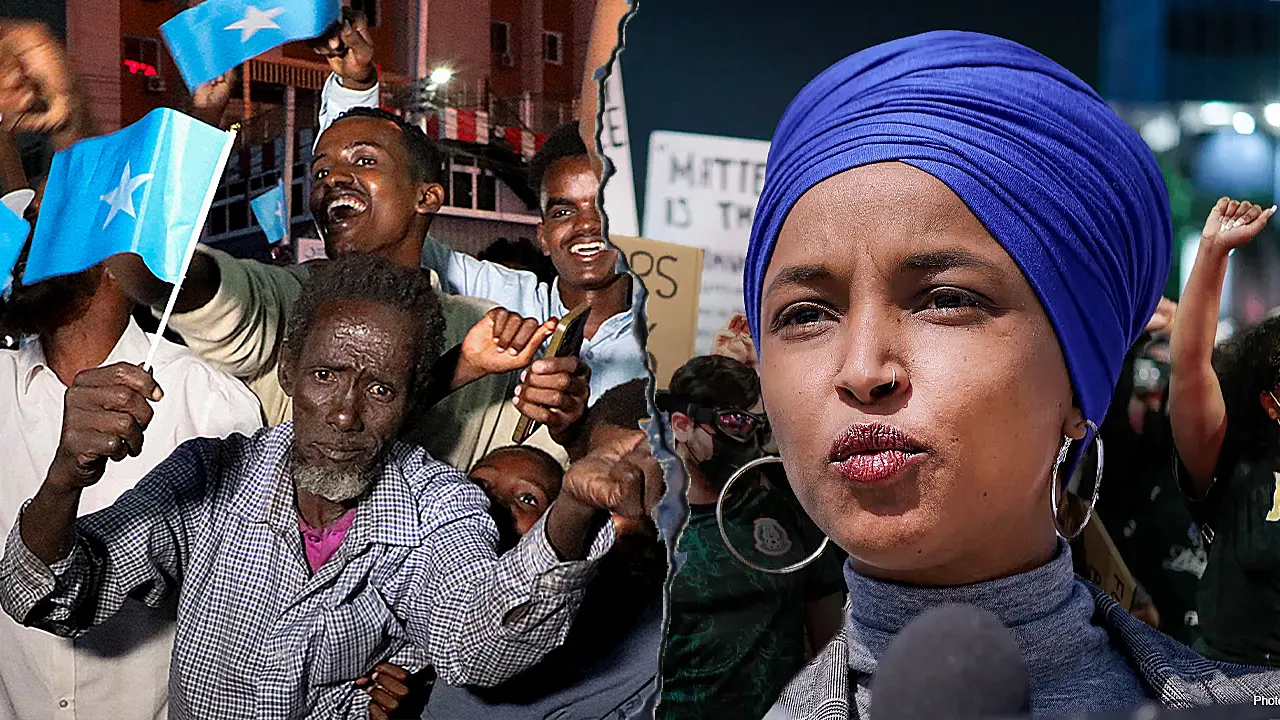
WASHINGTON, D.C. – As anger rises over one of the biggest welfare fraud cases in U.S. history, shaking Minnesota, Democratic Rep. Ilhan Omar is drawing renewed attention. Her household net worth has been reported as high as $30 million, driven mainly by her husband Tim Mynett’s business interests.
Those include a venture capital firm that recently removed key leadership details from its website as questions increased. Ilhan Omar’s congressional financial disclosures show a major change over time. When she entered Congress in 2019, her filings showed negative net worth. Her debts, including student loans, were larger than her listed assets.
By her 2024 disclosure, filed in May 2025, the picture looked very different. The couple’s combined assets were reported in broad ranges that add up to between $6 million and $30 million. That total has been described as a possible 3,500% jump from the prior year.
Most of the value appears tied to Mynett’s stakes in two companies:
- Rose Lake Capital LLC, a Washington, D.C.-based venture capital firm valued at $5 million to $25 million
- eStCru LLC (eStCru Wines), a California winery valued at $1 million to $5 million
Earlier filings were far lower. In 2023, Rose Lake Capital was listed at $1 to $1,000, and the winery at $15,001 to $50,000. The sudden change has drawn attention, especially after earlier reporting on lawsuits involving Mynett’s businesses that alleged investor fraud. Those claims were reported as settled.
Ilhan Omar has pushed back on claims that she is personally wealthy. In statements and social posts, she has said she is “barely worth thousands, let alone millions” and still has student loan and credit card debt. Critics point out that congressional disclosures report household assets, including spousal business interests, and they use wide value ranges instead of exact numbers.
Rose Lake Capital Removes Officer and Advisor Details From Its Website
Rose Lake Capital, co-founded by Mynett in 2022, also drew attention for changes to its website. Archived versions reviewed by multiple outlets show the firm removed names and biographies of nine officers and advisors between September and October 2025.
The removed names included figures with Democratic ties, such as:
- Former U.S. Ambassador to China Max Baucus
- Former Ambassador to Bahrain Adam Ereli
- Former Amalgamated Bank CEO Keith Mestrich, who previously called the bank the “institutional bank of the Democratic Party.”
- Other financiers linked to the DN.C
The edits came as federal fraud cases in Minnesota continued to expand. The firm has not offered a public explanation for the changes. Outreach to Mynett or the firm has reportedly not received a response. The company address is still listed as a shared WeWork location, even as the firm has described managing billions in prior assets through global networks.
Paul Kamenar, counsel for the conservative National Legal and Policy Center (NLPC), told reporters there are “a lot of strange things going on,” and urged Omar to “come clean” about the assets. The NLPC has also indicated it may look at possible ethics issues.
Connection to Minnesota’s Nearly $1 Billion Fraud Crisis
The questions around wealth come at a tense moment in Minnesota. The state has faced fraud schemes that total close to $1 billion across programs tied to child nutrition, autism services, and housing stabilization. Many cases have involved members of Minnesota’s Somali community, which Omar represents.
The best-known case centers on Feeding Our Future, a nonprofit accused of taking $250 million to $300 million in federal child nutrition funds intended to feed children during the COVID-19 pandemic. More than 80 people have been charged, with dozens convicted. Many of those charged are of Somali descent. Federal investigators have also looked at possible money laundering ties abroad.
Ilhan Omar has taken criticism for sponsoring the 2020 MEALS Act, which loosened oversight on federal reimbursements to speed aid delivery. Critics say those changes were later used in fraud schemes. Omar has defended the law, saying it “did help feed kids” and that she has no regrets.
Her campaign reportedly accepted donations from people later convicted of the fraud and later returned the money. Omar and Mynett have not been charged, and Omar has denied any wrongdoing.
The Treasury Department and Justice Department are investigating potential broader money laundering links. Republican figures, including President Trump, have amplified the story and aimed criticism at Omar and Gov. Tim Walz.
Ilhan Omar’s Response and the Political Fallout
Ilhan Omar’s office has described the wealth claims as part of a “coordinated right-wing disinformation campaign.” In a TikTok post, she joked about wishing the rumored millions into existence to pay off her student loans.
Fact-checkers, including Snopes, have added context to the disclosure reports. They note the reported wealth comes mostly from spousal business valuations listed in wide congressional ranges, not direct cash income, and that Omar has said she still carries debt.
Even with that context, the optics remain tough. Omar is a progressive member of the “Squad” who has backed Medicare for All and student debt relief, while her household asset values have surged on paper. Critics say the rapid change calls for clearer answers, especially as her state deals with major fraud cases.
As federal investigations continue and watchdog groups apply pressure, Ilhan Omar’s situation highlights an ongoing debate about ethics rules, spousal assets, and public trust. No formal investigation has been announced against her, but scrutiny remains focused on how a firm once valued near zero rose so quickly in reported worth, and what that means for confidence in Minnesota’s leadership.
This story continues to develop at the point where personal finances, political influence, and public scandal meet under intense public attention.
Related News:
Pressure Builds for Tim Walz to Resign After Viral Video of Somali Daycare Fraud
YouTuber Nick Shirley Exposes BILLIONS of Somali Fraud, Video Goes VIRAL


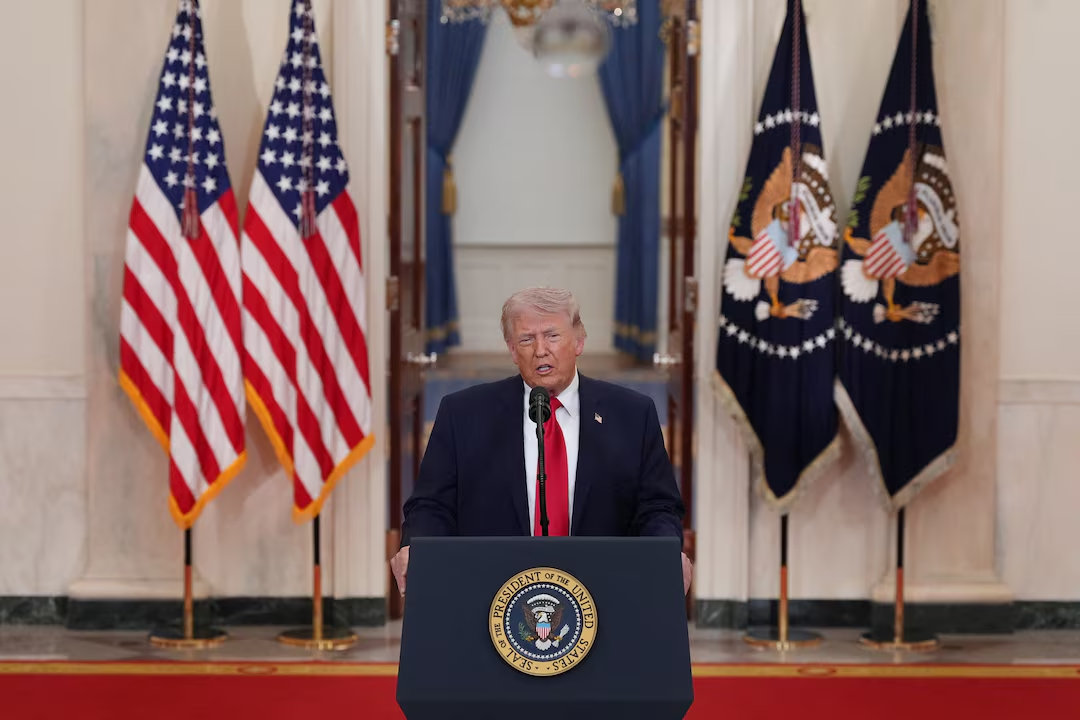
WASHINGTON, D.C. – President Donald Trump addressed the American public from the White House on Wednesday night in his first prime-time national address since the United States and Israel launched coordinated strikes on Iran in late February, declaring that American military objectives are on the verge of being achieved and that the conflict, now in its 32nd day, will conclude “very shortly.”
Speaking for roughly 19 minutes, the president said U.S. forces have achieved “overwhelming victories” but did not offer a definitive timeline as questions swirled about when and how the war could formally wrap up.
According to a White House official ahead of the address, the president was expected to reaffirm his intention to end the war within the next three weeks and relay an “operational update” on the progress of the conflict, which he and top administration officials have characterized as running ahead of schedule.
“Operation Epic Fury”: Four Goals, One Deadline
“I’ve made clear from the beginning of Operation Epic Fury that we will continue until our objectives are fully achieved,” Trump told the nation. “Thanks to the progress we’ve made, I can say tonight that we are on track to complete all of America’s military objectives shortly, very shortly.”
The president again outlined the four core objectives the White House says it is pursuing: destroying Iran’s missiles and production facilities, annihilating its navy, ensuring Iran can no longer support regional militant groups, and guaranteeing that Tehran cannot obtain a nuclear weapon.
Trump reminded the nation that past American conflicts — World War I, World War II, the Korean War, the Vietnam War, and the war in Iraq — lasted for years, while he expects this operation to conclude soon. “We are in this military operation, so powerful, so brilliant, against one of the most powerful countries for 32 days, and the country has been eviscerated,” he said.
Threats Against Iran’s Energy Infrastructure
In some of the speech’s most pointed language, Trump escalated his warnings against Tehran, threatening severe consequences if Iran’s leadership refuses to negotiate.
The president said the U.S. will hit Iran “extremely hard” over the next two to three weeks and threatened to obliterate all of Iran’s electric generating plants and target its oil sites if the country’s leaders don’t make a deal.
Trump had previously threatened to destroy Iran’s water and energy infrastructure if a deal to end the war and reopen the key trade route is not reached soon. Wednesday night’s address signaled no retreat from that posture.
The remarks drew immediate condemnation from international observers and human rights organizations who warned that targeting civilian energy infrastructure could constitute a violation of the Geneva Convention.
The Strait of Hormuz: An Economic Crisis at Choke Point
Central to Wednesday’s address was the closure of the Strait of Hormuz, the narrow waterway through which roughly one-fifth of the world’s oil supply passes. Iran has effectively shuttered the passage since the war began, triggering a cascading global economic shock.
As a result of the war, Iran has sharply curtailed traffic through the Strait of Hormuz, leading to higher oil prices, with gasoline in the U.S. now averaging more than $4 per gallon — a level not seen since 2022.
Higher fuel costs are beginning to ripple through prices on a wide variety of goods. The Strait’s closure has also raised the price of some fertilizers, hurting farmers.
Trump told allies that countries heavily relying on the Strait of Hormuz “must take care of that passage” and “grab it and cherish it,” suggesting nations struggling to secure sufficient fuel should purchase it from the United States. He added that once the conflict concludes, “the strait will open up naturally.”
Earlier in the day, Trump had urged allies who did not join the war but are facing fuel shortages to “build up some delayed courage, go to the Strait, and just TAKE IT,” saying the United States “won’t be there to help you anymore.”
Iran Rejects Ceasefire Claims, Vows to Continue Fighting
Hours before Trump’s primetime address, the president posted on social media claiming Iran’s president had asked for a ceasefire — a claim Tehran flatly denied.
Iran’s foreign minister called Trump’s claim “false and baseless,” according to a report on Iranian state television.
Iranian Foreign Minister Abbas Araghchi told Al Jazeera that Tehran is not in direct negotiations with Washington, despite Trump’s claims that the U.S. is in “serious discussions” with what he described as a “new, and more reasonable regime” in Iran. “Negotiation is when two countries engage in talks to reach an agreement, and such a thing does not exist between the United States and us,” Araghchi said.
Iran’s foreign minister also said his country is prepared for “at least six months” of war, directly contradicting Trump’s two-to-three-week timeline for wrapping up the operation. “We do not set any deadlines for defending ourselves,” Araghchi told Al Jazeera. “We will defend our country and our people as far as necessary and by any means required.”
Regime Change and Nuclear Ambiguity
Trump addressed the sensitive issue of regime change, saying, “Regime change was not our goal. We never said regime change. But regime change has occurred because of the deaths of all of their original leaders. They’re all dead. The new group is less radical and much more reasonable.”
On the question of Iran’s nuclear capability — cited by the administration as a central justification for launching the war — the president’s position remained notably ambiguous. Trump said Tuesday, “They will have no nuclear weapon, and that goal has been attained.” But he later hinted that another president may have to return to the issue in the future, saying Iran “will not be able to do a nuclear weapon for years.”
Netanyahu, for his part, asserted that the U.S.-Israeli strikes have eliminated Iran’s ability to produce nuclear weapons and ballistic missiles, thereby removing what he called “two existential threats” to Israel.
Lebanon, Gulf States, and the Widening War
Lebanon has become another major front in the larger Middle East war. More than 1,300 people in Lebanon have been killed in about four weeks of Israeli attacks, according to Lebanon’s Health Ministry, and more than a million people have been displaced by the fighting and Israel’s broad evacuation warnings.
A drone attack struck Kuwait International Airport’s fuel depots on Wednesday, causing a “massive blaze” with significant damage to fuel tanks, though no injuries were reported. Meanwhile, Bahrain’s Interior Ministry said it was working to extinguish a fire at a company facility following a separate Iranian drone attack.
Some Persian Gulf allies, including Saudi Arabia and the United Arab Emirates, have privately urged the Trump administration to press ahead with strikes on Iran to ensure the regime can no longer threaten the region with ballistic missiles and drones. “Our message is: Finish the job,” said one senior Gulf official.
Public Opinion and Political Pressures
The address comes at a politically fraught moment for the administration. Trump’s approval rating has continued to slide amid the war, hitting first-term lows in both the New York Times and RealClearPolitics polling averages.
New CNN polling shows just one-third of the American public believes Trump has a clear plan to handle the situation in Iran. Americans are not sold on the war’s costs, and significantly more Americans say the economy — rather than the war — is the most important issue facing the country.
Oil prices fell below $100 per barrel, and Asian shares surged on Wednesday over renewed optimism about a potential de-escalation following Trump’s suggestion he would likely end U.S. operations within several weeks. Brent crude, the international benchmark, dropped to $99.05 per barrel in early trading.
The foreign ministers of Pakistan and China issued a joint statement Tuesday calling for talks as part of a broader peace plan, demanding a ceasefire, an end to attacks on civilian infrastructure, and the reopening of the Strait of Hormuz.
As the conflict enters its second month with no formal ceasefire in sight, the coming days may prove decisive — a sentiment echoed by Defense Secretary Pete Hegseth, who declared earlier this week that the “upcoming days will be decisive” in the war with Iran.
This is a developing news story. Updates will be published as further information becomes available.
Related News:
Iran Rejects China’s Mediation Offer in Ongoing War with US and Israel
Trump Warns NATO Allies: America Won’t Protect Slackers After Iran Clash
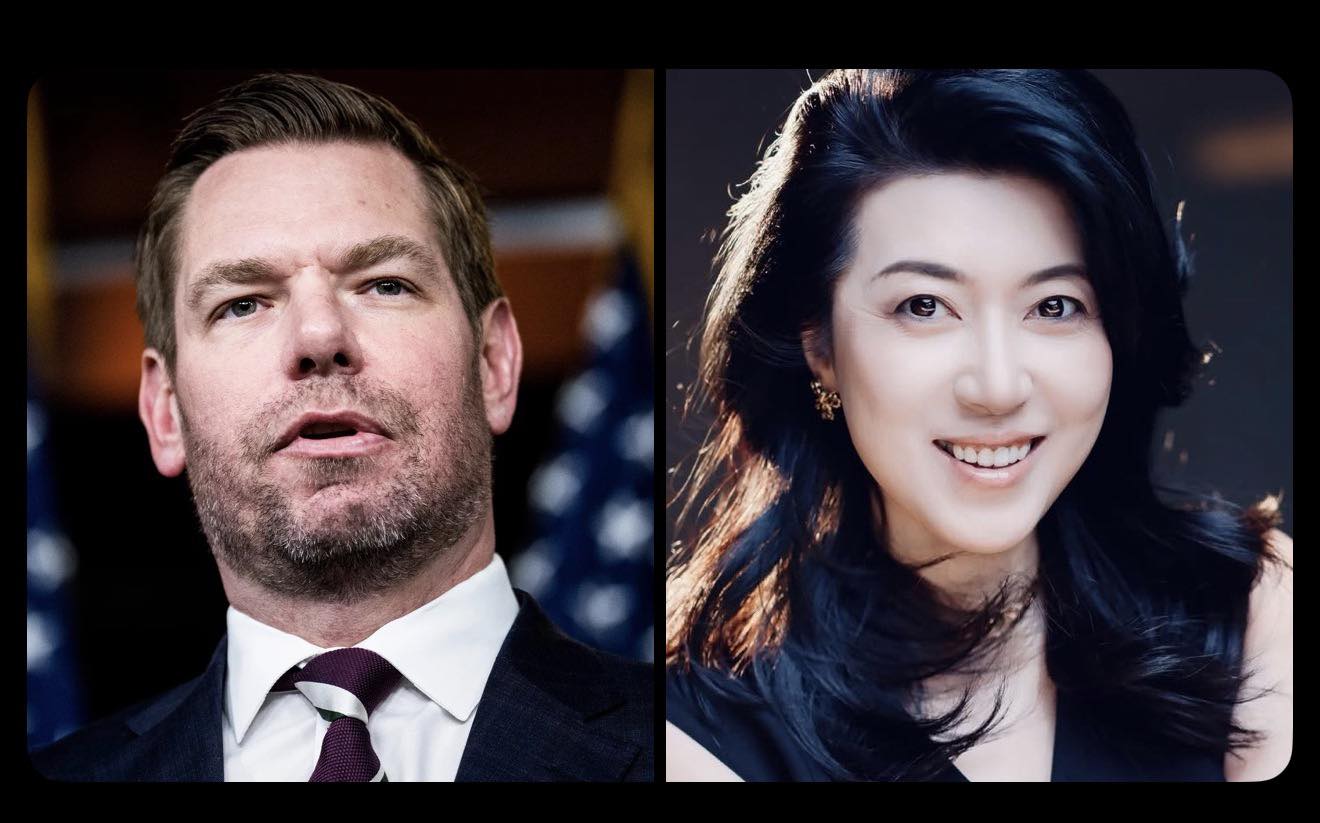
WASHINGTON, D.C. – Rep. Eric Swalwell from California battles FBI Director Kash Patel in a heated Washington showdown. Swalwell acts fast to stop the FBI from sharing files on a 10-year-old probe.
Those files link him to Christine “Fang Fang” Fang, a woman suspected of spying for China. She got close to several California Democrats back in the early 2010s.
Swalwell’s lawyers fired off a cease-and-desist letter to Patel on Monday. They demand he drop all plans to release the records right away. The probe never led to charges against Swalwell. For example, the Associated Press got a copy of the letter.
Top lawyers Sean Hecker and Norm Eisen signed it. They warn that Patel risks big legal trouble for himself, the FBI, and others. “You aim to smear him and hurt his run for California governor,” they state. They add that sharing the files breaks federal laws in key ways.
The letter sets a deadline. It asks Patel and the FBI to confirm in writing by Wednesday that they won’t release anything. So far, no public reply has come out.
Old Spy Probe Comes Back to Life
This story goes back over 10 years. Fang helped Swalwell raise funds. She also placed an intern in his office during his 2014 campaign. She first connected with his team in 2012 as he ran for Congress. Federal agents warned Swalwell in 2015.
They also briefed Congress then. Swalwell cut ties after that, he says.
No one ever charged him with anything wrong. A House Ethics probe started in 2021. It ended two years later with no action. The Justice Department skipped charges, too.
However, the case stirs again now. Critics point to the timing as no accident. FBI staff in California collect and edit documents now. They prep them for top Trump officials, says the New York Times. It cites three sources who know. The Washington Post broke the story first. They note this public release would break norms for cases without charges.
In addition, the Post reports something wild. The FBI eyes a visa for Fang to visit the U.S. She could talk to agents about Swalwell. Agents rarely do that with accused foreign spies.
Eric Swalwell Calls It Election Meddling
Swalwell speaks out strongly. He leads in the June 2 California governor’s primary. He sees the FBI push as a Trump White House trick to sway the race.
“It’s just 34 days until voting starts in California,” he told CNN’s Brianna Keilar on Monday. “Polls show us out front. The president wants his pick out West.”
On CNN, he calls any file release straight corruption. He compares it to J. Edgar Hoover’s FBI days, known for dirty politics.
Swalwell hits harder online. “Great reporting shows how far the White House goes after rivals,” he posted. “Trump fights me because I’m the frontrunner now, not just because of the governor race. Still, Trump and Patel don’t choose our governor. Voters do.”
Why Swalwell’s Team Says It’s Illegal
His lawyers list clear reasons to block the release. First, it breaks the 1974 Privacy Act. It also hits Swalwell’s First Amendment rights. “He helped the FBI in a closed case with no charges against him,” they write. “No real law enforcement need exists here.” Plus, it could harm sources and methods.
They call it pure politics, too. “You target him for his views. That violates the First Amendment,” the letter states.
The Justice Department sticks to a rule. It skips public shares on no-charge probes. Experts say changing that before a big primary would shock history.
Patel and Swalwell clashed before. In his 2023 book “Government Gangsters,” Patel named Swalwell among Trump’s foes. Now Patel controls those FBI files.
Patel mocked Swalwell publicly in December on Fox News. He joked about Swalwell dating Fang Fang again. Democrats slammed it as a personal grudge, not cop work.
The FBI defends its steps carefully. “This FBI shares more than ever,” a spokesperson says. “We prep docs for reviews by other agencies on old cases from past admins.” They skip details on Swalwell files or timelines.
Democrats Back Swalwell Hard
Top Democrats blast the moves. They see it as Trump using cops against enemies. Rep. Jamie Raskin leads the House Judiciary Democrats. “FBI smears a congressman, governor hopeful, and Trump foe,” he says. “How does that serve cops? It’s just partisan weapon use.”
Sen. Adam Schiff agrees. “Trump and his team hit DOJ foes again,” he posted on X. “Patel will do anything to pick California’s governor.”
This hits during California’s huge governor fight. Ten big names run: eight Democrats, two Republicans. Primary’s June 2. The top two advance to November, party aside. Polls this month put Swalwell high among Democrats. He even tops one Republican. That sets him up for the general.
Swalwell faces a DOJ referral, too, over alleged mortgage fraud. He calls it another attack. He dropped a suit on a housing official lately. Last September, he said he expected Trump to prosecute him. Patel’s book lists him as a “gangster.”
No one knows if files drop or when. Yet this Fang Fang fight spotlights big issues. It questions FBI independence, government attacks on rivals, and election-year power limits.
Swalwell risks his whole shot. Patel seems to plan it. California voters start early mail ballots in May. Who shapes the story might matter most in this race.
Related News:
Democrat Megadonor Exposes How Clueless Harris Campaign Really Was
Trump Signs Executive Order Tightening Mail-In Ballot Rules Before 2026 Midterms
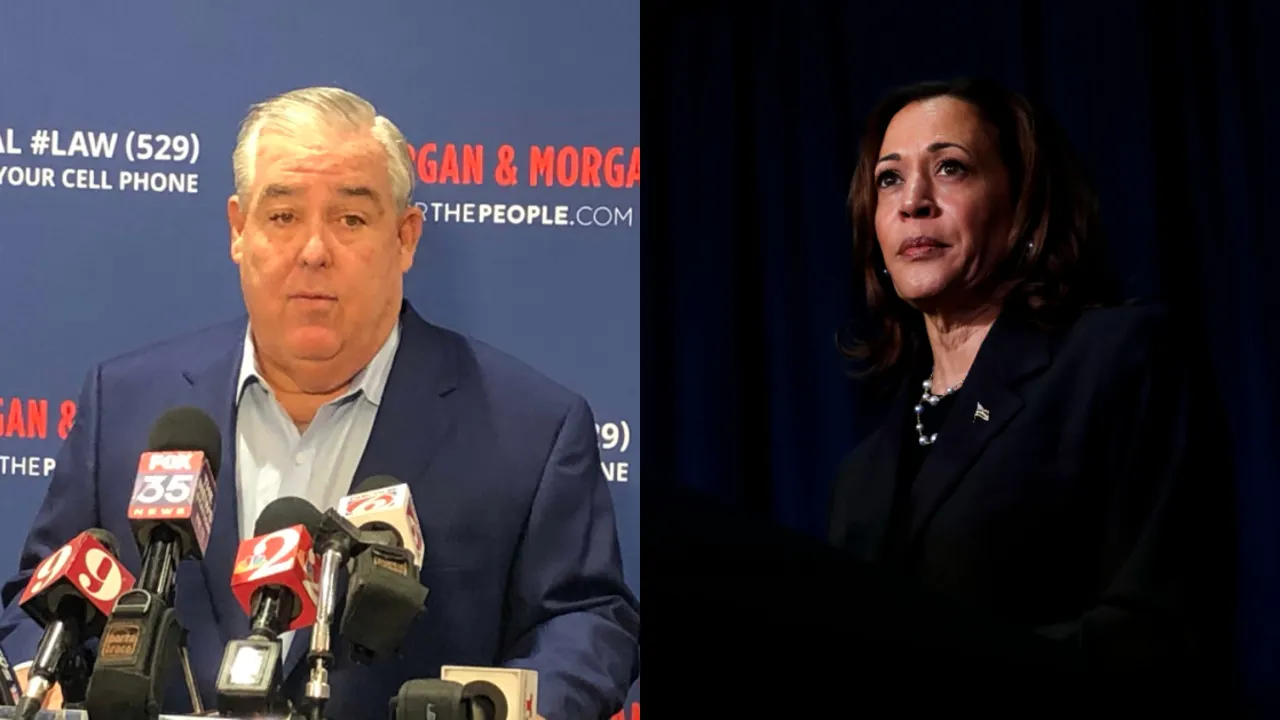
WASHINGTON, D.C. – John Morgan, a big-time Democratic donor from Florida, went on Fox News and ripped into Kamala Harris’s 2024 campaign. He said Donald Trump’s son Barron showed more smarts than the whole Democratic team that spent a billion dollars.
Morgan runs Morgan & Morgan, a major personal injury law firm. He spoke with host Kayleigh McEnany after the election. His words spread fast in political news circles.
Barron Trump looks like a model, yet he told his dad to hit podcasts like Joe Rogan’s, Morgan explained. An 18-year-old freshman got it right. Seasoned pros with big salaries missed the mark on media.
“Barron Trump beats everyone on the Harris team,” Morgan stated flat out. Progressives skipped Joe Rogan because they did not like him.
Joe Rogan Snub Cost Democrats Big Time
Post-election talk centers on Joe Rogan. Trump’s October 25 interview hit 52 million views before Election Day. Harris’s clip from “Call Her Daddy” on October 6 stayed under one million views. Her team wanted Rogan to come to her for just one hour. He suggested his Austin studio for the usual three hours. That fell through.
Trump showed real commitment. He arrived three hours late to a rally after Rogan’s show, Morgan pointed out. Both sides differed on reaching new listeners.
Rogan’s YouTube channel has 18.6 million subscribers. Edison Research says 80% of viewers are men, and 51% are 18 to 34 years old. Harris needed young guys. Skipping this hurt badly, Morgan argued.
“If I ran things, I’d do Rogan and Fox nonstop,” he said. “That’s how you win hearts. They hid instead, so they lost hard. She should step aside for good.”
How Barron Trump Shaped the Podcast Wins
Barron acted like a secret media advisor. Jason Miller, a top Trump aide, told Politico that Barron picked key podcasts.
Those shows targeted young male fans of streamers and hosts. The plan worked well.
On Rogan’s show, Trump credited his son. “Barron’s smart and tall. He knows guys I’ve never heard of. He said they’re huge, Dad.”
Morgan highlighted this to show Democratic blind spots. Progressives stuck to their views. A teen saw clear chances they ignored.
Morgan slammed money handling, too. Harris raised over a billion dollars but ended twenty million in the red. They spent more than they took in.
Money flooded in with 100 days left. Ad buyers, talent, and consultants grabbed it all, Morgan said on NewsNation’s CUOMO show. “No ads run, no pay for some.”
Did they steal? “Maybe legally,” he replied. Lots of folks cashed in, but no crime was hinted at.
Spending shocked: fifteen million on events, four million on jets, one million to Oprah’s firm. Consultants chased fees in safe states like Florida.
“Donors fought Trump, but many got rich off it,” Morgan said. “This bars her forever. Can’t run a campaign? Can’t lead America.”
Harris Lacked Support and Skills from the Start
Morgan doubted Harris early on. Obama and Pelosi did not back her to replace Biden. Obama waited five days.
She ran before and got zero delegates, just 8% in California. Morgan begged party leaders to skip her. Biden tied her down. Voters rejected Trump, not her, he noted.
“She copies Obama,” he told McEnany. Trips to Hawaii, speech style, all fake. “She’s no Obama. Zero talent. No more runs for president.”
Harris chased anti-Trump folks. Trump built fans on podcasts instead.
Morgan’s voice carries weight as an insider. In July, he went independent on NewsNation. No cash for Harris. On X, he said you need real fire or job hopes to fundraise. He had neither.
He picked Andy Beshear or Joe Manchin as better leads. Democrats had choices but passed.
The billion-dollar flop sparked fights. DNC’s Lindy Li told NewsNation staff to quit over money mess.
Morgan’s final take stays simple. They burned cash, dodged Rogan, and ignored voters. A kid’s tips beat pros. That ends her shot at the top.
“You can’t run a campaign? You sure can’t run the country.”
John Morgan founded Morgan & Morgan, a top U.S. personal injury firm. He was a key Democratic donor. His Fox chat with Kayleigh McEnany went viral in late November and early December 2024.
Related News:
Democrat Appointed Judge Reassigned from Musk Case Over Bias


Trump and Rubio Put NATO Under “Huge Stress” as US Weighs Exit Over Iran War

President Trump Addresses Nation on War with Iran

Swalwell Panics Demands FBI Halt Release of Fang Fang Spy Files

Democrat Megadonor Exposes How Clueless Harris Campaign Really Was

Trump Signs Executive Order Tightening Mail-In Ballot Rules Before 2026 Midterms

Democrat Appointed Judge Reassigned from Musk Case Over Bias

Trump Warns NATO Allies: America Won’t Protect Slackers After Iran Clash

Is Ilhan Omar at Risk of Deportation? The Facts and U.S. Immigration Law

Marco Rubio Criticizes NATO Says Current Setup “Not a Very Good Arrangement”

Iran Rejects China’s Mediation Offer in Ongoing War with US and Israel

Thai Billionaire Charged With Lese Majeste Over Facebook Post

Russia Bans Facebook, Meta Says It’ll Do “Everything” To Restore Service

Facebook Login Feature – Clash of Clans

4 Things you can do to take your Facebook Lead Generation to the Next Level

Zuckerberg to Allow Violent Speech on Russia After Facebook Blocked

Facebook Loses $200 Billion as Users Shift to TikTok

Downloading Facebook Videos Anonymously with High Quality Video through Snapsave app

The Best Site to Buy Real Facebook Likes and Followers in 2022

Chinese Man Arrested for Using Facebook to Dupe Cryptocurrency Investor

Google and Facebook Under Huge Pressure Over User Privacy
President Trump Addresses Nation on War with Iran
Trump Warns NATO Allies: America Won’t Protect Slackers After Iran Clash

Senate Hearing on Fraud and Foreign Influence Turns Tense Over Minnesota Scandals

CNN Forced to Backtrack Its Reporting on Trump’s Iran Talks

Joe Rogan Slams Gavin Newsom for Mocking Nick Shirley

Mosque Set Ablaze in Iran a Citizens Revolt Against the Islamic Regime

AOC Accuses Jessie Watters of Fox News of Sexualizing and Harassing Her

JD Vance Exposes Walz’s Fraud and CNN’s Lies in White House Presser

Milestone Card Credit: How the Milestone MasterCard Can Transform Credit
-

 China2 months ago
China-Based Billionaire Singham Allegedly Funding America’s Radical Left
-

 Politics2 months ago
CNN Delivers Stark Reality Check to Democrats Over Voter ID
-
 News3 months ago
Mosque Set Ablaze in Iran a Citizens Revolt Against the Islamic Regime
-

 Health3 months ago
RFK Jr Introduces the New Food Pyramid to “Make America Healthy Again”
-

 Politics1 month ago
Ilhan Omar’s Connections to Convicted Somali Fraudsters Surface
-

 Entertainment3 months ago
Epstein Files Get Broken Down By Alex Jones and Nick Fuentes
-

 Politics2 months ago
President Trump Addresses ICE Actions Amid Minnesota Unrest
-

 Politics3 months ago
Latest 2026 Midterm Election Polls: Senate, House, and Governors Races