Connect with us

Politics

Senate Poised to Square Off at Hearing Over ‘Rogue’ Judges

VORNews

Published

on

Senate Poised to Square Off at Hearing Over ‘Rogue’ Judges
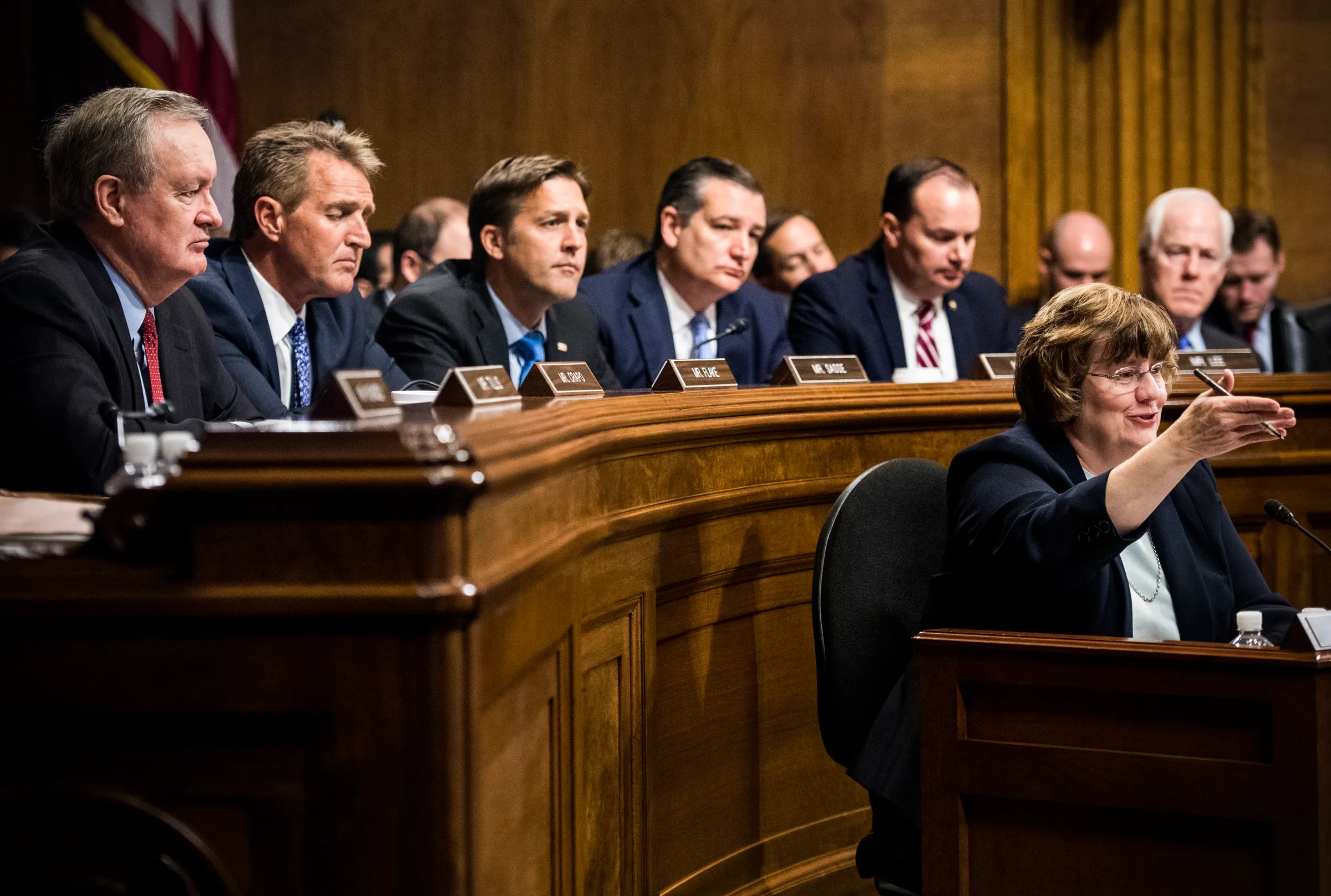
WASHINGTON, D.C. – Tensions over the Constitution are set to rise in Washington on Wednesday, as the Republican-led Senate Judiciary Committee holds a high-profile hearing titled, “Impeachment: Holding Rogue Judges Accountable.”

The hearing, scheduled for 2:30 p.m. in the Dirksen Senate Office Building, marks the latest and clearest step in a growing GOP drive to confront federal judges whose rulings have repeatedly blocked the policy goals and political priorities of President Donald Trump and his allies.

This session is less a dry review of judicial conduct and more a planned political showcase aimed at the lifetime tenure of federal judges. Republicans have filed impeachment resolutions against judges in several parts of the country, but the spotlight, and the fiercest anger on Capitol Hill, is aimed at the federal bench in Washington, D.C., especially Chief Judge James E. Boasberg of the U.S. District Court for the District of Columbia.

Judge Boasberg, appointed to the federal bench by former President Barack Obama after earlier serving on the D.C. Superior Court under President George W. Bush, has become a focal point for conservative outrage. His cases often involve high-stakes questions of national security, immigration, and executive power. That docket has placed him in the role of a key legal barrier to multiple Trump administration policies.

The story driving Wednesday’s hearing is the Republican claim that some judges have abandoned neutrality and turned their positions into tools of partisan combat. The witness list includes legal scholars and conservative advocates, such as representatives from the Article III Project. They are expected to argue that impeachment is a necessary tool to respond to what they see as a broad “weaponization” of the judiciary.

The Boasberg Target: Two Articles of Impeachment

The effort to oust Judge Boasberg stands out for both its intensity and its persistence in Congress. In the current 119th Congress, Republican House members have already filed at least two separate impeachment resolutions against him. These articles lay out two major grievances that GOP leaders say amount to “high crimes and misdemeanors.”

The first charge, and the most politically explosive, centers on the “Arctic Frost” investigation. Republicans accuse Chief Judge Boasberg of misusing his authority by allowing Special Counsel John L. Smith to issue secret subpoenas for phone records and toll records of several sitting Republican senators, including Marsha Blackburn, Ted Cruz, Josh Hawley, and others.

Representative Brandon Gill (R-Texas), who filed a resolution on November 4, 2025, claimed that Boasberg acted as an “accomplice” in what he described as “spying on Republican senators.” Gill and his allies argue that this move violated the separation of powers and trampled on legislative privilege, since it targeted lawmakers in the middle of carrying out their constitutional roles.

The second major complaint, outlined in a March 2025 resolution, arises from Boasberg’s ruling on immigration enforcement. In that case, the judge blocked President Trump’s use of the 1798 Alien Enemies Act to deport foreign nationals, including alleged members of violent groups such as Tren de Aragua, without standard due process protections.

His order forced planes that were already in the air with these migrants on board to turn around, which effectively shut down a key executive action. Republicans argue that this ruling seized power from the President and violated what they view as his sole and unreviewable authority over foreign policy and immigration enforcement.

Chief Judge Boasberg declined the committee’s invitation to appear at the hearing, as did U.S. District Judge Deborah Boardman, another judge who has drawn Republican criticism. Their decision not to testify is not unexpected, given the rare and fraught nature of asking sitting judges to defend their rulings before a panel that is weighing whether to remove them from office.

To Republicans, the refusal reads as defiance and arrogance. To many legal experts, it reflects a long-standing principle that judges should not be questioned by Congress about the substance of their official decisions.

The Senate’s Steep Road to Removing a Judge

While the hearing gives Republicans a national platform to broadcast their complaints and rally supporters, the actual odds of removing a federal judge through impeachment are extremely low.

The Constitution sets the rules for this process. Federal judges, like the President and other civil officers, can face impeachment for “Treason, Bribery, or other high Crimes and Misdemeanors.” The process has two stages.

Impeachment in the House:

The House of Representatives must first approve articles of impeachment with a simple majority. Given the effort Republicans are already putting into this issue, passage of articles against Judge Boasberg or another judge is possible, though not guaranteed.

Trial and removal in the Senate:

If the House impeaches, the Senate then holds a trial, acting as a High Court of Impeachment. To convict and remove a judge, two-thirds of the Senate, or 67 senators, must vote to do so. That supermajority requirement is a very high bar.

History shows how rare removal is. Since the founding of the country, only 15 federal judges have ever been impeached by the House. Out of those, just 8 were convicted and removed by the Senate. The most recent was Judge G. Thomas Porteous Jr. in 2010, who was removed for bribery and perjury, which involved clear criminal corruption, not disagreements over how he interpreted the law.

Legal scholars across the spectrum largely agree that disagreements over rulings, even if lawmakers see those rulings as biased or politically motivated, do not meet the standard for impeachment. The phrase “high crimes and misdemeanors” is meant to shield judicial independence so that judges can issue unpopular or controversial decisions without facing removal for political reasons.

Given today’s narrow and deeply divided Senate, reaching a two-thirds vote to convict any sitting judge over disputes about executive power or constitutional interpretation looks almost impossible. Even if the House passes articles of impeachment against Boasberg, a Senate trial would almost certainly end in acquittal, likely along party lines.

Symbolic Clash More Than Likely Change

For that reason, Wednesday’s hearing is less about actually removing Judge Boasberg and more about sending a political message. For Republicans, the session serves several goals at once. It channels conservative anger at what they see as activist courts, keeps public pressure on judges who might rule against future conservative policies, and highlights the sharp polarization that has now spread into the judiciary.

Seeing a Senate committee, which usually focuses on confirming judges, turn its attention to building a case to impeach a sitting chief judge shows how strained the relationship has become between elected officials and the courts. As this impeachment push gains steam, the pressing question is not whether Judge Boasberg will lose his seat on the bench. The more serious issue is how much long-term harm this clash could cause to the independence and credibility of the federal judiciary as a whole.

The upcoming hearing is likely to be dramatic, with sharp partisan lines, heated testimony, and intense media coverage. It will mark another flashpoint in the ongoing struggle among the Executive, Legislative, and Judicial branches over who holds the final word on core constitutional powers in Washington.

For more background on the controversy, the video titled Republicans plan to impeach Judge Boasberg over senators’ subpoenas offers additional detail on the judicial actions that sparked the current impeachment push.

Related News:

The GOP Need More Fiscal Responsibility in Government Spending

Continue Reading

Politics

Tim Walz Suffers Legal Blow as Rioters Overtake Minneapolis

VORNews

Published

on

By

Tim Walz suffers LEGAL BLOW

MINNESOTA – The U.S. Department of Justice has started an investigation into Minnesota Governor Tim Walz and Minneapolis Mayor Jacob Frey, raising tensions between the Trump administration and Democratic-run cities and states.

Federal officials say the two may have worked to slow or disrupt Immigration and Customs Enforcement (ICE) through public statements and local actions, while immigration enforcement ramps up across the Twin Cities.

The probe, first reported on January 16, 2026, focuses on whether Walz’s and Frey’s comments about the ICE operation crossed a legal line. Both have described the federal effort as chaotic, unsafe, and driven by politics. Sources familiar with the case told outlets including CBS News, CNN, and the Associated Press that investigators are reviewing possible violations tied to conspiring to impede federal officers.

No charges have been announced. As of late January 16, neither office said it had received formal notice, though reports say subpoenas are expected, and some accounts claim they have already gone out.

The investigation comes during Operation Metro Surge, which the Department of Homeland Security (DHS) has called the largest immigration enforcement action it has ever carried out. Since late 2025, nearly 3,000 federal agents have poured into the Minneapolis area. The operation targets undocumented residents, looks into alleged welfare fraud (with a focus on Minnesota’s Somali community), and includes raids that have drawn strong backlash.

Renee Nicole Good Shot Dead

Tensions grew after an ICE officer shot and killed Renee Nicole Good, a 37-year-old mother of three, during an encounter in early January 2026. DHS said the officer acted in self-defense and claimed Good tried to use her vehicle as a weapon. Local leaders and activists challenged that account, pointing to a video they say tells a different story.

Walz and Frey have repeatedly condemned the ICE deployment. Walz has called it a “federal invasion” and accused agents of using excessive force. Frey has publicly told ICE to “get out” of Minneapolis, saying the operation drains local police resources and heightens fear in many neighborhoods.

Both have urged people to protest peacefully, while also backing lawsuits with Minnesota Attorney General Keith Ellison that claim constitutional violations, including First and Tenth Amendment issues.

After news of the DOJ probe, Walz said the administration is “weaponizing the justice system against political opponents,” calling it an “authoritarian tactic” and pointing to similar actions taken against other critics. Frey said the investigation looks like a blunt effort to scare him into silence for speaking up for residents and local law enforcement.

Preliminary injunction

Federal officials and other critics say the governor and mayor helped stir unrest. DHS Secretary Kristi Noem and Deputy Attorney General Todd Blanche accused them of inflaming tensions around the raids. Blanche wrote on X that a “Minnesota insurrection” grew from their “encouraging violence against law enforcement,” and he said the administration would stop them “by whatever means necessary.”

That language has fueled claims that their words, along with policies seen as sanctuary-like (even though Minnesota disputes being a formal sanctuary state), have made ICE’s work harder.

Adding another layer, a federal judge issued a preliminary injunction on January 16, 2026, limiting how ICE can respond to demonstrators. U.S. District Judge Katherine Menendez, appointed under President Biden, ordered agents not to arrest, detain, or retaliate against people “engaging in peaceful and unobstructive protest activity,” including those who observe ICE operations.

The order, more than 80 pages long, also blocks the use of pepper spray, tear gas, and similar nonlethal tools on such people. It also limits vehicle stops unless agents have reasonable suspicion that someone is forcibly interfering.

What the Court Says Counts as “Peaceful” Protest

The injunction describes “peaceful and unobstructive” conduct as non-violent and non-threatening behavior that doesn’t forcibly block agents from doing their jobs. That includes gathering to speak or assemble, recording enforcement activity, and watching operations from a safe distance.

The judge also noted that following federal vehicles at an appropriate distance, a tactic sometimes used by community observers, can fall within protected activity. The ruling stresses that being present, criticizing ICE, or simply watching is not enough to justify arrest or force without probable cause of a crime or clear obstruction.

At the same time, the order does not protect violence or direct interference. Actions like assaulting officers, damaging property, or physically blocking enforcement are excluded. DHS pushed back on the ruling, saying it still allows officers to respond to “dangerous rioters,” and it emphasized that rioting and assault remain federal crimes.

The injunction follows similar court limits in other cities and comes from a lawsuit brought by protesters represented by the ACLU, who claim ICE used unconstitutional force, including arrests without cause and chemical irritants.

For demonstrators, the order offers short-term protection during an intense period of protests and raids. Still, it leaves room for conflict in fast-moving situations, where officers make quick calls under pressure while risking court penalties if they cross the line.

As protests continue and the DOJ investigation moves forward, the dispute underscores a widening fight over immigration enforcement, free speech, and policing tactics. Minnesota leaders say they’ll resist what they view as political retaliation, while the administration says it will enforce federal law “by whatever means necessary.”

Related News:

Articles of Impeachment Filed Against Tim Walz Over Massive Fraud

Continue Reading

Politics

Trump Threatens Minnesota With Insurrection Act Over ICE Protests

VORNews

Published

on

By

Trump Threatens Insurrection Act

WASHINGTON, D.C. – Tensions in Minnesota have spiked after President Donald Trump warned he may use the Insurrection Act to send U.S. military forces in response to protests tied to federal immigration enforcement.

The warning comes as Minneapolis sees clashes between demonstrators and Immigration and Customs Enforcement (ICE) agents after two widely reported shootings. At the same time, federal investigators say they are still uncovering large-scale fraud in state-run programs.

Republicans argue Democrats are pushing the ICE story to pull attention from the fraud cases, while state leaders such as Governor Tim Walz say the federal response is fueling fear and disorder. The White House, meanwhile, says local officials are letting unrest grow.

Rising Tensions in Minneapolis

The latest unrest grew after an ICE agent fatally shot 37-year-old Renee Nicole Good, a U.S. citizen and mother of three, during an immigration enforcement action in Minneapolis. Her death set off protests across the area, with critics accusing federal agents of using excessive force and overstepping their role during Trump’s immigration crackdown.

A second ICE-related shooting followed on January 14. A federal officer shot a man in the leg during an attempted arrest in north Minneapolis. The Department of Homeland Security (DHS) said the officer was attacked. Witnesses and local officials disputed that account and described the event as part of a wider pattern of aggressive enforcement.

Since then, protests have escalated into confrontations, including outside federal buildings such as the Bishop Henry Whipple Federal Building. Streets have been blocked, arrests have been reported, and some accounts describe agents using force against protesters, including smashing car windows and detaining bystanders.

Minnesota officials estimate 2,000 to 3,000 armed federal agents are now in the Twin Cities, a presence they say exceeds local police staffing. Walz called the surge a “federal invasion,” urged residents to document ICE actions for possible future legal cases, and asked people to keep protests peaceful.

White House Press Secretary Karoline Leavitt defended the operations, saying ICE is targeting “heinous criminals,” including child abusers and drug traffickers. She accused Democratic leaders, including Walz and Minneapolis Mayor Jacob Frey, of using public statements in ways that encourage violence toward federal officers. DHS officials also reported rising threats against agents, including alleged ambush attempts and interference during arrests.

Trump’s Insurrection Act Warning

On January 15, Trump posted on Truth Social that he would invoke the Insurrection Act if Minnesota’s “corrupt politicians” did not stop what he called “professional agitators and insurrectionists” from attacking ICE agents.

The Insurrection Act, passed in 1807, gives a president authority to deploy military forces inside the United States to suppress uprisings or enforce federal law when local authorities cannot or will not do so. Trump pointed to earlier uses of the law by other presidents and said federal agents are “only trying to do their job.”

Trump has raised the Insurrection Act before. He weighed it during the 2020 protests after George Floyd’s death, also in Minneapolis. Legal experts say the law has been used around 30 times in U.S. history, but using it in a modern major city could trigger major legal fights over federal power and civil rights.

Walz responded by urging Trump to lower the tension and stop what he called a “campaign of retribution.” Minnesota has also sued the Trump administration to block the federal agent surge, arguing it is creating chaos and spreading fear across communities.

Fraud Investigations Expand

While the ICE protests dominate headlines, federal investigators have kept pushing forward on fraud cases tied to Minnesota social services programs. Prosecutors estimate up to $9 billion may be fraudulent out of roughly $18 billion spent since 2018 across programs such as child care assistance, Medicaid-funded housing, and pandemic relief.

The investigations began surfacing in 2021 and include allegations that providers billed for services that never happened. Many cases have been linked to the state’s Somali community. So far, 98 defendants have been charged and 64 have been convicted, with investigators also looking into possible links to elected officials and terrorist financing.

The Trump administration has frozen $10 billion in child care funding for Minnesota and four other Democratic-led states (California, Colorado, Illinois, and New York), citing “extensive and systematic fraud.”

A viral video from influencer Nick Shirley, which accused Somali-run day cares of fraud, added fuel to the issue, though some of its claims have been debunked. Republicans in Congress have also held hearings, with House Oversight Committee Chairman James Comer calling for stronger accountability.

Under rising pressure, Walz announced on January 5 that he will not run for re-election, saying he needs to focus on the scandal instead of campaigning. He has admitted his administration had a “culture of being a little too trusting” and says new anti-fraud steps are now in place. Republicans argue that those changes came too late and claim the problem was allowed to grow for political reasons.

Distraction Claims Deepen

Republicans say Democrats, major news outlets, and Walz are giving the ICE protests outsized attention to draw focus away from the fraud findings. Rep. Greg Steube tied attacks on ICE agents to what he called Democratic “demonizing” of federal officers.

Vice President JD Vance praised Shirley’s video and suggested it provided stronger reporting than much of the protest coverage. The White House has also highlighted Minnesota fraud efforts in official messaging, implying that Democratic-led states share blame, and administration officials have pointed to immigrants as drivers of the schemes without offering evidence.

Democrats respond that the fraud investigations are serious but started well before the current ICE surge. They say the protests are driven by real anger over federal use of force. Walz has challenged the $9 billion estimate and says his administration helped spot problems early.

Major outlets, including The New York Times and CNN, have reported on both the protests and the fraud investigations, with live protest updates appearing alongside coverage of fraud hearings. Advocates say ICE actions have intensified under Trump and point to data showing more shootings involving immigration agents.

Both issues now sit at the center of a sharp political fight. Republicans frame the fraud as proof of Democratic failures in blue states. Democrats argue the ICE surge is meant to punish political opponents.

As investigations continue, Minnesota residents are demanding answers on both fronts, including independent reviews of ICE actions and stronger controls to prevent fraud. Another Insurrection Act move could push tensions even higher and test the limits of federal authority.

Minnesota may also preview Trump’s approach in other Democratic strongholds. The administration has already broadened fraud probes and funding freezes to states such as California and New York. Supporters say the pressure is needed to stop waste and abuse. Critics warn the strategy may weaken trust in public aid programs.

With Walz stepping aside, the 2026 governor’s race is now wide open, and the state’s political future looks less predictable. Community leaders continue to call for calm, with Walz warning against violence that could be used to justify more federal action. As national attention stays fixed on Minnesota, the state’s overlapping crises show how immigration policy, public spending, and political messaging can collide fast in Trump’s second term.

Continue Reading

Politics

Articles of Impeachment Filed Against Tim Walz Over Massive Fraud

VORNews

Published

on

By

Articles of Impeachment Filed Against Tim Walz

ST. PAUL, Minnesota – Republican lawmakers in the Minnesota House have introduced articles of impeachment against Democratic-Farmer-Labor (DFL) Gov. Tim Walz. The move targets the two-term governor shortly after he said he won’t run for re-election in 2026.

The resolution is dated January 12, 2026, and is led by State Rep. Mike Wiener (R-Long Prairie). It accuses Walz of “corrupt conduct in office” and claims he broke his constitutional oath by failing to faithfully enforce state laws.

At the center of the push are claims of major fraud inside state-run programs. The resolution argues the fraud could involve billions of taxpayer dollars and says Walz did not act fast enough to stop it.

The filing comes as federal investigators continue to look into large fraud schemes tied to programs such as child care assistance and Medicaid. Those probes have drawn wider attention after whistleblower reports and law enforcement raids.

Tim Walz, who has served as governor since 2019 and was the 2024 Democratic vice-presidential nominee, has rejected any claim of wrongdoing. He and his allies have described the impeachment effort as political “retribution.”

The Articles of Impeachment Against Walz, Explained

The resolution lists four articles that accuse Walz of serious failures in office:

  • Article I: Concealment or Allowing Widespread Fraud
    The first article claims Walz knew about broad, ongoing fraud in state programs and either helped hide it or allowed others to do so. It points to warnings from audits, reports, and other public signs of abuse. The resolution also references statements from prosecutors and whistleblowers who say the governor was briefed about large losses but did not take strong action, letting the activity continue.
  • Article II: Blocking Oversight and Investigations
    The second article accuses Walz of getting in the way of proper oversight. It says he did not direct executive agencies to fully cooperate with audits and investigations, allowed resistance to legislative review, and failed to discipline officials tied to program oversight.
  • Article III: Putting Politics Ahead of Accountability (based on the resolution’s descriptions)
    The third article suggests Walz focused more on political messaging than open and transparent management. It argues this approach may have weakened safeguards meant to prevent fraud.
  • Article IV: Failure to Protect Public Funds
    The fourth article claims Walz did not fulfill his duty to enforce laws that protect public money. It accuses him of letting safeguards go unenforced, not putting stronger anti-fraud steps in place, and allowing losses to pile up across several programs.

Supporters of the resolution include Reps. Pam Altendorf, Ben Davis, Krista Knudsen, and others. They say at least 10 GOP lawmakers back the effort and cite estimates that potential losses could reach as high as $9 billion. They argue the impeachment push is about answering public demands for accountability.

Political Backdrop and Legislative Roadblocks

As of early 2026, the Minnesota House is split 67 to 67 between Republicans and Democrats. That balance makes impeachment hard to pass without some bipartisan votes. If the House approves the articles, the matter would move to a trial in the Minnesota Senate. Conviction and removal would require a two-thirds vote, at least 45 of 67 senators.

Because of the close split and the high vote threshold, some observers have called the effort more symbolic than practical.

Minnesota’s 2026 legislative session begins February 17, when the House could take up the resolution. Under the Minnesota Constitution (Article VIII, Section 3), adoption of the articles would temporarily prevent Walz from carrying out his duties until the case is resolved or he is acquitted.

Walz’s office has brushed off the effort as an attempt to ride the momentum of federal actions and political grudges. A spokesperson said: “These legislators are apparently trying to capitalize on the president’s vow for ‘retribution’ against the state.

Wider Fallout and Reactions

Respected career attorneys have resigned over the DOJ’s behavior. The federal government is attempting to pull billions from its constituents. It is shameful that this is how they’re choosing to spend their time, and we urge them to get serious.”

Walz has said his focus remains on protecting Minnesotans from fraud and responding to critics. In early January, he announced he won’t seek a third term as the controversy continues.

The impeachment filing has sparked a heated fight at the Capitol. Republicans frame it as a needed response to misconduct and inaction by the governor’s office. Democrats and Walz supporters call it a distraction and say it reflects growing national political tension spilling into state government.

The dispute has also put a spotlight on weak points in Minnesota’s public assistance programs and raised sharper questions about oversight under Walz’s administration. Analysts note that even if the articles reflect real public concern about fraud, removing a sitting governor remains a steep climb in a divided Legislature.

With the session set to begin, attention will stay on whether any Democrats break ranks or whether the effort stalls and becomes another round of political theater. For now, the articles mark the strongest formal challenge to Walz’s tenure since he took office.

Related News:

New Voter ID Laws 2026: How Will They Affect the 2026 Midterms

Who Is Leading the Democratic Party in 2026?

Continue Reading

Get 30 Days Free

Express VPN

Create Super Content

rightblogger

Flight Buddies Needed

Flight Volunteers Wanted

Trending