


Connect with us

News

Candace Owens Vindicated Over Erika Kira Ft. Huachuca Claim With New Evidence

VORNews

Published

on

Candace Owens VINDICATED Over Ft. Huachuca

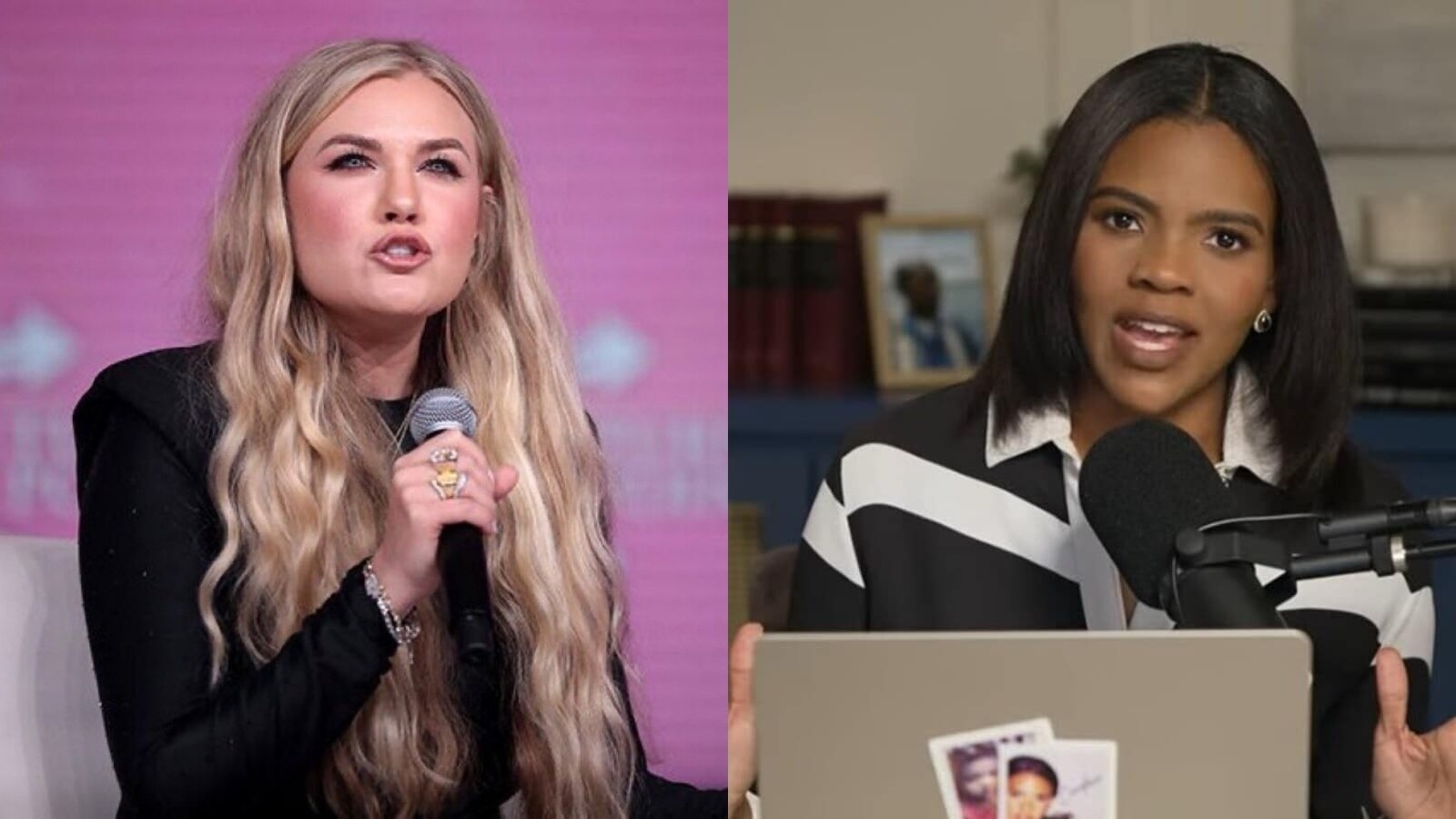
TUCSON, Arizona – Claims circulating online and on social media and talk on conservative podcasts are vindicating Candace Owens and are now pushing a growing claim that Erica Kirk, the widow of conservative activist Charlie Kirk and the current CEO of Turning Point USA, has connections to Fort Huachuca in Arizona, a U.S. Army base known for its CIA intelligence training.

In many versions, the story claims she was at or near the base in the days just before Charlie Kirk’s assassination in September 2025. Some posts also repeat a label used online that calls Fort Huachuca a “CIA Training Camp.” Other threads add a side claim that her presence was tied to people connected to an unmade film project about defense and advanced technology.

Where the Allegations Came From

Much of the attention traces back to an exclusive interview on Candace Owens’ podcast in mid-December 2025. Owens interviewed a guest introduced as Mitch Snow, described as a retired U.S. Army staff sergeant and former combat medic. Snow said he had once pursued Special Forces training, but an injury ended that path.

Snow claimed he went to Fort Huachuca around September 8 to 9, 2025, because a long-standing gag order had expired and he wanted access to older personal records. He said he accidentally walked into a restricted area, was detained for hours, and then released.

In the interview, Snow said he noticed people he believed were linked to Turning Point USA. He claimed, with “95 to 99% certainty,” that he recognized Erica Kirk in the lobby of a hotel or nearby facility. He described her based on an older photo and said she wore her hair in a ponytail. Snow added that she was with a man he connected to the organization, possibly someone in security or a similar role.

He also claimed he saw Brian Harpole, described as Charlie Kirk’s head of security, leaving what looked like a high-level meeting. Owens and supporters later framed these sightings as happening the evening before, or the day before, Charlie Kirk was fatally shot in Utah.

How Candace Owens Has Framed the Base

Candace Owens has described Fort Huachuca as more than a normal military post. She has pointed out that it hosts military intelligence courses, often shortened in military use to MIT (Military Intelligence Training). In her telling, that kind of setting can include programs where civilians might be trained and used as intelligence assets.

Across several discussions, Candace Owens has stressed a difference between standard bases and installations focused on intelligence work. She has suggested the base could support quiet meetings and activities tied to defense-related topics.

Online discussion has also tried to connect the Fort Huachuca story to a dropped film or media project. In those threads, people mention defense contractors, fears about technology weaknesses (like EMP threats or power grid security), and claims about psychological operations training.

Some of those talk points refer to older material, including unrelated footage where Erica appeared in a 2013 documentary clip alongside former intelligence figures. Still, no public proof has confirmed that Erica Kirk had a direct role in any film project tied to Fort Huachuca.

Much of what circulates comes from forum posts, X threads, and clipped podcast segments that build on each other.

The allegations have sparked loud arguments online. Supporters, including Candace Owens, say the eyewitness story should be taken seriously, especially with ongoing questions about timelines, alibis, and the larger set of events around Charlie Kirk’s death.

Owens has said she prefers verified facts over emotional reactions. She has also said she checked parts of Snow’s account before running the interview, mentioning metadata, receipts, and other review steps.

Candace Owens has addressed why she did not challenge Erica Kirk about Fort Huachuca during a private multi-hour meeting in late 2025, saying she was still checking details and planned to follow up later.

Pushback and Questions

Critics, including some conservatives and mainstream outlets, have pushed back hard. Much of the response has focused on Snow himself, not on independently confirming or disproving the travel and location claims he made.

Detractors have pointed to his personal history, his medical discharge, and the limits of a “95% sure” identification. Some reports have grouped his story with wider conspiracy narratives around the assassination, calling it unverified and sensational.

Other coverage has also noted that rumors about Erica Kirk have spread since Charlie Kirk’s death, including claims tied to unrelated scandals or made-up stories, often without evidence.

Erica Kirk has publicly responded to conspiracy claims in social media posts and interviews. She has rejected what she described as disrespect from figures like Candace Owens and has said her focus is on protecting her family and running Turning Point USA.

She has also shared details, including flight records for associates, to push back on certain timeline accusations.

As of early 2026, no official findings have confirmed the Fort Huachuca sightings or any link to a film project. The story remains a major flashpoint in online conservative debate, showing how a single eyewitness account can spread fast after a tragedy, especially in a tense political moment.


Related News:

Candace Owens Alleges FBI Was Involved in Kirk Assassination Coverup

Continue Reading

News

Supreme Court Crushes Democrats Racial Gerrymandering in 6-3 Decision

VORNews

Published

on

By

Supreme Court EARTHQUAKE

WASHINGTON, D.C. – In a series of landmark 6-3 rulings that have reshaped the American electoral landscape, the Supreme Court of the United States has delivered significant legal victories to Republican-led legislatures.

The Court’s recent decisions, particularly in cases involving South Carolina and Louisiana, have effectively raised the bar for challengers who argue that voting maps are racially discriminatory.

These rulings signal a shift in how the judiciary handles the messy intersection of race and politics. By emphasizing that partisan gerrymandering is a political issue beyond the reach of federal courts, the justices have provided a robust legal shield for mapmakers who claim their goal was to gain a party advantage rather than to target voters based on their race.

The South Carolina Decision: A Shield for Partisanship

In Alexander v. South Carolina State Conference of the NAACP, the Supreme Court reversed a lower court’s finding that South Carolina’s 1st Congressional District was an unconstitutional racial gerrymander. The case centered on the movement of tens of thousands of Black voters out of a swing district to make it “safely Republican.”

Writing for the 6-3 majority, Justice Samuel Alito argued that the lower court failed to provide sufficient evidence that race—rather than party loyalty—was the “predominant factor” in the map’s design. The Court emphasized several key points that now serve as a roadmap for future redistricting:

  • Presumption of Good Faith: Courts must start with the assumption that state legislatures act in good faith when drawing lines.
  • The “Alternative Map” Requirement: Challengers are now largely expected to produce an alternative map that achieves the same partisan goals without the same racial results to prove their case.
  • Correlation vs. Causation: Because race and party affiliation often overlap, the Court ruled that a map that looks like it targets race might actually just be targeting Democrats or Republicans.

Louisiana and the Narrowing of the Voting Rights Act

The legal momentum continued into 2026 with the Court’s intervention in Louisiana’s redistricting battle. In a 6-3 decision, the Court struck down a map that would have created a second majority-Black district in the state.

The justices ruled that the state’s use of race to create the new district constituted an unconstitutional racial gerrymander. This decision is particularly striking because the map had originally been drawn to comply with Section 2 of the Voting Rights Act (VRA). By striking it down, the Court has signaled that the VRA does not give states a “blank check” to prioritize race over traditional districting principles, such as keeping communities together or following geographic boundaries.

Key Takeaways from Recent Rulings

  • Federal Oversight Recedes: Federal courts are now less likely to intervene in redistricting unless there is “smoking gun” evidence of intentional racial bias.
  • Partisan Advantage is Permissible: Following the precedent set in Rucho v. Common Cause, the Court maintains that drawing maps for partisan gain is a “non-justiciable” political question.
  • Higher Burden of Proof: Civil rights groups face a much steeper climb in proving that a legislature used race as a proxy for party.

The National Impact: A “Gerrymandering Arms Race”

These decisions have triggered what analysts call a nationwide “gerrymandering arms race.” With the legal guardrails loosened, both parties are looking to solidify their power through mid-decade redistricting.

  1. Republican Strategy: In states like Alabama and Florida, GOP lawmakers are emboldened to maintain or create maps that maximize their seat count, confident that “partisan intent” will serve as a valid legal defense.
  2. Democratic Response: While the rulings have been seen as a blow to Democratic interests in the South, some blue states are looking to use the same logic to protect their own majorities, though they often face different state-level constitutional restrictions.
  3. Voter Impact: The primary losers in this legal tug-of-war are often minority communities whose voting power can be diluted or “packed” into single districts under the guise of political strategy.

The shift in the High Court’s approach suggests a “post-racial” view of the law that prioritizes the constitutional authority of state legislatures. Justice Elena Kagan, in her dissenting opinions, has warned that these rulings “greenlight” the systematic dilution of minority voting power.

As the 2026 midterm elections approach, these maps will play a decisive role in determining which party controls the U.S. House of Representatives. For now, the Supreme Court has made one thing clear: in the eyes of the law, “playing politics” with maps is perfectly legal, even if it changes the racial makeup of a district in the process.

Related News:

Trump Tariffs Supreme Court Ruling, What Changed in 2026

Supreme Court Orders CNN to Respond in High-Stakes Defamation Case


Continue Reading

News

Trump Shakes Up NATO: Major US Troop Drawdown in Germany

VORNews

Published

on

By

Trump Shakes Up NATO: Major US Troop Drawdown in Germany

WASHINGTON, D.C. — In a move that has sent shockwaves through the halls of European diplomacy and NATO, President Donald Trump has officially moved to slash the number of American troops stationed in Germany.

The decision, which marks a significant shift in decades of U.S. military strategy, comes as the President escalates a long-standing public feud with German Chancellor Friedrich Merz over global security and trade.

The announcement isn’t just about troop numbers; it’s a clear signal of the deepening divide between Washington and Berlin. From disagreements over the Iran nuclear deal to debates about NATO defense spending, the relationship between these two allies has reached a historic low.

President Trump has ordered the Pentagon to reduce the U.S. military footprint in Germany by nearly 9,500 personnel. Currently, about 34,500 active-duty soldiers are stationed there. Under the new plan, the cap for U.S. troops in the country would be set at 25,000.

The President’s reasoning is straightforward: he believes Germany is not paying its fair share. For years, Trump has criticized NATO members—and Germany in particular—for failing to meet the 2% of GDP defense spending target.

During a recent meeting at the White House, Trump was blunt about the situation. He questioned why the United States should “protect” Germany from Russia while Berlin continues to pay billions to Moscow for energy through projects like the Nord Stream 2 pipeline.

Key Takeaways from the Drawdown Plan:

  • The Numbers: A reduction of roughly 9,500 soldiers, dropping the total to 25,000.
  • The Relocation: Some troops may return to the U.S., while others could be moved to allies like Poland.
  • The Cost: Trump has frequently called the U.S. presence “expensive” and unfair to American taxpayers.
  • The Infrastructure: This affects major hubs like Ramstein Air Base and the Landstuhl Regional Medical Center.

The Iran Factor: A Widening Atlantic Gap

While money is a major talking point, the “Iran problem” is the underlying friction point. Chancellor Friedrich Merz has remained a staunch supporter of the 2015 Iran nuclear deal (JCPOA), which Trump famously withdrew from in 2018.

The U.S. has since implemented a “maximum pressure” campaign, including a naval blockade designed to halt Iranian oil exports. This blockade has caused significant tension in the Persian Gulf, where Iran’s Supreme Leader has recently issued defiant warnings against American presence.

The View from Tehran

The situation has been further complicated by recent comments from Iran’s leadership. In a defiant address, the Supreme Leader vowed to protect Iran’s nuclear and missile capabilities at all costs. He described the U.S. presence in the Persian Gulf as a “malice” and suggested that Americans have no place in the region except “at the bottom of its waters.”

These tensions put Germany in a difficult spot. Berlin wants to maintain the nuclear deal to prevent a regional arms race, but Washington sees this as being “soft” on a regime that continues to threaten global stability.

Impact on Global Security

Critics of the troop withdrawal argue that this is a “gift to Russia.” Germany has served as the backbone of U.S. military operations in Europe, Africa, and the Middle East since World War II.

Military experts note that these bases aren’t just for defending Germany; they are essential for:

  1. Deterrence: Keeping Russian expansion in check.
  2. Logistics: Providing a staging ground for operations in the Middle East and Africa.
  3. Medical Support: Treating wounded soldiers from various global “hot spots.”

Many U.S. lawmakers from both parties have expressed concern. Former Republican Senator Mitt Romney called the plan a “slap in the face” to a crucial ally, while others warn that it could weaken the NATO alliance at a time when global threats are rising.

Is This the End of the Transatlantic Alliance?

It is unlikely that the U.S. and Germany will part ways entirely, but the “business as usual” era of the alliance is clearly over. Chancellor Merz has historically been patient with Trump’s rhetoric, but this move feels different. It is a tangible policy change, not just a post on social media.

Interestingly, the German public is split. Recent polls suggest that nearly half of Germans actually support a reduction in American troops. Many younger Germans view the U.S. presence as a relic of the Cold War rather than a modern necessity.

What Happens Next?

  • Congressional Review: The U.S. Congress may attempt to block the funding for the withdrawal.
  • NATO Summitry: Expect tense meetings as other European leaders try to bridge the gap between Trump and Merz.
  • Regional Shifts: Watch for increased U.S. military cooperation with Poland and the Baltic states, which are eager for more American “boots on the ground.”

The world is watching to see if this is a temporary “public feud” or a permanent shift in how America views its role in the world. For now, the message from the White House is clear: the days of “free-riding” on American security are over.

Related News:

Trump Issues NATO ‘Ultimatum’ After High-Stakes White House Meeting

Trump Issues Stark Warning to NATO After Iran War Snub

Allies Abandoning US Over Iran Sparks Fears of Trump Dumping NATO

Continue Reading

News

Trump Embarrasses CNN’s Kaitlan Collins in Brutal Swipe at The White House

VORNews

Published

on

By

Trump Embarrasses CNN’s Kaitlan Collins

WASHINGTON, D.C. — In a room filled with the nation’s top space explorers and the cutting-edge technology of the Artemis program, the atmosphere shifted from the lunar horizon to political combat. President Donald Trump used a White House media briefing on Friday to laud the upcoming Artemis II mission but took a sharp, characteristic detour to criticize CNN correspondent Kaitlan Collins.

The event, held in the Roosevelt Room, was intended to showcase the administration’s commitment to returning American boots to the moon. However, the technical details of space travel were briefly eclipsed by the ongoing friction between the executive branch and the press corps.

The briefing began on a high note. President Trump was joined by the four astronauts selected for the Artemis II mission, the first crewed flight to orbit the moon in over fifty years. Standing alongside NASA Administrator Jared Isaacman, the President praised the “courage and brilliance” of the team.

The tone shifted during the Q&A portion of the event. When Kaitlan Collins attempted to ask a question regarding recent developments in the Department of Justice, the President interrupted, dismissing the query and the network.

  • The Comment: Trump referred to the reporter’s line of questioning as “nasty” and “unimportant” compared to the scientific milestones being discussed.
  • The Context: The exchange highlights the persistent tension between the administration and mainstream media outlets, even during non-partisan events like NASA briefings.
  • The Reaction: Collins attempted to follow up, but the President moved quickly to another reporter, effectively ending the interaction.

Artemis II: The Mission to the Lunar Far Side

Despite the brief verbal sparring, the primary focus of the day remained the ambitious goals of the Artemis II mission. This mission is a critical precursor to Artemis III, which aims to land the first woman and the next man on the lunar surface.

Key Mission Details

  • The Crew: The team includes Commander Reid Wiseman, Pilot Victor Glover, Mission Specialist Christina Koch, and Mission Specialist Jeremy Hansen.
  • The Goal: A 10-day flight test to ensure the Orion spacecraft’s life-support systems are ready for long-term deep-space travel.
  • The Technology: The mission utilizes the Space Launch System (SLS), the most powerful rocket ever built by NASA.

Administrator Jared Isaacman emphasized that this isn’t just a repeat of the 1960s. “We aren’t just going back to the moon; we are going there to stay and to prepare for the journey to Mars,” Isaacman told the press.

The Strategic Importance of Space Under the Trump Administration

The White House has consistently framed the Artemis program as a matter of national security and economic dominance. By involving private sector leaders like Isaacman—a billionaire adventurer and tech CEO—the administration is leaning heavily into the “New Space” economy.

During the briefing, Trump noted that the U.S. is currently in a “fierce competition” with China. He argued that American leadership in space is essential to maintaining global influence. The President’s brief swipe at the media seemed to serve as a reminder of his stance: that domestic “distractions” should not overshadow American achievements on the world stage.

The exchange with Kaitlan Collins is not an isolated incident. For years, the President and CNN have maintained a volatile relationship. Critics argue that these public rebukes are a tactic to avoid difficult questions, while supporters suggest the President is merely holding “biased” media accountable.

Journalism ethics experts often note that the White House press room is a unique environment where the First Amendment meets executive authority. When a President “swipes” at a reporter, it often goes viral, sometimes drowning out the very policy or news the President intended to promote.

As the astronauts prepare for their journey, the technical work continues at Kennedy Space Center. The Artemis II mission is currently scheduled for late next year, provided all safety checks and hardware integrations remain on track.

The White House indicated that more briefings will follow as the launch date nears. Whether those briefings will focus purely on the stars—or continue to feature the sparks of earthly politics—remains to be seen.

Trending Washington News:

Trump Assassin’s Selfie: New Details Emerge in Hotel Attack

Democrats Push Back on the SAVE Act Despite 85% of Voters Backing Voter ID


Continue Reading

Get 30 Days Free

Express VPN

Create Super Content

rightblogger

Flight Buddies Needed

Flight Volunteers Wanted

Trending