
News
China Reports Thousands of Chikungunya Cases Amid a Mosquito-Borne Outbreak.


(VOR News) – Hospitals in Foshan, the most affected city, have admitted patients, urging locals to take precautions against the Chikungunya virus’s spread.
Reports indicate thousands of cases of the deadly mosquito-borne disease chikungunya in the southern part of China. With Foshan acting as the focal point, Guangdong province has recorded about 7,000 illnesses thus far this year.
CCTV, the government-run channel, has taken pictures of hospitalized patients sleeping beneath mosquito netting. Although outbreaks are uncommon in China, the speed at which they are spreading—nearly 3,000 cases in the last week alone—has raised concerns.
At least a dozen other Guangdong cities have also reported confirmed instances, in addition to Foshan. In July, Chinese officials claimed that an “imported case triggered local transmission,” even though they were unable to pinpoint the infection’s origin.
Hong Kong reported its first case on Sunday, involving a 12-year-old child who had visited Foshan and then developed a rash, fever, and joint discomfort. According to Chinese officials, all cases have been minor thus far, and most sufferers have recovered quickly.
How does chikungunya spread, and what is it?
Chikungunya was discovered in Tanzania in 1952 and has since spread to more than 110 nations. Africa, Southeast Asia, and the Pacific region are where it is most common.
One week after the bite, symptoms often include a high fever, rash, headaches, nausea, swollen joints, and muscle pains. A small percentage of people have persistent joint pain that can last for months or even years, although most people heal in a week.
Although there is no specific treatment and immunizations are not widely accessible, the World Health Organization (WHO) says that chikungunya deaths are uncommon.
When an infected mosquito bites a human, the virus is spread. The virus can spread when a mosquito bites an infected person and subsequently bites another person, although it cannot be transmitted directly from one person to another.
How is the outbreak in China being controlled?
Officials in Guangdong have promised to take “decisive and forceful measures” to stop the virus from spreading.
Eliminating mosquito breeding grounds, which the WHO claims is the most efficient control measure, is a key component of their plan. Because stagnant water can act as a mosquito breeding ground, residents have been asked to remove it from their homes.
This includes water trapped in additional bottles, coffee appliance trays, and flowerpots. For failure to comply, fines of up to 10,000 yuan (€1,208) could be applied. The response has been more comprehensive in Foshan. Officials put thousands of mosquito-eating fish into reservoirs and other bodies of water last week, according to Chinese media.
Throughout the city, drones have been used to find water that has gathered in hard-to-reach places. Numerous cautions have been issued by the Chinese Center for Disease Control and Prevention on preventing dengue fever and chikungunya fever, both of which are spread by mosquitoes.
We advise using physical barriers like screen doors, bed netting, and insect repellent spray for protection.
Europe’s mosquito-borne diseases
The European Centre for Disease Prevention and Control (ECDC) announced that as of July 30, France had reported 49 cases of chikungunya and Italy had reported two.
In other parts of Europe, diseases spread by mosquitoes are also common. In the Lazio region of Italy, the West Nile virus, primarily spread by mosquitoes, killed a 93-year-old woman. This year’s national death toll was raised to ten.
The neuro-invasive form of the illness was especially deadly, with 57 new cases reported in the last week of July, according to the Italian National Institute of Health. Between 2024 and now, the lethality rate has increased from 14% to 20%.
Italy, Greece, Romania, Bulgaria, and France have all reported West Nile cases this season, according to the ECDC. With 43 infections recorded, the Italian province of Latina had the largest number of cases.
SOURCE: EN
SEE ALSO:
The sniffles? Discover How COVID-19, Summer Colds, And More Can Affect You
‘UnitedHealth’ Is Under Federal Investigation and Cooperating With Authorities

WASHINGTON. D.C. — In a major 6-3 ruling with wide effects on U.S. immigration policy, the Supreme Court opened the door for the executive branch to end Temporary Protected Status (TPS) designations more easily. Just as important, the Court limited how often lower courts can use broad orders to stop those terminations nationwide.
The case, tied to Venezuela’s TPS program (Noem v. National TPS Alliance), shifts more control back to the Department of Homeland Security (DHS). As a result, more than 600,000 people with TPS from several countries could face a faster loss of protection.
The Court issued the decision through its emergency docket in October 2025. It paused a lower court order that had kept TPS in place for many Venezuelans. The main case is still moving through appeals. Even so, the stay gave the Trump administration room to move forward with terminations sooner, with fewer court blocks slowing things down.
Temporary Protected Status (TPS), Explained, and What’s Changed
Temporary Protected Status (TPS) is a humanitarian program created by the Immigration Act of 1990. It lets people from certain countries live and work in the United States for a limited time when conditions at home make return unsafe. Those conditions can include armed conflict, natural disasters, or other extreme events.
- What TPS offers: Work authorization, protection from removal, and lawful presence. However, TPS does not create a direct path to a green card or citizenship.
- How countries get TPS: The DHS Secretary designates a country for set periods, often 6 to 18 months. DHS can extend the designation if problems continue.
- How the program shifted recently: The Biden administration expanded TPS through extensions and redesignations, including Venezuela, through October 2026. After returning to office in 2025, the Trump administration pushed to shorten or end certain TPS protections, saying the program had turned into a “de facto amnesty.”
The Supreme Court stepped in after U.S. District Judge Edward Chen in San Francisco ruled that DHS Secretary Kristi Noem’s move to end Venezuela’s TPS broke administrative law requirements. The Court stayed Chen’s orders twice, first in May 2025 and again on October 3, 2025. Both votes were 6-3, and the three liberal justices dissented.
Because of those stays, DHS can proceed with terminations while the lawsuits continue. That approach could also affect TPS holders from Venezuela (more than 300,000), along with people from Haiti, Honduras, and other countries where similar fights have played out.
Faster Deportation Timelines and More Executive Control
By removing immediate court barriers, the ruling can speed up deportation timelines for people who lose TPS.
- What happened right away: For Venezuelans, the termination moved forward after the October 2025 stay. At the same time, some work permits stayed valid for a period, including extensions through October 2026 for certain cardholders.
- What it means going forward: TPS expirations and terminations now face fewer delays from broad court orders. Once a designation ends, people can lose protection and may enter removal proceedings unless they qualify for other relief.
- Why enforcement changes: DHS gets more flexibility to carry out removals in line with the administration’s mass deportation plans. Without wide injunctions, DHS policies can take effect across the country sooner.
Critics say the shift could bring serious humanitarian harm, including family separations and returns to dangerous conditions. Supporters, including DHS officials, argue the decision restores “commonsense” enforcement.
Injunctions, Separation of Powers, and New Limits on Lower Courts
At the heart of the ruling is a separation of powers fight. The Court signaled that lower courts should not routinely issue broad orders that stop executive actions nationwide.
This view also showed up in a June 2025 case, Trump v. CASA, Inc. In another 6-3 decision, the Court limited “universal,” also called nationwide, injunctions. In an opinion by Justice Amy Coney Barrett, the Court said these broad orders go beyond what courts can do under the Judiciary Act of 1789.
Under that approach:
- Courts must shape relief around plaintiffs who have standing.
- If challengers want broader protection, they may need class actions or similar tools.
- As a result, it’s harder for a single judge to block a national policy.
In the TPS dispute, the same thinking supported the Supreme Court’s stays of Judge Chen’s rulings. In practical terms, one district court could not freeze DHS action across the country while the case continued.
What This Could Mean for DACA and the Next Wave of Immigration Fights
The impact likely goes beyond TPS.
- Why DACA matters here: Deferred Action for Childhood Arrivals has also relied on broad court orders at key moments. With tighter limits on nationwide injunctions, future changes to DACA could move faster.
- More room for policy swings: Presidents may have more freedom to change immigration policy, from border enforcement to parole programs. Opponents fear weaker checks on executive power. Supporters say elections should set immigration policy.
- Where the Venezuela case stands: Appeals continue. In January 2026, the Ninth Circuit ruled that Noem exceeded her authority. Still, because the Supreme Court had already issued stays, the terminations moved ahead.
- The human impact: More than 600,000 TPS holders could lose status. Many live and work in states such as California, Florida, and Texas.
Immigrant advocates say the Court put enforcement ahead of due process. Administration officials say the ruling reins in program misuse. Either way, the decision marks a clear shift toward stronger executive control in immigration, with less power for lower courts to stop policies nationwide.
Related News:
Trump Tariff Revenue Jumps 300% as Supreme Court Fight Nears
News
New Report Gives Trump an Economic Win as Inflation Cools to 2.4%
US Economy Holds Up Well: January Inflation Slows to 2.4% as Payrolls Jump by 130,000, White House Points to Stronger Paychecks
Prices Cool Further, Hiring Tops Estimates, Even as 2025 Job Totals Get Cut
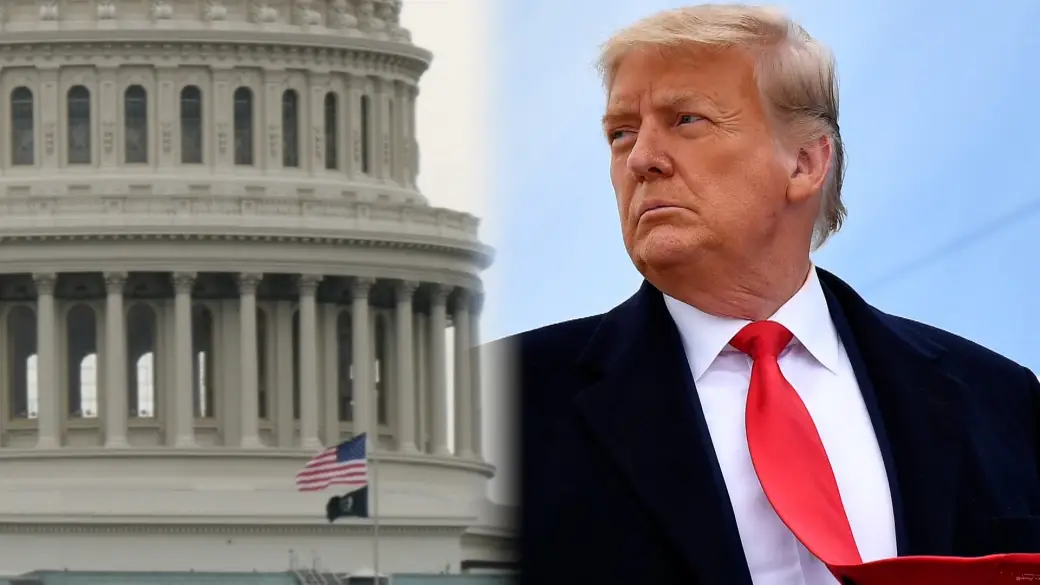
WASHINGTON, D.C. – Trump scored a big win this week when a new U.S. economic report brought some welcome news. The Consumer Price Index (CPI) showed inflation easing to 2.4% in January, down from 2.7% in December. That’s the lowest reading since mid-2025.
At the same time, the Bureau of Labor Statistics said employers added 130,000 jobs. That beat forecasts near 70,000. The unemployment rate also ticked down to 4.3%.
Both reports arrived after a short delay tied to a partial federal government shutdown. Even so, the message was clear. Hiring stayed steady, and price growth cooled. The White House pointed to the combination as a sign that workers are gaining purchasing power, since wages have been rising faster than inflation.
Inflation Slips as Energy Falls and Last Year’s Price Spikes Fade
January’s CPI rose 0.2% from the prior month, under the 0.3% increase many economists expected. Over the past year, the headline rate slowed to 2.4%, the softest pace in eight months. Core CPI, which removes food and energy, eased to 2.5% year over year.
Several categories helped pull inflation lower:
- Energy prices dropped 1.5% for the month, with gasoline down 7.5%.
- Shelter costs rose 0.2%, while food also increased 0.2%, both in line with a gentler trend.
- Used cars and trucks fell, which helped offset smaller increases in services like airline fares and medical care.
Economists said part of the improvement came from base effects. In other words, the high price jumps from January 2025 no longer weighed on the yearly math. Softer commodity prices also helped. Still, some analysts warned that service costs remain sticky, which could slow progress from here.
For now, the Federal Reserve has kept interest rates steady. Officials want to see inflation keep moving toward the 2% target without stalling the economy.
Hiring Under Trump Beats Expectations, Even as 2025 Gets Marked Down
On the jobs side, January payrolls increased by 130,000. That followed a revised 48,000 gain in December. Private employers added 172,000 jobs, while losses in federal government and financial activities held down the total.
Job growth showed up most in:
- Health care and social assistance, which continued to lead hiring
- Construction, supported by ongoing infrastructure work
- Business and professional services, which stayed firm
Meanwhile, the unemployment rate slipped to 4.3% from 4.4%. Household employment also jumped, which helped explain the lower rate. Wages kept climbing, too. Average hourly earnings have been running around 3.7% higher than a year earlier in recent months.
However, the report also came with a big reset for last year. Annual benchmark revisions cut total 2025 job growth from 584,000 to 181,000, or about 15,000 per month. The update reflected new Census data and changes to modeling assumptions. It also reinforced the idea that 2025 looked like a “low hire, low fire” year, with most net gains concentrated in areas like health care.
White House Highlights Real Wage Gains and Better Purchasing Power
Administration officials moved quickly to frame the numbers as good news for workers. They said real wages have improved as inflation cooled, which helps families stretch each paycheck further. The White House also said some blue-collar industries, including construction, manufacturing, and mining, have seen stronger gains. In some cases, officials suggested inflation-adjusted earnings could rise by $1,300 or more per year.
At the same time, the administration argued that earlier inflation had eroded purchasing power for many households. They credited policy changes, spending restraint, and domestic investment efforts for easing price pressure and supporting wage growth.
“These numbers show American workers are winning big, wages are surging ahead of inflation, restoring the purchasing power families deserve,” a White House spokesperson said in response to the reports.
What It Could Mean for Markets and the Fed
Together, softer inflation and solid hiring created a generally upbeat setup for investors. Stocks gained on hopes that the economy can keep growing without another spike in prices. Bond yields stayed fairly steady as traders weighed the stronger jobs number against the cooler CPI reading.
Many analysts expect the Fed to stay on hold through much of 2026. Policymakers want consistent proof that inflation is staying lower. At the same time, a steady labor market reduces recession worries. Still, it could push rate cuts further out if wage growth stays strong.
For households, the mix of slower inflation and ongoing job creation offers some breathing room. Gas and grocery prices showed signs of relief. Even so, housing and other services continue to put pressure on budgets.
As 2026 moves forward, the focus will stay on whether this early progress holds. The economy still has to work through the after-effects of 2025’s slowdown, along with outside forces such as trade policy shifts.
Related News:
Trump Tariff Revenue Jumps 300% as Supreme Court Fight Nears
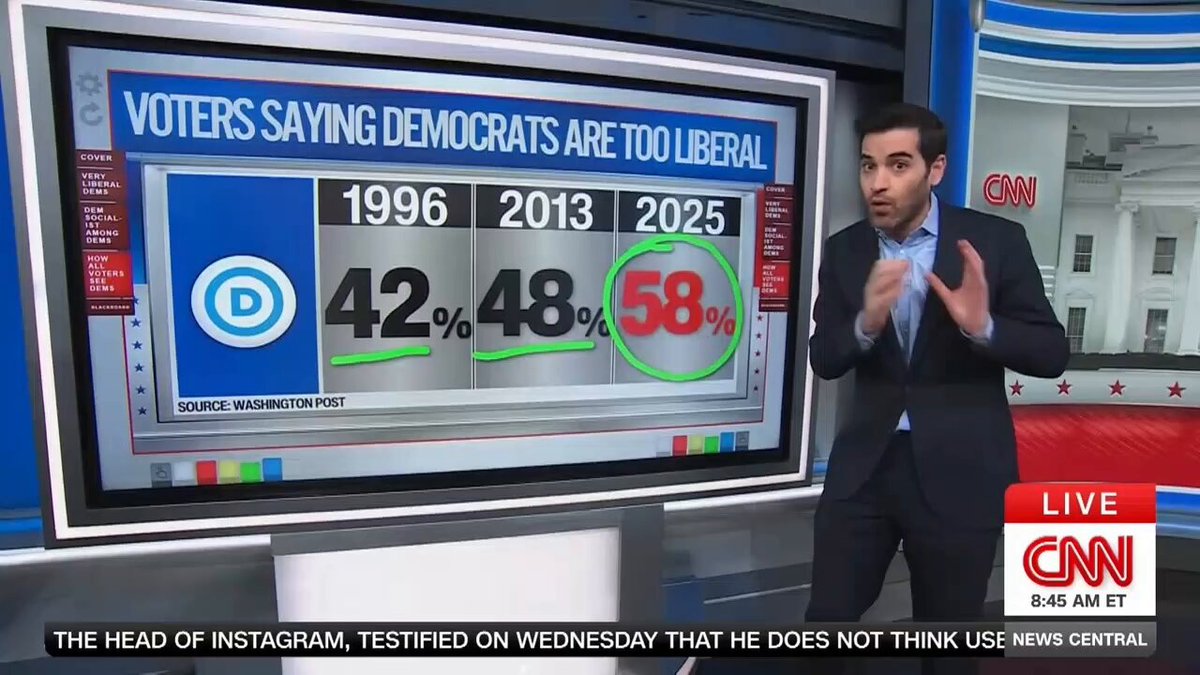
WASHINGTON, D.C. – CNN senior data analyst Harry Enten highlighted new Gallup polling that points to a growing problem for Democrats: more voters now see the party as too far left. On “CNN News Central,” Enten told anchor Kate Bolduan that 58% of Americans say the Democratic Party is “too liberal.” That’s the highest figure Gallup has recorded.
Just as important, the share has risen for decades. In other words, this isn’t a one-year blip. It’s a long trend that keeps moving in the same direction.
During the segment, Enten said the numbers show the party’s left wing holds more sway. He also argued that this shift could bring political costs, because most voters say Democrats have gone too liberal.
Gallup’s trend line shows the steady climb:
- 42% in 1996
- 48% in 2013
- 58% in 2025
That’s a 10-point jump since 2013 and a 16-point increase since the mid-1990s. Enten stressed that the view isn’t limited to a small group. Instead, it reflects a broad slice of the electorate, including moderates and many independents.
Inside the Party: Democrats Are Labeling Themselves More Liberal
Enten also pointed to changes inside the Democratic Party itself. Compared with the late 1990s, more Democrats now place themselves on the liberal end of the spectrum. At the same time, fewer call themselves conservative.
Here’s what stood out in the data Enten discussed:
- “Very liberal” Democrats now sit at 21%, or about one in five party members.
- Liberal identification overall (somewhat liberal plus very liberal) adds up to around three in five Democrats.
- Conservative Democrats fell sharply, dropping from 26% in 1999 to 8% today. Enten joked about their disappearance with a quick “adios amigos, goodbye.”
Age also plays a big role. Younger Democrats lean further left than older voters in the party. Among Democrats under 35:
- 42% identify as democratic socialists.
- Across the whole party, about one-third use the same label.
Enten said that the far left used to be a small part of the coalition. Now, he believes it has more influence, including in primaries where progressive challengers push incumbents from the left.
Why the “Too Liberal” Label Matters for Elections
These numbers land at a sensitive time for Democrats. In recent cycles, the party has faced struggles with working-class voters, moderates, and swing-seat districts. If most Americans think Democrats have moved too far left, that perception can make rebuilding those coalitions harder.
Enten warned that the trend could lead to “electoral repercussions.” The issue isn’t only what policies Democrats support. It’s also how voters interpret the party’s direction.
Progressive priorities, such as bigger social programs, climate policy, and social justice efforts, energize the base. However, the Gallup results suggest the party’s image may be drifting away from where many voters sit.
Independents, along with center-leaning Democrats, appear especially uneasy. Also, with fewer conservative Democrats in the mix, the party has fewer internal voices that naturally speak to the middle. As a result, competitive races may get tougher in places where elections are decided by narrow margins.
Bigger Picture and What to Watch Next
The Gallup findings fit into a wider story of polarization in American politics. Republicans have seen their own ideological sorting, too. Still, Enten’s focus here stayed on Democrats and how quickly the public now sees the party moving left.
After the segment, Enten posted a clip online and summed up the takeaway in plain terms: 58% of voters say Democrats are too liberal, and one in three Democrats identify as democratic socialists.
With the 2026 midterms ahead, the message is clear. Democratic leaders may need to keep progressives engaged while also easing concerns among moderates. Voters often care most about day-to-day issues like the economy, public safety, and practical governance. If the party can’t close the image gap, the “too liberal” label could become a real drag at the ballot box.
For now, Enten’s analysis highlights a simple reality: a majority of Americans think Democrats have gone too far left, and that view could shape the party’s political fortunes in the next election cycle.
Related News:
CNN Delivers Stark Reality Check to Democrats Over Voter ID
Democrats’ Stance on Voter ID Described as Racist by Many Blacks


Erika Kirk Faces Renewed Grooming Allegations Over 2014 Messages

Supreme Court Hands Executive Branch a 6-3 Win on TPS Protections

New Report Gives Trump an Economic Win as Inflation Cools to 2.4%

CNN Warns 58% of Americans Say Democrats Have Moved Too Far Left

Trump Tariff Revenue Jumps 300% as Supreme Court Fight Nears

Trump and EPA Chief Zeldin End Obama Era Net-Zero Climate Policies

Republican Senators Grill Minnesota AG Keith Ellison in Explosive Capitol Hill Hearing

New York’s Mamdani’s Tax the Rich Scheme Sparks Mass Exodus Fears

Major Lawsuit Questions Eric Swalwell’s California Governor Eligibility

Trump Orders Second Aircraft Carrier to Middle East as Iran Mass Killings Continue

Thai Billionaire Charged With Lese Majeste Over Facebook Post

Russia Bans Facebook, Meta Says It’ll Do “Everything” To Restore Service

4 Things you can do to take your Facebook Lead Generation to the Next Level

Zuckerberg to Allow Violent Speech on Russia After Facebook Blocked

Facebook Login Feature – Clash of Clans

Facebook Loses $200 Billion as Users Shift to TikTok

Downloading Facebook Videos Anonymously with High Quality Video through Snapsave app

Chinese Man Arrested for Using Facebook to Dupe Cryptocurrency Investor

The Best Site to Buy Real Facebook Likes and Followers in 2022

Google and Facebook Under Huge Pressure Over User Privacy

Mosque Set Ablaze in Iran a Citizens Revolt Against the Islamic Regime

AOC Accuses Jessie Watters of Fox News of Sexualizing and Harassing Her

JD Vance Exposes Walz’s Fraud and CNN’s Lies in White House Presser

Milestone Card Credit: How the Milestone MasterCard Can Transform Credit
-

 Crime2 months ago
YouTuber Nick Shirley Exposes BILLIONS of Somali Fraud, Video Goes VIRAL
-

 China3 weeks ago
China-Based Billionaire Singham Allegedly Funding America’s Radical Left
-

 Politics2 months ago
Ilhan Omar’s Ties to Convicted Somali Fraudsters Raises Questions
-

 News2 months ago
Walz Tried to Dodges Blame Over $8 Billion Somali Fraud Scandal
-

 Crime2 months ago
Somali’s Accused of Bilking Millions From Maine’s Medicaid Program
-

 Asia3 months ago
Asian Development Bank (ADB) Gets Failing Mark on Transparancy
-

 Crime2 months ago
Minnesota’s Billion Dollar Fraud Puts Omar and Walz Under the Microscope
-

 Politics2 months ago
Ilhan Omar Faces Renewed Firestorm Over Resurfaced Video