
News
New York Times Faces Backlash Over Trump Fatigue Article


WASHINGTON, D.C. – The New York Times is under heavy fire from conservative commentators after publishing a headline story claiming President Donald Trump, now 79, is showing “signs of fatigue” and facing the “realities of aging in office”. The article has sparked a fierce row over media bias, with critics accusing the paper of giving former President Joe Biden far softer treatment over his own well-known cognitive and physical issues.
At the same time, leading Democrats are pushing for Trump to release full medical records, including details of a recent MRI scan. The clash over transparency and presidential health has turned into a heated partisan fight, and interest is surging in search terms such as “Trump fatigue New York Times”, “Biden age coverage hypocrisy”, and “Trump medical records release”.
The New York Times hit piece, titled “Shorter Days, Signs of Fatigue: Trump Faces Realities of Aging in Office”, portrays a president who has eased back on his once relentless workload. Reporters Katie Rogers and Dylan Freedman tracked his public events and noted that Trump now tends to start his day around midday and finish by early evening, usually by 5 p.m., a noticeable shift from the long and chaotic days of his first term.
The article points to moments such as Trump appearing to nod off during an Oval Office press event on weight-loss drugs and looking drowsy during a recent Cabinet meeting. “Trump has always used his stamina and energy as a political strength. But that image is getting harder for him to sustain,” the piece claims, reminding readers that he is now the oldest person ever elected president.
Trump responded on Truth Social with a furious tirade, again branding the Times a “failing” paper and an “enemy of the people”, and taking a personal swipe at co-author Katie Rogers, calling her “ugly, both inside and out”.
He insisted, “I have never worked so hard in my life… Yet despite all of this the Radical Left Lunatics… did a hit piece on me that I am perhaps losing my Energy.” He highlighted a recent “perfect physical exam” and claimed he had aced a cognitive test.
According to White House visitor and schedule logs obtained by the New York Post, Trump has spent more hours in the Oval Office this year than Biden did in his final year as president. Allies have seized on those figures as proof that Trump is still working harder than his predecessor and that the Times is cherry-picking anecdotes to build a narrative.
Conservative Outrage: ‘Now the Media Cares About Age, Because It’s Trump’
The conservative reaction has been immediate and fierce, with right-leaning commentators accusing the Times of staggering hypocrisy. Fox News host Stuart Varney tore into the article on-air, calling it a “hit piece” and arguing, “The New York Times never said a word about Joe Biden’s obvious decline, stumbling on stairs, forgetting names, whispering incoherently. But Trump takes a nap? That is a front-page scandal.”
Even MSNBC’s Katy Tur, who is not known as a Trump supporter, questioned the focus of the story. On her programme, she remarked, “Trump is doing much more than Biden ever did,” contrasting Trump’s frequent press gaggles and media interactions with Biden’s more withdrawn approach during his presidency.
On X (formerly Twitter), the backlash broke into trending topics under hashtags such as #NYTHypocrisy and #TrumpFatigueFakeNews. One user, @iammarco75, wrote, “Katy Tur says Trump doing ‘much more’ than Biden ever did as NYT reports on president’s ‘fatigue’ – He’s doing a great job!” Another, @George85337002, vented, “FUNNY HOW THE FAKE NEWS NEVER CRITICIZED THE DEMENTED BIDEN BUT LOOKS FOR ANY OPPORTUNITY TO CRITICIZE PRESIDENT TRUMP.”
OutKick’s Clay Travis published a blistering column claiming, “The Times avoided criticising Biden’s mental decline but now scrutinises Trump’s schedule and Oval Office behaviour. It is enough to make you tear your hair out.”
This anger is not limited to a small pocket of commentators. USA Today columnist Glenn Garvin echoed the charge, asking why so many outlets downplayed concerns about Biden. He wrote that the media “ignored President Joe Biden’s obvious mental decline” but now focuses obsessively on Trump’s age and work habits.
The sense of a double standard meshes with a wider collapse in trust. A recent Rasmussen survey found that only 28% of Republicans trust mainstream media coverage about health and medical issues, down from 35% before the last election. On his podcast, Ben Shapiro called the Times coverage “selective outrage”, joking that “Biden wandered off stages and mixed up world leaders, and the press said nothing. Trump ends a rally early and suddenly it is an existential crisis.”
The frustration intensifies when set against the Times’ own polling and archives. A 2024 New York Times/Siena College poll showed that 73% of voters, including many who had backed Biden in 2020, believed he was too old for a second term. Even then, a lot of the paper’s coverage framed those concerns as voter “perceptions” rather than hard questions about fitness for office.
As one X user, @KJSpringer, put it during the latest MRI debate, “To hell with what the Democrats want. We put up with a freaking invalid in the white house for 4 years and the Democrats didn’t ask for crap.”
Democrats Turn Up the Pressure: ‘Release Trump’s Medical Records, Starting with the MRI’
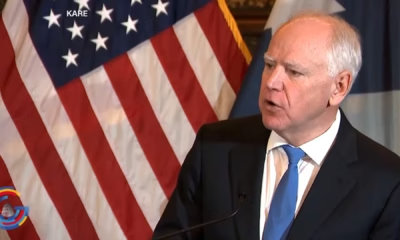
While conservatives hammer the media, Democrats are trying to push the story in a different direction, focusing on full transparency around Trump’s health. Minnesota Governor Tim Walz helped ignite the latest row with a video on X that quickly went viral.
In it, he declares, “The President is unwell. Release the MRI results.” The clip, viewed more than 3 million times, refers to Trump’s October MRI at Walter Reed, which the White House called “preventive”, but has not fully explained.
Appearing on NBC’s Meet the Press, Walz pushed the issue harder. “Here we got a guy on Thanksgiving… ranting. This is not normal behaviour. It is not healthy… Has anyone ever had an MRI and had no idea what it was for?” he asked.
When reporters later asked Trump about Walz’s criticism, he shot back, “You mean the incompetent Governor Walz? I have no idea what they analysed,” before turning his fire on female journalists and making digs about their intelligence.
The demands did not stop with Walz. The Democratic Governors Association posted, “Release the MRI results,” on X, which quickly drew tens of thousands of views. Influencer Harry Sisson shared a photograph of Trump, captioning it, “He’s clearly not well… Release the MRI results.” Former Republican congressman and CNN commentator Adam Kinzinger also joined in, writing, “Time for full disclosure.”
A petition on Care2 calling for Trump to release his “FULL medical records” has passed 8,000 signatures. It lists visible bruising on his hands and his July diagnosis of chronic venous insufficiency as reasons for concern.
For many observers, this feels like a replay of 2024, when more than 200 doctors associated with Doctors for Harris urged Trump to match Kamala Harris’s detailed medical disclosures. At that time, Trump told CBS he would “very gladly” release his records once Biden dropped out of the race. Biden did step aside, but Trump has still not provided a full set of documents.
His October physical produced a memo from the White House physician declaring that Trump was in “exceptional health”, but the summary contained little detail about the MRI. Critics on social media have demanded more. Popular X account @JoJoFromJerz wrote, “The press needs to ask about this every single day.” Trump has now said publicly that he will release the MRI report, but sceptical voices like @atrupar argue, “There is no such thing as a preventative MRI. She’s lying.”
Others push back on the growing demands. An account named @TruthSeekerBPL pointed out, “Presidents aren’t legally required to release their medical records… Biden never released full medical records either.”
There is no law forcing presidents to share their full files. Ronald Reagan tended to release summaries, Bill Clinton provided full examination details, while both Trump and Biden relied on short doctors’ letters and selective information rather than full transparency.
Echoes of Biden: Critics Say NYT Went Soft on His Cognitive Decline
For many conservatives, the New York Times’ coverage of Trump only reinforces their belief that the paper treated Biden far more gently, especially when serious questions about his physical and mental sharpness emerged.
A major Times investigation in January 2025, titled “How Biden’s Inner Circle Protected a Faltering President”, acknowledged that top aides managed his “physical frailty”. According to that report, staff reshuffled his diary to catch him in better moods, cut meetings to shorter slots, and sometimes held back bad polling to avoid triggering stress. It quoted Biden adviser Mike Donilon, who warned as early as 2022, “Your biggest issue is the perception of age.”
A separate book extract published in May 2025 described Biden aides blocking a proposed cognitive test in 2024 out of fear it would draw more attention to possible decline rather than calm concerns.
Going back further, a 2022 Times piece, “President Biden Is Turning 80”, interviewed ageing experts but leaned towards reassurance, arguing that Biden’s background, habits, and lifestyle were in line with healthy ageing.
Even after his shaky 2024 debate performance, much of the commentary focused on context and normal slip-ups. A February 2024 opinion article by a neuroscientist argued that Biden’s stumbles and verbal lapses were “normal” for someone in their early eighties.
Only later, in October 2025, did a House Oversight Committee report accuse Biden’s team of a “cover-up”, claiming that his cognitive issues had undermined decision-making in office. The Times did cover the report, but conservatives insist the paper treated these concerns as political theatre in the pre-2024 period, rather than digging in with the same intensity it now directs at Trump’s schedule and nap habits.
Wikipedia’s entry on “Age and health concerns about Joe Biden” records that outlets such as the Times, CNN, and the Washington Post began discussing Biden’s age and health as early as 2019. Yet the coverage often included caveats and reassurances. A poll in 2024 showed 61% of Democrats wanted a younger nominee, but Biden advisers shrugged off calls for formal tests like the Montreal Cognitive Assessment.
After Biden left office, even some liberal commentators looked back with regret. Former CNN analyst Chris Cillizza admitted he “didn’t push hard enough… on his mental and physical decline.”
On X, user @BrokenBerean summed up the sense of repeating history: “Democrats elected Biden… Republicans will not release Trump’s… It is like watching the same play back to back.” Another user, @AnimalsRockOn, complained, “Trump could release the medical records at any time but refuses… Just like he refuses to release the Epstein files.”
A Country Looking in the Mirror: Age, Power, and Faith in the Press in the Trump Era
Trump will turn 80 in June 2026, and the latest controversy has refocused attention on America’s ageing political class. In 2024, voters faced a choice between two men in their late seventies and early eighties. Now, Trump holds the record as the oldest sitting president, and new polling suggests that age worries have only grown.
A recent New York Times/Siena survey found that 59% of voters are concerned about Trump’s fitness for office, up from levels during the 2024 race. At the same time, his job approval rating has slipped to around minus 14 points, according to a Times analysis on 5 December, with economic frustrations and cost-of-living pressures weighing him down.
Conservatives argue they have been proven right about media bias. They note that when Republicans shared clips of Biden freezing on stage or flubbing basic facts, many outlets dismissed them as “cheap fakes”. Now that similar age-related questions hover over Trump, coverage has become relentless. Trump’s team has responded with its own data, highlighting his packed diary and the amount of time he spends in the Oval Office compared with Biden’s last year.
Democrats, backed by figures such as Tim Walz, present the argument as a simple matter of public safety and normal behaviour. They say a president who spends late nights firing off angry social media posts and picking fights with reporters should welcome the chance to prove his health is sound, starting with that disputed MRI.
The New York Times has stood by its reporting. Editors insist the article reflects careful sourcing and direct observation. “Our reporting is accurate… Name-calling does not change that,” a spokesperson said, after Trump attacked the paper and its reporters online.
Within the paper itself, columnists are wrestling with the broader question. In a conversation published on 4 December, Times writer Bret Stephens asked, “What Is Going On With Trump?” and speculated that a second term would likely focus more on foreign policy and less on domestic battles, simply because of Trump’s age and experience.
On social media, the argument often reduces to one blunt point about double standards. As user @Charles07788205 wrote, “When every democrat demanding Trump releases his medical records… demand the same from Biden… you will have some moral high ground.”
As the noise grows, one theme cuts across party lines. Voters want honesty about the health and stamina of whoever holds the nuclear codes. Many feel burned by years of spin and half-answers around both Biden and Trump.
With midterm elections on the horizon, the question hanging over Washington is whether Trump will actually publish his MRI and fuller records, or whether the story will drag on with rumours, partisan demands, and selective leaks. Search interest in “presidential age transparency” keeps rising, a sign that the public is paying close attention.
In the end, the real verdict will not come from cable news segments or trending hashtags. It will come from a weary electorate, weighing energy, judgment, and trust as they decide how long they are willing to accept an ageing presidency at the top of American politics.
Related News:
Trump Signs New Taiwan Law Amid Heightening Tensions With China


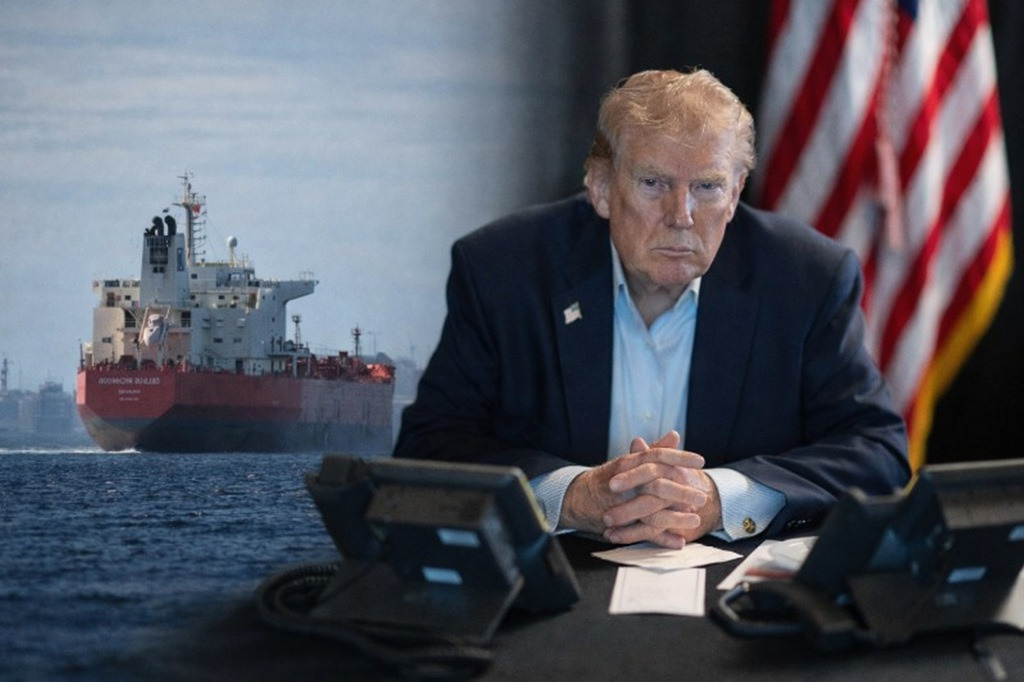
WASHINGTON, D.C. – President Donald Trump has ordered the U.S. government to offer political risk insurance and naval escorts for commercial ships moving through the Strait of Hormuz. The directive follows a pullback by major marine insurers, led by Lloyd’s of London, after threats to Persian Gulf shipping drove war-risk costs higher or pushed coverage off the market.
Supporters say the plan keeps oil and LNG moving and strengthens energy security. Critics say it also challenges a long-standing center of global marine insurance power in London.
The Strait of Hormuz is a narrow 21-mile passage between Iran and Oman. It carries about 20 to 30% of the global seaborne oil trade and a large share of LNG exports from Gulf producers.
After U.S. and Israeli strikes against Iran in late February 2026 (called “Operation Epic Fury” in some reports), threats and attacks around the waterway drove risk levels up fast.
- By early March, traffic through the strait fell by more than 80%. On some days, tankers did not move at all.
- Major Protection and Indemnity (P&I) clubs, including Gard (Norway), Skuld, NorthStandard (UK), the London P&I Club, and the American Club, sent 72-hour cancellation notices for war-risk add-ons that took effect March 5.
- Lloyd’s Joint War Committee widened the “high-risk” area to include the full Persian Gulf. As a result, many underwriters canceled coverage or raised premiums sharply, sometimes two to five times normal levels.
In practice, shipping slowed because money, not missiles, set the limit. Without workable war-risk insurance, shipowners and charterers would not send high-value tankers into danger. That left hundreds of vessels waiting and raised fears of a global energy squeeze.
Lloyd’s holds a major share of marine cargo and war-risk business, and it has long handled complex, high-loss exposures. Its marine roots go back centuries to Britain’s early merchant trade.
Trump’s Response: The U.S. Steps Into Maritime Insurance
On March 3, Trump posted on Truth Social that he had instructed the U.S. International Development Finance Corporation (DFC) to provide “political risk insurance and guarantees” for Gulf maritime trade at a very reasonable price.”
The plan includes:
- Political risk insurance covering losses tied to war, terrorism, or government actions.
- Financial guarantees aimed at backing shipowners, charterers, and private insurers.
- U.S. Navy escorts for tankers when needed, echoing past U.S. protection missions in the region.
- A later announcement of a $20 billion reinsurance facility meant to steady prices and help restore traffic.
Trump framed the goal in simple terms: “No matter what, the United States will ensure the free flow of energy to the world.”
Using the DFC this way stands out because the agency usually supports development-related financing in emerging markets. Still, there is a recent parallel. In 2023, an insurance effort helped support Ukraine grain exports with participation from Lloyd’s and other firms.
What This Could Mean for Lloyd’s of London and the UK
Lloyd’s remains a global hub for specialty insurance and brings billions into the UK economy each year through premiums, jobs, and related services. Around 50,000 people work in insurance and connected roles in the City of London. Marine and energy coverage sit at the center of that system, and war-risk insurance, while niche, can carry real geopolitical weight.
Some analysts think Trump’s move could pull business away from London over time:
- If U.S.-backed coverage stays dependable and priced well, some shippers may favor it after the crisis.
- British headlines have floated the idea that Trump could weaken a roughly £50bn insurance giant.
- Lloyd’s has taken a cooperative tone with the DFC and says it still leads on war-risk expertise. It also argues coverage is still available, even at higher rates, and that some traffic has started to return.
Even so, the message is hard to miss. A private insurance market in London has long been able to slow trade with pricing and capacity. Now, a state backstop is trying to remove that pressure point.
Bigger Ripple Effects for Energy, Alliances, and Markets
This standoff shows how finance, military power, and energy supply connect in real time.
- Energy security and prices: By pushing shipments to resume, the U.S. reduces the risk of price spikes at home and helps allies that depend on Gulf oil and LNG.
- Tension with close partners: In London, some see the policy as a direct hit to a key national industry.
- Oil market reaction: Prices jumped at first, then eased after Trump’s announcement. Still, war-risk costs remain high, and sentiment is shaky.
- Limits of insurance alone: Shipping leaders warn that guarantees only help up to a point. If attacks continue, fear can outrun price. At the same time, more naval activity can raise the sense that the route is a live conflict zone.
The administration’s approach blends money, security promises, and military readiness. In effect, the U.S. is presenting itself as the backstop for key sea lanes.
What Comes Next for Hormuz Shipping and War-Risk Coverage
Results will hinge on execution. That includes the fine print of DFC coverage, how it coordinates with private insurers, and whether Navy escorts become routine. Lloyd’s has signaled it can work with the U.S. effort, so a shared model may emerge instead of a clean replacement.
Still, the larger shift is clear. Where private underwriters once had near veto power over a critical chokepoint, direct government support is moving in to keep tankers sailing.
For now, the U.S. has acted to prevent a supply shock, and it has turned an insurance freeze into a test of who guarantees global energy flows.
Related News:
Trump Says He’s Very Disappointed in Starmer Over Iran
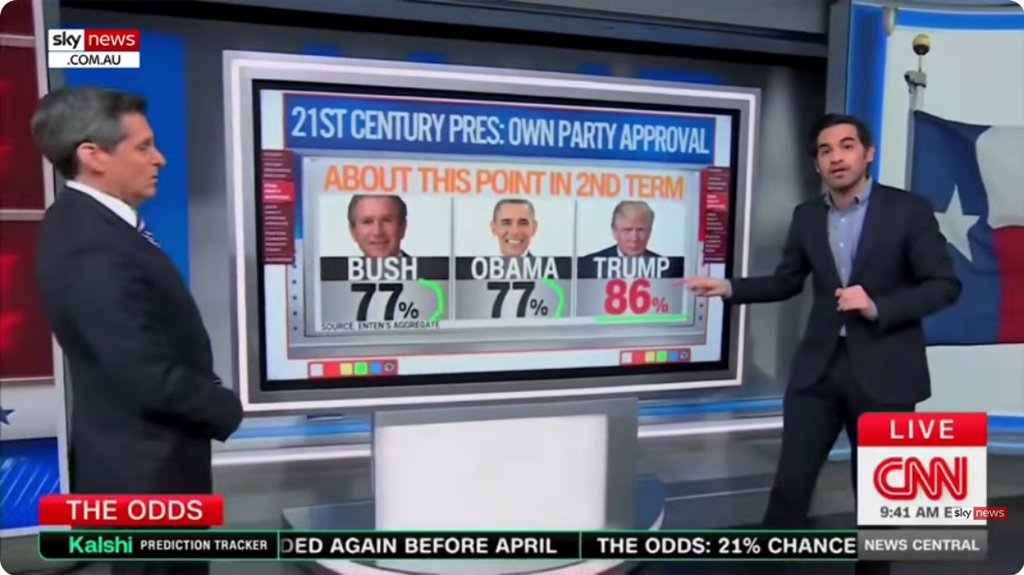
ATLANTA – CNNsenior writer and chief data analyst Harry Enten walked through polling that shows President Donald Trump holding unusually strong support inside the Republican Party. Using CNN survey averages and side-by-side comparisons, Enten said Trump’s current approval among Republicans sits well above where Barack Obama and George W. Bush stood with their own parties at a similar stage of their presidencies.
The discussion came up while the panel talked about Trump’s influence in GOP primaries and the impact of his endorsements. According to Enten, the numbers suggest Trump’s pull with Republican voters remains firm. As he put it, Trump’s “magic touch has not seemed to wear off yet when it comes to the Republican base.”
Main Takeaways From Enten’s Breakdown
- Very high Republican approval: CNN polling averages show Trump at 86% approval among Republicans at this point in his second term.
- Higher than recent presidents at the same stage: At a comparable moment, George W. Bush was at 77% with Republicans, and Barack Obama was at 77% with Democrats.
- More intense support, too: 53% of Republicans strongly approve of Trump’s performance. By comparison, Obama measured 48% and Bush 47% on strong approval at the same point.
- Endorsement power tied to base loyalty: Enten compared Trump’s primary influence to famous athletes like Tom Brady and Babe Ruth. He also said Trump-backed candidates have posted 95% to 99% win rates in recent cycles, helped by tight party loyalty.
- Standout own-party support in the modern era: Enten summed it up plainly, saying Republicans support Trump more than any 21st-century president’s party supporters at this point.
Even as Trump’s overall national approval moves up and down, the Republican core stays steady. That gap between base support and broader approval is a major part of the story.
Own-Party Approval, Side-by-Side
Here’s the same comparison Enten shared, focused on approval within each president’s own party at roughly the same point in their second terms:
| President | Party Approval Rating (%) | Strong Approval (%) | Time Period Context |
|---|---|---|---|
| Donald Trump | 86 | 53 | Current (second term, early 2026) |
| Barack Obama | 77 | 48 | Similar point in the second term |
| George W. Bush | 77 | 47 | Similar point in the second term |
Source: CNN polling averages and historical figures as cited by Harry Enten. Timelines reflect approximate equivalents across presidencies.
Enten stressed that this level of party unity stands out. In many presidencies, overall approval sits in the 40% to 50% range because the country splits along party lines. In contrast, Trump’s near-unified backing from Republican voters gives him a strong base even when national debates heat up.
Why These Numbers Matter for Trump’s Influence
High own-party approval usually turns into real power inside a party, and Enten argued that’s exactly what’s happening here. Because Republicans approve of Trump at such a high rate, his endorsement often carries major weight in primary elections. Since 2020, Trump-supported candidates have won GOP primaries at a pace that goes far beyond what most endorsements can deliver.
As a result, challenges to Trump-aligned candidates often struggle to gain traction. Even when Trump’s broader public numbers soften, Republican enthusiasm hasn’t dropped in the same way.
Enten’s tone stayed data-focused, but he made clear the size of the gap surprised him. “Look at this: 86% of Republicans approve,” he said, while pointing back to the 77% figures for Obama and Bush.
A Quick Look at Party Loyalty Over Time
Presidents often begin terms with strong support from their party, then see it slip when controversies build or conditions change. In that context:
- Bush held about 77% party approval at a similar second-term point, before later drops tied to the Iraq War and economic concerns.
- Obama also measured 77% among Democrats at the same stage, showing solid support but less intensity than Trump’s current numbers.
Trump’s 86% approval, paired with higher strong approval, signals a more locked-in base. That kind of support can cushion a president from pressures that hit other administrations harder.
What to Watch Next
With the 2026 midterms on the horizon, the data suggests Trump still holds major influence within the Republican Party. It’s still unclear how long that strength will last or how it will shape policy fights and candidate choices, but the polling shows little sign of fatigue among GOP voters.
Enten’s segment also highlights something many headline polls miss. National approval matters, but internal party support can say even more about a president’s staying power. After the clip aired, the comments spread quickly on social media and conservative outlets, mainly because the contrast between Trump’s GOP numbers and his broader national approval remains so sharp.
Related News:
Karoline Leavitt Slams CNN’s Kaitlan Collins Over Killed U.S. Soldiers
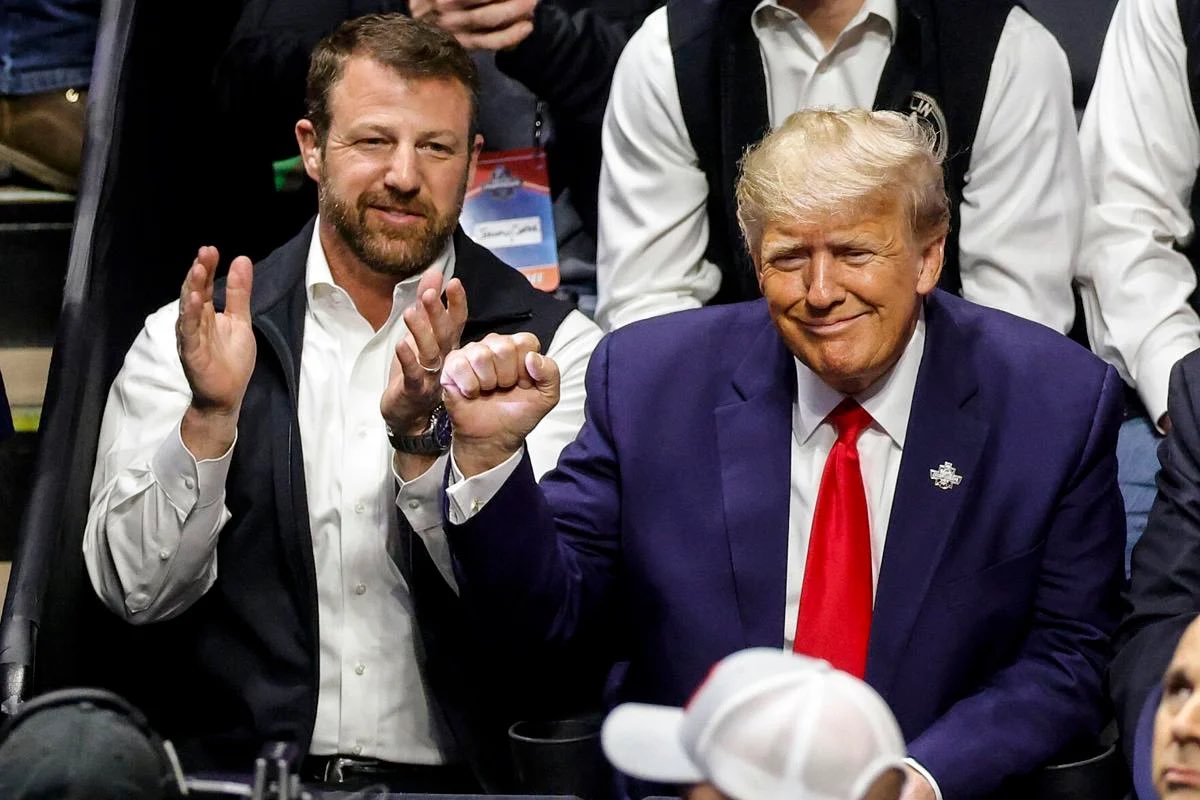
WASHINGTON, D.C. – President Donald Trump is making an early second-term Cabinet change, tapping U.S. Sen. Markwayne Mullin (R-Okla.) as the next Secretary of the Department of Homeland Security (DHS). He will replace Kristi Noem after a rocky stretch that drew heavy attention to the administration’s strict immigration enforcement push.
Trump shared the decision on Thursday on Truth Social. He called Mullin a “Highly Respected” lawmaker and a “MAGA Warrior,” adding that Mullin works well with others and has the “Wisdom and Courage” to move the America First agenda forward.
The shift is scheduled for March 31, 2026, and it depends on Senate confirmation. If confirmed, Mullin would have to give up his Senate seat. Under federal vacancy rules, he could also serve in an acting role while the process plays out.
The announcement came only days after Noem faced sharp criticism in congressional hearings. Lawmakers from both parties pressed her on immigration raids, a disputed $220 million ad campaign urging people to leave voluntarily, disaster response, and DHS spending.
At the same time, reports pointed to frustration inside the administration about the speed and management of mass deportation efforts. That includes high-profile incidents, such as the shooting deaths of two protesters in Minneapolis tied to immigration enforcement officers.
Kristi Noem’s statement to the press
After Trump’s post, Noem spoke at a DHS event and avoided mentioning the change. Instead, she stayed on prepared remarks that backed the president’s priorities. Later, she posted a statement on X (formerly Twitter) and thanked Trump for her new assignment:
“Thank you, @POTUS Trump, for appointing me as the Special Envoy for the Shield of the Americas. @SecRubio and @SecWar are incredible leaders, and I look forward to working with them closely to dismantle cartels that have poured drugs into our nation and killed our children and grandchildren.
The Western Hemisphere is absolutely critical for U.S. security. In this new role, I will be able to build on the partnerships and national security expertise I forged over the last 13 months as Secretary of Homeland Security.”
Trump said Noem will lead “The Shield of the Americas,” a new regional security effort focused on fighting drug cartels across the Western Hemisphere. The administration plans to roll it out on Saturday in Doral, Florida. Noem, a former South Dakota governor, becomes the first Cabinet secretary to leave her post during Trump’s second term.
Why Trump picked Markwayne Mullin
By choosing Markwayne Mullin, Trump appears to want a close ally running DHS as the administration keeps pressing its hard-line immigration strategy. Markwayne Mullin, 48, has strongly defended mass deportations and ICE activity. He has described ICE agents as “red-blooded American patriots.”
Several factors seem to have helped Mullin rise to the top:
- Loyalty and shared priorities: Markwayne Mullin has stood with Trump on America First policies, especially border security and enforcement.
- Time on Capitol Hill: He served in the House from 2013 to 2023, then won his Senate seat in 2022 with 62% of the vote. That background may help during confirmation and with tough policy fights.
- A tough public image: Mullin is known for an aggressive style, plus an undefeated pro MMA record (5-0). Trump pointed to that persona in his announcement.
- A distinct personal story: Mullin is a member of the Cherokee Nation and is the first Native American senator in two decades. He also ran his family’s plumbing company after earning an associate’s degree, and he often stresses practical results.
- Alignment on major DHS issues: He has supported strict immigration enforcement, changes to disaster response, and actions against cross-border threats, which track closely with the administration’s goals.
Mullin responded by calling the moment “humbling.” He told reporters he called his father after hearing the news and said, “A little kid from west Oklahoma gets to serve in the president’s cabinet, that’s pretty neat.” He added that he didn’t expect the call, but he’s “excited to get started.”
What it could mean next
The DHS leadership swap lands during a tense period for the department. DHS is dealing with a partial shutdown that has hit some operations and employee pay. On top of that, lawsuits over enforcement tactics continue, and protests against deportations remain active.
Markwayne Mullin’s nomination may draw questions about his limited executive management experience. Still, with Republicans in control, confirmation could move more smoothly.
For the White House, the change looks like an attempt to reset DHS leadership while keeping the broader immigration crackdown on track. Meanwhile, moving Noem into a focused envoy job keeps her in the mix on regional security, while shifting day-to-day DHS control to a new face.
As Markwayne Mullin heads toward confirmation hearings, the spotlight will move to his plans for mass deportations, FEMA-related reforms, cybersecurity, and ongoing border threats.
Trending News:
Trump Orders Complete Freeze on Economic Ties with Spain


US-Israel Defensive Against Iran Exposes the Weak Leadership of Canada, France and the UK

Trump Outmaneuvers the “British Empire” in the Strait of Hormuz

Carney and Starmer’s Iran U-Turn Betrays Their Closest Ally

CNN Reveals Trump’s GOP Approval Tops Obama and Bush at the Same Point

Amazon Shopping Site Hit By Hours-Long Outage Tied to Bad Code

Britney Spears Taken Into Custody on Suspicion of DUI

Sen. Markwayne Mullin Tapped to Replace Kristi Noem as DHS Secretary

Canada’s Carney Betrays the US Condemns Defensive Strikes on Iran

Karoline Leavitt Slams CNN’s Kaitlan Collins Over Killed U.S. Soldiers

Jasmine Crockett’s Loses Democratic Texas Senate primary

Thai Billionaire Charged With Lese Majeste Over Facebook Post

Russia Bans Facebook, Meta Says It’ll Do “Everything” To Restore Service

Facebook Login Feature – Clash of Clans

4 Things you can do to take your Facebook Lead Generation to the Next Level

Zuckerberg to Allow Violent Speech on Russia After Facebook Blocked

Facebook Loses $200 Billion as Users Shift to TikTok

Downloading Facebook Videos Anonymously with High Quality Video through Snapsave app

The Best Site to Buy Real Facebook Likes and Followers in 2022

Chinese Man Arrested for Using Facebook to Dupe Cryptocurrency Investor

Google and Facebook Under Huge Pressure Over User Privacy

Mosque Set Ablaze in Iran a Citizens Revolt Against the Islamic Regime

AOC Accuses Jessie Watters of Fox News of Sexualizing and Harassing Her

JD Vance Exposes Walz’s Fraud and CNN’s Lies in White House Presser

Milestone Card Credit: How the Milestone MasterCard Can Transform Credit
-

 Crime2 months ago
YouTuber Nick Shirley Exposes BILLIONS of Somali Fraud, Video Goes VIRAL
-

 China1 month ago
China-Based Billionaire Singham Allegedly Funding America’s Radical Left
-

 Politics2 months ago
Ilhan Omar Faces Renewed Firestorm Over Resurfaced Video
-

 Politics3 months ago
Ilhan Omar’s Ties to Convicted Somali Fraudsters Raises Questions
-

 Crime3 months ago
Somali’s Accused of Bilking Millions From Maine’s Medicaid Program
-

 Crime3 months ago
Minnesota’s Billion Dollar Fraud Puts Omar and Walz Under the Microscope
-

 Business2 months ago
Tech Giant Oracle Abandons California After 43 Years
-

 Politics4 weeks ago
CNN Delivers Stark Reality Check to Democrats Over Voter ID