
News
Tulsi Gabbard’s Explosive Revelations on Russia Collusion Hoax Shake Washington

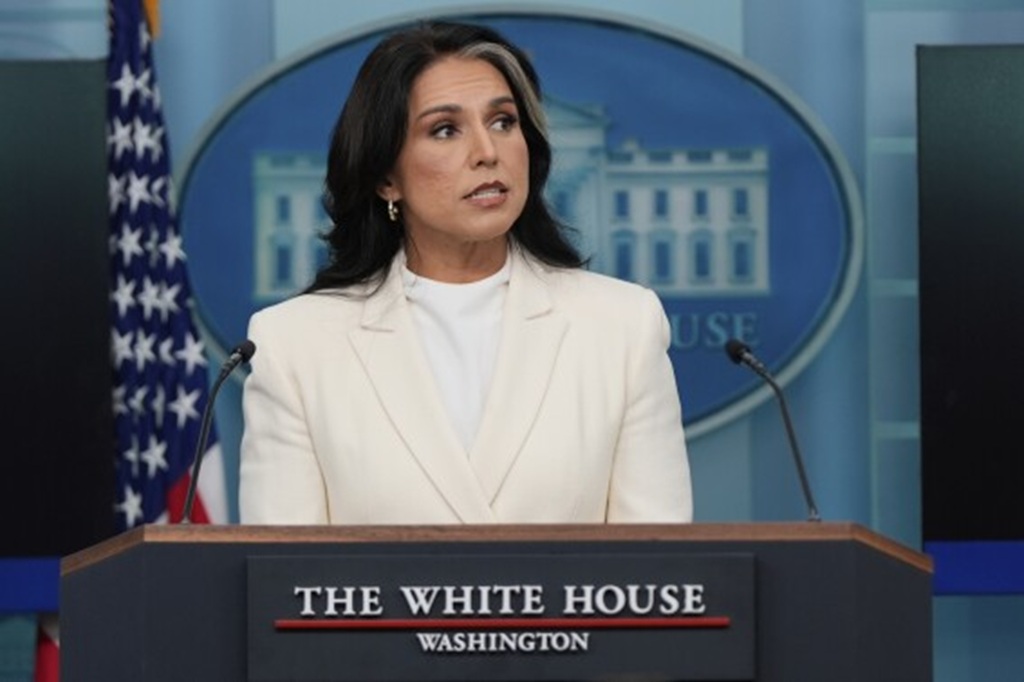
WASHINGTON, D.C. – Director of National Intelligence Tulsi Gabbard ignited intense debate in Washington after she released a collection of declassified files. Gabbard claims these documents reveal strong proof that former President Barack Obama and senior intelligence officials plotted to create the story of Russian intervention in the 2016 election.
According to her, this effort aimed to cast doubt on Donald Trump’s win and presidency. These claims sparked sharp arguments, with Democrats and mainstream outlets downplaying the release, while some legal analysts say top Obama-era officials could face serious legal trouble.
Gabbard’s Statement: Claims of a Planned Hoax
On July 19, 2025, Tulsi Gabbard, once a Democratic congresswoman who is now affiliated with Trump’s Republican circle, declassified over 100 documents. She argues these records show an intentional plan by the Obama administration to push an unfounded story about Russia swinging the 2016 election in Trump’s favour.
Speaking at the White House, Gabbard described the plot as an effort to overturn the voters’ choice. “Our findings today show there was a conspiracy at the highest levels in 2016,” she said, naming Obama, James Clapper, John Brennan, James Comey, Susan Rice, John Kerry, Loretta Lynch, and Andrew McCabe as key participants.
The released records, which include emails and memos, along with a long-hidden September 2020 House Intelligence Committee report, suggest Obama ordered his national security staff to publish a misleading intelligence assessment on January 6, 2017. This report claimed Moscow worked to help Trump.
Gabbard’s team points to other intelligence, gathered weeks before, which stated Russia lacked both the intent and means to hack U.S. voting systems. In one cited exchange, Clapper’s assistant emails intelligence chiefs after a December 9, 2016, National Security Council meeting, instructing them to draft a new assessment “at the President’s request,” outlining “methods Moscow used to influence the 2016 election.”
Gabbard claims Obama and his advisers knowingly relied on weak sources, such as the controversial Steele dossier, to build the collusion narrative. These claims were then leaked to reporters from major outlets such as The Washington Post, she says, even though U.S. agencies didn’t agree before the election that Russia had helped Trump. “This transcends party lines,” Gabbard told Fox News. “Confidence in our democracy is at stake.”
Journalists Analyze the Fallout: Taibbi, Kelly, O’Reilly Respond
After Gabbard released the documents, several well-known journalists pored over them and spoke out. Matt Taibbi, who gained attention for reporting on the Twitter Files, said on The Megyn Kelly Show that the December 2016 White House meeting appeared to be the key moment.
According to Taibbi, after that meeting with Obama, Clapper, Brennan, Rice and others, the intelligence community made a sharp turn in its view of Russian activities. He noted, using the 2020 House report as evidence, that the reassessment came after Obama’s “unusual” instructions, especially from Brennan.
Megyn Kelly, now a podcaster after her time with Fox News, called Gabbard’s move a potential major scandal. On her podcast, Kelly and Taibbi discussed how the Steele dossier, paid for by the Clinton campaign and filled with shaky claims, became part of the intelligence community’s official 2017 assessment.
Kelly highlighted that some intelligence insiders thought the dossier was more online gossip than hard fact, yet high-profile officials like Brennan, Comey, and McCabe pushed for it to be included.
Bill O’Reilly, a leading conservative commentator and 40-year news veteran, said on his show No Spin News that the declassified documents show a misuse of power by the Obama administration. O’Reilly argued Gabbard is exposing what Trump’s supporters suspected for years: that the Russia investigation was politically driven.
He praised Gabbard for her boldness and her journey from outsider Democrat to a close Trump ally, saying, “She is revealing what others in her position have not dared to.”
Democratic and Media Pushback
Democratic lawmakers and media outlets have rejected Gabbard’s accusations, calling them a ploy and based on misleading information. Congressman Jim Himes, the leading Democrat on the House Intelligence Committee, dismissed the claims as “baseless” and accused Gabbard of recycling old conspiracy theories to distract from other issues, including the Trump team’s handling of Jeffrey Epstein files.
Senator Mark Warner, a top Democrat on the Senate Intelligence Committee, referenced a 2020 bipartisan Senate report which concluded Russia did try to influence the 2016 election. “If there was a conspiracy under Obama, we would have found it,” he said on X, formerly Twitter, labelling Gabbard’s actions as an effort to muddy the historical record and undermine public trust in the intelligence community.
Major news brands, including CNN and The Washington Post, have pushed back on Gabbard’s account, too. The Washington Post published an article arguing her reading of the 2017 intelligence assessment is wrong, since the assessment focused on Russian propaganda efforts, not vote hacking.
The article pointed to four investigations, including reports from Robert Mueller and the 2020 Senate Intelligence Committee, that backed the assessment’s main conclusions. CNN noted that Gabbard’s decision to declassify a redacted intelligence report, which Trump never released, could put sensitive information at risk, setting off warnings from former officials.
Obama’s spokesperson called the claims “ridiculous and a weak attempt at distraction,” and reminded the media that Obama ordered the Russia probe in 2016 to help protect U.S. voting systems. Some critics say Gabbard is trying to rebuild her reputation with Trump, who once questioned her commitment after disputes on Iran.
Legal Pressure on Obama-Era Officials
Since the documents became public, the Justice Department confirmed it has started a review. James Clapper, Obama’s former Director of National Intelligence, is reportedly working with lawyers to address the possible investigation. Clapper, who oversaw the 2017 intelligence assessment, denied any wrongdoing, calling the accusations “false and baseless” in a CNN interview.
Observers are watching John Brennan, Obama’s CIA director, who some legal analysts believe is at risk of prosecution. Lawyer Mike Davis told The Glenn Beck Program he thinks Gabbard’s evidence could justify charges against Brennan, Clapper, and others for misleading Congress. Davis said, “If they kept the coverup going after they left office, they can’t hide behind presidential immunity.”
The Justice Department is investigating Brennan and James Comey, the former FBI director, following a referral from current CIA Director John Ratcliffe, who criticized how the 2017 assessment was put together.
Comey remains a focus of attention, since the documents suggest he strongly pushed for the Steele dossier to be included in the 2017 report, even while knowing its reliability was questionable. According to Gabbard’s office, both Comey and McCabe admitted, in transcripts from House hearings, that there was no hard evidence of Trump-Russia collusion.
Legal experts warn that any cases could be affected by the statute of limitations and recent Supreme Court rulings on presidential immunity.
The Justice Department has set up a task force to review Gabbard’s disclosures. This move may lead to grand jury appearances by Adam Schiff, Susan Rice, Comey, Brennan, Clapper, and possibly Obama. Schiff, a key figure during the House’s Russia probe, is accused of continuing the collusion story.
Susan Rice is named as a central attendee at the December 2016 meeting described in the documents. While officials are keeping details private, the formation of this group suggests rising stakes.
Wider Impact on U.S. Politics
Gabbard’s actions have reopened old arguments about the Russia probe, an issue that shaped Trump’s first term. Her supporters, including Trump, see her disclosures as solid proof that the investigation into his campaign was never genuine.
Trump has used social media to share images implying Obama and others should be jailed, and called the documents “rock-solid evidence” of major wrongdoing.
On the other side, critics warn that releasing such material could reveal sensitive sources or methods, risking national security. Democrats argue this renewed focus on 2016 takes away from ongoing issues, like the Epstein case or pressing foreign affairs.
“The Trump administration seems willing to release anything except the Epstein files,” Senator Warner joked.
Gabbard herself has become a symbol of change, shifting from a Democratic presidential hopeful to a top Trump appointee. Her history, including previous comments sympathetic to some Russian views, made her nomination as Director of National Intelligence controversial. Yet Trump has praised her recent work, describing her as a standout at a recent Republican gathering.
Conclusion
Tulsi Gabbard’s document release has returned the Russia collusion story to centre stage. Her supporters, including well-known journalists, regard the documents as clear proof of long-suspected misconduct at the highest levels of government.
Meanwhile, Democrats and most media voices reject the claims as a political distortion of well-established facts. What happens next in the legal arena is still unclear, but the Justice Department’s new task force could shape how history remembers the Obama administration.
Washington now faces a high-stakes fight over facts, accountability, and trust in the country’s institutions.
Related News:
Tulsi Gabbard DC Sparks Firestorm


WASHINGTON, D, C. – President Donald Trump took aim at US allies on Tuesday after they refused to join US defensive moves tied to Iran. He said the United States no longer needs their backing after years of carrying most of the alliance’s defense costs.
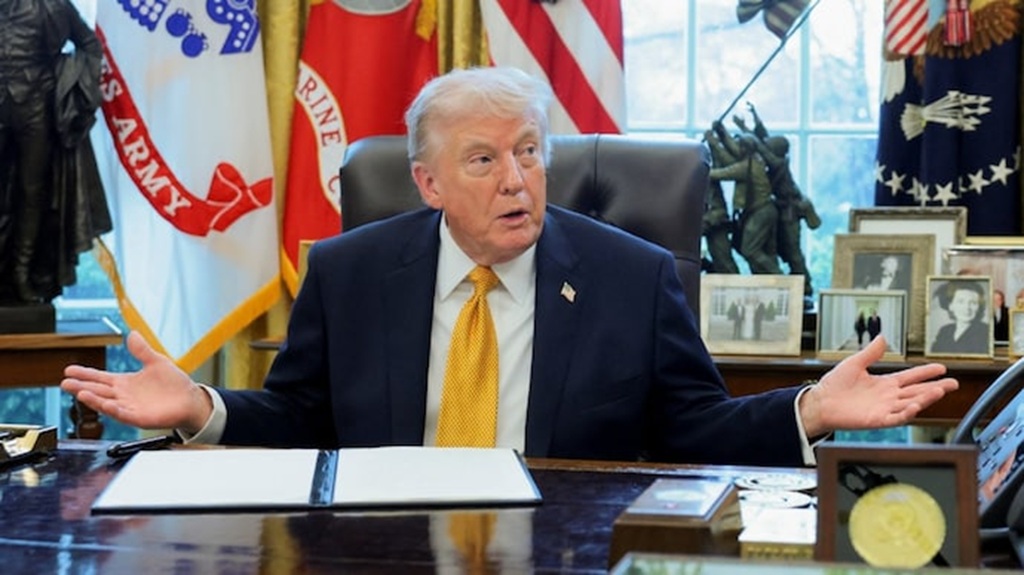
Speaking from the Oval Office, Trump said the US covers about 62 to 70 percent of NATO’s total defense spending, roughly $980 billion in 2025 alone. He called the allies’ refusal a “very foolish mistake” and framed it as a loyalty test that showed who stands with America in a crisis.
His remarks quickly stirred alarm in Washington and across Europe. Lawmakers and foreign policy analysts now say Trump could move closer to pulling the US out of NATO. At the same time, the White House is pushing ahead with a new group, the “Board of Peace,” which many see as a step away from the 77-year-old alliance and other long-standing global institutions.
Trump Criticizes Allies: “They Don’t Want to Get Involved”
Trump made the comments during a media appearance centered on US operations in the Middle East. He said most NATO members told American officials they would not take part in strikes or naval efforts tied to securing the Strait of Hormuz.
“I think NATO is making a very foolish mistake,” Trump said. “Everyone agrees with us on Iran, but they don’t want to help. We no longer ‘need,’ or desire, the NATO countries’ assistance.”
He then added, “I’ve long said I wonder whether or not NATO would ever be there for us. So this was a great test.”
The moment comes with tensions already running high. US forces are leading defensive strikes on Iranian targets under Operation Epic Fury. NATO allies offered diplomatic support, yet they stopped short of military action because of domestic pressure and fears of a wider conflict.
The US Share of NATO Spending: A Long-Running Complaint
Trump again pointed to what he sees as an unfair financial split inside NATO. Recent alliance figures support the broad point he has made for years.
Here are the numbers he highlighted:
- The United States spent an estimated $980 billion on defense in 2025.
- That accounts for about 62 percent of NATO’s total combined spending, around $1.59 trillion.
- Some estimates place the US share closer to 70 percent when nuclear deterrence and global logistics are included.
- The rest of NATO spent far less, with the United Kingdom next at $90.5 billion.
- All 32 members reached the 2 percent of GDP target in 2025, but the US is still far outspending every other ally at 3.2 percent of GDP.
Trump has long said this gap makes NATO a poor deal for American taxpayers. On Tuesday, he tied that argument directly to the Iran standoff, saying the burden is even harder to justify when allies refuse to act.
Refusal to Help Fuels Fears of a US Break From NATO
European leaders moved fast to contain the fallout. Germany, France, and the United Kingdom released statements supporting US leadership, but none promised troops or ships. One senior NATO diplomat, speaking privately, told reporters, “No one wants to get dragged into another Middle East war.”
That response only added to the sense that relations may be nearing a breaking point. Trump has threatened to leave NATO before, and now some officials believe he may try to act. Congress passed a law in 2023 requiring its approval for any formal withdrawal. Still, legal experts say a president determined to test that limit could create a major crisis by cutting troop levels in Europe or refusing to honor Article 5.
Some former Trump officials say the Iran dispute struck a personal nerve. One insider put it this way: “This was the moment allies were supposed to step up. Instead, they left America holding the bag again.”
What a US Exit From NATO Could Mean
A full US withdrawal is no longer treated as just a theory. For years, think tanks and military planners have studied what could happen if America walked away.
Here is what many of those assessments suggest:
- Europe would face an immediate security gap: Without US forces, bases, and nuclear protection, Russia could test NATO’s eastern edge. Countries like Poland and the Baltic states already fear hybrid attacks or worse.
- Nuclear deterrence would weaken: Britain and France have nuclear weapons, but many experts say they cannot fully replace the American shield. Some scenarios show renewed debate over nuclear arms across Europe.
- The US would lose access and reach: America depends on European ports, airfields, and intelligence links. Without them, projecting force into the Middle East and Africa would get harder and more costly.
- Russia and China could benefit: Moscow might push harder in Ukraine or elsewhere. Beijing could use the split to press its own interests in Asia. Some war games predict a Russian move against NATO territory within three years.
- Europe would spend more, but not fast enough: Non-US NATO members have raised spending to about 2.3 percent of GDP. Even if they climbed to 3 or 4 percent, they would still lack many US capabilities, including airlift, satellites, and heavy armor.
- Washington would face legal and political turmoil: Courts would likely weigh in on presidential power, while Congress could try to block funding or force a showdown.
- One-on-one security deals could replace the alliance model: Trump could favor direct pacts with countries like Poland or the UK while pushing others aside. That would fit the more transactional style he has often preferred.
- Economic effects could spread quickly: Supply chains could take a hit, oil prices could jump if threats around the Strait of Hormuz grow, and a more divided Europe could trigger new sanctions fights.
In short, NATO might still exist without the United States, but it would look much weaker. Europe would face more risk, while the US might save money in the short term but lose influence over time.
Trump’s “Board of Peace” Signals a Different Path
While criticizing NATO, Trump is also building what he presents as an alternative. His new Board of Peace held its first major meeting in February 2026. Under its charter, Trump serves as chairman for life.
The group is described as a lean, deal-focused body built around practical outcomes, starting with Gaza reconstruction. It has already secured $5 billion in pledges. Unlike NATO or the United Nations, membership requires major financial commitments and follows America’s priorities.
Supporters point to several key differences:
- Trump has permanent control.
- The group centers on peace through strength and economic pressure, not long committees.
- It includes select partners, even some outside the usual Western circle, while leaving out reluctant European allies.
- It addresses global flashpoints like Gaza without using NATO-style collective defense rules such as Article 5.
People close to the administration describe the Board of Peace as Trump’s long-term answer to what they see as outdated global structures. One adviser summed it up this way: “NATO was useful in the Cold War. The Board of Peace is built for today’s world.”
Part of Trump’s Broader Fight Against Global Institutions
The clash over Iran fits into Trump’s larger battle with what he calls the “globalist elite.” For years, he has argued that organizations like NATO, the UN, and the World Economic Forum put outside interests ahead of US priorities.
His message has stayed the same: Allies should pay more, or America should step back. In his view, the Iran dispute proves the point. He says Europe’s hesitation was not just about one conflict. He sees it as more proof that allies still resist sharing real risk and real cost.
Critics say that the approach could leave America isolated. Supporters argue it finally puts “America First” into practice.
Democrats, along with some Republicans, warn that abandoning NATO would hand a strategic win to Russia and China. Trump argues the current system already weakens the US by asking it to do too much for too many.
What Happens Next
The White House has not announced any formal move to leave NATO. Even so, Trump’s team is reviewing US troop levels in Europe. At the same time, staff tied to the Board of Peace are expanding contacts in Asia and the Middle East.
European leaders are set to hold emergency NATO meetings next week. Several governments have also started quiet bilateral talks with Washington to protect their own interests if tensions grow.
For now, one point stands out. Trump’s patience with allies he sees as free-riders appears to be gone. The Iran dispute showed exactly where each side stands. Whether that leads to a full US break from NATO, or a reshaped security order built around the Board of Peace, may become the biggest foreign policy story of 2026.
American voters are paying close attention. After years of hearing complaints about unfair deals, many now say they want change. The next few weeks may show whether Trump’s sharp words turn into a historic shift.
Related News:
Carney and Starme’s Iran U-Turn Betrays Their Closest Ally
Trump Slams UK’s Starmer Over Too-Late Aircraft Carrier Offer
Trump Announces U.S. Forces Totally Obliterated Iran’s Kharg Island
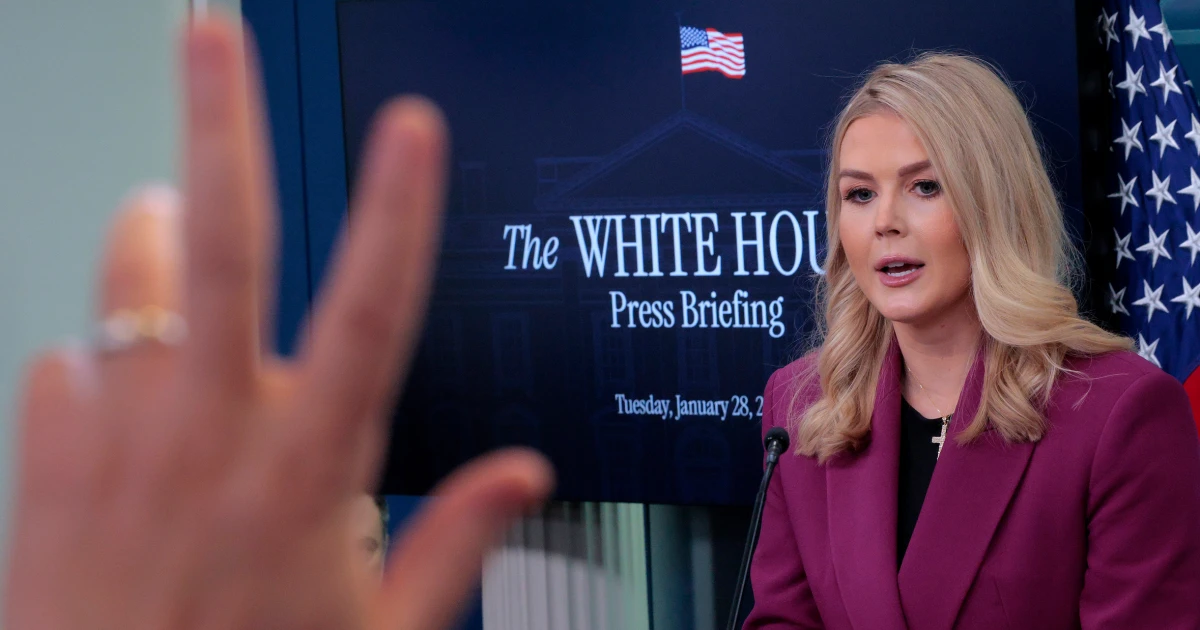
WASHINGTON, D.C. – White House Press Secretary Karoline Leavitt publicly pushed back on former National Counterterrorism Center Director Joe Kent’s resignation letter, saying it included “many false claims” about whether Iran posed an immediate danger to the United States.
Kent, a longtime Trump ally and military veteran, stepped down from his senior intelligence role on March 17, 2026. In his letter, he argued that the U.S. struck Iran based on false grounds and pressure from Israel. Leavitt answered within hours, saying President Donald Trump moved forward because of “strong and compelling evidence” that Iran was preparing to attack.
The dispute has exposed strain inside the Trump administration early in its military campaign against Iran, called Operation Epic Fury. It has also stirred new concerns about internal trust, alleged leaks, and who had access to classified intelligence.
Joe Kent’s resignation letter claims Iran was not an immediate threat
Early Tuesday, Kent posted his resignation letter on X, formerly Twitter. In it, he wrote:
“I cannot in good conscience support the ongoing war in Iran. Iran posed no imminent threat to our nation, and it is clear that we started this war due to pressure from Israel and its powerful American lobby.”
Kent, a former congressional candidate from Washington state and a strong “America First” voice, called on Trump to change direction and consider the human and political cost of the conflict. He argued the strikes did nothing for the American public and put U.S. lives at risk.
The letter spread quickly online and split many conservatives. Some applauded Kent for speaking against another Middle East war. Others, including senior Trump officials, viewed it as a break from a man who had once held the president’s confidence.
Karoline Leavitt says Kent’s claims are false
Leavitt responded on X with a pointed statement aimed directly at Kent’s version of events. Her message left little room for doubt.
“There are many false claims in this letter but let me address one specifically: that Iran posed no imminent threat to our nation,” Leavitt wrote. “This is the same false claim that Democrats and some in the liberal media have been repeating over and over.”
She then pointed to Trump’s own position. “As President Trump has clearly and explicitly stated, he had strong and compelling evidence that Iran was going to attack the United States first.”
Leavitt also stressed that the president decides what rises to the level of a national threat. She added that, from what she sees inside the White House, Trump focuses on what he believes serves the country’s best interests.
She also rejected Kent’s claim that Israel drove the decision. Leavitt called that charge “both insulting and laughable” and said Trump’s stance on Iran has been consistent for years, especially on the issue of Iran obtaining a nuclear weapon.
Her response framed the strikes as the result of intelligence from multiple sources, not pressure from another country. She also repeated the administration’s view that Iran remains the leading state sponsor of terrorism and has long threatened Americans at home and abroad.
Insider says Kent had been shut out of key briefings for months
The White House case grew stronger after Fox News correspondent Aishah Hasnie reported details from a senior administration official. Those details offered a clear reason for the gap between Kent’s claims and the administration’s position.
According to the official:
- Joe Kent had a reputation inside the administration as a suspected leaker.
- Because of those concerns, officials cut him off from presidential intelligence briefings months ago.
- He did not take part in Iran planning meetings or related briefings.
That helps explain the disconnect Leavitt pointed to earlier in the day. Kent did not have access to the classified material that, according to the White House, showed Iran had strengthened its capabilities and may have been preparing an attack against the United States.
Hasnie later added that, according to background from the Office of the Director of National Intelligence, Director of National Intelligence Tulsi Gabbard was not directly told to remove Kent. Still, the core point remained the same. Kent had been kept away from Iran-related intelligence, which left him working from old or incomplete information.
Officials cited several reasons for sidelining him:
- Suspected leaks tied to sensitive operations
- A months-long removal from top-level presidential briefings
- No role in Iran strike planning sessions
- A major information gap on the evidence Trump reviewed before authorizing action
Taken together, those details support the administration’s claim that Kent resigned over a policy area from which he had already been excluded. In the White House view, that made his letter both inaccurate and poorly informed.
Trump says Kent is out for the right reason.
Trump addressed the resignation during remarks from the Oval Office on Tuesday afternoon. He called Kent “very weak on security” and made his position plain.
“It’s a good thing he’s out, because he said that Iran was not a threat. Iran was a threat, every country realized what a threat Iran was.”
His remarks matched Leavitt’s response and showed the administration speaking with one voice on the Iran strikes. Trump also repeated that Iran’s regime is “evil” and said it has targeted America for years.
The fallout points to bigger divisions inside Trump’s coalition
Kent’s exit is the first major resignation inside the Trump administration tied directly to the Iran conflict. As a result, it highlights early splits inside the broader “America First” movement.
Backers of Kent say his letter reflects real concern about repeating old mistakes in the Middle East. On the other hand, his critics say his removal from briefings proves he was out of the loop and no longer a reliable voice on the matter.
The episode also puts a spotlight on larger issues inside the White House, including intelligence security and staff oversight:
- Why were leak concerns allowed to linger for months?
- What part did Tulsi Gabbard play in handling Kent’s status?
- Will more officials break ranks as the Iran campaign continues?
Administration officials say the strikes were needed to stop an Iranian attack before it reached U.S. soil. Leavitt’s statement, along with the briefing details shared later, appears meant to block any claim that Trump acted too quickly or under outside pressure.
As the conflict moves forward, the White House is trying to project unity and control. Leavitt’s fast response sent a blunt message. Internal disagreement may happen, but the administration says the fact, and the classified intelligence behind Trump’s decision comes first.
Kent has not publicly answered the leak claims or Leavitt’s remarks since resigning. The National Counterterrorism Center has not named an acting director.
The full picture of Iran’s nuclear progress and any planned attacks remains classified. Even so, the administration says the evidence was overwhelming and that Trump made the call on his own authority as commander in chief.
The fight over Kent’s resignation shows how much access matters in national security. Real-time intelligence can shape how leaders see a threat, and without it, they may reach very different conclusions.
Related News:
Karoline Leavitt Corrects CBS News, Over ICE Deportation Numbers
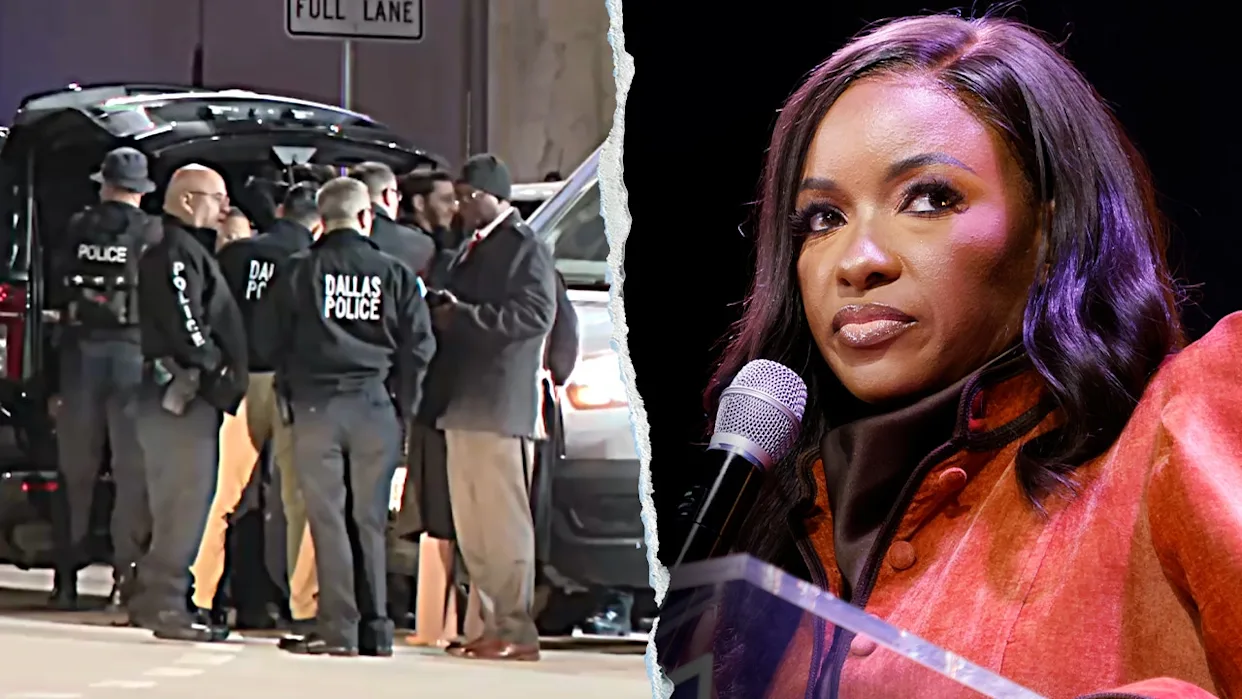
DALLAS, Texas – A longtime security guard for U.S. Rep. Jasmine Crockett died after Dallas Police SWAT officers shot him during a tense standoff in a hospital parking garage. The man known to Crockett and her staff as Mike King was actually Diamon-Mazairre Robinson, a 39-year-old convicted felon with a criminal record that stretches back more than 15 years.
People close to the case say he used the name Mike King to hide his real identity. Investigators linked Robinson to repeated theft arrests, active warrants, and a federal case tied to impersonating a law enforcement officer. Now, the shooting has put a harsh spotlight on how someone with that background ended up protecting a sitting member of Congress.
The incident happened late Wednesday night, March 12, 2026, outside the Children’s Medical Center in Dallas. Body camera video released by the Dallas Police Department shows an hour-long standoff that ended with officers opening fire. As a result, the case has triggered serious concern about background checks for congressional security contractors.
The Deadly Standoff: Police Chase, Barricade, and SWAT Shooting
Dallas police first spotted Robinson on March 11 while he was driving a silver Dodge Charger. Officers tried to stop him because a stolen government license plate on the car was tied to a Black GMC Yukon he had also been using. Instead of pulling over, Robinson led officers on a short chase and then ran into the parking garage at Children’s Medical Center.
Once there, he barricaded himself inside a vehicle with an unidentified woman. Police said the woman followed commands and got out safely. After that, officers spent more than an hour trying to talk Robinson into surrendering.
When negotiations failed, SWAT officers moved in. They used tear gas to push him out of the car. Bodycam footage shows Robinson stepping out with a handgun in his right hand and aiming it at officers. Three SWAT officers then fired their rifles, hitting him several times. He died at the scene.
Later, police found 11 guns at his home and in his vehicles, including at least one stolen firearm. Investigators also recovered two stolen vehicles and signs of fraud-related activity. On top of that, Robinson had three active warrants, two for theft and one tied to a 2017 parole violation.
The standoff lasted for hours and drew a heavy police response into a busy medical area. Dallas police said Robinson was already the subject of a manhunt connected to impersonation charges.
The Real Identity Behind Mike King
For years, Robinson used the name Mike King. He presented himself as an experienced security professional with law enforcement ties. In fact, some coworkers and even some officers believed he worked as a detective with the U.S. Capitol Police. That claim was false.
He drove what authorities described as a replica undercover police vehicle. He also used stolen license plates taken from cars parked outside a military recruiting office. Sources told CBS News Texas and FOX 4 that he built a false identity in an effort to reinvent himself after years of legal trouble.
Robinson also ran a company called Off Duty Police Services. Through that business, he hired real North Texas police officers for off-duty security jobs. He even promoted high-paying work tied to the upcoming FIFA World Cup in the Dallas-Fort Worth area, with rates listed at $90 an hour.
Even with his record, Robinson worked closely with Crockett’s team. He handled security at downtown Dallas hotels, public events, and during her recent U.S. Senate campaign. Photos from public appearances show him standing close to the congresswoman, often only a few feet away.
Records reviewed by several news outlets show that a person using the name Mike King was paid by Crockett’s office for security work. One payment totaled $340 as recently as 2025.
A Long Criminal Record: Arrests, Warrants, and False Identities
Court records tied to Robinson’s real name, Diamon-Mazairre Robinson, show a series of arrests going back to at least 2009 and 2010. Those records include repeated theft charges in Dallas, Duncanville, Irving, and Dallas County.
Here are some of the main details from his record:
- 2009 to 2012: At least seven theft arrests, including both misdemeanor and felony cases.
- Through 2017: More charges that led to guilty pleas, fines of up to $2,500, probation terms ranging from one to five years, with one case bringing 10 years of probation, plus a parole violation warrant.
- Recent warrants: Two active theft warrants and one warrant for the 2017 parole violation.
- No listed violent crimes: As Crockett later said, an early review of Dallas County records did not show violent offenses.
A former lawyer who represented Robinson in a fraud case described him as “very smooth, very friendly” and the kind of person who seemed trustworthy at first meeting. The attorney said he was shocked when he learned the man’s true identity through news reports.
Robinson also used more than one alias to cover his past. Investigators say he created fake businesses with false identifying details so he could hire legitimate police officers. Federal authorities were already looking into claims that he impersonated a federal agent and ran under the name of a fake agency called “Special Dignitary Police.”
How He Got Close to Jasmine Crockett
Jasmine Crockett, the Democratic congresswoman for Texas’s 30th District, is widely known for speaking out on civil rights and criminal justice reform. Before entering politics, she worked as a public defender.
Robinson joined her security circle years ago. He coordinated with local law enforcement and appeared to have strong ties in the community. Crockett’s team used him as a vendor approved through House protocols for added district security.
To the congresswoman and her staff, he was Mike King. They say they had no reason to think he was living under a false identity until after the shooting. He worked security during her time in Congress and while she campaigned for the Senate, often appearing beside her at public events.
Now, attention has turned to the screening process. The U.S. House has rules for hiring security vendors, including guidance to work with district security services and the Sergeant at Arms. Still, those checks are not always required in every form or strong enough to catch every issue. Robinson appears to have slipped through anyway, despite his record and an ongoing federal investigation.
His company also misled local agencies. Real officers accepted work through Off Duty Police Services without knowing who actually ran it.
Jasmine Crockett’s Response and Public Statement
Congresswoman Crockett spoke publicly on Monday in a written statement posted to social media. She said she was shocked and saddened by what had come to light.
Here are key parts of her statement:
- “We are praying for the friends and family of the man that we knew as Mike King. There was never any reason to suspect that he wasn’t who he held himself out to be. He never endangered our team, worked diligently, coordinated with local law enforcement, and maintained positive relationships throughout the community.”
- “Mike always conducted himself respectfully and with care for those around him.”
- “As a former public defender, the Congressman has always believed that people have an immense capacity for redemption and deserve second chances. What we’re now learning about his past doesn’t fit the person we came to know as Mike King. His death evokes a range of emotions.”
- “Our team followed all protocols outlined by the House to contract additional security. We were approved to use this vendor who also provided security services for additional entities in the local community and also worked closely with law enforcement agencies, including Capitol Police.”
- “The fact that an individual was able to somehow circumvent the vetting processes for something as sensitive as security for members of Congress highlights the loopholes and shortcomings in many of our systems.”
Crockett also said an early review of Robinson’s background did not show violent offenses. She called the situation “incredibly alarming” and said it points to bigger problems in the way security workers are screened for elected officials.
Her office has not answered more questions and says it is waiting for more facts from the ongoing investigation.
Growing Concern Over Security Gaps
The case has sparked a wider debate over congressional security standards. Many people now want to know how a man with theft convictions, active warrants, and a federal impersonation investigation got this close to a member of Congress.
People familiar with security procedures point to weak spots in the House system. While lawmakers do submit security contracts for approval, deeper background checks may depend on self-reported information or limited records searches. Robinson’s use of aliases likely made that even harder to catch.
He also earned trust in local law enforcement circles. He placed officers in paying jobs and claimed ties to Capitol Police, and those claims appear to have gone unchallenged for years.
Dallas police are still investigating the shooting. At the same time, federal authorities are reviewing the impersonation case and the alleged fraudulent business activity.
Reaction has been sharp and divided. Some critics say Crockett should face questions about how her team hired security. Others argue she relied on approved vendors and trusted local contacts. Supporters also point to her long-standing belief in second chances.
The release of graphic bodycam footage added more pressure. The video shows the moment officers fired, and Dallas police say the SWAT team acted because Robinson pointed a gun at them.
What This Means for Congressional Protection
The shooting has exposed weak points in the way elected officials are protected. Members of Congress often rely on private security for district events, campaign appearances, and travel. At the same time, threats against public officials have increased, which has pushed demand for security even higher.
Still, this case shows how vetting can fail. Because of that, more people are calling for mandatory background checks, live warrant searches, and outside verification of private security vendors.
Robinson’s path, from repeat arrests to fake federal agent claims to trusted bodyguard, shows how far deception can go when systems rely too much on appearances and not enough on hard checks.
Friends and former associates say Mike King seemed professional and dependable. The truth about his identity has left many of them stunned.
As the investigation moves forward, one fact stands out. The death of Diamon-Mazairre Robinson has forced lawmakers, staff, and the public to take a harder look at trust, redemption, and safety in American politics.
Dallas police have not yet released a full autopsy report or final toxicology results. The woman who was inside the vehicle with Robinson has not been charged. Federal charges tied to the impersonation case are still under review.
The House Administration Committee has received a briefing on the matter, but no formal changes to security procedures have been announced.
For Crockett and her team, this marks the loss of someone they trusted. For the public and for lawmakers, it has become a warning sign and a demand for real answers on how to stop a similar breach from happening again.
Related News:
Jasmine Crockett Faces Backlash as Texans Question Her Authenticity and Conduct


Trump’s Kharg Island Strike Cuts Iran’s Oil Fear Premium

Allies Abandoning US Over Iran Sparks Fears of Trump Dumping NATO

Karoline Leavitt Slams Joe Kent’s Resignation Letter Says Many False Claims Made

Jasmine Crockett Security Guard Killed by Dallas S.W.A.T.

VOR News: The Voice of the Republic for Readers Who Want Clarity

Democrat Party Insiders Turning on AOC Move Against the Progressive Squad

CNN’s Fareed Zakaria Says Democrat Mayors Are “Destroying Their Own Cities”

Top Democrats Abandon Zohran Mamdani as His Radical Plan Backfires

Progressive Democrats Step Up Calls to Replace Hakeem Jeffries

Panic Engulfs CNN as Ellison’s Paramount Skydance Wins Takeover Bid

Thai Billionaire Charged With Lese Majeste Over Facebook Post

Russia Bans Facebook, Meta Says It’ll Do “Everything” To Restore Service

Facebook Login Feature – Clash of Clans

4 Things you can do to take your Facebook Lead Generation to the Next Level

Zuckerberg to Allow Violent Speech on Russia After Facebook Blocked

Facebook Loses $200 Billion as Users Shift to TikTok

Downloading Facebook Videos Anonymously with High Quality Video through Snapsave app

The Best Site to Buy Real Facebook Likes and Followers in 2022

Chinese Man Arrested for Using Facebook to Dupe Cryptocurrency Investor

Google and Facebook Under Huge Pressure Over User Privacy

Mosque Set Ablaze in Iran a Citizens Revolt Against the Islamic Regime

AOC Accuses Jessie Watters of Fox News of Sexualizing and Harassing Her

JD Vance Exposes Walz’s Fraud and CNN’s Lies in White House Presser

Milestone Card Credit: How the Milestone MasterCard Can Transform Credit
-

 Crime3 months ago
YouTuber Nick Shirley Exposes BILLIONS of Somali Fraud, Video Goes VIRAL
-

 China2 months ago
China-Based Billionaire Singham Allegedly Funding America’s Radical Left
-
 Politics3 months ago
Ilhan Omar Faces Renewed Firestorm Over Resurfaced Video
-

 Politics1 month ago
CNN Delivers Stark Reality Check to Democrats Over Voter ID
-

 Business3 months ago
Tech Giant Oracle Abandons California After 43 Years
-

 Midterm Elections3 months ago
2026 Midterms Guide: Candidates, Key Issues, and Battleground States
-

 Crime3 months ago
Minnesota Fraud Scandal EXPANDS, $10 Billion in Fraudulent Payments
-

 Politics3 months ago
Accusations Fly Over Alleged Zionist Takeover of (TPUSA) Turning Point USA